










An open padlock resting on a laptop keyboard bathed in red and green light, symbolizing a cybersecurity breach

Device Code Phishing: How Hackers Are Bypassing MFA (And How to Stop Them)

Device code phishing is an attack technique that tricks users into handing over valid authentication tokens by abusing the OAuth 2.0 device authorization flow, allowing attackers to bypass multi-factor authentication entirely without ever stealing a password. The attacker generates a legitimate device code from Microsoft, Google, or another identity provider, then socially engineers the target…

Read More
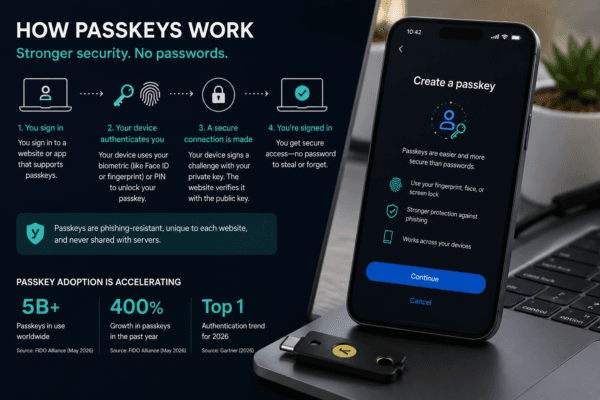
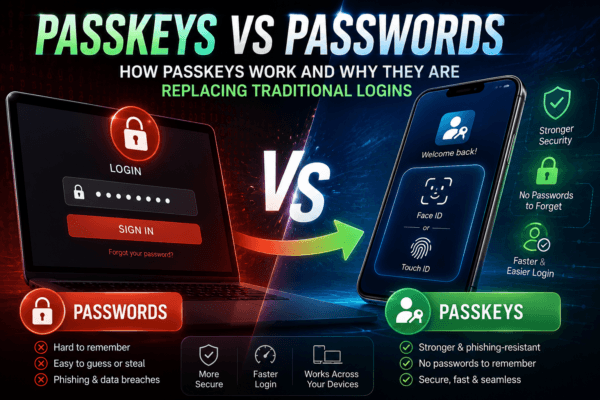
Passkeys vs Passwords infographic: passwords are hard to remember and phishing-prone; passkeys use Face ID or Touch ID for stronger, seamless security

Passkeys vs Passwords: How Passkeys Work and Why They Are Replacing Traditional Logins

Passwords have protected online accounts since the 1960s, but their fundamental design flaw has never changed: they are secrets that can be stolen, guessed, or leaked. In 2024 alone, credential-based attacks remained the leading vector in data breaches tracked by major incident response firms, and reused or weak passwords continue to expose millions of US…

Read More