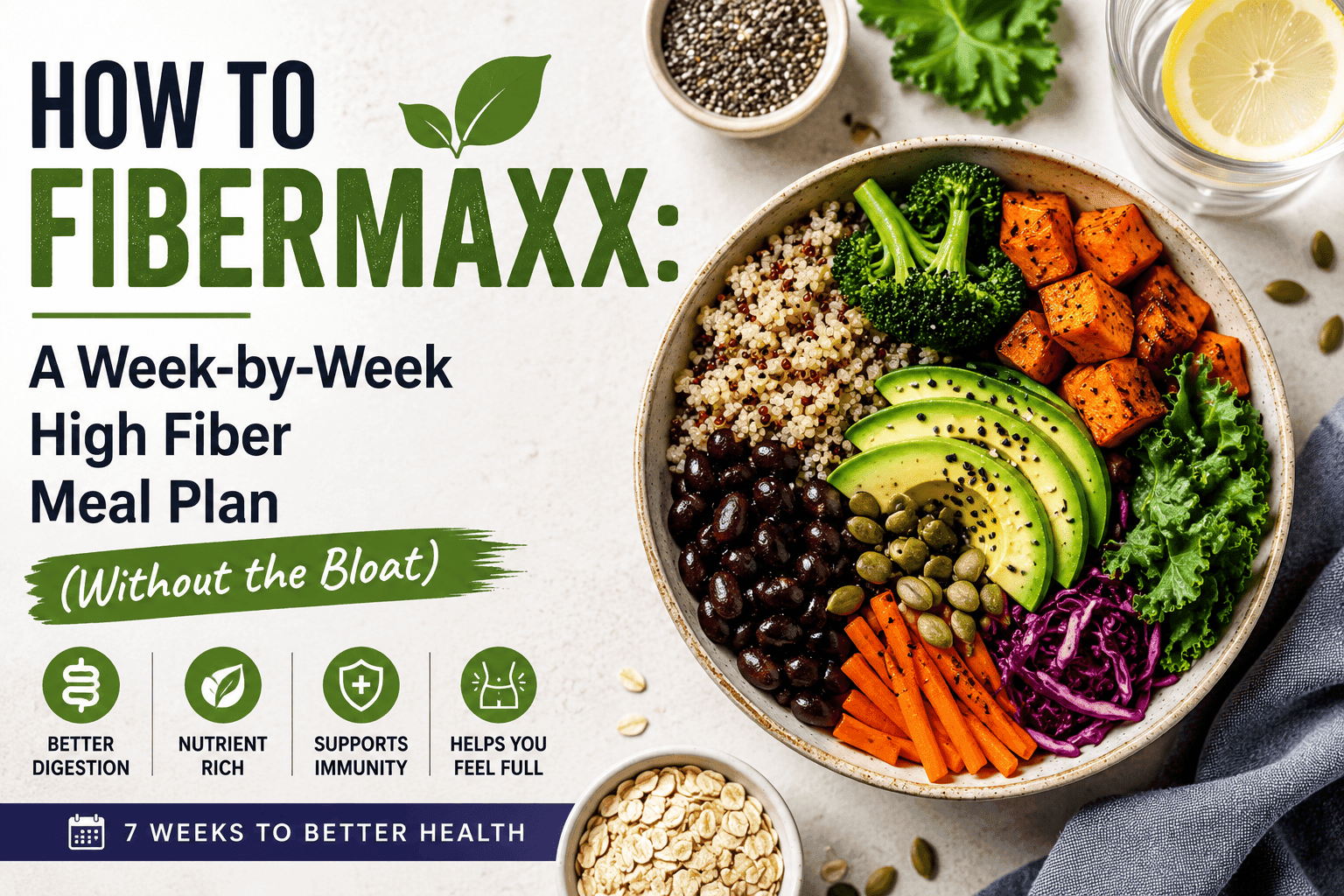
Fibermaxxing means intentionally and gradually increasing your daily fiber intake to meet or exceed the Institute of Medicine’s recommended 25 grams for women and 38 grams for men, using whole foods spread across every meal. The key to doing it without bloating is a slow ramp-up over three to four weeks, paired with consistent hydration.
Key Takeaways
- About 94% of American adults fail to meet their daily fiber target, averaging only 17 grams per day against a recommended 25 to 38 grams.
- Adding fiber too fast is the primary cause of bloating; a week-by-week ramp-up of roughly 5 grams per week gives your gut microbiota time to adapt.
- Soluble and insoluble fibers do different jobs: soluble fiber feeds gut bacteria and softens stool, while insoluble fiber adds bulk and speeds transit.
- People on GLP-1 medications like Ozempic or Wegovy face a unique risk from standard fibermaxxing advice because these drugs already slow gut motility, making aggressive fiber increases more likely to cause constipation.
Why Most Americans Need to Fibermaxx in the First Place
The average American adult eats roughly 17 grams of fiber per day, less than half the recommended amount, making fiber the single most under-consumed nutrient in the US diet.
According to StatPearls via the NIH National Library of Medicine, approximately 94% of American children and adults fall short of adequate fiber intake, with mean adult consumption sitting at just 17 grams per day between 2017 and 2020. The 2020-2025 Dietary Guidelines confirm the gap is near-universal: 90% of women and 97% of men do not hit their daily targets. That shortfall matters because low fiber intake has been linked to alterations in the gut microbiota that researchers associate with the global rise in obesity, type 2 diabetes, and metabolic disorders. Meta-analyses spanning decades of data show that higher dietary fiber intake correlates with a statistically significant reduction in relative risk for type 2 diabetes, with cereal fibers showing the strongest protective association. Epidemiologic research has also consistently found inverse relationships between fiber intake and cardiovascular disease. The science is not ambiguous: most people would benefit from eating more fiber.
Soluble vs. Insoluble Fiber: What You Actually Need to Know
Fiber is not one thing. The two main types work differently in your body, and eating both is what makes fibermaxxing effective rather than just filling.
Soluble fiber dissolves in water and is partially fermented in the colon, where it feeds beneficial gut bacteria and helps regulate blood sugar and cholesterol. Insoluble fiber does not dissolve; it adds bulk to stool and keeps things moving through the digestive tract. Both types are present in most whole plant foods, but their ratios differ. Oats, beans, apples, and flaxseed are particularly high in soluble fiber. Whole wheat, brown rice, leafy greens, and most vegetable skins lean heavily insoluble. A practical rule: if you are currently constipated, prioritize insoluble fiber and water. If your main concern is blood sugar or gut flora, lean into soluble fiber sources like lentils and oats. Most people benefit from both, and a varied plant-heavy diet naturally delivers a useful mix.
How to Fibermaxx Week by Week (Without Triggering Bloat)
The week-by-week approach works because your gut microbiota needs time to produce the right enzymes to ferment the extra fiber you are adding. Jumping straight to 38 grams when you were eating 17 is a reliable recipe for gas and discomfort.
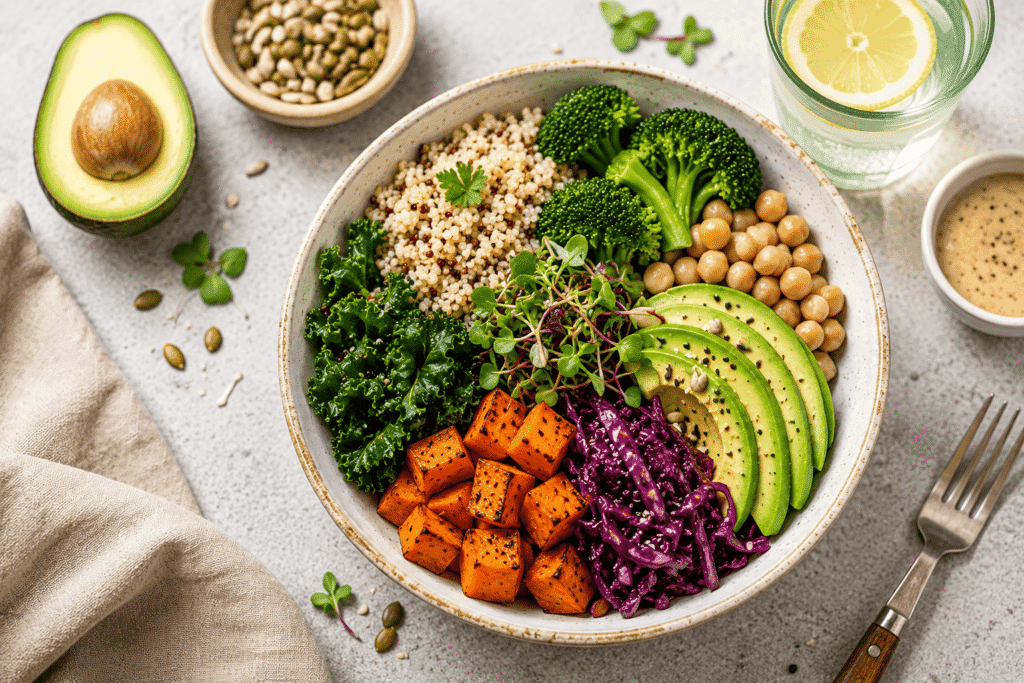
The core strategy is a gradual ramp-up of roughly 5 grams per week, paired with at least eight cups of water daily. Here is a simple four-week framework: Week 1 (target: ~22g/day): Add one high-fiber food per meal. Swap white bread for whole grain, add a half-cup of black beans to lunch, and snack on a medium apple with the skin on. Keep dinner unchanged. Week 2 (target: ~27g/day): Introduce oatmeal at breakfast (3 to 4 grams per half-cup dry), add a handful of leafy greens to dinner, and try chia seeds stirred into yogurt or a smoothie. Week 3 (target: ~32g/day): Replace one refined-grain side with a legume-based option such as lentil soup or chickpea salad. Add a second vegetable serving at dinner. Pair fiber-rich meals with adequate protein to stay satisfied. Check out these high-protein meal prep ideas for budget-friendly ways to balance both macros. Week 4 (target: 25-38g/day based on your goal): Maintain variety across all three meals. Rotate legumes, whole grains, fruits, vegetables, and seeds so no single food dominates and gas-producing compounds stay distributed. High-Fiber Foods at a Glance
| Food | Serving Size | Approx. Fiber (g) | Primary Fiber Type |
|---|---|---|---|
| Lentils (cooked) | 1/2 cup | ~8g | Soluble + Insoluble |
| Black beans (cooked) | 1/2 cup | ~7.5g | Soluble + Insoluble |
| Oats (dry, rolled) | 1/2 cup | ~4g | Primarily soluble (beta-glucan) |
| Chia seeds | 1 oz (2 tbsp) | ~10g | Soluble + Insoluble |
| Whole wheat bread | 1 slice | ~2g | Primarily insoluble |
| Apple (with skin) | 1 medium | ~4.5g | Soluble (pectin) + Insoluble |
How to Fibermaxx on GLP-1 Medications Like Ozempic, Wegovy, and Mounjaro
GLP-1 receptor agonists slow gastric emptying and reduce gut motility, which means standard fibermaxxing advice can backfire for people on these medications. This intersection of fibermaxxing and broader health and lifestyle changes is one that almost no general fiber guides address.
GLP-1 medications work partly by slowing how quickly food moves through your digestive system. That same mechanism, according to published pharmacological data on semaglutide and tirzepatide, leads to harder stools and difficulty with bowel movements for many users. Adding large amounts of fiber rapidly on top of already-slowed motility can worsen constipation rather than relieve it. The opportunity, however, is real. Dietary fiber (particularly soluble fiber) stimulates your body’s own natural GLP-1 release from gut cells. This means a well-timed, moderate fiber intake may complement the drug’s mechanism rather than compete with it. The practical guidance differs from standard fibermaxxing in two key ways: keep your ramp-up slower (aim for 3 grams added per week rather than 5), and prioritize hydration even more aggressively because dehydration compounds constipation risk significantly when gut motility is already reduced. Avoid high-FODMAP fiber sources such as large portions of raw onion, garlic, and certain legumes in the early weeks; they ferment quickly and produce gas in a system that is already moving slowly. Cooked vegetables, oats, and small portions of lentils tend to be better tolerated. If constipation persists beyond two weeks despite hydration and a slow ramp-up, a conversation with your prescribing doctor is the right next step.
The One Mistake That Undoes Fibermaxxing Progress
Eating more fiber without drinking enough water is the most common reason people quit. Fiber absorbs water to do its job; without it, insoluble fiber can compact rather than move.
Most adults under-hydrate even without adding fiber. When you increase fiber significantly, your fluid needs rise in proportion. Eight cups of water per day is a reasonable floor; if you are eating 35 or more grams of fiber, aim higher. Herbal teas and water-rich fruits count toward your total. Coffee and alcohol do not offset the need because of their diuretic effects. The second common mistake is adding fiber only at breakfast and forgetting about lunch and dinner. Spreading fiber across all three meals produces a steadier fermentation load in the colon, which means less gas production at any single point. Think of it as distributing the workload rather than dumping it all at once.
Fibermaxxing is one of the most evidence-supported dietary shifts a person can make, and the week-by-week approach makes it genuinely sustainable for most people. If you have a gastrointestinal condition such as IBS, Crohn’s disease, or diverticulitis, check with your doctor before significantly increasing your fiber intake, since the right approach may differ from the general guidance here. For more evidence-based eating strategies, browse the nutrition guides at WideJournal.
Disclaimer: The information in this article is for educational purposes only and is not a substitute for professional medical advice. Always consult your doctor or a registered dietitian before making significant changes to your diet or if you are managing digestive health alongside prescription medications like GLP-1 agonists.
Frequently Asked Questions
How long does it take to see results from fibermaxxing?
Most people notice improved digestion and more regular bowel movements within one to two weeks of consistently hitting their fiber targets. Benefits related to blood sugar regulation and cholesterol develop over months of sustained higher intake rather than days.
Can you fibermaxx with supplements instead of whole foods?
Fiber supplements such as psyllium husk can help close a gap, but they primarily deliver one fiber type and lack the vitamins, minerals, and phytonutrients that come packaged with whole food sources. Supplements are a useful backup, not a replacement for a varied plant-based diet.
Is there such a thing as too much fiber?
Very high intakes, generally above 70 grams per day, may reduce the absorption of certain minerals including calcium, iron, and zinc by binding to them in the gut. For most people eating whole foods, reaching that level without deliberately trying is unlikely, but it is a reason to favor variety over extreme intake from a single source like bran supplements.
Does cooking vegetables reduce their fiber content?
Cooking softens fiber and makes some of it more fermentable, but it does not meaningfully destroy the total fiber content of most vegetables. Steaming and roasting preserve fiber well. Boiling can leach some soluble fiber into the cooking water, so using that water in soups or sauces is a simple way to keep it in your diet.