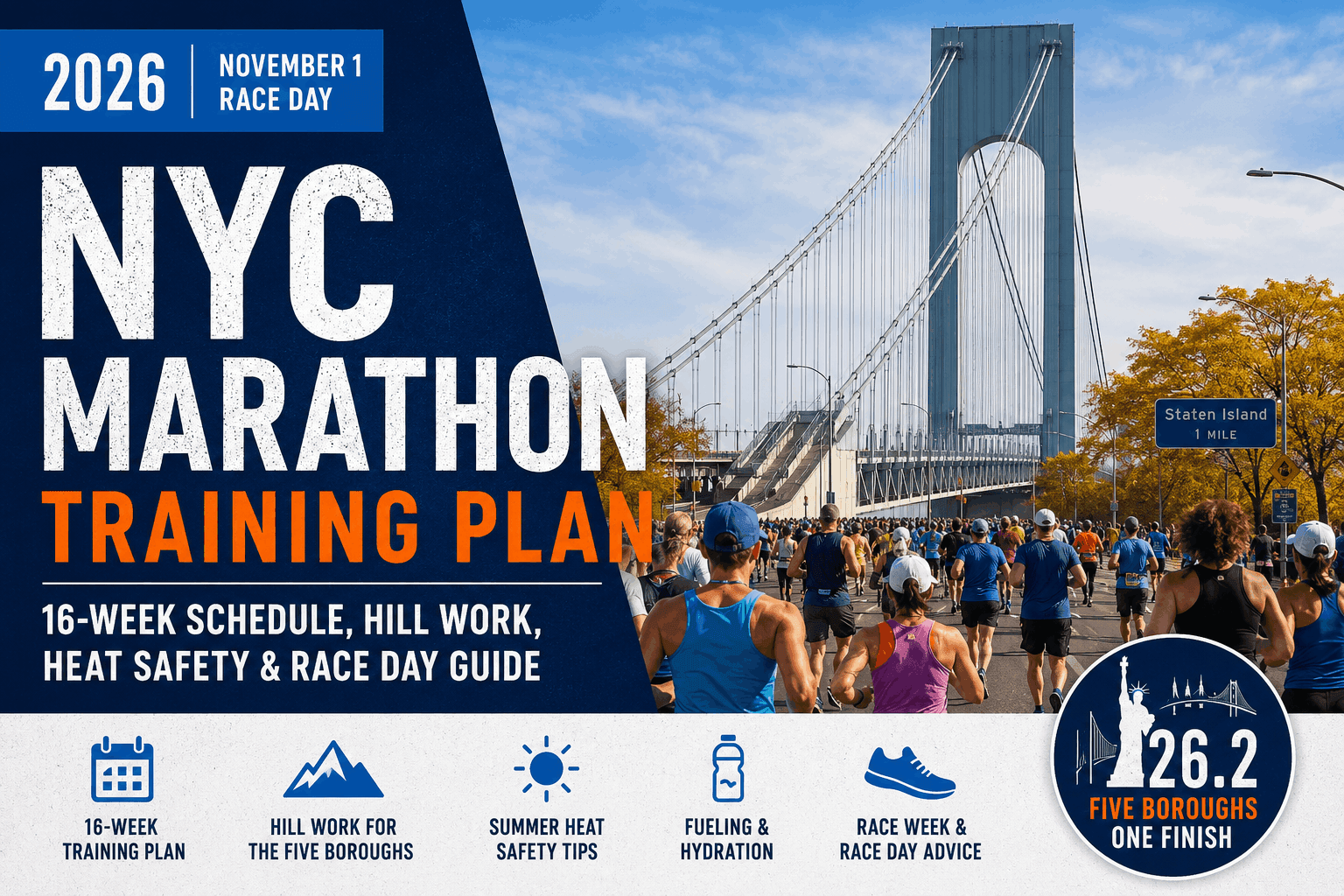
Training for the New York City Marathon requires more than simply adding miles each week. The course crosses all five boroughs, includes several demanding bridges and finishes on the rolling roads of Central Park.
A full 16-week training cycle for the November 1, 2026 race should begin around July 12. Runners starting later should already have a consistent mileage base and may need to adjust the early weeks rather than increase their workload too quickly.
This plan is designed for runners who already average approximately 20 to 25 miles per week and can complete an 8- to 10-mile long run. It combines gradual mileage development, course-specific hill work, recovery, fueling practice, summer heat safety and a controlled taper to help runners reach the start line healthy and prepared.
Key Takeaways
- Begin a full 16-week plan around July 12 for the November 1, 2026 race.
- This schedule is for runners who already average 20 to 25 miles per week.
- Most long runs should stay conversational, with selected later miles at marathon effort.
- Add regular hill work to prepare for the bridges, Fifth Avenue and Central Park.
- Adjust pace and distance during hot weather instead of forcing normal training speeds.
Understanding the NYC Marathon Course
The New York City Marathon is not a flat race. It begins on the Verrazzano-Narrows Bridge, crosses four more bridges and finishes with rolling terrain in Central Park.
The Queensboro Bridge is especially important because it arrives around mile 15, when fatigue begins to build. Runners who train only on flat roads may struggle with both the climbs and the descents.
Include one weekly hill session or a rolling long run from the early stages of the plan. Treadmill incline can help when outdoor hills are not available.
Choosing the Right Training Level
Your plan should match your current fitness, not your goal pace.
Runners preparing for a first marathon should use the lower end of the weekly mileage range and keep most sessions easy. More experienced runners can add one weekly tempo or threshold workout if they recover well.
Do not increase mileage aggressively after missed training, illness or injury. A shorter adjusted plan is safer than trying to catch up in one or two weeks.
16-Week NYC Marathon Training Schedule
The table below provides a flexible mileage framework. Adjust the totals based on recovery, experience and recent training.
| Week | Phase | Long Run | Weekly Mileage |
| 1 | Base | 10 miles | 22–26 |
| 2 | Base | 11 miles | 24–28 |
| 3 | Base | 12 miles | 25–30 |
| 4 | Recovery | 9 miles | 20–24 |
| 5 | Development | 13 miles | 27–32 |
| 6 | Development | 14 miles | 29–34 |
| 7 | Development | 15 miles | 31–36 |
| 8 | Recovery | 11 miles | 24–28 |
| 9 | Peak Build | 16 miles | 33–38 |
| 10 | Peak Build | 18 miles | 35–40 |
| 11 | Recovery | 13 miles | 28–32 |
| 12 | Peak | 18–20 miles | 36–42 |
| 13 | Peak / Tune-Up | 16 miles | 32–38 |
| 14 | Taper | 12 miles | 25–30 |
| 15 | Taper | 8 miles | 18–22 |
| 16 | Race Week | 26.2-mile race | 30–35 including race |
Complete most miles at an easy, conversational effort. Experienced runners may add short marathon-pace sections during selected long runs, but recovery should remain the priority.
Training Safely Through Summer Heat
July and August training may feel slower because heat and humidity increase cardiovascular strain. Do not force your normal pace in difficult conditions.
Run during the coolest part of the day, reduce distance or intensity when needed and carry fluids on longer sessions. Easy runs should remain conversational rather than being tied to a fixed pace or heart-rate number.
Stop immediately if you feel dizzy, confused, unusually weak, nauseated or chilled. Heat adaptation should happen gradually, not through deliberately pushing into unsafe conditions.
Fueling and Hydration Practice
Use long runs to test the same gels, drinks and timing you plan to use on race day. Do not wait until the marathon to learn what your stomach can tolerate.
Start fueling before energy levels drop and drink according to thirst, weather and sweat rate. Avoid trying new products during race week.
The goal is not to follow one universal formula, but to build a routine that works consistently during long efforts.
Race Week and Start Logistics
Reduce mileage during the final two weeks, but keep a few short easy runs so your legs stay active. Do not introduce new shoes, foods or supplements.
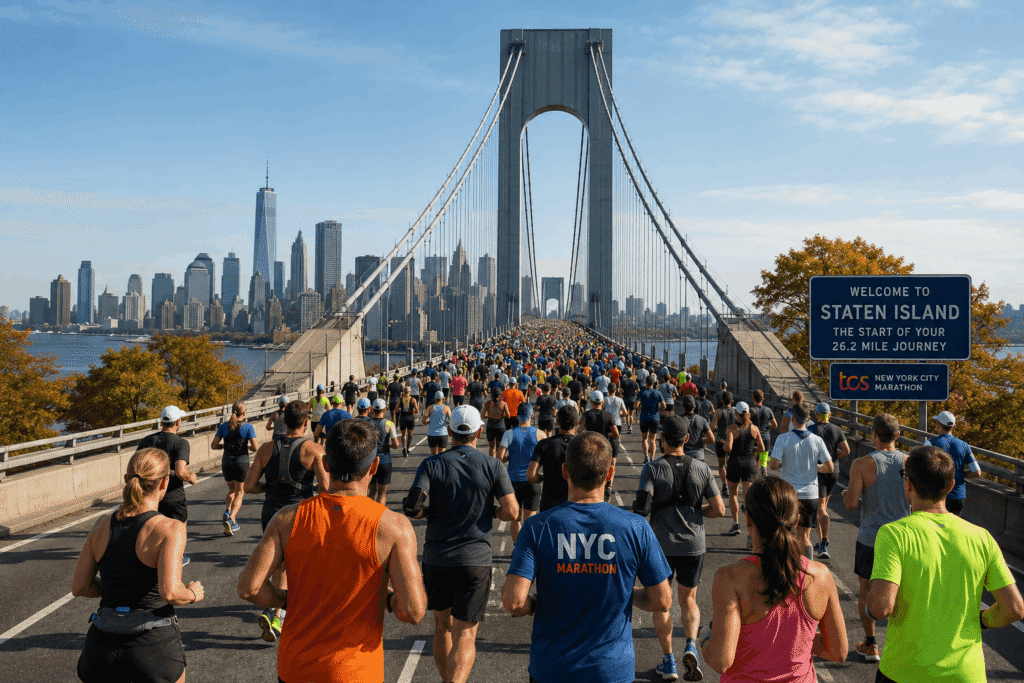
Follow the transportation time assigned by NYRR and expect a long wait in the Staten Island start village. Bring throwaway layers, simple food and any race fuel you have already tested.
Start the opening mile conservatively. The climb and descent on the Verrazzano Bridge can make an aggressive pace feel easier than it really is.
Strength, Recovery, and Injury Prevention
Add one or two short strength sessions per week, focusing on calves, glutes, hamstrings and single-leg stability.
Recovery days are part of the plan, not missed training. Sleep, easy running and regular mobility work help your body absorb the weekly mileage.
Do not run through sharp pain or worsening discomfort. Reduce the workload and seek professional advice if symptoms persist.
Final Training Advice
A successful NYC Marathon build depends on consistency, not perfect workouts. Follow the plan, keep easy days easy and adjust the workload when heat, fatigue or pain becomes excessive.
The goal is to arrive in New York healthy, confident and prepared for the bridges, crowded early miles and rolling finish in Central Park.
A slightly conservative training cycle is far better than reaching race week injured or exhausted.
Frequently Asked Questions
When should I start training for the 2026 NYC Marathon?
A full 16-week plan for the November 1 race should begin around July 12. Runners starting later should already have a consistent weekly mileage base.
How many days per week should I run?
Most runners can prepare with four or five running days per week. The right number depends on experience, recovery and injury history.
How long should my longest training run be?
For many first-time marathoners, 18 to 20 miles is enough. More experienced runners may choose a slightly longer run, but additional distance is not always better.
Do I need to run hills?
Yes. Regular hill training helps prepare your legs for the bridges, Fifth Avenue and the rolling finish in Central Park.
Is a tune-up half marathon required?
No. A half marathon can be useful for testing pacing, fueling and race-day logistics, but it is optional.