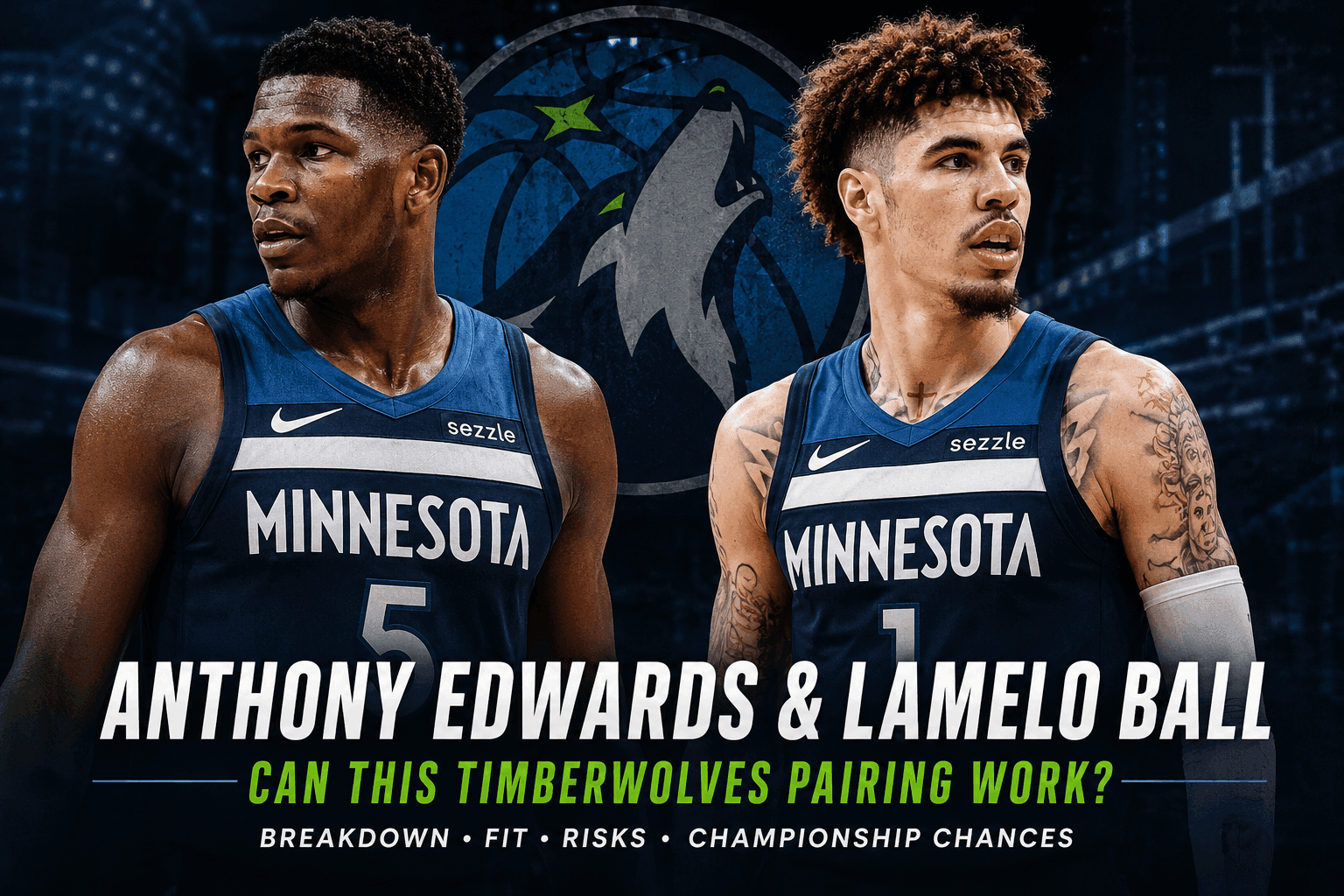
Minnesota did not acquire LaMelo Ball simply to add another scorer next to Anthony Edwards. The Timberwolves traded for a primary playmaker who can create easier opportunities for Edwards, accelerate the offense and give Chris Finch another option when playoff defenses load up on Minnesota’s franchise star.
Ball arrives after his healthiest season in years, averaging 20.1 points and 7.1 assists across 72 games for Charlotte. The talent is undeniable, but the fit is not automatic. Both Ball and Edwards are accustomed to controlling possessions, Ball has never played in a seven-game NBA playoff series, and Minnesota sacrificed valuable frontcourt depth and significant draft capital to make the deal happen.
The Edwards-Ball partnership therefore carries both a championship-level ceiling and clear structural risks. Its success will depend on role definition, off-ball adaptation and whether Minnesota can add offensive creativity without compromising the defensive identity that made it a Western Conference contender.
Key Takeaways
- LaMelo Ball gives Minnesota a second elite playmaker who can reduce Anthony Edwards’ creation burden.
- The fit will depend on Ball accepting fewer on-ball possessions and Edwards becoming more active off the catch.
- Ball has played in four Play-In games but has never experienced a seven-game NBA playoff series.
- Minnesota’s biggest concern is whether the added offense can offset the loss of frontcourt depth and defensive flexibility.
What Minnesota Is Getting in LaMelo Ball
Ball gives the Timberwolves a true lead playmaker. He averaged 20.1 points and 7.1 assists in 72 games last season while shooting 36.8% from three.
His biggest value is not scoring volume. It is his ability to create early offense, find cutters and punish defenses before they are set. That should give Edwards more chances to attack closeouts instead of creating every possession from isolation.
The concern is role adjustment. Ball controlled Charlotte’s offense for most of his career. In Minnesota, he must share those responsibilities and remain effective when Edwards has the ball.
How the Edwards-Ball Backcourt Can Work
The clearest division is simple: Ball organizes the offense, while Edwards remains the primary scorer.
Ball can push the pace, run pick-and-rolls and deliver the ball to Edwards before the defense is set. Edwards can then attack from the wing, cut behind defenders or punish closeouts instead of starting every possession from a standstill.
The fit becomes more difficult late in games. Minnesota will need clear rules for who initiates, who closes possessions and how Ball stays involved when Edwards takes control.
The Defensive Risk
Ball is not a defensive stopper, and Minnesota cannot expect Edwards to cover every difficult perimeter assignment.
At 6-foot-7, Ball has the size to contest passing lanes, but stronger guards can target him in switches and screen actions. Losing Naz Reid also reduces Minnesota’s frontcourt versatility.
The Timberwolves can limit the damage by keeping Ball away from the opponent’s primary creator and using Rudy Gobert’s rim protection behind him. The question is whether that structure will hold up against elite playoff offenses.
Ball’s Playoff Inexperience
Ball has appeared in four Play-In games, but he has never played in a seven-game playoff series.
That distinction matters. Playoff opponents repeatedly attack the same weaknesses, increase physical pressure and adjust from game to game. Ball will need to protect the ball, defend through contact and remain effective when teams force him away from his preferred actions.
His talent is clear. How quickly he adapts to postseason basketball is not.
What Minnesota Gave Up
Minnesota acquired Ball and Josh Green in a four-team trade, but the cost went far beyond Naz Reid.
The Timberwolves also moved Julius Randle, an unprotected 2033 first-round pick, three first-round pick swaps and three second-round picks. That is a major investment in a player with a long injury history and no playoff-series experience.
The deal only makes sense if Ball becomes a reliable second star, not simply a more creative regular-season guard.
How Minnesota Compares With West Contenders
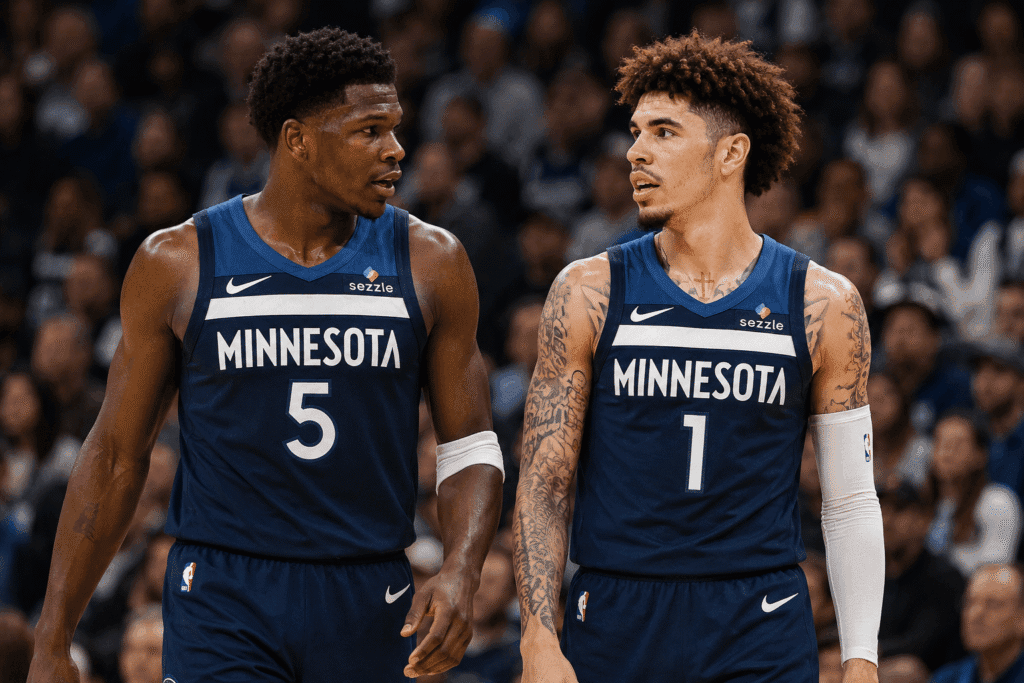
Minnesota now has two high-level creators, but talent alone does not guarantee a championship fit. The strongest teams in the Western Conference already have established roles, proven systems or years of chemistry around their stars.
| Team | Core Duo | Main Strength | Main Question |
| Minnesota Timberwolves | Anthony Edwards / LaMelo Ball | Scoring, transition playmaking and shot creation | Can they share offensive control and defend consistently? |
| Oklahoma City Thunder | Shai Gilgeous-Alexander / Jalen Williams | Two-way versatility and continuity | Can opponents limit their pressure at the rim? |
| Denver Nuggets | Nikola Jokić / Jamal Murray | Proven playoff chemistry and half-court execution | Does Denver have enough supporting depth? |
| San Antonio Spurs | Victor Wembanyama / De’Aaron Fox | Size, speed and pick-and-roll pressure | How quickly can the roster develop playoff chemistry? |
| Los Angeles Lakers | Luka Dončić / Austin Reaves | Half-court creation and late-game scoring | Can their perimeter defense hold up against elite guards? |
Minnesota’s advantage is offensive unpredictability. Ball can organize possessions and increase the pace, while Edwards remains the primary scorer. The challenge is building the chemistry and defensive discipline that established contenders already possess.
Best-Case and Worst-Case Outcomes
In the best-case scenario, Ball improves Minnesota’s pace and playmaking while Edwards becomes even more efficient away from the ball. The Timberwolves gain a more flexible offense without losing their defensive identity.
In the worst-case scenario, injuries, defensive targeting and overlapping roles prevent the partnership from stabilizing.
The most realistic outcome sits between those extremes: a dangerous backcourt that raises Minnesota’s ceiling but still needs time and roster support to become championship-ready.
Final Verdict
The Edwards-Ball pairing can work because their strengths are different enough to complement each other. Ball creates advantages early in possessions, while Edwards remains Minnesota’s best scorer and late-game option.
The fit is not risk-free. Minnesota gave up depth and future assets, and Ball still has to prove he can stay healthy, defend consistently and adjust to playoff basketball.
If those concerns are managed, the Timberwolves have the talent to become a stronger offensive team and remain a serious contender in the Western Conference.
Frequently Asked Questions
Has LaMelo Ball played in the NBA Playoffs?
No. Ball has played in four Play-In games but has never appeared in a seven-game playoff series.
What did Minnesota trade for LaMelo Ball?
Minnesota acquired Ball and Josh Green in a four-team deal. The Timberwolves gave up Naz Reid, Julius Randle, an unprotected 2033 first-round pick, three first-round pick swaps and three second-round picks.
Can Ball and Edwards play together?
Yes, but their roles must be clear. Ball should lead the offense and create opportunities, while Edwards remains the primary scorer and late-game option.