Before you read this: I’m not a dentist and this isn’t dental advice. What follows is what I put together after a few weeks of reading manufacturer labels, ADA material, clinical summaries, and a lot of long forum threads where regular people and a few working dentists argue about toothpaste. I’ve collected it because it helped me, not because I think it should override anyone’s professional opinion. For anything specific to your mouth a cavity, receding gums, ongoing pain go see a licensed dentist. Nothing here is a recommendation, and results genuinely vary from person to person.
With that out of the way, here’s what I found.
Key Takeaways
- Fluoride is the one ingredient that consistently separates a toothpaste that prevents cavities from one that just tastes clean.
- Most adult over-the-counter tubes sit at roughly 1,000–1,450 ppm, that’s the range the evidence supports, and it’s printed on the label.
- The ADA Seal is the fastest shortcut I found for skipping the marketing entirely.
- The three fluoride compounds aren’t interchangeable: sodium fluoride covers cavities, stannous adds gum and sensitivity benefits, MFP does the basics.
- RDA (abrasivity) is the number nobody prints and the one that mattered most to me.
- 5,000 ppm is prescription-only. It’s not an upgrade you buy yourself.
- Not rinsing after brushing changed more for me than switching brands did.
How Fluoride Actually Works. The Part I Had Wrong
I assumed fluoride was basically an antibacterial. It isn’t, or not mainly.
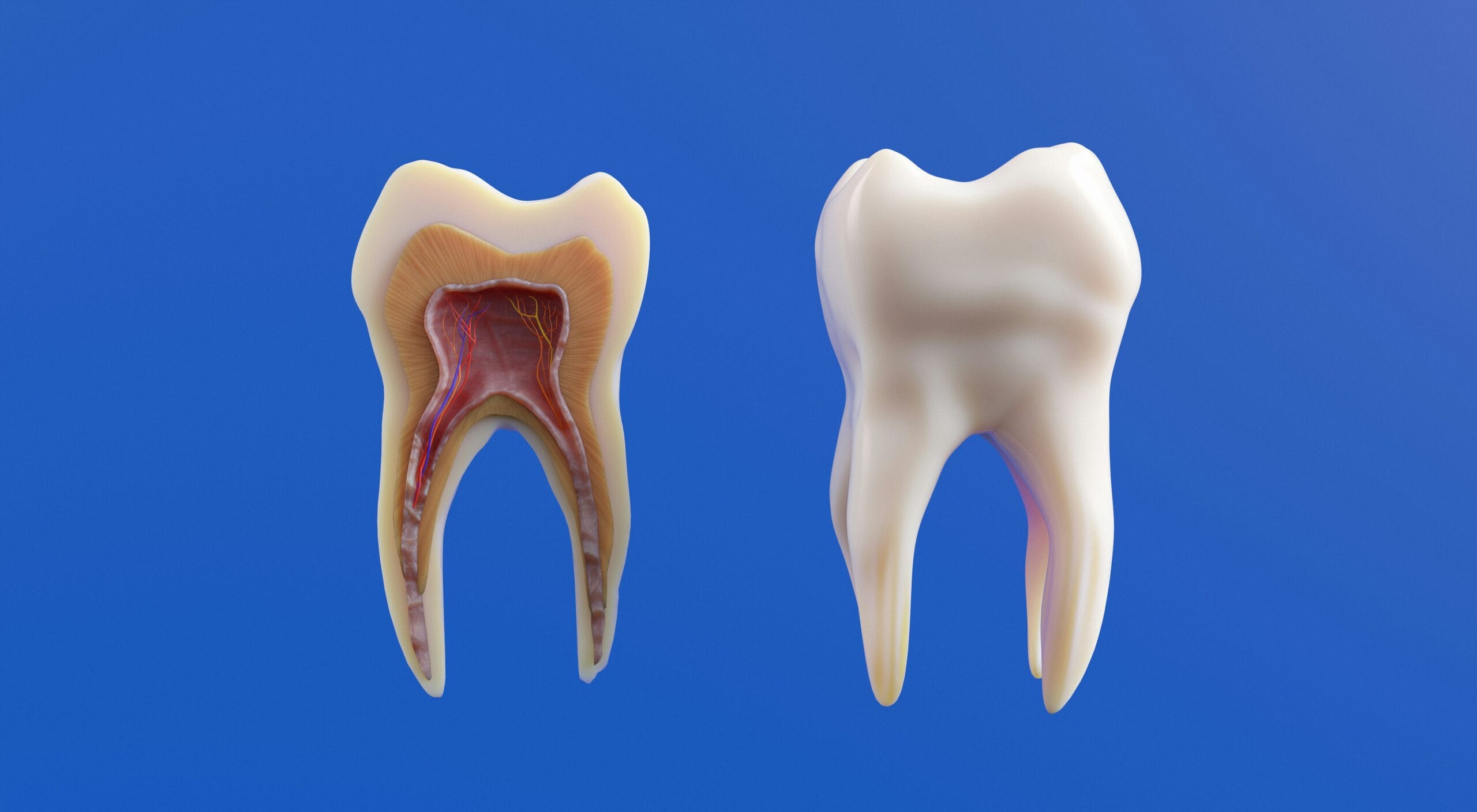
Every time you eat, acid softens the outer layer of your teeth. You can’t feel it. Fluoride’s job is to interrupt that cycle through remineralization: while it’s sitting on your teeth during and after brushing, it helps pull calcium and phosphate back into the softened enamel. The repaired surface ends up more acid-resistant than it was before.
That’s it. Three steps acid softens, fluoride restores, enamel comes back tougher. Which explains something that confused me at first: brushing longer matters less than brushing twice a day, every day, because the benefit accumulates from repeated contact rather than from any single heroic session.
The clearest explanations I read came from dentists answering laypeople directly — r/askdentists is worth an hour of scrolling if you want this in plain language.
Sodium, Stannous, or MFP: The Label Detail I’d Been Ignoring
There are three fluoride compounds in common toothpaste, and they aren’t interchangeable.
Sodium fluoride (NaF) is the default. Stable, well-studied, in most ADA-accepted tubes. Pronamel and Tom’s of Maine typically use it. If all you want is cavity prevention, this is the baseline.
Stannous fluoride (SnF₂) does more. Beyond cavity protection it’s antimicrobial, which is why it shows up in gum-health formulas, and it has decent evidence behind it for sensitivity. It’s the active ingredient in Colgate Total and Crest Pro-Health at 0.454%. The catch, mentioned constantly in reviews: a faint metallic taste for the first week or two. Most people stop noticing.
Monofluorophosphate (MFP) is older, still in some traditional Colgate lines, and releases fluoride ions during brushing. Cavity protection comparable to sodium fluoride, no bonus features.
| Type | Main benefit | Extra | Common in |
|---|---|---|---|
| Sodium fluoride | Cavity prevention, enamel repair | Enamel strengthening | Pronamel, Tom’s of Maine |
| Stannous fluoride | Cavity + gum protection | Sensitivity relief, antimicrobial | Colgate Total, Crest Pro-Health |
| MFP | Cavity prevention | — | Some Colgate variants |
The stannous-vs-sodium debate is a recurring one in r/Dentistry, and hygienists chime in there with more nuance than any product page gave me.
What I Started Checking on the Box
Four things, in order of how much they actually changed my choice.
The ADA Seal of Acceptance. The fastest filter. It means an independent body reviewed the safety and efficacy data rather than taking the manufacturer’s word. It doesn’t mean unsealed products are bad, just unverified.
PPM. Most adult over-the-counter toothpaste sits at roughly 1,000–1,450 ppm fluoride. That’s the range clinical evidence supports. Children under 3 use a rice-grain smear of ~1,000 ppm; ages 3–6, a pea-sized amount. The 5,000 ppm products are prescription-only and not something to source creatively online.
RDA (Relative Dentin Abrasivity). This is the one almost nobody talks about, and it’s the reason I stopped using a whitening paste daily. RDA measures how abrasive the paste is against dentin. The ADA caps safe products at 250. If your enamel is already thin or your roots are exposed, lower is better, whitening formulas trend high, sensitivity formulas trend low. Manufacturers rarely print it, so you’ll be looking it up.
SLS. If you get canker sores regularly, sodium lauryl sulfate is worth ruling out before you blame anything else.
Threads on Quora’s toothpaste topic go deep on RDA numbers and where to find published lists — that’s where I first learned the term.
The Brands That Kept Coming Up
Not a ranking. Formulations change, so verify the current label.
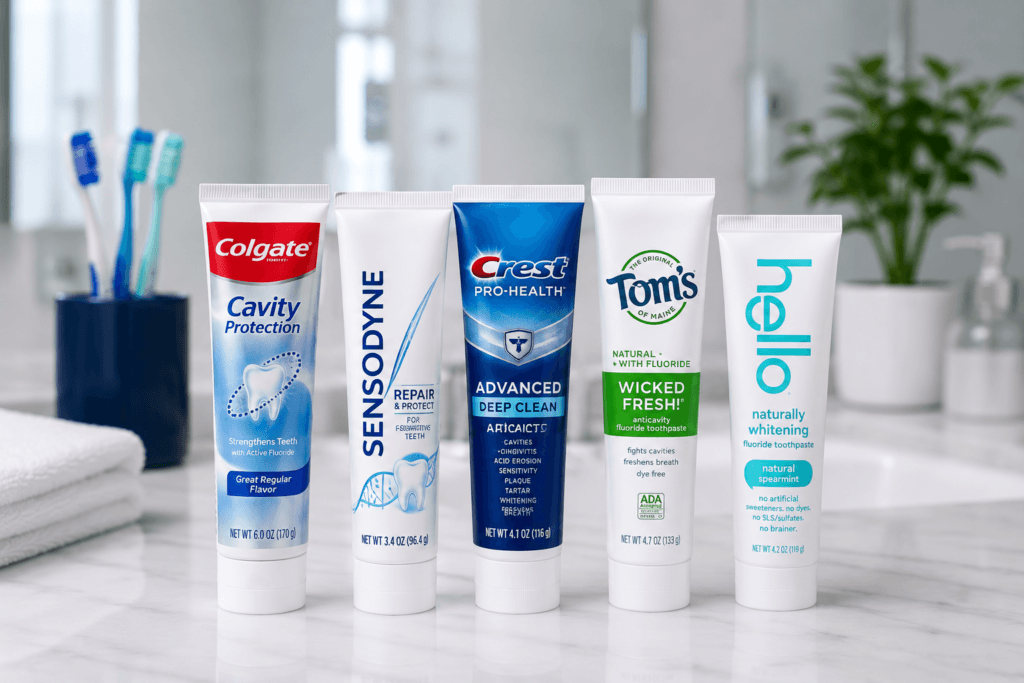
- Colgate Total – stannous fluoride, covers cavities, gums and sensitivity in one tube. ADA accepted. The broad-coverage default.
- Crest Pro-Health – also stannous. Comes up constantly in threads about occasional gum bleeding and cold sensitivity. ADA accepted.
- Sensodyne Repair & Protect – built around sensitivity and enamel. The most-mentioned name by a wide margin when someone posts “cold water hurts.”
- Pronamel Intensive Enamel Repair – sodium fluoride, aimed at acid erosion. Cited a lot by people with reflux or a soda habit.
- Parodontax – stannous, gum-focused. Universally described as tasting medicinal.
- Tom’s of Maine (fluoride version) – one of the few “natural” brands that keeps the fluoride in. SLS-free, short ingredient list. ADA accepted.
- Colgate Prevident 5000 – prescription only, 5,000 ppm, for high cavity risk, dry mouth, or radiation patients. Not a store-shelf product.
Real-world reports on taste, staining and how long the stannous adjustment period actually takes are worth more than any product page. The Dentistry topic on Quora and the comment sections on the ADA’s Facebook page are where I found people describing the first two weeks honestly.
Matching the Tube to Your Actual Problem
The mistake in most toothpaste articles is assuming one product fits everyone.
Sensitive teeth → potassium nitrate or stannous fluoride, low RDA. Gum trouble → stannous fluoride. Acid erosion → low-abrasivity sodium fluoride, and wait about 30 minutes after acidic food before brushing so saliva can neutralize things first. Whitening → fine occasionally, risky as your only paste if enamel is thin. Dry mouth → fluoride matters more than usual here, and some dentists prescribe the 5,000 ppm version. Kids → age-appropriate product, supervised, spitting not swallowing.
Searching “fluoride toothpaste” on X surfaces a steady stream of dentists correcting misconceptions in real time.
What It Won’t Do
This part rarely gets written down. Fluoride toothpaste cannot reverse an existing cavity once decay is through the enamel, that’s a dentist’s job. It won’t remove tartar; only a hygienist can. It won’t work if you rinse it straight down the drain, and it won’t compensate for brushing three times a week.
Small Habits That Mattered More Than the Brand
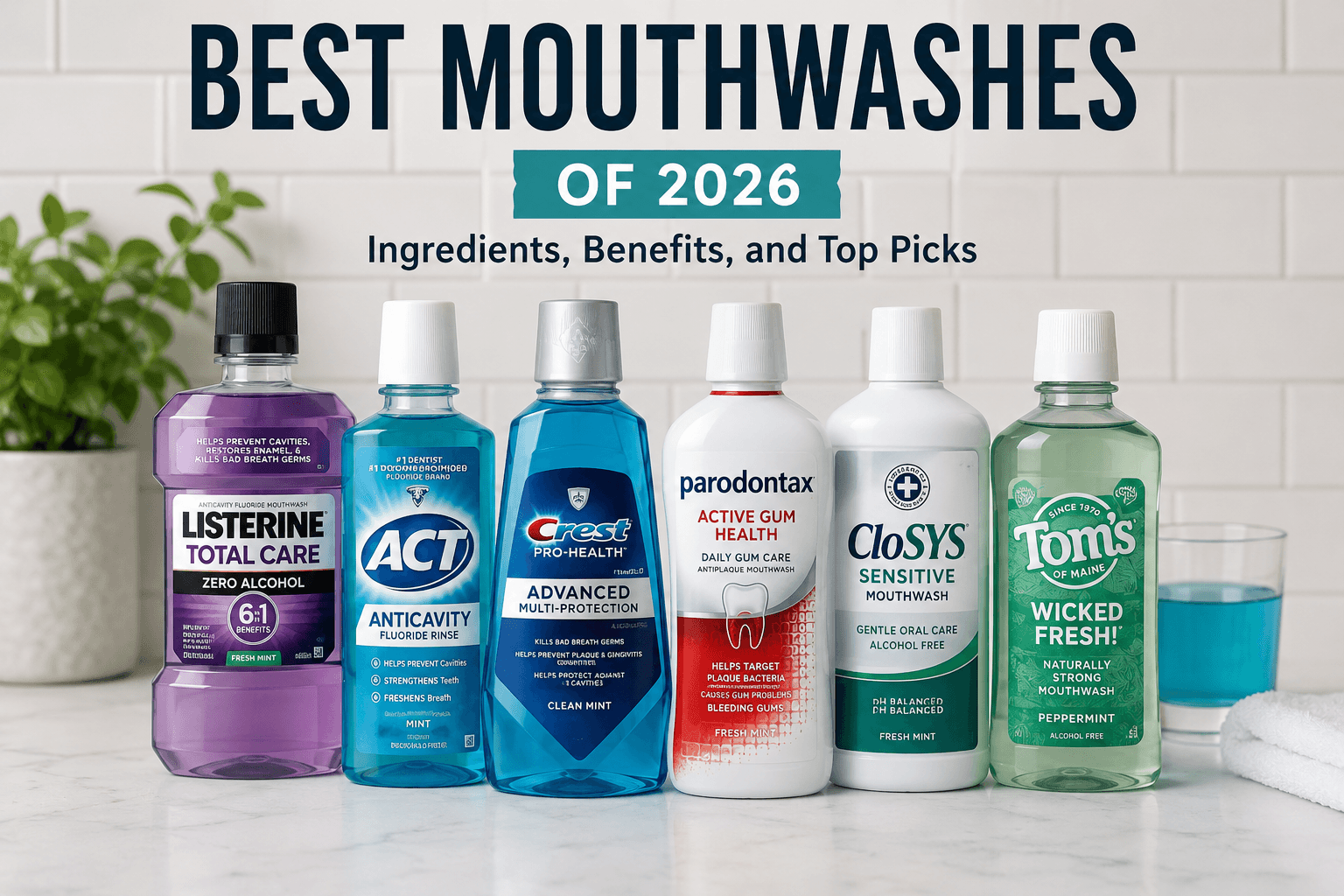
The single most useful thing I picked up: don’t rinse after brushing. Spit, don’t rinse. Rinsing washes off the fluoride before it’s finished working. Same logic for mouthwash, space it 10–20 minutes away from brushing rather than using it as a chaser.
What I Landed On
Of everything I read, the finding that stuck with me most is that the specific tube matters far less than I’d assumed provided it has fluoride, an ADA seal, and roughly 1,000–1,450 ppm. Almost every serious source, professional or amateur, converged on that.
For what it’s worth, I tried a stannous fluoride paste for a month. The metallic taste was real and it did fade by week two. What changed more noticeably was not rinsing afterward, a free habit I’d been getting wrong my entire life. That’s my experience, not a prescription. Yours may go differently, and your dentist can narrow it down in one visit far faster than I did in a month of reading.
Frequently Asked Questions About Fluoride Toothpaste
Does all toothpaste have fluoride?
No and this surprised me. Plenty of charcoal and “natural” pastes skip it entirely, sometimes without saying so loudly. Check the Active Ingredients panel. If you see sodium fluoride, stannous fluoride or sodium monofluorophosphate, it’s in there.
Which toothpaste has the most fluoride?
Prescription products like Prevident 5000 sit at 5,000 ppm. Among what you can actually buy off a shelf, 1,450 ppm is the ceiling, that’s what “maximum strength” usually means on a label.
Does Colgate have fluoride?
Most Colgate products do, but the compound varies by line sodium, stannous or MFP. Reading the box is the only reliable way to know which one you’re holding.
What about hydroxyapatite toothpaste?
It’s the mineral enamel is largely made of, and some brands use it instead of fluoride. There’s research suggesting it may be comparable in some cases, but the evidence base behind fluoride is far larger and far older. I decided that mattered to me. Reasonable people disagree here.
Should I rinse after brushing?
This one has the most consistent answer of anything I read: no. Spit and leave it. If you can’t stand the feeling, wait at least 30 seconds.
Can I use my toothpaste for my kid?
Under 6, use a product formulated for their age group and the ADA amounts a rice-grain smear under 3, a pea after that. Swallowing too much fluoride while teeth are still developing can cause fluorosis, which is cosmetic but permanent.