Key Takeaways
- Studies suggest tongue scraping can reduce volatile sulfur compounds (VSCs) — the primary driver of bad breath — by up to 75% with regular use, compared to roughly 45% for tongue brushing alone.
- Stainless steel and copper scrapers are the most durable options and easier to sanitize than plastic; most last years with basic rinsing after each use.
- Dentists typically recommend scraping once per day, ideally in the morning before eating or drinking, as part of a broader oral hygiene routine.
- A thin white coating after scraping is normal and usually returns within hours; a persistent thick yellow or cottage-cheese-like coating may signal a condition worth discussing with a dentist or doctor.
- Tongue scraping is a complement to brushing and flossing, not a replacement, and does not treat gum disease or cavities on its own.
What Is a Tongue Scraper?
A tongue scraper is a thin, flexible tool designed to glide across the tongue’s surface and collect the soft debris that accumulates there throughout the day and overnight.
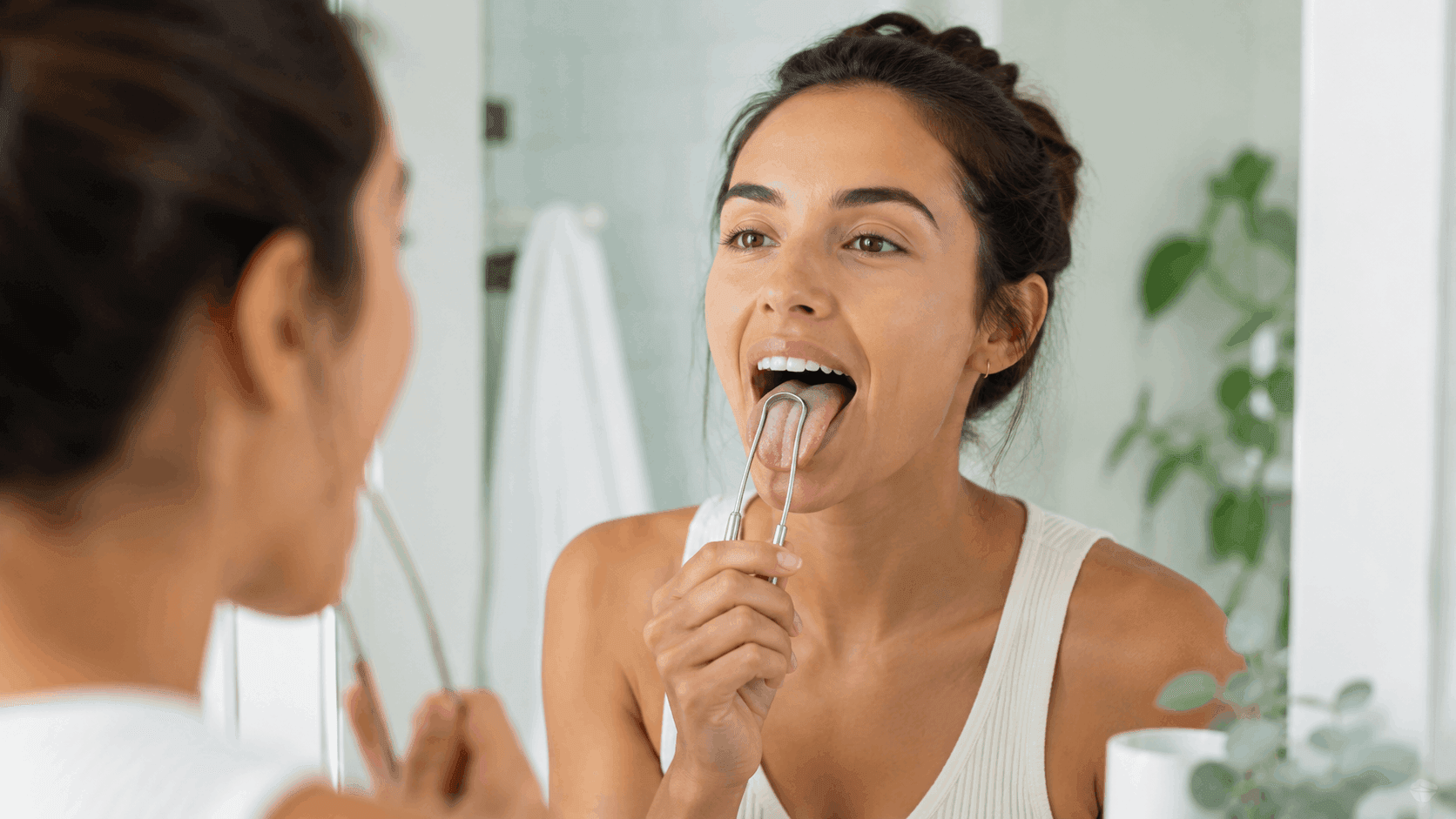
If you have ever looked at your tongue in the mirror and noticed a white or yellowish film coating it, that film is exactly what a tongue scraper is built to remove. The tool typically comes in a U-shape or flat-bow design, with a slightly curved edge that conforms to the tongue’s width. You place it at the back of the tongue, apply gentle pressure, and draw it forward toward the tip, collecting debris along the way.
Tongue scrapers are sold in three main materials. Stainless steel is the most popular among dentists because it is non-porous, easy to clean, and effectively lasts indefinitely. Copper scrapers have been used in Ayurvedic medicine for centuries and share similar antimicrobial properties, though the research on copper’s specific advantage over steel is limited. Plastic scrapers are widely available and inexpensive but tend to harbor more bacteria over time and need to be replaced more frequently, typically every three to four months.
The tool is not a modern invention. Tongue cleaning has been documented in Indian Ayurvedic texts dating back thousands of years, and it became common in European medical practice during the 17th and 18th centuries. What is relatively new is the clinical research attempting to quantify its benefits, particularly for halitosis (chronic bad breath).
Tongue Scraper Benefits: What Does the Research Actually Show?
The strongest evidence for tongue scraping centers on its ability to reduce bad breath, with smaller but plausible benefits for taste and overall oral hygiene.
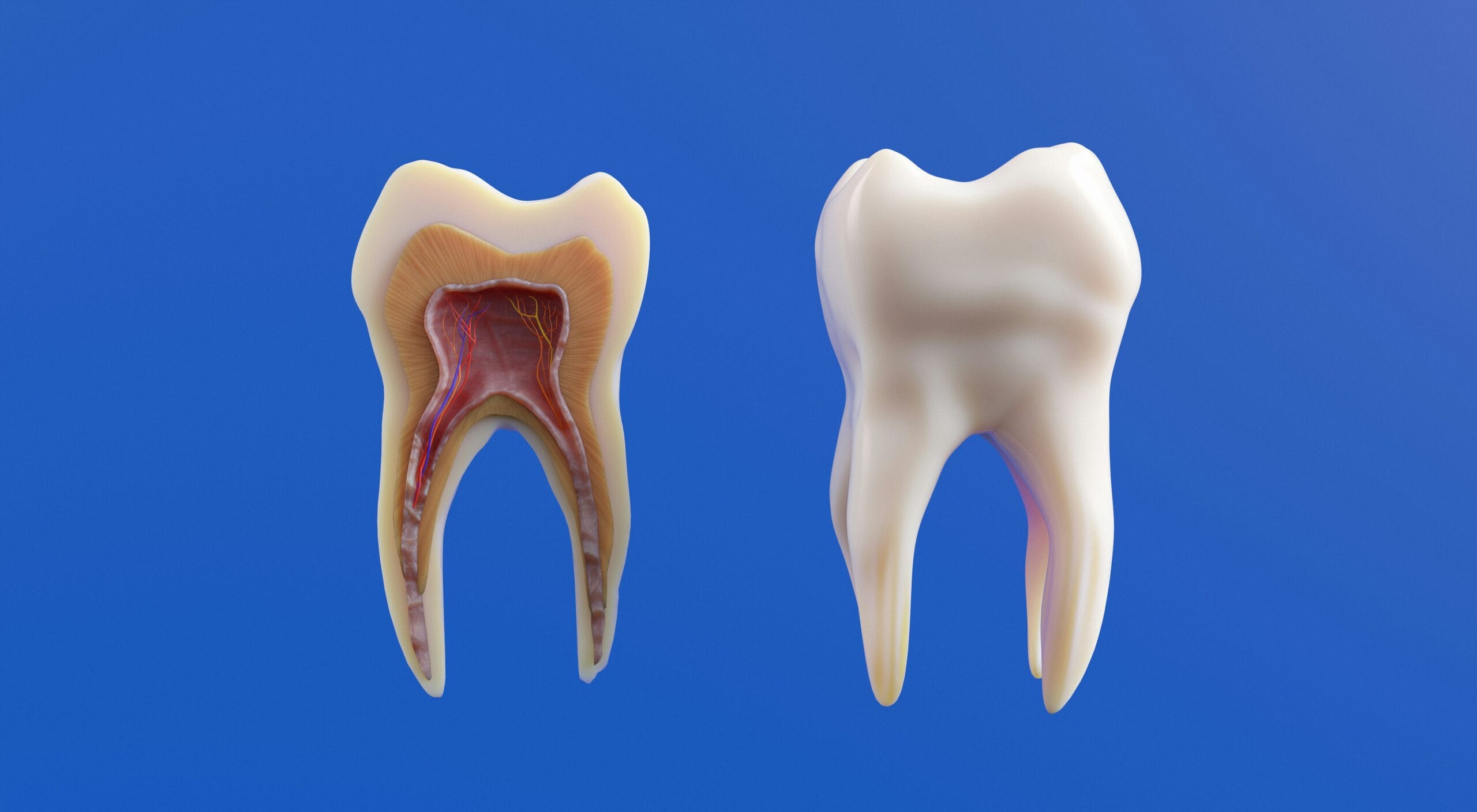
The coating on your tongue is called a biofilm, and it hosts a significant portion of your mouth’s total bacterial population. Those bacteria break down proteins from food, saliva, and dead cells, releasing volatile sulfur compounds (VSCs) as a byproduct. VSCs, particularly hydrogen sulfide and methyl mercaptan, are the primary chemical cause of bad breath.
The clinical evidence is consistent across multiple decades of research. A frequently cited study by Pedrazzi et al. (2004) published in the Journal of Periodontology found that tongue scrapers reduced VSC levels by approximately 75%, compared to about 45% for a toothbrush used on the tongue. More recent research published in the International Journal of Environmental Research and Public Health (2022) confirmed that tongue scrapers are more effective at reducing VSCs than toothbrushes, with hydrogen sulfide showing statistically significant reduction specifically in the scraper group. A meta-analysis of randomized clinical trials (PubMed, PMID 24165218) found that combining tongue cleaning with toothbrushing produced a large effect size in reducing both VSCs and tongue coating compared to toothbrushing alone.
Beyond breath, some studies suggest regular tongue scraping may improve taste sensitivity. The proposed mechanism is straightforward: removing the coating from the taste buds allows them to interact more directly with food. The evidence here is less robust than the bad-breath data, but the finding appears across multiple small trials.
Other claimed tongue scraper benefits, including improved digestion and immune function, are not well-supported by current research. These claims appear frequently in wellness content but trace back to traditional medicine frameworks rather than controlled clinical evidence. It is reasonable to include tongue scraping in a health routine for its documented oral benefits without expecting systemic effects.
One practical limitation worth naming: tongue scraping does not eliminate bad breath caused by gum disease, post-nasal drip, or gastrointestinal conditions. If your bad breath persists despite consistent scraping, brushing, and flossing, the source is likely deeper than your tongue’s surface.
How to Use a Tongue Scraper Correctly (Step-by-Step)
Knowing you should scrape your tongue and knowing how to do it properly are two different things. Most people who try a tongue scraper and give up do so because they are using too much pressure, starting in the wrong place, or scraping too infrequently to notice a difference. The technique is simple once you understand the logic behind it.
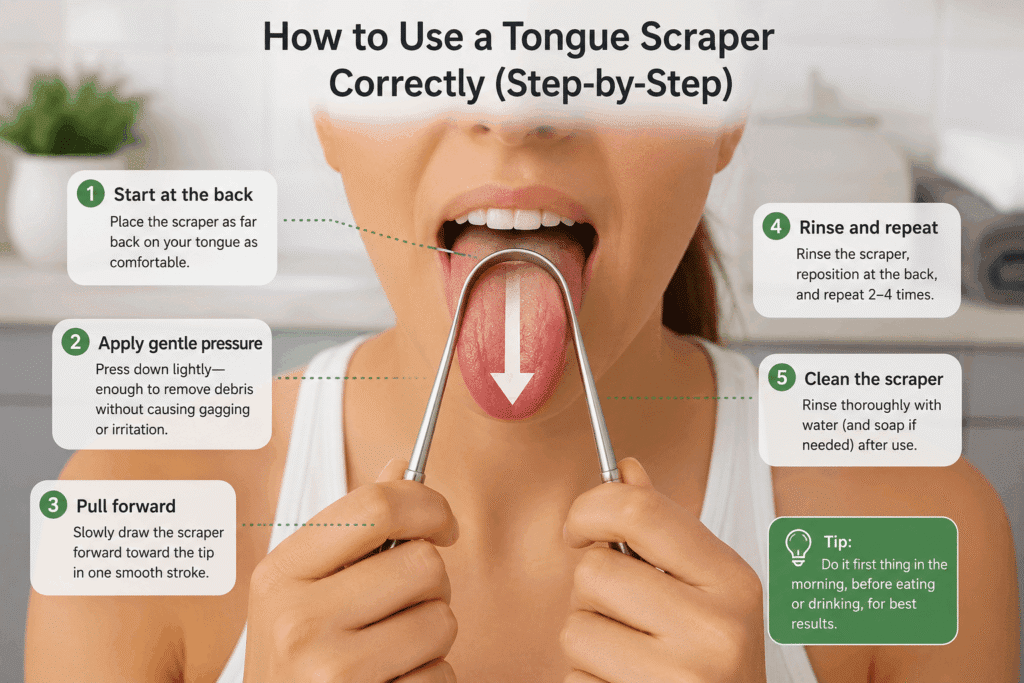
The best time to scrape is first thing in the morning, before you drink water or brush your teeth. Overnight, the anaerobic bacteria responsible for volatile sulfur compounds work without interruption, and the biofilm that accumulates while you sleep is at its thickest. Scraping before you eat or drink anything removes that buildup before it has a chance to disperse back into your saliva.
To use a U-shaped scraper, extend your tongue as far comfortably forward as possible and place the curved edge as far back on the tongue surface as you can reach without triggering your gag reflex. Apply gentle, even pressure and draw the scraper forward toward the tip in one smooth motion. Rinse the scraper under running water, then repeat two to three more times, overlapping the path slightly each time to cover the full width of the tongue. Four passes is usually enough. Rinse your mouth afterward and follow up with brushing and flossing as normal.
After each session, rinse the scraper thoroughly with warm water. Once a week, clean it with a mild soap or soak it briefly in diluted mouthwash, then let it air dry before storing. This keeps the tool itself from becoming a source of bacterial buildup.
Two common mistakes undermine most people’s results. The first is pressing too hard. The tongue is sensitive tissue and a firm scrape does not remove more bacteria than a moderate one; it just irritates the surface. If you see redness or feel soreness, lighten your touch. The second mistake is inconsistency. Tongue coating rebuilds every night, so scraping a few times a week produces noticeably weaker results than a daily habit. Most people find it takes two to three weeks of daily use before the reduction in morning breath becomes reliably obvious.
If you have a sensitive gag reflex, start by placing the scraper only a short distance back and gradually work further over several days as you acclimate. Breathing steadily through the nose and focusing your eyes on a fixed point can also help suppress the reflex response. Children can use tongue scrapers safely, though a smaller or softer-edged tool is more appropriate, and the scraping distance should stay conservative.
⚠ Do not use a tongue scraper if you notice open sores, bleeding, significant burning, or a painful reaction when the scraper touches the tongue surface. These may indicate oral thrush, geographic tongue, or another condition that needs medical attention before mechanical cleaning resumes. Scraping inflamed or broken tissue can worsen irritation.
How Often Should You Scrape Your Tongue?
Once daily is the standard recommendation from most dental professionals, with morning being the most effective time given overnight bacterial accumulation.
Your tongue accumulates its heaviest bacterial load while you sleep. Saliva flow decreases significantly during sleep, which allows bacteria to multiply more freely on the tongue’s surface. This is why morning breath tends to be more noticeable than breath at other times of day, and why scraping first thing in the morning, before eating or drinking, produces the most visible results.
Scraping twice a day is not harmful, but research does not show a meaningful additional benefit beyond once daily for most people. If you find yourself wanting to scrape after meals because of a coating you can see, that is fine, but the habit’s real value comes from daily consistency rather than frequency. Some people new to tongue scraping start every other day to let any initial sensitivity settle, which is a reasonable approach. Within one to two weeks, daily scraping typically feels entirely routine and causes no discomfort.
Tongue Scraper vs. Toothbrush: Which Does a Better Job on Your Tongue?
A dedicated tongue scraper removes more of the bacterial biofilm in fewer strokes than a toothbrush can, though brushing the tongue is still better than doing nothing.
This is one of the most common questions people bring to their dentist, and the clinical evidence gives a fairly clear answer. A toothbrush, particularly one with soft bristles, can disturb the surface layer of the tongue’s biofilm, but its design works against it here. Bristles push debris around as much as they collect it, and the tongue’s uneven surface, covered in papillae (the small bumps housing taste buds), makes it difficult for a toothbrush to reach into the recesses where bacteria concentrate.
A tongue scraper’s flat or curved edge covers a wider surface area in a single stroke and mechanically lifts the biofilm rather than dispersing it. The practical recommendation most dentists land on is to use both tools for their intended purposes: brush and floss your teeth as you normally would, then finish with a tongue scraper.
Tongue Scraper vs. Toothbrush: Key Comparisons
| Factor | Tongue Scraper | Toothbrush (on tongue) |
|---|---|---|
| VSC reduction (bad breath) | Up to ~75% in clinical studies | Up to ~45% in clinical studies |
| Mechanical action | Lifts and removes biofilm | Disperses and partially removes biofilm |
| Coverage per stroke | Full tongue width in one pass | Narrow, requires multiple overlapping passes |
| Gag reflex risk | Low with correct technique | Moderate (brush head is bulkier) |
| Cost | $5–$15 USD (steel lasts years) | Already owned; no added cost |
| Hygiene and cleaning | Easy to rinse; steel is non-porous | Bristles can harbor bacteria over time |
| Replacement | Steel: rarely; plastic: every 3–4 months | Every 3 months (standard guidance) |
Who Benefits Most — and When Scraping Alone Is Not Enough
A tongue scraper is not a universal fix, and the people who benefit most from one are not always who you might expect. The clearest candidates are anyone who wakes up with consistent bad breath despite brushing and flossing, people who wear dentures or retainers that trap moisture overnight, individuals with dry mouth caused by medications or mouth breathing, and those who eat diets high in dairy or sulfur-containing foods like garlic and onions.
Dry mouth deserves special mention because it is both common and widely underappreciated as a driver of tongue coating. Saliva is the mouth’s natural cleaning mechanism; it physically washes the tongue surface and contains antimicrobial proteins that inhibit bacterial overgrowth. Dozens of common medications, including antihistamines, antidepressants, blood pressure drugs, and diuretics, reduce saliva flow as a side effect. When saliva production is suppressed, bacteria accumulate faster and the coating tends to be thicker and more persistent. Scraping helps manage the symptom, but it does not address the cause, and people in this situation should tell their dentist about the medication-related dryness.
There are also situations where a persistent or unusual tongue coating signals something that scraping will not resolve. A thick white coating that does not improve with consistent scraping over a couple of weeks can sometimes indicate oral candidiasis (thrush), a fungal overgrowth that is especially common in people who have recently completed a course of antibiotics, use inhaled corticosteroids, or have a condition affecting immune function. A bright red tongue can be associated with nutritional deficiencies, particularly B12, folate, or iron. Irregular white patches that cannot be scraped away may be leukoplakia, which warrants a dental or medical evaluation.
⚠ If you notice a cottage-cheese-like coating that does not scrape away, or experience burning, redness, or soreness during scraping, stop and consult a dentist or doctor. These signs may indicate oral thrush or another condition where mechanical scraping can make things worse, not better.
People who smoke tend to have heavier tongue coating as a baseline, and while scraping can reduce the surface buildup, the tissue changes associated with long-term tobacco use mean the coating is more complex and more stubborn. Here again, scraping is a supportive habit rather than a solution.
What Your Tongue Is Telling You: How to Read Your Coating Before and After Scraping
Most people start scraping and immediately wonder whether what they are removing is normal, whether the color means something, and why their tongue still looks white even after they scrape. These are the right questions, and understanding the answers makes the habit far more useful as a daily health signal.
Thin White Coating (Normal)
A thin, white, slightly hazy coating on the tongue in the morning is completely normal. The tongue’s surface is covered in papillae, tiny projections that create grooves and pockets where dead cells, food particles, and bacteria accumulate during sleep. That mild white film is not a sign of illness; it is simply what a tongue looks like after several hours without the mechanical cleaning action of eating, drinking, or talking. When you scrape it away, the underlying tongue should appear a soft pinkish-red, moist, and relatively smooth. That is your baseline healthy result.
Thick White or Opaque Coating
A thick white coating, one that looks more opaque or layered rather than a light haze, suggests a heavier bacterial load. This is common in people who mouth breathe at night, who went to bed without cleaning their mouths, or who ate a large meal late in the evening. With consistent scraping and good oral hygiene, this kind of coating typically thins over one to two weeks.
If the coating has a cottage-cheese-like texture and cannot be fully scraped away, that profile is consistent with oral thrush (candidiasis) rather than simple biofilm, and a dentist or doctor should have a look. The
Mayo Clinic notes that oral thrush is especially common after antibiotic use, in people who wear dentures, and in those with weakened immune systems.
Yellow or Yellowish-Brown Coating
A yellow or yellowish-brown coating is most often a sign of heightened bacterial activity combined with reduced saliva flow or tobacco use. It is more common in people who are sick, recently had a fever, smoke, or have been on antibiotics. Scraping will clear the surface layer, and after a few days of consistent habits the color usually shifts back toward white or clear. A coating that is persistently yellow, especially if accompanied by a burning sensation or taste changes, is worth mentioning to a healthcare provider.
What a Healthy Post-Scrape Tongue Looks Like
A healthy post-scrape tongue should look consistently pink across most of its surface, with slightly deeper pink or reddish tissue visible where the papillae are more prominent. The surface will be moist but not coated. Small amounts of thin residue may remain in the grooves between papillae no matter how carefully you scrape, and that is normal. If your tongue looks bright red after scraping, you are most likely using too much pressure. If it still looks heavily coated after four careful passes, the coating may be deeper than a scraper can reach, or it may be something other than ordinary biofilm.
Tracking these signals over time is more useful than judging any single morning. A tongue that gradually shifts from a thick coating to a thin one over two weeks of consistent care is showing you that the habit is working. One that stays thick or changes color despite good hygiene is giving you information worth taking to a professional.
“Tongue coating is primarily composed of desquamated epithelial cells, leukocytes, bacteria, and food debris. The composition and thickness vary considerably between individuals and can reflect systemic as well as local oral conditions.”— Summarized from research published via PubMed (National Library of Medicine), consistent with peer-reviewed studies on tongue microbiome and coating composition
“Mechanical tongue cleaning reduces volatile sulfur compound levels and the overall bacterial load on the tongue surface. Evidence supports its use as an adjunct to standard oral hygiene for the management of halitosis.” — Mayo Clinic guidance on bad breath diagnosis and treatment
A tongue scraper is one of those rare oral hygiene tools that is genuinely straightforward: it does one job, it does that job well, and the evidence behind it is solid enough that dentists recommend it without much debate. For most people, adding a daily scrape to their morning routine produces a noticeable reduction in bad breath within a couple of weeks, and the cost of a quality stainless steel scraper is lower than a single tube of specialty toothpaste. The broader value, though, is in paying attention. Learning to read what your tongue looks like before and after scraping turns a thirty-second habit into an ongoing signal about what is happening in your mouth and sometimes in your wider health. If something about your coating consistently seems off, that observation has real diagnostic value, and anyone with persistent or unusual changes in tongue appearance, chronic dry mouth, or underlying immune conditions should bring those observations to a dentist or physician rather than scraping and hoping the problem resolves on its own.
This article is for informational purposes only and does not constitute medical advice. Consult a qualified dentist, physician, or oral health professional before making changes to your oral care routine, especially if you have an existing medical condition. Individual results may vary.
Frequently Asked Questions
How often should you use a tongue scraper?
Once daily is the standard recommendation, ideally first thing in the morning before eating or drinking. This is when bacterial biofilm on the tongue is at its thickest after hours of undisturbed overnight accumulation. Some people also scrape after meals if they are managing persistent halitosis, but once a day is sufficient for most. Scraping more than twice a day offers no additional benefit and may cause minor irritation.
Is a tongue scraper better than brushing your tongue with a toothbrush?
For tongue cleaning specifically, yes. Research — including a 2022 study in the International Journal of Environmental Research and Public Health — consistently finds that a dedicated tongue scraper removes more volatile sulfur compounds and reduces bacterial load more effectively than a toothbrush used on the tongue. The scraping action physically lifts and removes biofilm, whereas a toothbrush tends to move material around more than it collects it. That said, brushing your tongue is meaningfully better than doing nothing at all.
Why does my tongue still look white after scraping?
Some residual coating in the grooves between papillae is normal and does not indicate failure. If a thin haze remains after two to four careful passes, that is expected. If the coating is still thick, opaque, or textured after scraping, a few possibilities are worth considering: you may be scraping too gently, the coating may have built up due to dry mouth or a recent illness, or in some cases the appearance reflects something like oral candidiasis rather than ordinary biofilm. A coating that stays heavy despite consistent daily scraping over two or more weeks is worth mentioning to a dentist.
Can tongue scraping damage your taste buds?
Used correctly, no. Taste buds are embedded within the papillae and are not located on the exposed surface of the tongue, so a scraper moving across the surface does not contact them directly. The risk of damage comes almost entirely from using excessive pressure, which can irritate or abrade the superficial tissue. If you use a smooth-edged stainless steel scraper with gentle, controlled pressure and notice no soreness or redness afterward, you are not causing harm. Persistent soreness after scraping is a reliable signal to reduce pressure or check that the scraper’s edge has not developed any rough spots over time.