
Yes, cherries are genuinely good for you. They deliver a concentrated mix of antioxidants, anti-inflammatory compounds, fiber, and essential vitamins in a relatively low-calorie package, making them one of the more nutrient-dense fruits you can add to a daily diet. Both sweet and tart varieties offer real, research-backed benefits ranging from heart health to post-exercise recovery.
Key Takeaways
- One cup of sweet cherries (about 21 cherries) contains roughly 97 calories, 3 grams of fiber, and 25 grams of carbohydrates, making them a moderate-sugar fruit with meaningful nutritional value.
- Cherries are among the richest dietary sources of anthocyanins, a class of antioxidants linked to reduced inflammation, improved heart health, and faster muscle recovery after exercise.
- Tart cherry juice has been shown in multiple clinical trials to reduce muscle soreness and markers of inflammation in athletes, with some studies using doses of 8 to 12 ounces consumed twice daily.
- Montmorency tart cherries contain natural melatonin and tryptophan, and research suggests regular consumption may improve sleep duration and quality in adults.
- Despite their natural sugar content, cherries have a low glycemic index of around 22, meaning they raise blood sugar more slowly than many other fruits and snack foods.
Cherries Nutrition Facts: What You Actually Get Per Serving
A single cup of raw sweet cherries packs a solid nutritional punch without a heavy calorie cost, offering fiber, vitamin C, potassium, and powerful plant pigments all in one small serving.
Understanding what cherries contain is the foundation for evaluating any health claim made about them. The two most commonly consumed types in North America are sweet cherries (such as Bing, Rainier, and Chelan) and tart cherries (most often Montmorency), and their nutritional profiles differ in small but meaningful ways. Tart cherries tend to carry higher concentrations of certain antioxidants and are more frequently used in clinical research, often in juice or supplement form.
Per one cup (approximately 138 grams) of raw sweet cherries with pits removed, you receive a well-rounded snapshot of essential micronutrients. Vitamin C supports immune function and collagen synthesis. Potassium helps regulate blood pressure and fluid balance. The B vitamin choline, less commonly discussed, plays a role in brain cell signaling and liver function. And the deep red pigment in cherries signals the presence of anthocyanins, which researchers now consider some of the most biologically active plant compounds in the human diet.
Sweet Cherry Nutrition Facts (1 Cup / ~138g, Raw, Pitted)
| Nutrient | Amount | % Daily Value |
|---|---|---|
| Calories | 97 kcal | ~5% |
| Total Carbohydrates | 25 g | 9% |
| Dietary Fiber | 3.2 g | 11% |
| Total Sugars | 20 g | n/a |
| Protein | 1.6 g | 3% |
| Total Fat | 0.3 g | <1% |
| Vitamin C | 10.8 mg | 12% |
| Potassium | 342 mg | 7% |
| Magnesium | 16.6 mg | 4% |
| Glycemic Index | ~22 (low) | n/a |
Source: USDA FoodData Central. Percent daily values based on a 2,000-calorie diet. Tart cherries are nutritionally similar but carry a higher anthocyanin concentration per gram and a slightly more sour flavor profile driven by lower sugar content.
Do Cherries Have Fiber? And Why Does It Matter?
Yes, cherries do contain fiber. One cup of sweet cherries provides over 3 grams, contributing meaningfully to the 25 to 38 grams most adults should be getting each day.
Dietary fiber is one of the most under-consumed nutrients in the average North American diet, and cherries offer a practical, enjoyable way to close that gap. The fiber in cherries is a mix of soluble and insoluble types. Soluble fiber forms a gel-like substance in the gut that slows digestion, helps stabilize blood sugar levels, and feeds beneficial gut bacteria. Insoluble fiber adds bulk to stool and supports regular digestive function.
For anyone tracking macros or managing blood sugar, the fiber content is especially relevant because it partially offsets the natural sugar load. The 20 grams of sugar in a cup of cherries sounds significant on paper, but the combination of fiber, water content, and a low glycemic index of around 22 means that sugar is absorbed gradually rather than spiking your blood glucose the way a candy bar would. This is a meaningful distinction that raw sugar numbers alone can obscure.
Research from the American Journal of Clinical Nutrition has consistently linked higher dietary fiber intake to reduced risk of cardiovascular disease, type 2 diabetes, and colorectal cancer. Cherries won’t single-handedly meet your daily fiber needs, but as part of a varied diet, they contribute a useful share.
Key Health Benefits of Cherries Backed by Research
From reducing post-workout inflammation to supporting heart health and sleep quality, the health benefits of cherries are broader and better-documented than most people realize.
Anti-Inflammatory and Antioxidant Power
The most clinically studied aspect of cherry nutrition is their antioxidant content, particularly anthocyanins. These pigments give cherries their distinctive red and dark-purple color, and they work in the body by neutralizing free radicals and suppressing inflammatory signaling pathways, including those driven by enzymes like COX-1 and COX-2, the same targets as common over-the-counter anti-inflammatory medications.
A study published in the Journal of Nutrition (via PubMed) found that consuming Bing sweet cherries for 28 days significantly reduced circulating markers of inflammation, including C-reactive protein and nitric oxide, in healthy adults. This makes cherries one of the more evidence-backed whole-food sources of anti-inflammatory support available. Cherries pair naturally with other anti-inflammatory staples, and if you want to layer your approach, our ginger shot recipe is another simple way to stack daily antioxidant intake.
Exercise Recovery: What Athletes Should Know
Cherry’s benefits for athletes have attracted genuine scientific interest over the past decade. Multiple randomized trials, including work out of Northumbria University and the University of Vermont, have found that Montmorency tart cherry juice reduces muscle soreness, strength loss, and inflammatory markers following intense exercise. The typical protocol in these studies involves drinking 8 to 12 ounces of tart cherry juice twice daily for several days before and after a strenuous event.
The mechanism is plausible and well-theorized: the anthocyanins and polyphenols in tart cherries appear to blunt the oxidative stress and secondary tissue damage that produces delayed onset muscle soreness (DOMS) in the 24 to 72 hours after hard training. For recreational athletes and serious competitors alike, this represents a food-first recovery strategy with a reasonable evidence base behind it.
Heart Health: Blood Pressure and Cholesterol
Cherries contain potassium, a mineral essential for managing blood pressure by counteracting the effects of sodium and helping blood vessel walls relax. The anthocyanins in cherries have also been associated, in observational studies, with lower levels of LDL cholesterol oxidation, which is a key early step in atherosclerosis.
Research published in the European Journal of Nutrition found that tart cherry consumption was associated with significant reductions in systolic blood pressure in participants with early hypertension. While the evidence here is promising, it remains largely based on short-term trials and observational data, so it is fair to describe the heart health benefits of cherries as strongly suggestive rather than definitively established.
May Improve Sleep Quality
Montmorency tart cherries are one of the few whole foods with measurable concentrations of naturally occurring melatonin, the hormone that regulates the sleep-wake cycle. They also contain tryptophan, a precursor to both serotonin and melatonin, and proanthocyanidins, which may inhibit an enzyme that breaks down tryptophan in the body.
A study published in the European Journal of Nutrition found that adults who drank tart cherry juice twice daily for seven days experienced significant increases in melatonin levels, sleep time, and sleep efficiency compared to a placebo. The effect sizes were modest but consistent, suggesting tart cherry juice may be a useful, low-risk addition for people dealing with mild sleep disruption rather than a replacement for more targeted interventions.
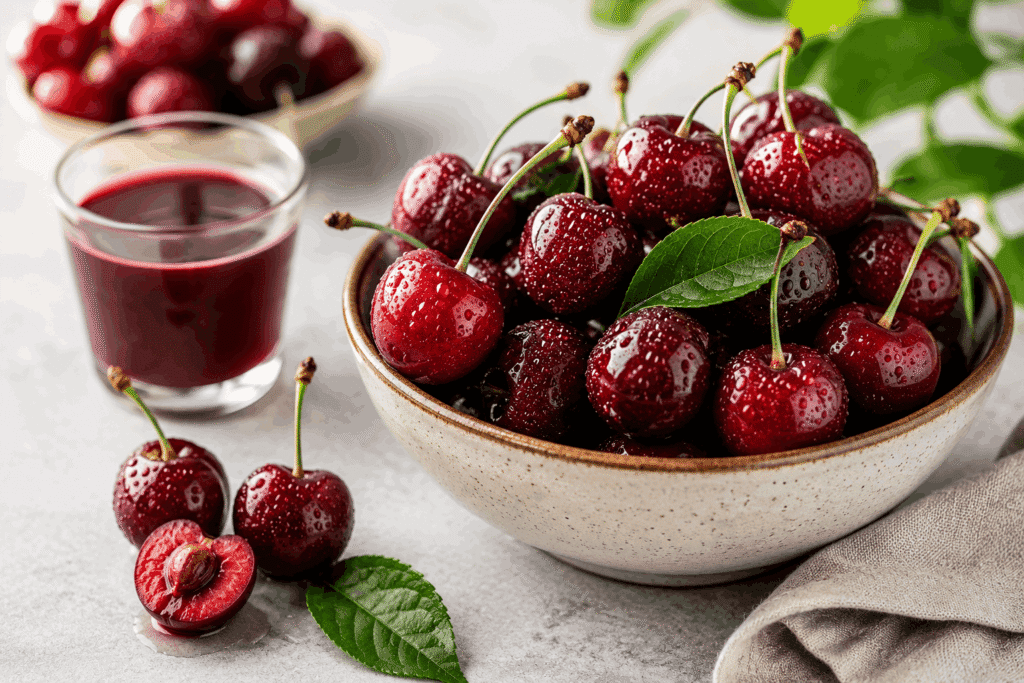
Are Cherries Good for Weight Loss?
Cherries can fit comfortably into a weight management plan, and several of their properties make them a smarter snack choice than most processed alternatives at a comparable calorie count.
At around 97 calories per cup, cherries are not a calorie-free food, but they are a high-volume, high-satiety option. The combination of water content (roughly 80% by weight), fiber, and natural sweetness makes them filling relative to their caloric footprint. A cup of cherries will generally leave you more satisfied than 100 calories of crackers or pretzels, which lack fiber and trigger faster blood sugar fluctuations that can bring hunger back sooner.
Their low glycemic index is particularly relevant here. Foods that digest slowly and produce a more gradual insulin response are generally associated with better appetite regulation and less fat storage signaling over time. Cherries fit this profile well. They are also naturally sweet enough to serve as a dessert substitute for people managing sugar cravings, which can be a meaningful behavioral advantage in a weight loss context.
That said, portion awareness still matters. Dried cherries and cherry juice concentrate carry significantly higher sugar and calorie loads per serving than fresh or frozen fruit, and those forms can undermine weight management goals if consumed in large quantities without accounting for the difference. If you want to build cherries into a structured eating routine, our roundup of the best meal planning apps can help you track macros and portions with ease.
For more evidence-based fitness and nutrition guides, explore our full library, part of our wider Health & Lifestyle articles covering diet, wellness, and active living.
Fresh vs. Frozen vs. Dried: Which Form Is Best?
Fresh cherries are the gold standard for fiber and whole-food nutrition, but frozen cherries (with no added sugar) are nutritionally comparable and available year-round at a lower cost, making them a practical everyday option. Tart cherry juice is the form most used in clinical research on recovery and sleep, but it is also calorie-dense and low in fiber compared to whole fruit. Dried cherries, unless specifically unsweetened, often contain added sugar and can deliver two to three times the calories of fresh fruit per ounce. Reading labels carefully on dried and juice products is a step many people skip and it makes a real difference.
How Cherries Fit Into Weight Management and Everyday Eating
One of the more practical questions people ask when evaluating any fruit is whether it helps or hinders weight management. Cherries sit in a favorable position here. A one-cup serving of sweet cherries contains roughly 87 to 95 calories, while the same portion of tart cherries comes in slightly lower. That calorie count is modest for a food that delivers meaningful fiber, water content, vitamins, and plant compounds. The natural sweetness of cherries also tends to satisfy cravings for something sweet without triggering the blood sugar spike that processed sweets produce, largely because the fiber and water slow glucose absorption.
The glycemic index of cherries is among the lowest of any commonly eaten fruit, typically ranging from 22 to 25 for sweet varieties. This means they cause a relatively slow, gradual rise in blood sugar rather than a sharp spike and crash. For people managing their weight by keeping hunger and cravings in check, that slow response matters. Foods with a lower glycemic load tend to extend satiety, making it easier to eat less overall without feeling deprived.
Fiber plays a direct role in this as well. Each cup of cherries delivers around 3 grams of dietary fiber, which contributes to the daily recommended intake of 25 to 38 grams depending on age and sex. That fiber feeds beneficial gut bacteria, supports regular digestion, and contributes to the feeling of fullness that follows a meal or snack. Replacing a processed dessert or a handful of crackers with a cup of fresh cherries is a straightforward substitution that reduces calories, adds fiber, and still delivers something that tastes genuinely satisfying.
Cherries also contain a high percentage of water by weight, which adds volume to a meal without adding calories. High water content in food is consistently associated with lower overall calorie intake in dietary research, because volume and the act of chewing signal satiety to the brain. This is one reason eating whole cherries tends to be more filling than drinking cherry juice, even when the juice is made from the same fruit. Weight-conscious eaters are generally better served by the whole fruit for this reason, keeping juice as an occasional option rather than a daily staple.
Anti-Inflammatory Properties and Recovery Benefits Backed by Research
Cherries, particularly tart Montmorency cherries, have accumulated a meaningful body of clinical research supporting their anti-inflammatory effects. The key compounds responsible are anthocyanins, which are the pigments that give cherries their deep red color, along with quercetin, catechins, and other polyphenols. These compounds work by inhibiting the same inflammatory pathways targeted by common pain-relief medications, though through gentler mechanisms and without the gastrointestinal side effects associated with long-term NSAID use.
The most robust evidence comes from studies examining exercise recovery in athletes and active adults. Multiple randomized controlled trials have found that participants who consumed tart cherry juice in the days before and after intense exercise reported significantly less muscle soreness, experienced smaller decreases in muscle strength, and recovered faster than those given a placebo. Research published in the Scandinavian Journal of Medicine and Science in Sports found that marathon runners who consumed tart cherry juice for five days before, on the day of, and two days after a race reported substantially faster strength recovery compared to a placebo group.
Beyond sports recovery, the anti-inflammatory effects of cherries have drawn attention in the context of gout, a form of inflammatory arthritis caused by the buildup of uric acid crystals in the joints. Observational research has found that people who regularly eat cherries experience fewer gout flares, and some studies suggest that cherry consumption may lower circulating uric acid levels. The anti-inflammatory compounds appear to reduce both the production of uric acid and the inflammatory response it triggers in joint tissue. People who already take medication for gout should discuss adding cherries with their physician, as the interaction with existing treatment is worth monitoring.
Chronic low-grade inflammation is recognized as an underlying factor in conditions ranging from type 2 diabetes to cardiovascular disease to certain cancers. While cherries are not a treatment for any of these conditions, incorporating anti-inflammatory whole foods into a regular diet is consistently associated with lower inflammatory markers in population studies. Cherries represent one of the more palatable and accessible ways to increase polyphenol intake, particularly for people who struggle to eat a varied diet rich in vegetables and legumes.
Can Cherries Boost Brain Health and Protect Against Cognitive Decline?
The connection between cherry consumption and brain health is one of the more compelling and underreported areas in nutritional research. Most of the attention on cherries in popular media focuses on sleep or muscle recovery, but a growing collection of clinical findings points toward meaningful cognitive benefits, especially from Montmorency tart cherry juice. The polyphenols in tart cherries, particularly anthocyanins and flavonoids, are thought to cross the blood-brain barrier and exert direct effects on neural tissue, reducing oxidative stress and neuroinflammation, two processes that play a central role in cognitive aging and neurodegenerative disease.
A study conducted by researchers at the University of Delaware examined the effects of daily Montmorency tart cherry juice consumption in older adults with mild-to-moderate dementia over a 12-week period. Participants who drank the juice showed improvements in verbal fluency, short-term memory, and long-term memory compared to a control group. Blood markers of inflammation and oxidative stress also declined in the cherry juice group. The researchers pointed to the high anthocyanin and quercetin content of tart cherries as the likely drivers, noting that these compounds have demonstrated neuroprotective effects in both cellular and animal models. That study, published in Nutrients in 2019, is one of the more cited pieces of human clinical evidence in this space and represents a meaningful step beyond the earlier animal research.
Separate research from the University of Exeter found that tart cherry juice improved mental agility and memory recall in healthy older adults, suggesting the benefits are not limited to people already experiencing cognitive decline. Participants completed cognitive tests before and after a 12-week supplementation period, and those consuming tart cherry juice outperformed the control group on accuracy tasks requiring sustained attention. The researchers noted improvements in both episodic memory and mental alertness, qualities that tend to decline gradually with normal aging well before any clinical diagnosis is made.
The theoretical pathway connecting cherries to brain protection involves several overlapping mechanisms. Anthocyanins are potent antioxidants that neutralize reactive oxygen species, which accumulate in brain tissue over time and contribute to the damage seen in Alzheimer’s disease and Parkinson’s disease. Neuroinflammation, driven by chronically activated microglia and elevated inflammatory cytokines, is increasingly understood as a key early step in neurodegenerative pathology. The quercetin and other flavonoids in cherries have been shown in laboratory settings to inhibit the activation of nuclear factor-kappa B, a protein complex that controls the transcription of inflammatory genes. Melatonin, present in small but notable amounts in tart cherries, may also play a role, as disrupted sleep architecture is now linked to impaired clearance of amyloid-beta, a protein that accumulates in Alzheimer’s disease.
Honesty about the limitations of this research matters, though. The human trials conducted so far have involved relatively small sample sizes, often ranging from 25 to 50 participants, and short durations of 8 to 16 weeks. Most have not been powered to detect effects on clinical disease outcomes, meaning they can document changes in biomarkers and cognitive test scores but cannot yet confirm whether regular cherry consumption meaningfully reduces a person’s lifetime risk of developing Alzheimer’s or Parkinson’s disease. The studies also typically use concentrated tart cherry juice in quantities that represent more than most people would consume through whole fruit alone. Translating these findings into practical dietary recommendations requires more large-scale, long-duration trials than currently exist. The evidence is genuinely promising, but calling cherries a proven cognitive protectant goes further than the current science supports.
Putting It All Together: Are Cherries Good for You?
The answer is a clear yes, with appropriate context. Cherries deliver a meaningful package of nutrients, fiber, and bioactive plant compounds in a form that is naturally low in calories, high in water, and low on the glycemic index. The anti-inflammatory evidence is robust enough to be taken seriously, particularly for people dealing with joint pain, intense exercise recovery, or elevated markers of systemic inflammation. The sleep benefits supported by melatonin and polyphenol content are well-documented and relevant for a large segment of the population that struggles with sleep quality. The cognitive health data is early but compelling, representing one of the more interesting frontiers in whole-food nutrition research. Eating a cup of fresh or frozen cherries most days of the week fits naturally within any balanced diet, costs less than most supplements making similar promises, and carries no meaningful downside for the vast majority of healthy adults. As with any dietary change, anyone managing a chronic condition, taking medications affected by antioxidant-rich foods, or dealing with fruit-related digestive sensitivities should have a conversation with their doctor before making cherries a daily staple.
Medical Disclaimer The information in this article is for educational and informational purposes only and is not intended as medical advice, diagnosis, or treatment. Dietary changes can affect individuals differently, especially those with pre-existing medical conditions (such as diabetes or gout) or those taking prescribed medications. Always consult with a qualified healthcare professional or your primary care physician before making significant changes to your daily diet or introducing concentrated supplements like tart cherry juice.
Frequently Asked Questions
How many cherries should you eat per day to get health benefits?
Most of the research suggesting anti-inflammatory, sleep, and cognitive benefits has used portions equivalent to roughly one to two cups of whole tart cherries, or 8 to 16 ounces of tart cherry juice. For everyday eating without a specific therapeutic goal, a single cup serving of fresh or frozen cherries provides meaningful fiber, vitamins, and polyphenols and fits comfortably within a balanced diet. There is no established upper limit for healthy adults, but juice forms should be kept to moderate amounts due to their higher calorie density and lower fiber content.
Are cherries high in sugar?
Cherries contain natural sugars, around 13 to 18 grams per cup depending on the variety, but they also deliver fiber and have one of the lowest glycemic indexes of any commonly eaten fruit. This means their impact on blood sugar is relatively mild compared to many other fruits and most processed sweet foods. The sugar in whole cherries is not nutritionally equivalent to added sugar in packaged foods, because it arrives with fiber, water, and plant compounds that slow its absorption. People with diabetes or insulin resistance should still monitor portion sizes and discuss fruit intake with their care team.
Do tart cherries and sweet cherries have different health benefits?
Both types offer genuine nutritional value, but tart cherries, particularly the Montmorency variety, contain significantly higher concentrations of anthocyanins and other anti-inflammatory polyphenols than sweet cherries. The majority of clinical research on sleep, exercise recovery, cognitive function, and inflammation has used tart cherry juice or tart cherry concentrate. Sweet cherries deliver more natural sweetness and are easier to eat fresh, making them a better everyday fruit for general nutrition. If a specific health outcome like gout management or post-exercise recovery is the goal, tart cherry products are more directly supported by the evidence.
Can cherries help with sleep, and how much do you need?
Tart cherries are one of the few whole foods with a naturally measurable melatonin content, and they also contain compounds that appear to inhibit enzymes responsible for melatonin breakdown. Clinical trials have shown improvements in sleep duration and quality with daily consumption of tart cherry juice, typically 8 ounces consumed in the morning and again one to two hours before bed. Results tend to appear within a week to two weeks of consistent use. Whole tart cherries offer the same compounds in lower concentrations, so they may support sleep quality at the margins without producing effects as pronounced as the juice used in studies. People taking sleep medications should consult their physician before adding tart cherry juice regularly, as the combined effects on melatonin could be more pronounced than anticipated.