
The modern diet has shifted dramatically over the past several decades, with ultra-processed foods now accounting for a substantial portion of daily caloric intake in many countries. From packaged snacks and soft drinks to ready-made meals and flavored cereals, these products are engineered for convenience and palatability — but mounting research suggests they may be quietly undermining the health of your teeth and gums in ways that go well beyond simple sugar content. Whether you’re exploring our Dental Health hub for the first time or browsing our broader collection of Health articles, understanding the relationship between what you eat and how your mouth responds is one of the most practical steps you can take for long-term wellbeing.
This article examines the evidence on ultra-processed foods and dental health, covering the mechanisms of damage, the role of specific ingredients, and what current research suggests about the cumulative effects of a diet high in processed products. The goal is not to alarm but to inform — giving you a clear, balanced picture of the science so you can make thoughtful decisions about your diet and oral care routine.
What Are Ultra-Processed Foods, and Why Does the Distinction Matter?
Ultra-processed foods are industrially manufactured products containing ingredients rarely used in home cooking, such as emulsifiers, artificial flavors, and hydrogenated oils — and research suggests their impact on oral health extends well beyond their sugar content alone.
Not all processed foods are created equal, and the terminology matters when evaluating health research. The NOVA classification system, developed by researchers at the University of São Paulo, divides foods into four groups based on the extent and purpose of processing. Ultra-processed foods sit at the far end of that spectrum — they are not simply “processed” in the way that canned tomatoes or frozen vegetables are. Instead, they are formulations containing multiple additives, preservatives, colorings, and flavor enhancers designed to maximize shelf life and encourage overconsumption.
Common examples include carbonated soft drinks, packaged bread with multiple additives, flavored chips, instant noodles, breakfast cereals with added sugar, energy drinks, processed meats, and commercially produced cakes and cookies. What makes these foods particularly relevant to oral health is not just one ingredient but a combination of factors: high fermentable carbohydrate content, low pH levels, sticky or adhesive textures, and the near-complete absence of the fiber, water, and micronutrients found in whole foods that help buffer and protect oral tissues.
According to the World Health Organization’s oral health fact sheet, dental caries is the most common chronic disease worldwide, affecting an estimated 2.5 billion people with untreated decay in permanent teeth. The WHO identifies free sugars — the kind found abundantly in ultra-processed foods — as a primary dietary risk factor. But researchers increasingly argue that focusing on sugar alone misses the broader picture of how these food products interact with oral biology.
How Do Ultra-Processed Foods Trigger Tooth Decay?
Ultra-processed foods fuel tooth decay primarily by feeding acid-producing bacteria in the mouth, but their low pH, sticky textures, and lack of protective nutrients create a compounding effect that accelerates enamel breakdown over time.
The process of tooth decay begins with the oral microbiome — the complex community of bacteria living in your mouth. When you consume fermentable carbohydrates, certain bacteria, most notably Streptococcus mutans, metabolize those sugars and produce lactic acid as a byproduct. This acid lowers the pH of the oral environment, and when pH drops below approximately 5.5, the mineral hydroxyapatite that makes up tooth enamel begins to dissolve — a process called demineralization.
Saliva naturally buffers this acid and helps remineralize enamel between meals, but when fermentable carbohydrates are consumed frequently throughout the day — as is common with snacking on ultra-processed foods — the mouth spends more time in an acidic state than it can recover from. This repeated acid challenge is what drives the progression from early enamel erosion to full cavities over months and years. For a more detailed breakdown of which specific foods are most implicated in this cycle, see our article on foods that cause cavities.
The NIH National Institute of Dental and Craniofacial Research explains that tooth decay develops when bacteria in dental plaque convert sugars and starches into acids, which then attack the tooth surface. What distinguishes ultra-processed foods in this context is the combination of high sugar or refined starch content with low fiber and low water content — meaning there is little to mechanically cleanse the teeth or dilute the acidogenic substrate available to bacteria.
Additionally, many ultra-processed foods — particularly soft drinks, energy drinks, sports drinks, and flavored waters — are themselves highly acidic, with pH values ranging from 2.5 to 3.5 in some commercial beverages. This means they can cause direct chemical erosion of enamel independent of bacterial activity, a distinction researchers refer to as erosive tooth wear rather than caries. Studies published on PubMed have documented the erosive potential of these beverages in both in vitro and clinical settings, noting that the citric acid and phosphoric acid commonly used as preservatives and flavoring agents are particularly damaging to enamel surfaces.
A 2019 study published in the Journal of Dentistry and indexed on PubMed found that frequent consumption of carbonated soft drinks was independently associated with significantly higher rates of erosive tooth wear in adolescents, with the acidity of the drinks — not just their sugar content — identified as a primary contributing factor.
The Connection Between Processed Food, Sugar, and Gum Disease
Research suggests that diets high in ultra-processed foods may worsen gum disease by promoting systemic and local inflammation, disrupting the oral microbiome, and reducing intake of nutrients essential for periodontal tissue health.
Periodontal disease — which encompasses both gingivitis (gum inflammation) and the more serious periodontitis (destruction of the bone and tissue supporting teeth) — is not caused by diet alone. Bacterial biofilm accumulation remains the primary trigger, and genetic susceptibility, smoking, and systemic conditions like diabetes all play significant roles. However, diet appears to act as an important modifier of periodontal risk, influencing both the composition of the oral microbiome and the body’s inflammatory response to bacterial challenge.
Ultra-processed foods are typically low in dietary fiber, antioxidants, and micronutrients such as vitamin C, vitamin D, and omega-3 fatty acids — all of which have been studied in the context of periodontal health. Vitamin C, for example, is essential for collagen synthesis, which underpins the structural integrity of gum tissue. Diets that are high in ultra-processed foods and low in whole fruits, vegetables, and other nutrient-dense options may therefore compromise the gum’s capacity to maintain and repair itself. For strategies on protecting your gum tissue through lifestyle choices, our guide on gum disease prevention covers evidence-based approaches in detail.
Beyond nutrient deficiency, the high sugar content of many ultra-processed foods has a more direct effect on the oral microbiome. Research suggests that diets rich in fermentable carbohydrates selectively favor the growth of dysbiotic, or disease-associated, bacterial species in the subgingival environment — the space between the tooth and gum. This shift in microbial balance can amplify the inflammatory cascade that, when chronic, leads to breakdown of the periodontal ligament and alveolar bone.
According to researchers at the Harvard T.H. Chan School of Public Health, dietary patterns characterized by high intake of sugar, refined carbohydrates, and processed foods are associated with elevated systemic inflammatory markers, which may in turn exacerbate localized inflammatory responses in periodontal tissues.
The Mayo Clinic notes that poor nutrition can affect the entire immune system, increasing susceptibility to infection — including the kind of bacterial infection that drives periodontal disease. While it is important not to overstate the independent role of diet, the available evidence does suggest that consistently high consumption of ultra-processed foods creates a systemic environment less equipped to resist and recover from periodontal challenges.
Which Ingredients in Ultra-Processed Foods Are Most Harmful to Oral Health?
Among the ingredients in ultra-processed foods, fermentable sugars, acidic additives, sticky starches, and certain emulsifiers appear to pose the greatest risks to teeth and gums based on current research.
Because ultra-processed foods contain a wide range of additives and ingredients, it is worth examining the specific components that research has most clearly linked to oral health damage. Understanding these mechanisms helps clarify why the category as a whole — rather than any single ingredient — presents a cumulative risk.
Fermentable Sugars and Refined Starches
Sucrose, high-fructose corn syrup, glucose, and maltose are all fermentable by oral bacteria and are ubiquitous in ultra-processed foods. These are not limited to obviously sweet products — processed breads, crackers, flavored sauces, and savory snacks often contain significant quantities of added sugars. Refined starches, such as those found in puffed snacks and white-flour products, break down rapidly in the mouth into simple sugars, extending the window of bacterial acid production even after consumption has ended.
Acidic Additives and Preservatives
Citric acid, phosphoric acid, malic acid, and tartaric acid are routinely used in ultra-processed foods and beverages to enhance flavor, extend shelf life, and prevent microbial growth. Each of these compounds is capable of directly demineralizing enamel when in prolonged contact with tooth surfaces. Studies indexed on PubMed have documented that citric acid in particular is one of the most erosive substances encountered in the human diet, with a chelating action on calcium that accelerates enamel loss beyond simple pH reduction.
Adhesive and Retentive Textures
Many ultra-processed snacks — gummy candies, chewy granola bars, fruit roll-ups, and similar products — are specifically designed with sticky, adhesive textures that maximize the time the product remains in contact with tooth surfaces. The longer a fermentable substrate remains on or between teeth, the more prolonged the acid challenge to enamel and the greater the opportunity for bacterial colonization in hard-to-reach areas.
Artificial Sweeteners and Acidic pH: A Nuanced Picture
It is worth noting that sugar-free ultra-processed foods are not automatically safe for teeth. Products sweetened with non-cariogenic sweeteners such as xylitol, erythritol, or stevia do not feed acid-producing bacteria in the same way, and xylitol in particular has been studied for its potential to reduce S. mutans colonization. However, many sugar-free products are still highly acidic due to their flavor additives, meaning they may cause erosive damage even without contributing to bacterial acid production. The picture is more complex than a simple “sugar-free equals safe” conclusion.
Comparing the Oral Health Impact of Common Food Categories
Different food categories vary significantly in their potential to cause tooth decay, enamel erosion, and gum inflammation — with ultra-processed options consistently presenting higher risk profiles across multiple damage mechanisms.
| Food Category | Caries Risk | Erosion Risk | Periodontal Impact | Key Protective Factors | Evidence Strength |
|---|---|---|---|---|---|
| Carbonated soft drinks | High (added sugars) | Very High (pH 2.5–3.5) | Negative (promotes inflammation) | None identified | Strong (multiple RCTs and cohort studies) |
| Packaged candies & gummies | Very High (fermentable sugar + adhesive texture) | Moderate–High (citric acid) | Negative (disrupts microbiome) | None significant | Strong (well-documented cariogenic properties) |
| Processed white bread & crackers | Moderate–High (rapid starch hydrolysis) | Low | Mildly negative (low nutrient density) | None significant | Moderate (starch fermentability well established) |
| Fresh whole fruits | Low–Moderate (intrinsic sugars, fiber) | Low–Moderate (natural acids) | Positive (antioxidants, vitamin C) | Fiber, water content, micronutrients | Moderate (mixed; context-dependent) |
| Dairy (cheese, plain yogurt) | Low (casein, calcium) | Low (alkalizing effect of cheese) | Positive (supports remineralization) | Calcium, phosphate, casein proteins | Strong (well-supported protective associations) |
| Leafy vegetables & legumes | Very Low | Very Low | Positive (anti-inflammatory nutrients) | Fiber, vitamin C, folate, antioxidants | Moderate (epidemiological evidence) |
| Energy & sports drinks | High (sugar content) | Very High (pH often below 3.5) | Negative | Electrolytes (do not offset dental risk) | Strong (extensive erosion research) |
Note: Risk levels in this table reflect patterns identified in peer-reviewed research and are intended as general guidance. Individual factors — including oral hygiene practices, saliva flow, frequency of consumption, and genetic susceptibility — significantly influence actual outcomes for any given person.
How Ultra-Processed Foods Disrupt the Oral Microbiome
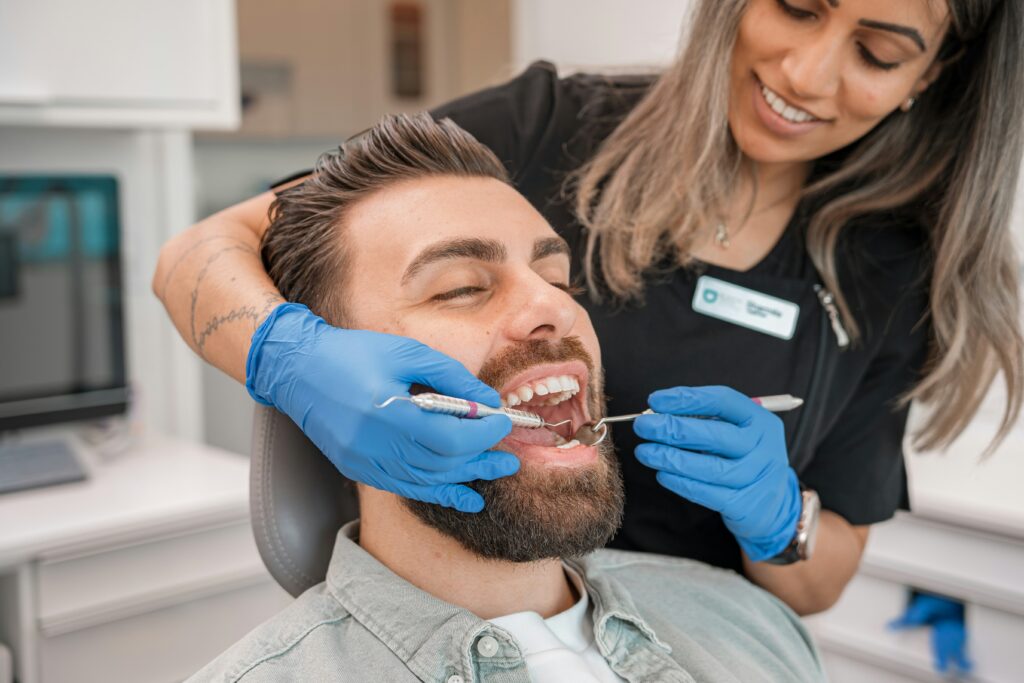
Beyond sugar and acid, ultra-processed foods interfere with the delicate bacterial ecosystem living in your mouth — and scientists are only beginning to understand how far-reaching that disruption can be.
Your mouth hosts over 700 species of bacteria, fungi, and viruses that together form the oral microbiome. In a balanced state, this community supports immunity, aids digestion, and helps protect against pathogens. Ultra-processed foods introduce a combination of refined carbohydrates, synthetic additives, emulsifiers, and artificial sweeteners that can selectively feed harmful bacterial strains while starving the beneficial ones.
Streptococcus mutans, the bacterium most closely associated with cavity formation, thrives on the rapidly fermentable sugars found in packaged snacks, sweetened beverages, and processed baked goods. As these bacteria metabolize sugar, they produce lactic acid that erodes enamel and creates a low-pH environment that further favors acidogenic species. Over time, this cycle reshapes the entire microbial landscape of the mouth — a process researchers have linked not only to cavities but to chronic gum disease and even systemic inflammation.
Dietary fiber plays a critical but often overlooked role here. Whole, minimally processed foods contain fiber that stimulates saliva production and mechanically disrupts plaque as you chew. Ultra-processed foods are almost entirely devoid of this fiber, meaning the natural buffering and cleansing mechanisms your mouth relies on are never fully activated. A diet heavy in these products effectively starves the oral microbiome of the inputs it needs to maintain balance.
A 2021 study published in Cell Host & Microbe found that short-term dietary changes — even spanning just a few days — produced measurable shifts in oral bacterial communities, with high-sugar, low-fiber diets consistently associated with increased abundance of cariogenic (cavity-causing) bacterial species and reduced microbial diversity overall.
Artificial sweeteners, commonly used in “diet” ultra-processed products as a sugar substitute, are not a straightforward solution. Emerging research suggests that some artificial sweeteners — particularly sucralose and saccharin — may alter oral bacterial populations in ways that are not yet fully understood. While they do not directly feed acid-producing bacteria the way sugar does, their long-term effects on microbiome balance remain an active area of investigation.
Emulsifiers and preservatives present in many packaged foods add another layer of concern. These compounds, designed to extend shelf life and improve texture, were developed with gastrointestinal effects in mind — but the mouth is the first point of contact, and growing evidence suggests they may interfere with the protective biofilm layer that healthy oral bacteria form on tooth surfaces.
The Connection Between Gum Disease and Systemic Health
Periodontal disease is rarely just a mouth problem. When ultra-processed foods fuel chronic gum inflammation, the consequences can extend to the heart, blood sugar regulation, and beyond.
Gum disease — encompassing both gingivitis and the more advanced periodontitis — affects nearly half of adults over 30 in the United States. While poor brushing and flossing habits are frequently cited as primary causes, diet is a fundamental but less publicized driver. Ultra-processed foods contribute to gum disease through multiple overlapping pathways: they promote bacterial overgrowth, deplete key nutrients required for gum tissue integrity, and generate systemic inflammation that weakens the body’s ability to fight localized infection in periodontal tissue.
Vitamin C deficiency is particularly relevant here. This essential nutrient is required for collagen synthesis, the structural protein that forms the connective tissue holding your gums to your teeth. Highly processed diets, which typically crowd out fresh fruits and vegetables, can leave people chronically low in vitamin C — producing a slow deterioration of gum tissue even in people who brush and floss regularly. In severe cases, this mirrors the early signs of scurvy, a condition once associated only with extreme malnutrition.
The American Dental Association states that periodontal disease has been associated in research with an increased risk of cardiovascular disease, diabetes complications, adverse pregnancy outcomes, and respiratory illness — conditions that share inflammation as a common underlying mechanism, making dietary patterns that drive oral inflammation a concern for whole-body health.
The bidirectional relationship between gum disease and type 2 diabetes is one of the most studied examples of this systemic connection. Chronic periodontal inflammation can worsen insulin resistance, while elevated blood sugar creates an environment in the gums that favors bacterial growth and tissue breakdown. Ultra-processed foods, which are strongly associated with both poor glycemic control and periodontal inflammation, sit at the intersection of this feedback loop — worsening both conditions simultaneously.
Researchers have also identified links between periodontal bacteria and arterial plaque. Certain oral pathogens, including Porphyromonas gingivalis, have been detected in cardiovascular tissue, raising the possibility that chronic gum infection serves as a portal through which inflammatory bacteria and their byproducts enter systemic circulation. While causality has not been definitively established in all cases, the association is robust enough that many cardiologists and periodontists now coordinate care for high-risk patients.
From a public health standpoint, this systemic dimension of oral disease significantly raises the stakes of dietary choices. A pattern of consumption dominated by ultra-processed foods may not only accelerate tooth decay and gum recession — it may contribute to a chronic inflammatory burden that quietly elevates risk for serious disease across multiple organ systems.
Practical Dietary Strategies for Protecting Your Teeth
Understanding the damage is only half the equation. Meaningful protection comes from deliberate dietary shifts that support enamel strength, gum health, and a balanced oral microbiome — without requiring perfection.
Reducing ultra-processed food consumption does not mean overhauling your diet overnight. Research consistently shows that incremental, sustainable changes produce better long-term outcomes than dramatic short-term restrictions. For dental health specifically, a few targeted adjustments can have a disproportionately large impact.
Frequency matters as much as quantity when it comes to acid and sugar exposure. Every time you consume a sugary or acidic food or drink, your mouth enters an acidic state for roughly 20 to 40 minutes. Eating a large amount of processed food in a single sitting gives your saliva time to neutralize and partially remineralize enamel between sessions. Grazing on packaged snacks and sipping sweetened beverages throughout the day, by contrast, keeps your mouth in a near-constant state of acid attack. Consolidating consumption and allowing time between eating occasions is one of the most evidence-supported strategies for reducing caries risk.
Certain whole foods actively support oral health and serve as effective replacements for processed alternatives. Dairy products — cheese in particular — stimulate saliva production and introduce calcium and casein proteins that can help remineralize enamel. Crunchy raw vegetables increase saliva flow mechanically and provide vitamins and minerals that processed foods strip away. Green and black teas contain polyphenols that inhibit the growth of S. mutans and other cariogenic bacteria. Nuts and seeds offer healthy fats and phosphorus, both of which contribute to mineral balance in the mouth.
Water remains the single most effective and accessible protective beverage for dental health. Drinking water — particularly fluoridated tap water — rinses food particles and acids from tooth surfaces, maintains salivary flow, and in fluoridated communities actively supports enamel remineralization. Replacing even a portion of daily sweetened beverage intake with water produces measurable reductions in cavity risk over time.
Reading ingredient labels with dental health in mind is a practical skill worth developing. Added sugars appear under dozens of names — including dextrose, maltose, high-fructose corn syrup, cane juice, and agave nectar — and may be listed separately across multiple entries in the same product. Products with multiple sugar variants in the first five ingredients deserve particular scrutiny. Checking pH is harder for consumers, but beverages with citric acid, phosphoric acid, or malic acid listed as ingredients are reliably erosive regardless of their sugar content.
Alternative Perspectives
It is worth acknowledging that the relationship between diet and dental health is not uniformly straightforward, and some researchers urge caution against overstating dietary determinism in oral disease. Genetics play a meaningful role in enamel density, saliva composition, and susceptibility to bacterial colonization — meaning two people eating nearly identical diets can experience very different dental outcomes. Access to fluoridated water, consistent professional dental care, and early childhood exposure to fluoride treatments are structural factors that significantly modify risk and are not equally distributed across populations.
Some nutrition scientists also point out that the NOVA classification system, which defines ultra-processed foods, is a useful epidemiological tool but a blunt one for individual dietary guidance. Not all foods that fall into the ultra-processed category carry equivalent dental risk — a whole-grain breakfast cereal fortified with calcium and low in added sugar, for example, occupies a very different risk profile than a sweetened carbonated soft drink, despite both being technically classified as ultra-processed. Context, formulation, and consumption pattern all matter.
The food industry has also invested in reformulation efforts — reducing sugar content, lowering acidity, and in some cases adding enamel-protective minerals like calcium and phosphate to processed products. Whether these modifications are sufficient to meaningfully offset the dental risk associated with heavy processed food consumption remains an open question, and independent research in this area is ongoing. Consumers are encouraged to evaluate specific products rather than entire food categories when possible.
The evidence linking ultra-processed foods and dental health is both substantial and growing. From the acid erosion caused by carbonated beverages to the microbiome disruption driven by refined carbohydrates and synthetic additives, the mechanisms through which these products damage teeth and gums are increasingly well understood. What makes this public health challenge particularly complex is that ultra-processed foods are engineered to be highly palatable, affordable, and convenient — qualities that make them deeply embedded in modern dietary patterns. Protecting oral health in this food environment requires awareness of specific risk factors, practical strategies for reducing exposure, and an understanding that the mouth is not a system that operates in isolation from the rest of the body. Small, consistent dietary changes — eating less frequently, choosing whole foods where possible, staying hydrated with water, and not neglecting nutrients like vitamin C and calcium — can meaningfully shift the odds in favor of healthier teeth and gums over a lifetime.
Frequently Asked Questions
It depends on the type and extent of the damage. Early-stage enamel demineralization can be partially reversed through remineralization — a process supported by fluoride, calcium-rich foods, and adequate saliva flow — if the acidic and sugary exposures driving the damage are reduced. However, once enamel is fully eroded or a cavity has progressed into the dentin, the structural loss is permanent and requires professional dental treatment to restore. Gum tissue that has been destroyed by advanced periodontitis similarly cannot fully regenerate on its own, though reducing dietary inflammation can slow further progression. Improving your diet is beneficial at any stage, but it works best as prevention rather than a cure for established damage.
They eliminate some risks while preserving others. Sugar-free products do not feed the acid-producing bacteria responsible for cavities in the same way that sugar-sweetened products do, which is a genuine advantage. However, many diet sodas and sugar-free drinks are highly acidic — with pH values low enough to cause significant enamel erosion independent of their sugar content. Phosphoric acid and citric acid, both commonly found in diet beverages, are particularly erosive. Sugar-free gum sweetened with xylitol is a notable exception — research supports its use as a tool that may reduce cavity risk by inhibiting S. mutans and stimulating saliva flow. As a general rule, water and plain milk remain the safest beverage choices for dental health.
Every time sugar or acid enters the mouth, oral bacteria produce acids that drop the mouth’s pH below the threshold at which enamel begins to dissolve — roughly pH 5.5. Saliva works to neutralize these acids and redeposit minerals into enamel, but this remineralization process takes time, typically 20 to 40 minutes after the acidic exposure ends. When someone snacks continuously throughout the day, the mouth never has adequate time to return to a neutral pH, keeping enamel in a prolonged demineralized state. Three meals with no snacking in between actually produces fewer total acid-exposure events than three meals plus four snack sessions, even if the overall caloric or sugar intake is similar. This is why dental professionals often emphasize reducing snacking frequency, not just sugar content.
Several nutrients have direct, well-documented roles in oral health. Calcium and phosphorus are the primary minerals in enamel and dentin, and adequate dietary intake supports both formation and ongoing remineralization. Vitamin D is essential for calcium absorption and has been independently associated with reduced periodontitis risk. Vitamin C is required for collagen synthesis and gum tissue repair — deficiency can cause gum bleeding and deterioration even in people with otherwise good oral hygiene. Vitamin K2 helps direct calcium to hard tissues like teeth and bone rather than soft tissues. Magnesium contributes to enamel crystal structure. These nutrients are predominantly found in whole, minimally processed foods — dairy products, leafy greens, oily fish, nuts, seeds, and fresh fruits — which further underscores the relationship between a diet low in ultra-processed foods and better long-term dental outcomes.
Disclaimer: The information in this article is for educational purposes only and should not replace professional medical or dental advice. While reducing ultra-processed foods heavily supports oral health, genetic factors, systemic conditions, and baseline hygiene routines also dictate individual outcomes. Always consult a licensed dentist or periodontist for personalized diagnostics and treatment plans.