How to Find the Best Mouthwash for Your Needs
Walk into any drugstore and the mouthwash aisle is a wall of colored bottles making big promises – fresher breath, whiter teeth, healthier gums, fewer cavities. The truth is that no single product is the best mouthwash for everyone. The right rinse depends entirely on what you’re trying to accomplish: preventing cavities, calming inflamed gums, controlling bad breath, or simply freshening up.
This guide cuts through the marketing. We’ll explain the difference between cosmetic and therapeutic rinses, break down the active ingredients that actually matter, and offer top picks across the categories people search for most – best mouthwash for gums, best whitening mouthwash, best fluoride mouthwash, and best alcohol-free options. Every product highlighted here is widely available and, where noted, carries the ADA Seal of Acceptance.
One thing worth saying up front: mouthwash is a supplement to brushing and flossing, not a replacement. Even the strongest mouthwash can’t remove plaque the way mechanical cleaning does. With that framing in mind, the right rinse can be a genuinely valuable addition to your routine.
How We Chose These Mouthwashes
To create this guide, we focused on several practical criteria rather than marketing claims alone. Products were evaluated based on their active ingredients, intended use, availability in major retail channels, transparency of labeling, and overall fit for specific oral health goals. Preference was given to therapeutic mouthwashes with well-established active ingredients such as fluoride, cetylpyridinium chloride (CPC), essential oils, stannous fluoride, or chlorine dioxide. We also considered alcohol-free options whenever available, since many users prefer formulas that are less likely to cause irritation or dryness. Where applicable, ADA Seal of Acceptance status was reviewed as an additional indicator of product testing and effectiveness.
Key Takeaways
- Mouthwashes fall into two broad categories: cosmetic (freshens breath temporarily) and therapeutic (delivers active ingredients with real oral health benefits).
- The active ingredient determines the benefit – fluoride for cavities, cetylpyridinium chloride or essential oils for plaque and gingivitis, stannous fluoride for gum health.
- The ADA Seal of Acceptance is the most reliable shortcut to a tested, effective product.
- Alcohol-free formulas are now widely available and are often a good option for people with dry mouth, sensitivity, or those who prefer a gentler rinse.
- The “best” mouthwash is the one matched to your specific need – there’s no universal winner.
- Whitening mouthwashes provide modest results compared to dedicated whitening products.
Cosmetic vs. Therapeutic Mouthwash: The Key Distinction
Before comparing brands, it helps to understand the single most important divide in the mouthwash world.
Cosmetic Mouthwash
These rinses freshen breath and leave a pleasant taste, but they don’t address the underlying causes of oral health problems. They temporarily mask bad breath without reducing the bacteria or compounds that cause it. If a mouthwash makes no therapeutic claims and contains no active ingredient like fluoride, it’s cosmetic.
Therapeutic Mouthwash
These contain active ingredients clinically shown to deliver a benefit – reducing plaque, preventing cavities, controlling gingivitis, or reducing bad breath at its source. Therapeutic rinses are the ones worth prioritizing if you want more than a momentary fresh feeling. This is the category where the ADA Seal of Acceptance matters most.
Quick test: Read the label. If you see an “Active Ingredients” panel (like a Drug Facts box), it’s therapeutic. If the ingredient list reads like a cosmetic product with no active drug facts, it’s primarily for freshening.
Mouthwash Ingredients That Actually Matter
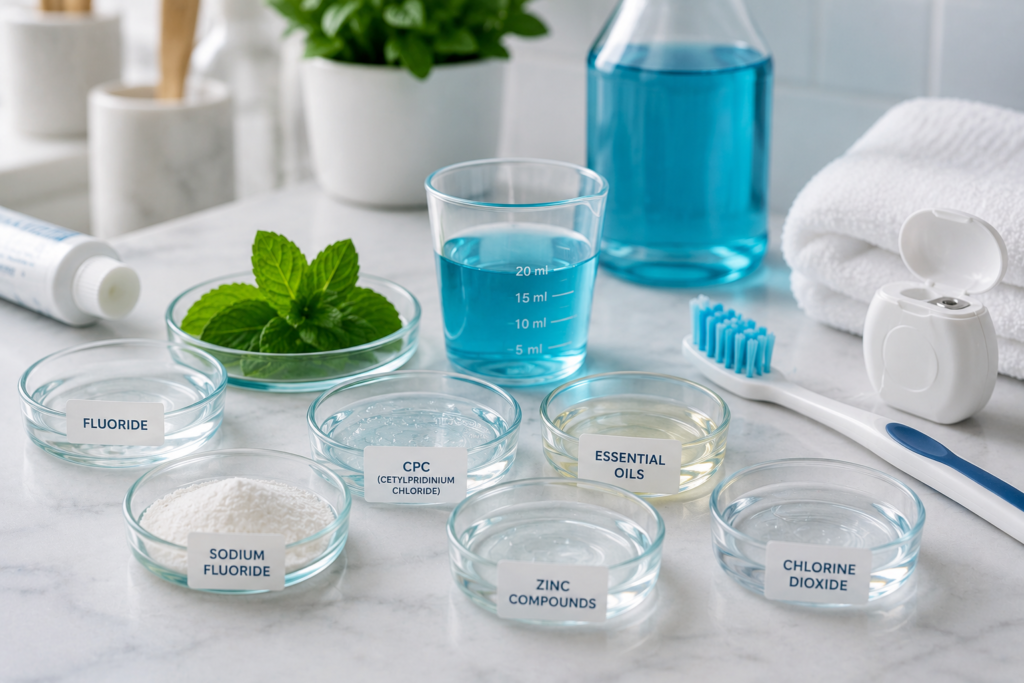
Understanding active ingredients is the key to choosing well. Here’s what each one does.
| Active Ingredient | What It Does | Best For |
|---|---|---|
| Fluoride (sodium fluoride) | Strengthens enamel, helps prevent cavities | Cavity prevention, weak enamel |
| Cetylpyridinium chloride (CPC) | Antibacterial – reduces plaque and gingivitis | Plaque, bad breath, gum health |
| Essential oils (eucalyptol, menthol, thymol, methyl salicylate) | Antibacterial – reduces plaque biofilm | Plaque and gingivitis control |
| Chlorhexidine | Powerful prescription antiseptic typically used for short-term treatment of gum disease under dental supervision. | Advanced gum disease, short-term use |
| Stannous fluoride | Cavity prevention + antibacterial gum benefit | Gum health plus cavity protection |
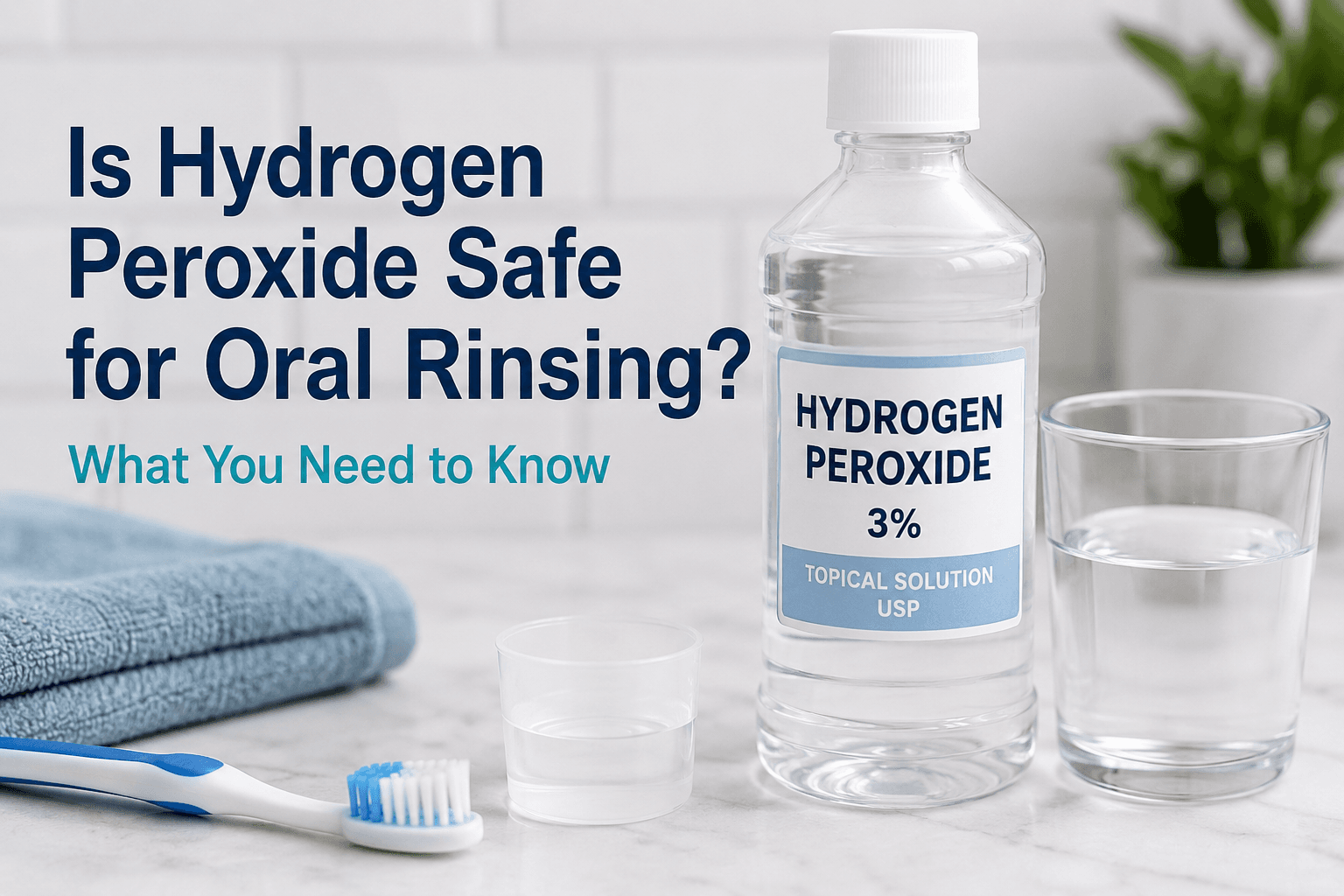
| Hydrogen peroxide | Mild antibacterial and whitening effect | Mouth sores, mild stain control |
| Chlorine dioxide | Neutralizes odor compounds; gentle | Bad breath, sensitive mouths |
| Zinc compounds | Inhibit odor-causing sulfur compounds | Bad breath control |
Knowing these ingredients lets you decode any label. A rinse marketed for “gum health” should contain CPC, essential oils, or stannous fluoride. One marketed for “cavity protection” should list fluoride. If a product makes a claim but the matching active ingredient isn’t there, the claim is mostly marketing.
The Best Mouthwashes of 2026: Top Picks by Category
The selections below are based on widely available, well-reviewed products and general ingredient analysis. They are not paid placements or personal endorsements. Product availability and formulas can change – always check the current label. Consult your dentist for advice specific to your situation.
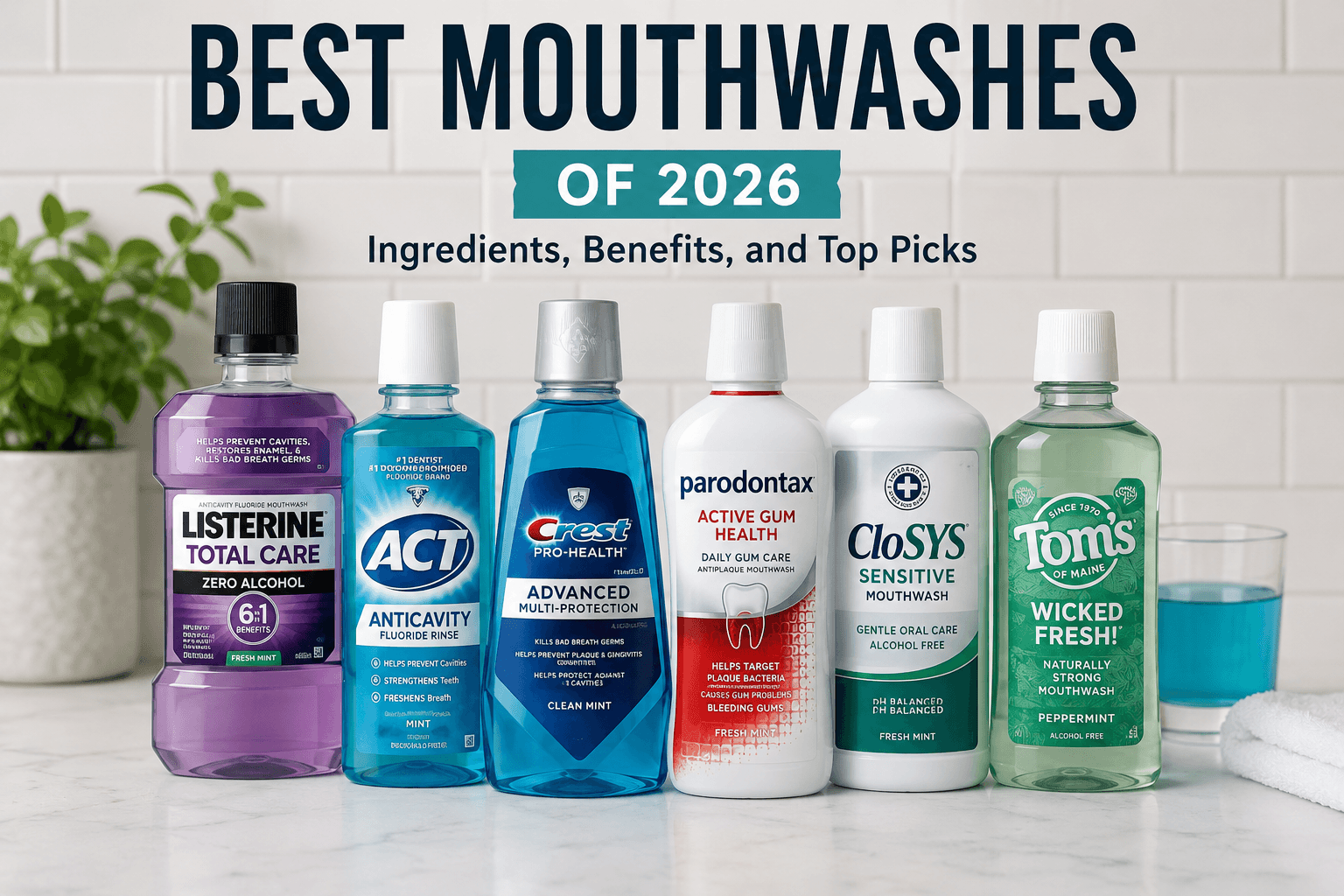
Best Overall Listerine Total Care
Type: Therapeutic, alcohol-free options available
Active ingredients: Essential oils, fluoride (varies by line)
Best for: All-around daily protection
Listerine’s essential-oil formulas have decades of clinical research behind them for plaque and gingivitis reduction. Listerine Total Care combines multiple benefits – cavity protection, plaque control, gum care, and fresh breath support – in a single rinse. Alcohol-free versions make it accessible to people who find the original formula too harsh. A reliable default for most adults.
Best for Cavity Prevention ACT Anticavity Fluoride Rinse
Type: Therapeutic fluoride rinse, alcohol-free
Active ingredient: Sodium fluoride
Best for: People prone to cavities or with weak enamel
If cavity prevention is your priority, a dedicated fluoride rinse is the strongest choice. ACT delivers a steady, reliable source of fluoride to strengthen enamel and is commonly used by people looking for additional cavity protection beyond fluoride toothpaste. It’s also alcohol-free and gentle enough for daily use, which matters since fluoride rinses work best with consistent use.
Best for Gums Crest Pro-Health Advanced / Parodontax Active Gum Health
Type: Therapeutic, alcohol-free
Active ingredients: CPC (Crest) / antibacterial antiplaque formula (Parodontax)
Best for: Gingivitis, bleeding gums, gum care
For people dealing with gum inflammation or occasional bleeding, these two stand out. Crest Pro-Health uses cetylpyridinium chloride to fight plaque and gingivitis while being gentle on the mouth. Parodontax Active Gum Health is designed for people concerned about plaque buildup and bleeding gums. Its alcohol-free formula focuses on controlling plaque bacteria associated with gum problems. Both are alcohol-free.
Best Whitening Crest 3D White / Listerine Whitening
Type: Cosmetic-therapeutic hybrid
Active ingredient: Hydrogen peroxide
Best for: Mild surface stain maintenance
A whitening mouthwash uses hydrogen peroxide to reduce surface stains over time. Set expectations realistically: these rinses provide modest whitening compared to strips or professional treatment, since the peroxide contacts teeth only briefly. They’re best thought of as stain maintenance to support other whitening efforts, not a standalone solution. Choose one with fluoride for added cavity protection.
Best for Sensitive Mouths CloSYS Sensitive Mouthwash
Type: Therapeutic, alcohol-free
Active ingredient: Stabilized chlorine dioxide
Best for: Sensitive gums, dry mouth, no-burn preference
CloSYS uses pH-balanced, stabilized chlorine dioxide in an alcohol-free formula designed for people who prefer a gentler mouthwash experience. It’s particularly well-suited to people with sensitive tissue or dry mouth who can’t tolerate stronger antiseptic rinses. The gentle, near-flavorless formula (a separate flavor dropper is included) makes it a strong no-burn option.
Best Natural / Fluoride-Free Tom’s of Maine Wicked Fresh
Type: Cosmetic-therapeutic, alcohol-free
Active ingredients: Vary by product line and may include essential oils and other plant-derived ingredients.
Best for: Natural-ingredient preference, alcohol avoidance
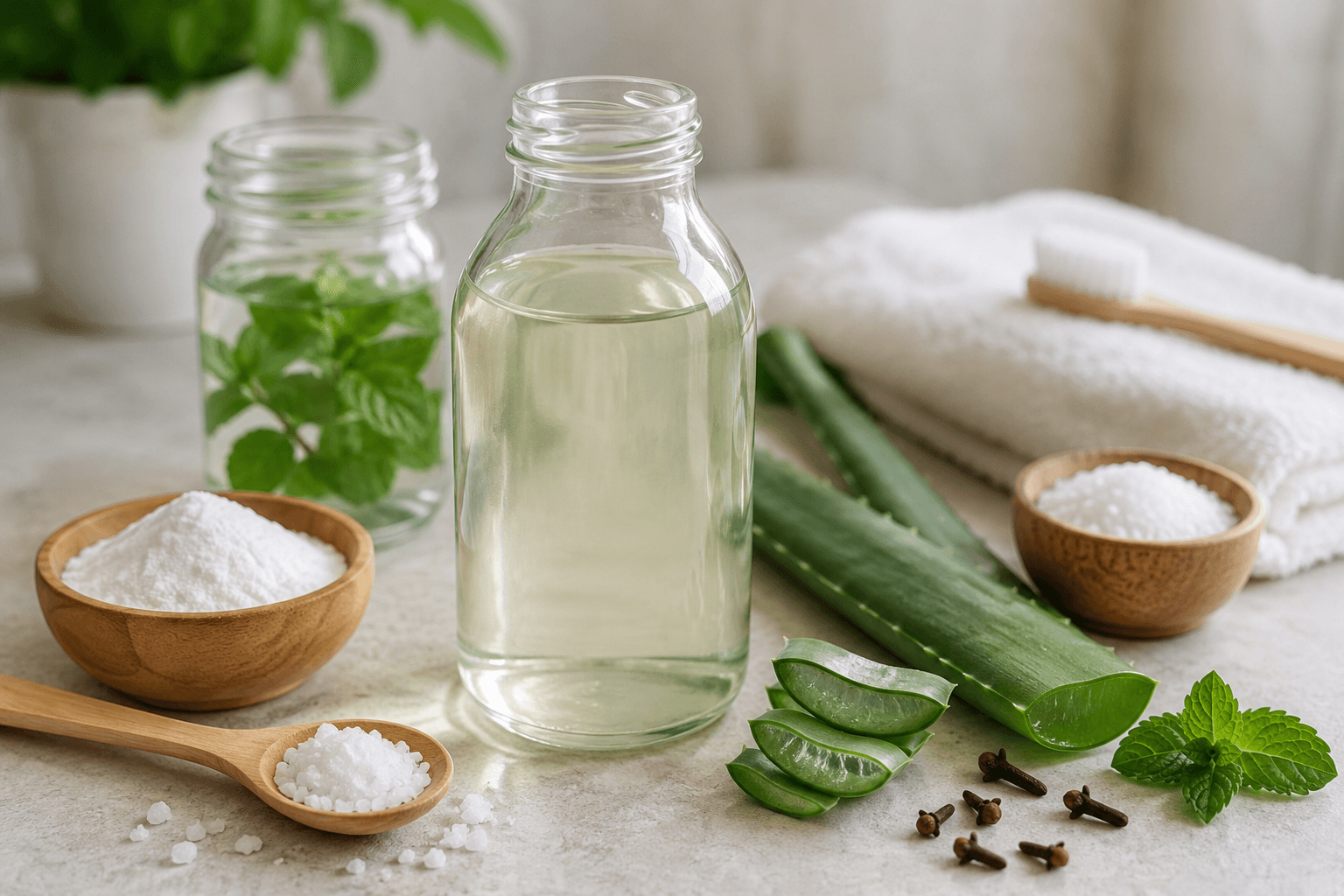
For those who prefer natural formulations or want to avoid alcohol and artificial additives, these brands often include plant-based ingredients such as peppermint, coconut-derived ingredients, and botanical flavoring agents to support a fresh-mouth feel. Note that many natural rinses skip fluoride – if cavity prevention is important to you, pair these with a fluoride toothpaste or choose a natural option that includes fluoride.
Best for Bad Breath TheraBreath Fresh Breath Oral Rinse
Type: Therapeutic, alcohol-free
Active ingredients: Oxygenating compounds, zinc
Best for: Chronic bad breath (halitosis)
TheraBreath targets the volatile sulfur compounds that cause bad breath at the source rather than masking them. Its oxygenating, alcohol-free formula is a popular choice for people whose primary concern is persistent bad breath. Worth noting: chronic halitosis often has an underlying cause (gum disease, dry mouth, tonsil stones), so persistent bad breath warrants a dental checkup.
Quick Comparison: Best Mouthwashes of 2026
| Pick | Product | Main Limitation | Key Ingredient | Alcohol-Free |
|---|---|---|---|---|
| Best Overall | Listerine Total Care | Some versions may contain alcohol; formulas vary by product line. | Essential oils + fluoride | Yes (Zero line) |
| Cavity Prevention | ACT Anticavity | Primarily focused on cavity prevention rather than gum health. | Sodium fluoride | Yes |
| Gums | Crest Pro-Health / Parodontax | Benefits depend on the specific active ingredient and formulation. | CPC / antiplaque antibacterial formula | Yes |
| Whitening | Crest 3D White | Whitening effects are typically modest. | Hydrogen peroxide | Yes |
| Sensitive Mouths | CloSYS Sensitive | Mild flavor profile may not appeal to users seeking a stronger fresh-breath sensation. | Chlorine dioxide | Yes |
| Natural | Tom’s of Maine Wicked Fresh | Some versions may not contain fluoride. | Essential oils | Yes |
| Bad Breath | TheraBreath | May not address underlying causes of chronic halitosis. | Oxygenating + zinc | Yes |
How to Choose the Right Mouthwash for You
Rather than searching for a single best product, match the rinse to your primary goal.
If your goal is cavity prevention
Choose a fluoride rinse. Look for sodium fluoride in the active ingredients and the ADA Seal. Best for people with a history of cavities, weakened enamel, dry mouth, or those wearing braces.
If your goal is healthier gums
Look for cetylpyridinium chloride, essential oils, or stannous fluoride. These reduce the plaque bacteria that drive gingivitis. If you have diagnosed gum disease, your dentist may prescribe a chlorhexidine rinse for short-term use.
Important: Do not use chlorhexidine unless prescribed by a dentist. It is generally intended for short-term use because prolonged use may increase the risk of tooth staining, altered taste perception, and tartar buildup.
If your goal is fresh breath
Choose a therapeutic rinse that targets odor compounds – look for zinc, chlorine dioxide, or oxygenating ingredients rather than a purely cosmetic rinse that only masks odor temporarily.
If you have a sensitive mouth or dry mouth
Go alcohol-free. Alcohol can dry and irritate oral tissue. Chlorine dioxide and CPC formulas tend to be gentler. CloSYS and other pH-balanced rinses are designed for this.
If you want whiter teeth
A hydrogen peroxide whitening rinse can help maintain results, but pair it with whitening toothpaste or strips for meaningful change. Don’t expect a mouthwash alone to dramatically whiten.
How to Use Mouthwash Correctly
- Use the amount specified on the label (usually about 4 teaspoons / 20 mL).
- Swish for the full recommended time – typically 30 seconds to 1 minute. Cutting it short reduces effectiveness.
- Don’t eat or drink for about 30 minutes afterward, so the active ingredients stay in contact with your teeth.
- For fluoride rinses, consider using at a different time than brushing so you’re not rinsing away the concentrated fluoride from your toothpaste.
- Don’t swallow. Most therapeutic rinses are not meant to be ingested.
- Mouthwash supplements brushing and flossing – it doesn’t replace them.
Should You Use Mouthwash Before or After Brushing?
This is one of the most common mouthwash questions – and the practical answer is that using mouthwash at all matters more than the exact timing. That said, there’s a useful nuance: if you use a fluoride toothpaste, rinsing with mouthwash immediately after brushing can wash away the concentrated fluoride your toothpaste leaves behind. For that reason, many dentists suggest rinsing at a separate time – for example, after lunch – rather than right after your morning or evening brush. If you do rinse right after brushing, a fluoride mouthwash is the better choice so you’re replacing fluoride rather than removing it.
When to Call a Dentist
Mouthwash can support a healthy oral care routine, but it is not a substitute for professional evaluation when symptoms persist. Schedule a dental appointment promptly if you experience:
- Bleeding gums that continue despite improved oral hygiene.
- Gum swelling or facial swelling.
- Pus around the teeth or gums.
- Persistent or severe tooth pain.
- Mouth sores that do not heal within two weeks.
- Chronic bad breath that does not improve with routine oral care.
These symptoms may indicate an underlying condition that requires diagnosis and treatment rather than a different mouthwash.
The Bottom Line
There’s no single best mouthwash – there’s the best mouthwash for your specific goal. For cavity prevention, reach for a fluoride rinse. For gum health, look to CPC or stannous fluoride. For sensitivity, go alcohol-free with a gentle chlorine dioxide formula. For bad breath, target the odor compounds directly.
The most reliable shortcuts to a good choice are simple: look for the ADA Seal of Acceptance, read the active ingredients to confirm they match the claim, and favor alcohol-free formulas unless you have a specific reason not to.
Above all, remember that even the best mouthwash of 2026 is a supporting player. Consistent brushing with fluoride toothpaste, daily flossing, and regular dental checkups do the heavy lifting for your oral health. The right rinse simply makes a good routine a little better. If you’re unsure which formula fits your needs, your dentist can point you to the right one in minutes.
Medical Disclaimer: This article is for general informational purposes only and does not constitute dental or medical advice, diagnosis, or treatment. Product mentions are based on publicly available information and general ingredient analysis; they are not endorsements, and Anthropic and the publisher have no financial relationship with the brands named. Formulations and availability may change. Consult a licensed dentist for recommendations specific to your oral health. Individual results may vary.
Frequently Asked Questions
What is the best mouthwash recommended by dentists?
Dentists rarely name a single universal best – they match the rinse to the patient’s needs. That said, ADA-accepted, alcohol-free therapeutic rinses are commonly recommended. For cavity-prone patients, fluoride rinses like ACT come up often; for gum concerns, CPC or stannous fluoride formulas; and for sensitive mouths, gentle chlorine dioxide options. The common thread is the ADA Seal and an alcohol-free formula.
Is alcohol-free mouthwash better?
For many people, yes. Alcohol-free formulas are gentler on oral tissue, don’t cause the burning sensation some people dislike, and are a better fit for those with dry mouth, sensitivity, or who simply prefer a no-burn rinse. Importantly, alcohol-free no longer means less effective – modern alcohol-free formulas deliver the same active ingredients. The alcohol in traditional rinses is largely a carrier, not the active benefit.
Which mouthwash has the most fluoride?
Among over-the-counter options, dedicated anticavity fluoride rinses (like ACT or Colgate fluoride rinses) contain the fluoride concentrations designed for cavity prevention – typically around 0.05% sodium fluoride for daily-use rinses. Prescription-strength fluoride rinses with higher concentrations are available from dentists for high-risk patients. Check the active ingredients panel to compare fluoride content between products.
Can mouthwash whiten teeth?
To a limited degree. Whitening mouthwashes containing hydrogen peroxide can help reduce and prevent surface stains over weeks of consistent use. However, the brief contact time means results are modest compared to whitening strips, trays, or professional treatment. Think of whitening mouthwash as maintenance rather than a primary whitening method.
Is mouthwash necessary for good oral health?
No – brushing twice daily with fluoride toothpaste and flossing are the essentials. Mouthwash is an enhancement, not a requirement. That said, the right therapeutic rinse can add real value: extra fluoride for cavity-prone people, antibacterial action for gum health, or odor control for bad breath. It complements a good routine rather than replacing any part of it.
What’s the strongest mouthwash available?
The strongest antiseptic mouthwash is prescription chlorhexidine, used short-term for advanced gum disease under dental supervision. Among over-the-counter options, essential-oil and CPC rinses are the strongest antibacterial formulas. “Strongest” isn’t always best, though – for daily use, a rinse matched to your specific need and tolerable for your tissue beats the harshest formula you can find.