The Growing Interest in Natural and Homemade Mouthwash
More people are looking at what’s in their personal care products — and mouthwash is no exception. The appeal of a homemade mouthwash or a natural mouth rinse is easy to understand: simple ingredients you can read and recognize, no artificial dyes or synthetic preservatives, and the satisfaction of knowing exactly what you’re putting in your mouth.
But the practical question is a real one: can a DIY mouthwash actually do what a store-bought one does? Can it freshen breath, fight bacteria, support gum health, and help prevent decay — or is it just a feel-good ritual without much clinical backing?
The honest answer is nuanced. Some homemade mouthwash recipes have solid science behind them. Others rely on ingredients with limited evidence or real downsides. And a few popular DIY formulas — often shared on health blogs without any dental expertise behind them — can actually cause harm if used regularly.
This guide covers what mouthwash actually does, which natural ingredients are safe and effective, how to make several evidence-supported homemade mouthwash recipes, what to avoid, and how DIY rinses stack up against over-the-counter options.
Key Takeaways
- Mouthwash is a helpful supplement to brushing and flossing — but it cannot replace either one.
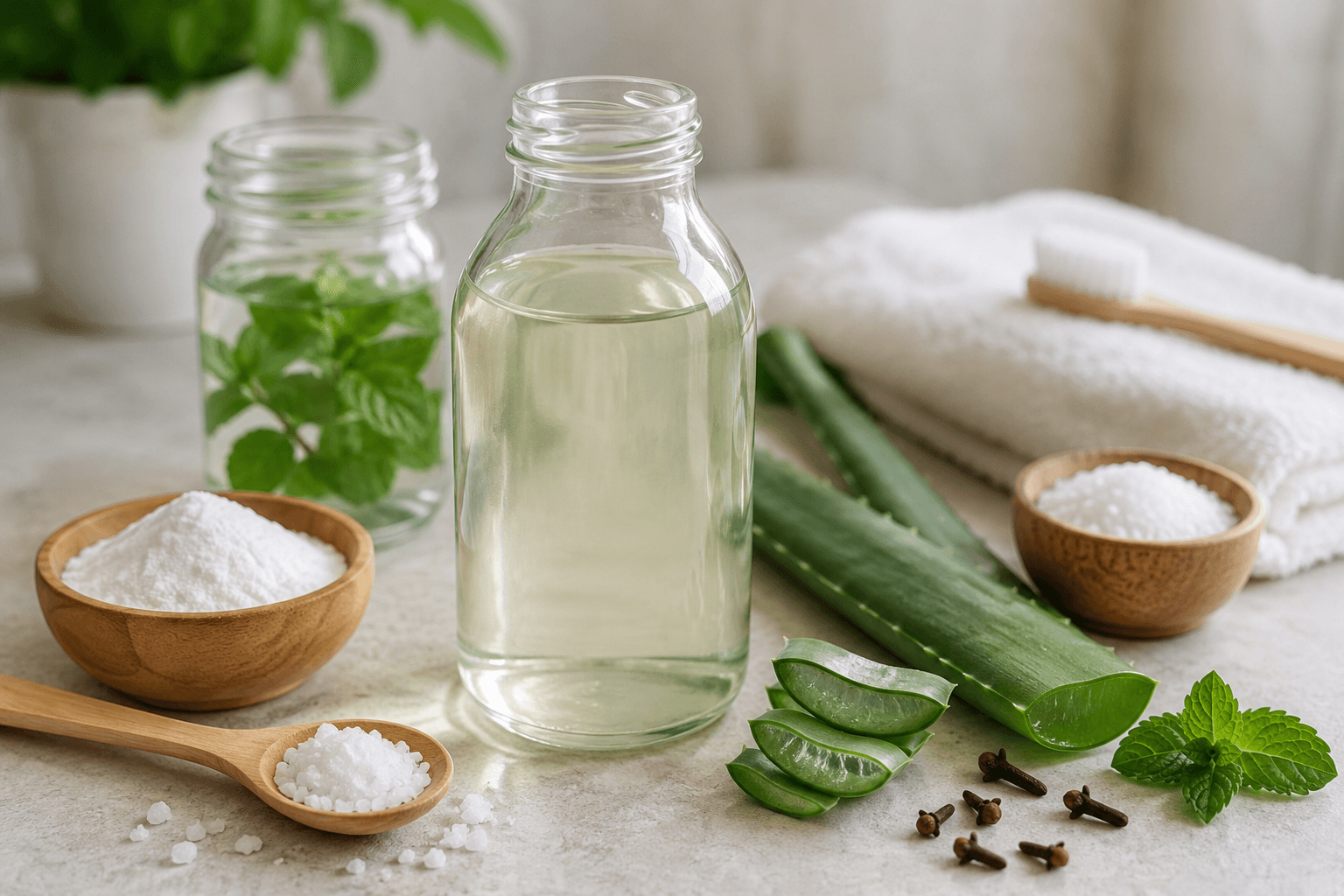
- Several natural ingredients — saltwater, baking soda, diluted hydrogen peroxide, clove, and aloe vera — have research supporting their use in homemade rinses.
- Homemade mouthwash cannot replicate the fluoride content of ADA-accepted commercial rinses, which is important for cavity prevention.
- Some popular DIY ingredients — undiluted essential oils, apple cider vinegar, and high-concentration hydrogen peroxide — can damage enamel or irritate tissue when used incorrectly.
- Natural and non-toxic mouthwash options are also available over-the-counter for people who prefer to avoid synthetic additives without giving up clinical benefits.
- People with gum disease, frequent infections, or other active dental conditions should consult a dentist before relying solely on homemade rinses.
What Does Mouthwash Actually Do?
Before evaluating homemade recipes, it’s worth being clear about what mouthwash can and cannot accomplish — because there are some persistent misconceptions.
Mouthwash does not remove dental plaque. Plaque is a sticky biofilm that clings to tooth surfaces and can only be disrupted by physical action — brushing and flossing. No rinse, no matter how strong, can dislodge it. This is why mouthwash is always described as an adjunct to good oral hygiene, not a replacement for it.
What mouthwash can do is meaningful, though:
- Reduce the bacterial load in the mouth, slowing the rate at which plaque re-forms
- Reach areas that brushing and flossing may miss — the back of the throat, soft tissues, tongue
- Deliver active ingredients (fluoride, antimicrobials, remineralizing agents) directly to teeth and gum tissue
- Freshen breath by neutralizing odor-causing compounds
- Soothe inflamed or irritated gum tissue
- Help with mouth sores, post-procedure healing, or dry mouth when the right formula is used
With that framework in mind, the question becomes: which homemade ingredients can deliver these benefits?
Natural Mouthwash Ingredients That Actually Work
Not all natural ingredients are equally effective — and some that appear frequently in DIY recipes have little evidence behind them. Here’s a breakdown of what’s actually supported.
Salt (Saline Rinse)
A saltwater mouth rinse is probably the most evidence-backed homemade option available. Salt creates a hypertonic environment in the mouth — meaning it draws fluid out of inflamed tissue, reducing swelling. It may help create a less favorable environment for certain oral bacteria while supporting the natural healing process of oral tissues.
Saltwater rinses are consistently recommended by dental professionals after extractions, oral surgery, and crown or implant placement because they’re gentle, effective, and carry no risk of chemical irritation. They’re also one of the few homemade mouthwash options that dentists openly recommend for routine use.
Best for: Post-procedure healing, gum inflammation, canker sores, and general oral soothing. Not a substitute for fluoride rinse for cavity prevention.
Baking Soda (Sodium Bicarbonate)
Baking soda is mildly alkaline, which helps neutralize the acids that bacteria produce in the mouth. Since acid is what erodes enamel and creates the conditions for cavities, an alkaline environment is genuinely protective. Baking soda also has mild antibacterial properties and can neutralize bad breath compounds.
It’s a common ingredient in commercial toothpastes and some OTC rinses for good reason — it’s safe, inexpensive, and well-tolerated. A baking soda mouthwash or a combined salt and baking soda mouthwash is a practical, low-risk daily rinse for most people.
Best for: Neutralizing acid, mild odor control, and supporting a healthy oral pH. Safe for daily use in small concentrations.
Clove (Clove Oil / Clove Water)
Clove has been used in traditional dentistry for centuries — and with good reason. Its primary active compound, eugenol, is a natural anesthetic and antimicrobial agent. Dentists still use eugenol-based materials in certain procedures today.
Clove mouthwash or clove water made by steeping whole cloves may provide antibacterial and mild pain-relieving benefits, although most evidence comes from laboratory studies and traditional use rather than large clinical trials. It’s particularly useful for temporary relief of tooth or gum pain. Clove oil is potent, however, and must always be diluted before use — undiluted clove oil applied to gum tissue can cause chemical burns.
Best for: Mild gum pain relief, antibacterial rinse, and general oral health support. Use diluted clove oil or steeped clove water — never undiluted essential oil.
Hydrogen Peroxide (Diluted)
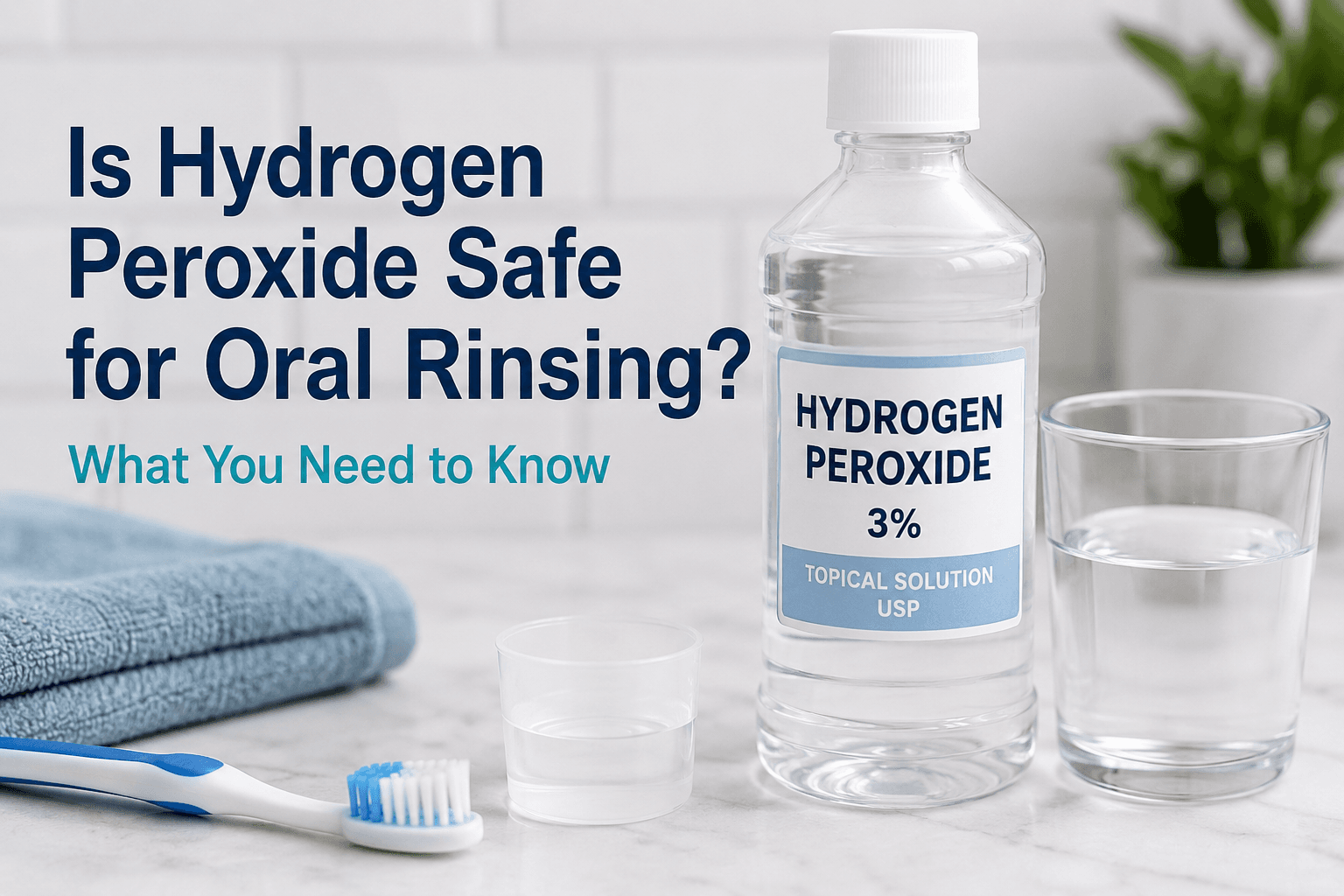
Hydrogen peroxide is a legitimate antimicrobial agent with a long history in oral care. At low concentrations (0.5%–1.5%), it kills bacteria, reduces gum inflammation, and can support healing of mouth sores. At higher concentrations, it damages soft tissue and tooth enamel — so dilution is non-negotiable.
A hydrogen peroxide mouthwash should use a standard 3% drugstore hydrogen peroxide diluted 1:1 with water to reach approximately 1.5%, used no more than a few times per week. Daily use of peroxide mouthwash is generally not recommended, as it can disrupt the natural oral microbiome.
Never use undiluted hydrogen peroxide as a mouth rinse. Concentrations above 3% increase the risk of oral tissue irritation and chemical injury when used improperly.
Aloe Vera
Aloe vera has documented anti-inflammatory and antimicrobial properties. ome small clinical studies suggest that aloe vera mouthwash may help reduce plaque buildup and gingival inflammation. However, chlorhexidine remains the more extensively studied and clinically established option for managing gingivitis and bacterial plaque.
It’s a particularly good option for people with sensitive gum tissue, mouth sores, or those who react poorly to alcohol-containing rinses. Use pure aloe vera juice — not aloe gel — and ensure it’s food-grade with no added ingredients.
Best for: Gum sensitivity, canker sores, gentle daily rinse. An underrated option with solid research support.
Peppermint and Other Herbal Additions
Essential oils like peppermint, spearmint, and tea tree oil have antimicrobial properties and contribute to the familiar fresh feeling of mouthwash. They’re commonly used in herbal mouthwash recipes for flavor and their mild antibacterial effect. However, they should always be diluted — typically just 1–2 drops per cup of rinse — and tea tree oil should never be swallowed, even in a rinse.
Natural Ingredients to Avoid in Homemade Mouthwash
Some popular DIY mouthwash ingredients that appear frequently in online recipes can cause real harm to enamel or soft tissue. These are worth knowing.
| Ingredient | Why It’s Problematic | Risk Level |
|---|---|---|
| Apple Cider Vinegar | Highly acidic (pH ~2.5–3.0) — erodes tooth enamel with repeated use | High — avoid for regular use |
| Undiluted Essential Oils | Can cause chemical burns to gum tissue; toxic if swallowed | High — always dilute significantly |
| High-concentration H₂O₂ (>3%) | May irritate oral tissues and disrupt the normal oral microbiome when used improperly | High — use only 3% diluted 1:1 |
| Lemon Juice | Very acidic — same enamel erosion risk as vinegar | High — avoid |
| Colloidal Silver | No reliable evidence for oral benefit; potential systemic toxicity | Avoid — not recommended |
| Alcohol (undiluted) | Dries oral tissue, disrupts pH, linked to irritation at high concentrations | Moderate — avoid high percentages |
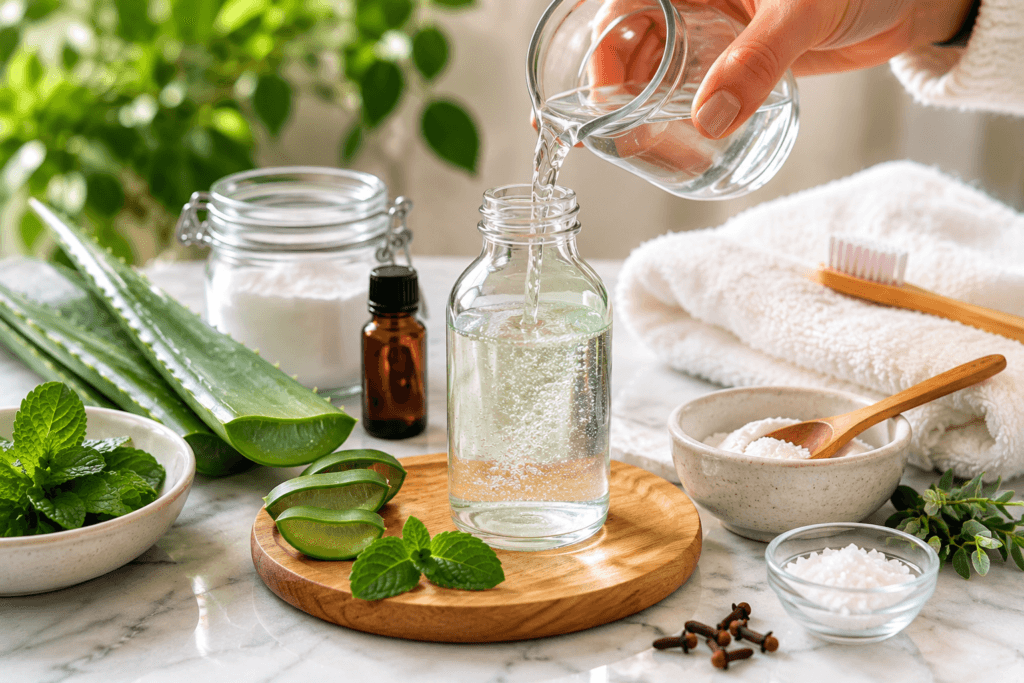
5 Homemade Mouthwash Recipes — Ingredients, Steps, and Best Uses
These recipes are for general informational purposes. Individual sensitivity to ingredients varies. Results may differ. Consult your dentist if you have active gum disease, infections, or oral sores before using homemade rinses as a primary treatment.
Recipe 1: Classic Saltwater Mouth Rinse
The simplest and most dentist-endorsed homemade rinse. Ideal after dental procedures, for gum inflammation, or as a gentle daily rinse.
Ingredients:
- 1 cup warm water
- ½ teaspoon non-iodized sea salt or plain table salt
How to make it:
- Dissolve salt completely in warm water.
- Swish for 30–60 seconds, then spit.
- Use up to 3 times daily for healing; once daily for maintenance.
- Make fresh each time — do not store.
Best for: Post-extraction healing, gum soreness, canker sores, general maintenance. Generally well tolerated by many people, although children and pregnant individuals should follow guidance from their dentist or healthcare provider.
Recipe 2: Baking Soda Mouthwash for pH Balance and Odor Control
A simple alkaline rinse that neutralizes acid in the mouth, helps control bad breath, and supports a healthy oral environment.
Ingredients:
- 1 cup water (warm or room temperature)
- 1 teaspoon baking soda
- 1–2 drops peppermint essential oil (optional, for flavor)
How to make it:
- Stir baking soda into water until fully dissolved.
- Add peppermint oil if using — mix well.
- Swish for 30–60 seconds, spit, and do not rinse with water immediately after.
- Use once daily. Store remaining solution for up to 24 hours in a sealed container.
Best for: Acid neutralization, mild odor control, and people who find commercial mouthwash too harsh or irritating.
Recipe 3: Clove Mouthwash Recipe for Antibacterial Support
A traditional herbal mouthwash with genuine antimicrobial and mild analgesic properties. Good for gum discomfort and as a natural antibacterial rinse.
Ingredients:
- 1 cup water
- 1 teaspoon whole cloves (or 1 drop clove essential oil — not more)
- ½ teaspoon baking soda (optional)
How to make clove mouthwash — Steeping method (preferred):
- Bring water to a boil, add whole cloves, and remove from heat.
- Let steep for 10–15 minutes, then cool to room temperature.
- Strain out cloves. Add baking soda if using.
- Swish for 30 seconds, then spit. Do not swallow.
- Use once daily. Discard after 48 hours.
If using clove essential oil instead of whole cloves: use only 1 drop per cup of water — never more. Undiluted clove oil applied directly to tissue causes burns.
Recipe 4: Diluted Hydrogen Peroxide Rinse
An antimicrobial rinse useful for gum inflammation, minor infections, and mouth sore relief. Use sparingly — not a daily rinse.
Ingredients:
- ½ cup 3% hydrogen peroxide (standard drugstore concentration)
- ½ cup water
How to make it:
- Mix equal parts 3% hydrogen peroxide and water to create approximately 1.5% solution.
- Swish for 30 seconds, then spit. Do not swallow.
- Use 2–3 times per week maximum, not daily.
- Do not eat or drink for 30 minutes after use.
Do not use undiluted hydrogen peroxide. Do not use concentrations higher than 3% from the drugstore bottle. Not recommended for children or pregnant women without dental guidance.
Recipe 5: Aloe Vera Mouthwash for Sensitive Gums
A gentle, soothing rinse with research-backed anti-inflammatory and antimicrobial properties. Especially good for people sensitive to alcohol-based commercial rinses.
Ingredients:
- ½ cup food-grade aloe vera juice (not gel, not flavored)
- ½ cup water
- 1 drop peppermint essential oil (optional)
- Pinch of baking soda (optional, for pH balance)
How to make aloe vera mouthwash:
- Combine aloe vera juice and water in a clean bottle.
- Add peppermint oil and baking soda if using. Shake to combine.
- Swish for 30–60 seconds, spit, and do not rinse immediately after.
- Refrigerate and use within 5–7 days. Shake before each use.
Best for: Sensitive gum tissue, canker sores, mouth sores, or anyone who reacts to harsh commercial mouthwash. One of the most research-supported natural alternatives.
DIY vs. Over-the-Counter Mouthwash: Honest Comparison
This is where a lot of natural mouthwash guides pull their punches — so here’s a straightforward comparison.
| Factor | Homemade Mouthwash | OTC Mouthwash (ADA-accepted) |
|---|---|---|
| Fluoride for cavity prevention | Not available in DIY | Available in fluoride rinses |
| Antibacterial effectiveness | Moderate — varies by ingredients | Stronger in clinical formulations |
| Gum disease treatment | Supportive only | Prescription chlorhexidine most effective |
| Ingredient transparency | Complete — you control everything | Requires label reading |
| Alcohol content | Alcohol-free by default | Many OTC rinses contain alcohol; alcohol-free options exist |
| Cost | Comparable to budget OTC options | Wide range from budget to premium |
| Shelf life | Short (hours to days) | Months to years |
| ADA Seal / clinical validation | None | Available on accepted products |
| Suitability for active gum disease | Not sufficient alone | Prescription rinse may be needed |
The key gap that no homemade mouthwash can close: fluoride. If cavity prevention is a priority — and for most adults it should be — a DIY rinse cannot replicate the protective effect of a fluoride mouthwash used consistently. Homemade rinses can be excellent complements to a good oral care routine, but for people at high cavity risk, replacing a fluoride rinse with a natural alternative is not an even trade.
Natural and Non-Toxic Mouthwash Options You Can Buy
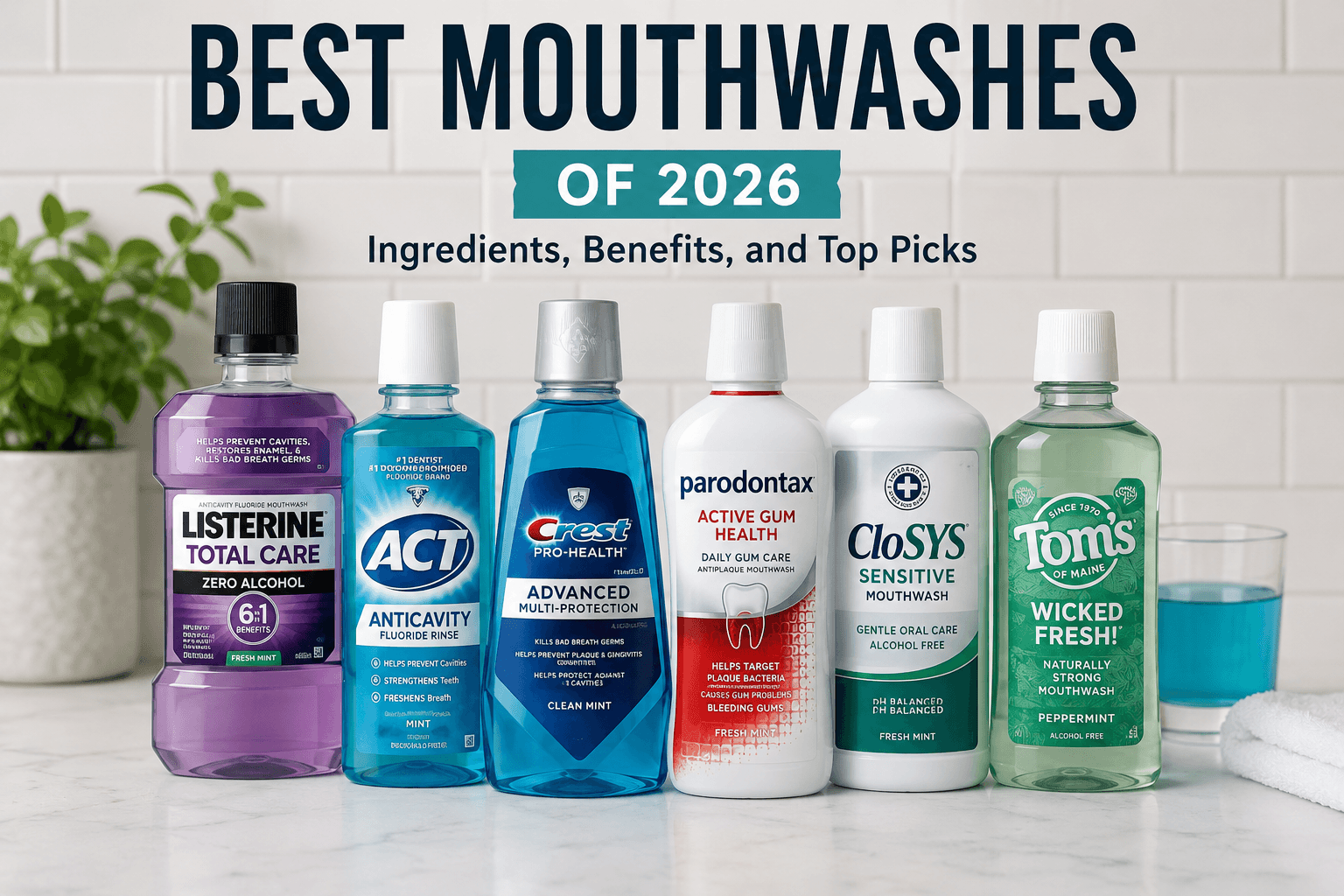
For people who want to avoid synthetic additives but still want clinical-grade ingredients, there are OTC options worth knowing about. The “non-toxic” and “organic mouthwash” market has grown significantly, and some products genuinely deliver.
What to look for in a natural or non-toxic mouthwash:
- Fluoride — if cavity prevention is a goal, this is the most important active ingredient
- Alcohol-free formula — avoids the drying effect of alcohol-based rinses
- ADA Seal of Acceptance — confirms safety and efficacy testing
- No artificial dyes or synthetic flavors — if those are your concern
- Xylitol — a plant-based sweetener that also fights cavity-causing bacteria
Brands in the natural/clean mouthwash category include options using essential oils, xylitol, and fluoride without the harsh additives of traditional commercial rinses. Read labels carefully — “natural” on packaging is not a regulated claim.
When Homemade Mouthwash Works — and When It Doesn’t
Homemade mouthwash is a good fit for:
- Daily maintenance rinsing as a supplement to brushing and flossing
- Post-procedure healing (saltwater rinse is often the dentist’s first recommendation)
- People with chemical sensitivities or allergies to commercial mouthwash ingredients
- Temporary gum soreness or mild mouth sores
- Freshening breath naturally between brushing
- People who prefer to avoid alcohol-based rinses
Homemade mouthwash is not sufficient for:
- Active gum disease or periodontal infections — these require dentist-prescribed treatment
- Dental abscesses or serious oral infections — see a dentist promptly
- Cavity prevention in high-risk patients — fluoride rinse is clinically superior
- Replacing brushing or flossing — no rinse can do that
- Children with developing teeth — fluoride rinse recommendations should come from a pediatric dentist
The Bottom Line
You can make an effective mouthwash at home — with the right ingredients and realistic expectations about what it can accomplish.
Saltwater rinses, baking soda mouth rinses, clove mouthwash, diluted hydrogen peroxide, and aloe vera mouthwash all have evidence supporting their use. They’re genuine alternatives for daily maintenance, breath freshening, gum soothing, and mild antibacterial support.
What they can’t do is replicate fluoride protection or treat active dental disease. For cavity-prone individuals, a fluoride rinse remains clinically important. And for anyone dealing with gum disease, infections, or persistent oral symptoms, a dentist — not a kitchen recipe — is the right resource.
Used as part of a complete oral hygiene routine alongside consistent brushing, flossing, and regular dental checkups, a homemade or natural mouthwash can be a practical, low-cost addition to daily care.
Medical Disclaimer: The recipes and information in this article are for informational purposes only and do not constitute dental or medical advice, diagnosis, or treatment. Homemade mouthwash is not a substitute for professional dental care. Individual sensitivities to ingredients vary, and results are not guaranteed. If you have active dental disease, oral infections, or are pregnant, consult your dentist before using homemade rinses. Always perform a patch test with essential oils before use.
Scientific Sources
This article was researched using guidance from recognized dental organizations and peer-reviewed scientific literature, including resources from the American Dental Association (ADA), National Institutes of Health (NIH), and leading periodontal journals.
- American Dental Association (ADA). Mouthrinse (Mouthwash) Guidelines and Oral Health Recommendations.
- National Institute of Dental and Craniofacial Research (NIDCR). Oral Hygiene and Oral Health Resources.
- National Institutes of Health (NIH) / PubMed. Clinical studies evaluating baking soda, hydrogen peroxide, aloe vera, and herbal oral rinses.
Frequently Asked Questions
Does homemade mouthwash actually kill bacteria?
Some ingredients do have genuine antibacterial properties — salt, diluted hydrogen peroxide, clove, and aloe vera all have research supporting their antimicrobial effects. However, none reach the level of clinical mouthwashes containing chlorhexidine or cetylpyridinium chloride (CPC). For everyday bacterial reduction as part of a complete oral hygiene routine, natural rinses can be effective. For treating active infection or disease, they’re not sufficient on their own.
What is the best homemade mouthwash for bad breath?
A baking soda mouthwash is particularly effective for bad breath because it neutralizes the sulfur-based compounds that cause odor. Adding a drop of peppermint or spearmint essential oil addresses the sensory aspect. Clove mouthwash also has odor-fighting properties. For persistent bad breath that doesn’t respond to oral hygiene improvements, see a dentist — it may indicate an underlying issue like gum disease or dry mouth.
Can I make a homemade mouthwash for a gum infection?
A warm saltwater rinse is the most appropriate home rinse for gum soreness or mild inflammation. A diluted hydrogen peroxide rinse (used sparingly) can also help with bacterial load. However, a true gum infection — characterized by swelling, pus, persistent pain, or fever — requires professional dental treatment, not a home remedy. Delaying care for an oral infection can allow it to spread. See a dentist promptly if you suspect an infection.
Is it safe to use baking soda as a daily mouthwash?
Yes, in the concentrations used in a homemade rinse (approximately 1 teaspoon per cup of water), baking soda is safe for daily use. It’s not abrasive enough to damage enamel in liquid form, and its alkaline properties are actively beneficial for oral pH balance. Some commercial toothpastes and rinses use it as an active ingredient for exactly this reason.
Can I make a natural mouthwash for gingivitis?
Several natural ingredients have shown promise for mild gingivitis — aloe vera, diluted hydrogen peroxide, and saltwater all have evidence supporting reduced gingival inflammation. However, established gingivitis benefits most from improved mechanical cleaning (brushing and flossing) combined with professional cleaning. A natural rinse can support the process, but if your gums bleed regularly or are persistently swollen, a dental visit is the right next step.
How long does homemade mouthwash last?
It depends on the recipe. A plain saltwater rinse should be made fresh each time — salt and water require no storage. A baking soda rinse can be stored for up to 24 hours. An aloe vera mouthwash refrigerated in a clean container is usable for 5–7 days. Any recipe containing fresh ingredients like herbs should be used within 48 hours. When in doubt, make a smaller batch and use it fresh.