
The demand for artificial intelligence skills has moved well beyond Silicon Valley job listings. From healthcare analytics to marketing automation, employers across nearly every sector are actively recruiting workers who understand how AI systems function and how to apply them responsibly. Whether you’re a career-switcher exploring new possibilities or a working professional looking to stay current, finding the right AI course online in 2026 can feel overwhelming given how many options now exist. This guide cuts through the noise. For broader context on digital credentials and learning pathways, browse our Education articles to see how AI learning fits into the larger upskilling landscape.
Why AI Upskilling Matters in 2026
Global investment in artificial intelligence is accelerating rapidly, and workers who develop verified AI competencies may find themselves better positioned for roles that didn’t exist five years ago.
The scale of AI investment is difficult to overstate. According to a 2024 IDC forecast cited by TechTarget, worldwide AI spending is projected to exceed $632 billion by 2028, growing at a compound annual rate of approximately 29%. That level of sustained investment signals sustained demand for people who can build, manage, and work alongside AI systems.
“According to Research.com’s 2026 analysis of AI degree and certification outcomes, professionals holding credentials in artificial intelligence fields report median annual salaries of approximately $145,080, reflecting strong market demand for verified AI competency across industries.”
That salary figure represents a median, not a guarantee, and individual outcomes vary considerably based on role, geography, experience, and employer. Still, the directional signal is consistent: AI skills to learn online are attracting real investment from employers, and the credential market has responded with a wider, more rigorous set of options than existed even two years ago.
How to Choose the Right AI Course for Your Goals
The best AI course for you depends heavily on your current skill level, the specific AI applications relevant to your field, and whether you need a formal credential or practical project experience.
Before comparing platforms or prices, it’s worth asking three questions: What problem am I trying to solve? How much time can I realistically commit each week? And do I need a certificate that an employer will recognize, or do I primarily need hands-on skills I can demonstrate through a portfolio? Your answers will narrow the field considerably.
Beginner vs. Intermediate vs. Advanced Pathways
Generative AI courses for beginners typically require no programming background and focus on conceptual literacy — understanding how large language models work, how to write effective prompts, and how to evaluate AI outputs critically. Intermediate pathways usually assume some familiarity with Python and statistics, covering topics like machine learning fundamentals, neural network architecture, and model evaluation. Advanced tracks, including graduate-level programs, involve original research methods, deep learning systems, and often require prior professional or academic experience in data-adjacent roles.
Should You Pursue a Certificate or a Degree?
Certificates from platforms like Coursera, edX, or Dataquest can be completed in weeks to months and tend to be far more affordable than degree programs. However, Research.com’s 2026 ranking of online AI degree programs highlights that institutions like Stanford, MIT, Carnegie Mellon, Georgia Tech, and the University of Illinois offer online AI graduate credentials that carry significant employer recognition, particularly for research-oriented roles. The Georgia Tech OMSCS AI specialization, for example, has attracted substantial attention for combining academic rigor with an accessible tuition structure relative to residential programs.
Top AI Upskilling Platforms in 2026
Several major platforms have expanded and formalized their AI curricula in 2026, with meaningful differences in hands-on rigor, cost, and the type of learner each serves best.
| Platform / Program | Best For | Approximate Cost | Credential Type | Notable Feature |
|---|---|---|---|---|
| Coursera (Multiple Partners) | Beginners to intermediate learners | Free audit / ~$49–$79/month | Professional Certificate | Recognized by Consumer365 as a top 2026 AI platform; spans ML, generative AI, prompt engineering |
| Andrew Ng’s ML Specialization (Coursera/DeepLearning.AI) | Structured ML foundations | Included in Coursera subscription | Specialization Certificate | 4.8M+ enrollees as of 2026; one of the most widely completed ML programs globally |
| MIT Professional Education (ML Courses) | Senior professionals, career changers | $2,500–$4,700 per course | Professional Certificate | High employer recognition; rigorous curriculum with live instruction components |
| Dataquest AI Engineering Path | Learners wanting project-based portfolios | ~$33–$49/month | Certificate of Completion | Includes 20 guided projects; browser-based coding environment requires no local setup |
| Microsoft Azure AI Fundamentals (AI-900) | Professionals in Microsoft ecosystems | ~$165 exam fee | Vendor Certification | Widely recognized in enterprise IT; free prep content via Microsoft Learn |
| AWS AI Practitioner (launched Aug 2024) | Cloud-adjacent roles | ~$150 exam fee | Vendor Certification | Validates foundational AI/ML knowledge within the AWS ecosystem |
*Prices are current as of the first half of 2026.
Cost and credential data sourced from Dataquest’s 2026 ranked comparison of AI certifications and TechTarget’s expert-curated list of top AI certifications for 2026. Prices are subject to change; verify current details directly with each provider.
What Do Experts Say About AI Course Quality?
Not all AI courses are created equal — hands-on project rigor, curriculum recency, and real-world applicability are the factors most consistently linked to learner satisfaction and skill transfer.
“According to DataCamp’s 2026 analysis of 17 AI courses — evaluated against criteria including hands-on rigor, curriculum recency, and student outcomes using G2 Winter 2026 Grid Report data — the strongest programs consistently emphasized applied projects over passive video consumption, with top-ranked courses drawing curriculum from providers including fast.ai, Hugging Face, Stanford, MIT, Microsoft Learn, and Google Cloud Skills Boost.”
That finding aligns with what learning science research has long suggested: skills developed through active practice and real problem-solving tend to transfer more reliably to workplace contexts than content absorbed passively. When evaluating any online AI certification for 2026, look for programs that require you to build something — a working model, a deployed application, or an analyzed dataset — rather than simply watch lectures and pass multiple-choice assessments.
Which Skills Are Most In-Demand Right Now?
Based on current employer signals and course catalog trends, the AI skills to learn online that appear most consistently in job descriptions include: prompt engineering and LLM application development, Python for data analysis and ML workflows, model evaluation and responsible AI practices, cloud-based AI deployment (particularly on AWS, Azure, and Google Cloud), and retrieval-augmented generation (RAG) system design. For a more detailed breakdown of how these skills map to specific platforms, DataCamp’s expert analysis of the best AI courses in 2026 provides useful curriculum comparisons across 17 programs.

Online AI Certification 2026: Is It Worth the Investment?
Whether an AI certification pays off depends on your specific role, industry, and how you apply the credential — but labor market data suggests meaningful demand for verified AI competency across multiple sectors.
A certification alone is unlikely to transform a career without accompanying skill development, portfolio work, and strategic job searching. That said, formal credentials do serve a signaling function in hiring processes, particularly when candidates are competing for roles where hiring managers aren’t themselves technical experts. A March 2026 report from Consumer365 via Yahoo Finance noted Coursera’s platform as a leading destination for AI training this year, citing growing demand for AI skills across industries from healthcare to financial services.
Alternative Perspectives
Not all researchers and educators agree that online AI certifications deliver consistent value. Some argue that self-directed learning through open-source projects, GitHub contributions, and community participation — via communities like Hugging Face or fast.ai forums — builds more demonstrable, employer-relevant skills than structured certificate programs. Others point out that the rapid pace of AI development means that content in even a recently published course may be partially outdated by the time a learner completes it. Critics of the certification market also note that course completion rates on large platforms remain low, suggesting that structured accountability mechanisms matter significantly to outcomes. Prospective learners may benefit from weighing open-source and community-based learning pathways alongside formal programs, rather than treating certification as the only credible route into AI work.
Building a Learning Plan: Practical Next Steps
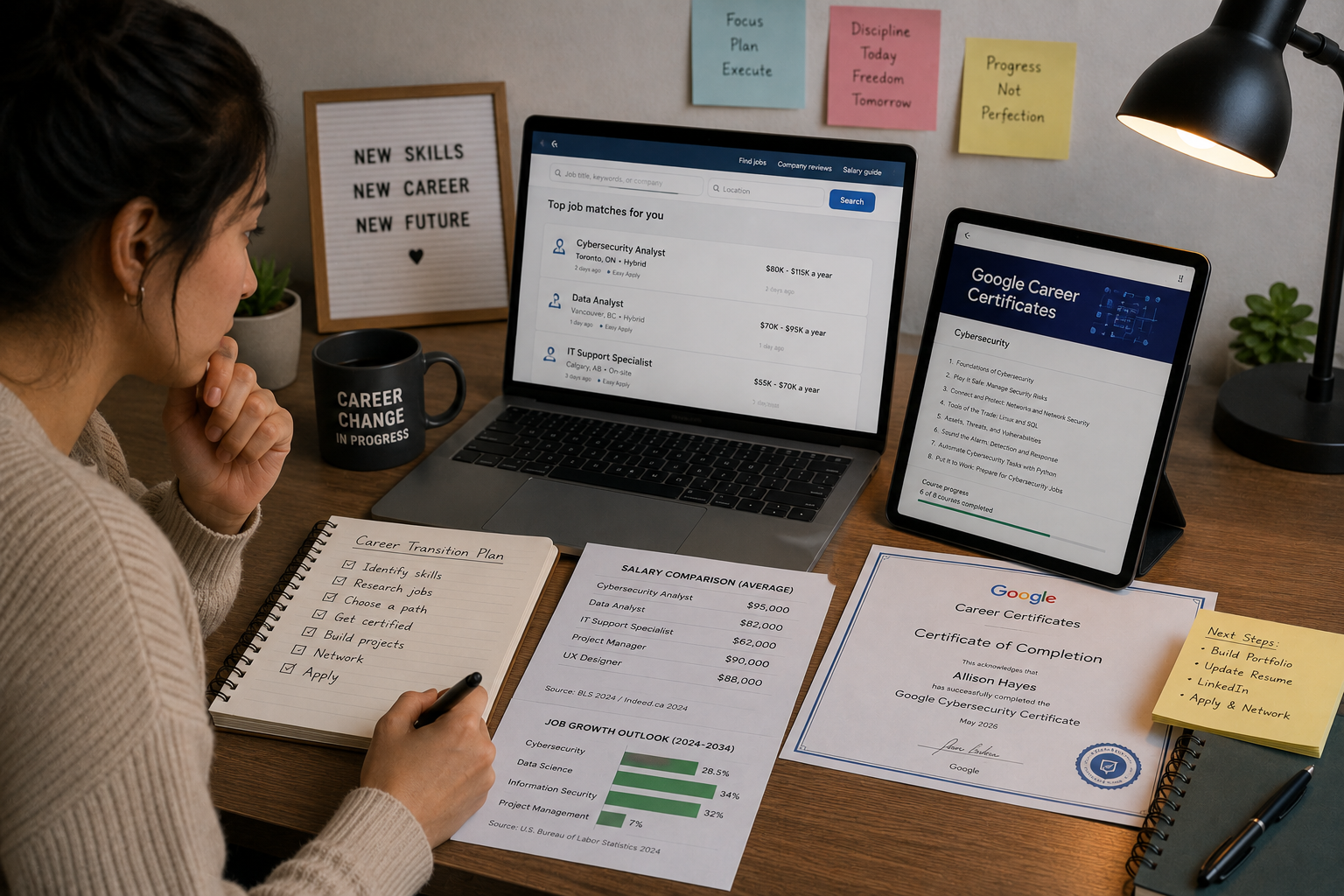
A realistic learning plan accounts for your available time, starting skill level, and a clear definition of what “done” looks like — whether that’s a completed certification, a portfolio project, or a specific job application.If you’re building an AI upskilling plan from scratch, consider starting with a free audit of a beginner course to assess your comfort level before committing financially. Many platforms, including Coursera and edX, allow content access without paying for the certificate. Build in time for projects, not just lessons. And treat your first credential as a starting point rather than a destination — AI is a fast-moving field, and the most effective learners tend to maintain a habit of continuous learning rather than treating upskilling as a one-time event. For curated recommendations on structured pathways and platform comparisons, explore WideJournal’s online learning guides.
Frequently Asked Questions
For learners with no technical background, generative AI courses for beginners on platforms like Coursera — particularly those developed in partnership with Google or DeepLearning.AI — are frequently cited as accessible entry points. They focus on conceptual understanding, prompt engineering, and practical applications without requiring prior coding experience. Andrew Ng’s Machine Learning Specialization is widely considered a strong next step once foundational literacy is established.
Timelines vary considerably. Vendor certifications like Microsoft Azure AI Fundamentals (AI-900) or AWS AI Practitioner may require four to eight weeks of focused preparation for someone with a technology background. Professional certificate programs on Coursera or Dataquest typically estimate three to six months at a part-time pace. Graduate-level programs like Georgia Tech’s OMSCS AI specialization are multi-year commitments. Your timeline depends heavily on your starting point and weekly hours available.
Free audits and open-access courses can be genuinely valuable for skill development, particularly for learners who are self-directed and project-oriented. The paid certificate primarily adds a verifiable credential that can appear on a resume or LinkedIn profile, which may matter more in some hiring contexts than others. If your goal is portfolio-building rather than credential signaling, free resources from platforms like fast.ai, Google, or Microsoft Learn may serve you well without added cost.
Employer recognition tends to be strongest for credentials from established institutions (MIT, Stanford, Carnegie Mellon) and major cloud vendors (Microsoft, AWS, Google). Among subscription platforms, Coursera’s professional certificates — particularly those from Google and IBM — have gained broader employer familiarity over time. Dataquest and DataCamp are more likely to be recognized by technically literate hiring managers in data and engineering roles than by general HR screeners. Research the specific employers and roles you’re targeting to assess which credentials they’re most likely to value.
Disclaimer: Course pricing, free audit availability, and certification requirements are current as of the first half of 2026 and are subject to change by the respective providers. Salary data and market projections mentioned in this article are for informational purposes only and do not guarantee employment or specific income outcomes. WideJournal is not affiliated with the platforms mentioned unless otherwise stated. Please verify current terms and enrollment details directly on the provider’s official website before making any financial commitments.