
Enterprise software is undergoing one of its most significant structural shifts in decades. Across tech articles and boardroom conversations alike, one phrase keeps surfacing: agentic AI. Unlike the chatbots and copilots that defined the first wave of generative AI adoption, today’s autonomous AI agents don’t just respond to prompts — they plan, execute multi-step tasks, call external tools, and loop back on their own outputs with minimal human intervention. Understanding what that distinction actually means for enterprise operations in 2026 is no longer optional for technology leaders.
What Is Agentic AI — and How Does It Differ from Generative AI?
Agentic AI refers to systems capable of autonomous goal-directed action across multiple steps and tools, whereas generative AI primarily produces outputs in direct response to a single prompt. The shift is architectural as much as philosophical.
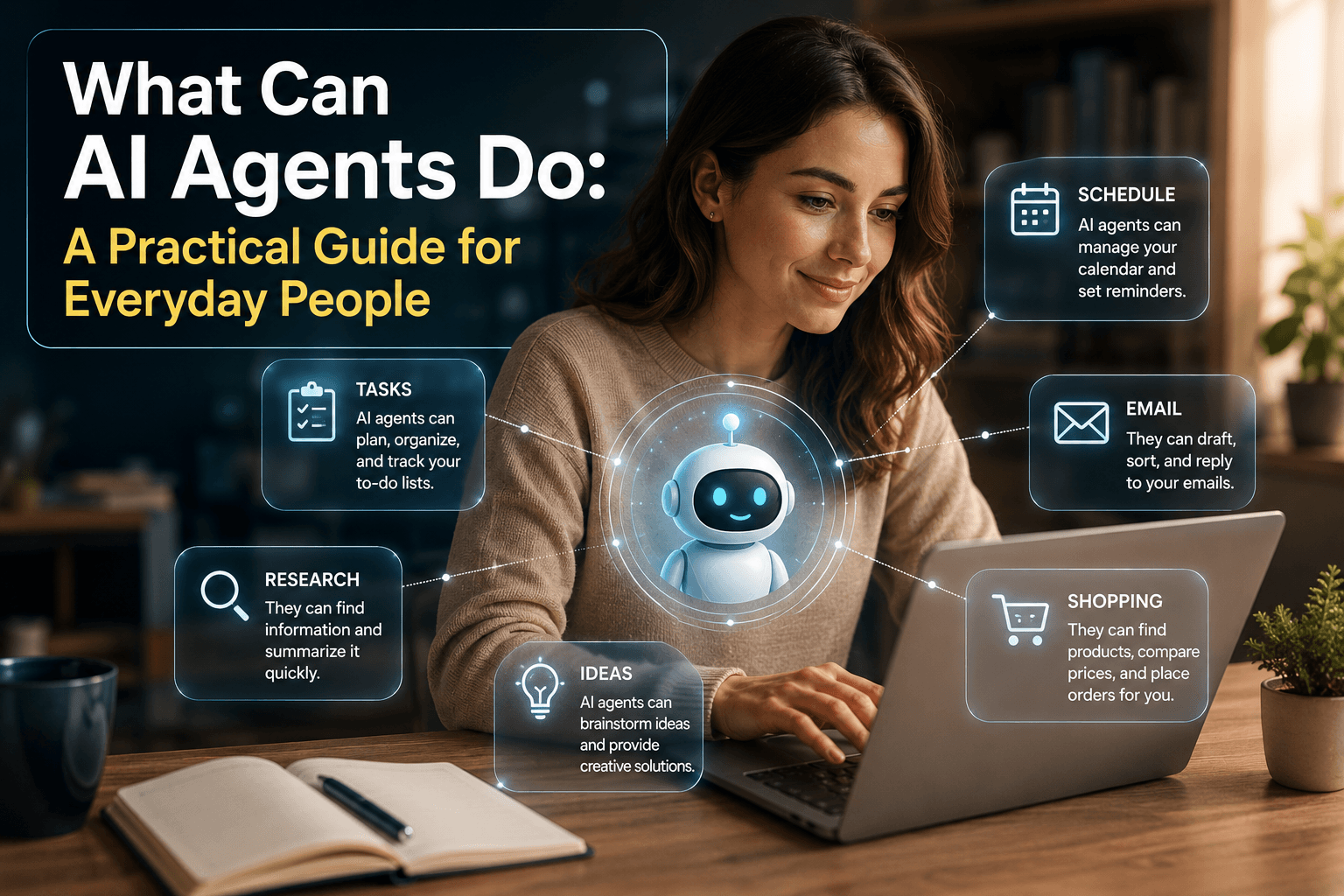
Generative AI models like large language models excel at producing text, code, images, and structured data on demand. Agentic AI builds on that foundation but adds a critical layer: agency. An agentic system receives a high-level objective, decomposes it into subtasks, selects appropriate tools or APIs, monitors its own progress, handles errors, and iterates — often without a human approving each step. Think of the difference between asking a colleague a question versus delegating a project to them for the week.
In practice, agentic architectures typically involve an orchestrator model directing one or more specialized sub-agents, each with access to specific tools: web search, code execution, database queries, email APIs, or internal enterprise systems. The orchestration layer manages sequencing, context passing, and failure recovery. This architecture is what separates best AI agents 2026 deployments from earlier single-turn AI integrations.
Where Does Enterprise Adoption Actually Stand in 2026?
Adoption of agentic AI in enterprise environments is accelerating, but production deployments remain a minority — with significant variation by industry maturity, infrastructure readiness, and organizational risk tolerance.
According to a Gartner press release on agentic AI in enterprise applications, 40% of enterprise apps are predicted to feature task-specific AI agents by the end of 2026, up from less than 5% in 2025. Gartner also projects that agentic AI could drive approximately 30% of enterprise software revenue by 2035, potentially surpassing $450 billion.
That trajectory is steep, but current production numbers tell a more measured story. Deloitte’s 2026 Tech Trends report on agentic AI strategy, drawing on its 2025 Emerging Technology Trends study, found only 11% of organizations actively using agentic AI in production, with 42% still developing strategy roadmaps. The gap between executive enthusiasm and operational reality remains substantial.
Which Industries Are Leading Agentic AI Deployment?
G2’s Enterprise AI Agents Industry Outlook for 2026 surveyed companies across sectors and found 57% have AI agents in some form of production, with 22% in pilot and 21% in pre-pilot stages. Financial services, healthcare, manufacturing, and retail showed the highest concentrations of active deployments, driven by well-defined workflows, high transaction volumes, and measurable ROI targets.
Agentic AI Enterprise Adoption: Key 2026 Data Points
| Metric | Figure | Source |
|---|---|---|
| Enterprise apps with task-specific AI agents by end of 2026 | ~40% (up from <5% in 2025) | Gartner |
| Organizations actively using agentic AI in production | 11% | Deloitte Insights |
| Companies with AI agents in production (any stage) | 57% | G2 |
| Organizations at ‘autonomy-with-guardrails’ stage | 47% | G2 |
| Orgs with extensive agentic AI adoption expecting operating model changes | 66% (vs. 42% with no adoption plans) | MIT Sloan / BCG |
| Median improvement in speed-to-market reported | 23% | G2 |
How Are AI Agents for Business 2026 Actually Being Used?
Enterprise AI agents in 2026 are most commonly deployed in IT operations, finance, HR, and customer service — handling tasks that are repetitive, data-intensive, and previously required significant human coordination overhead.
Workflow Orchestration and Cross-System Tasks
Forrester’s Predictions 2026 report on enterprise software forecasts that role-based AI agents will orchestrate cross-system tasks — pulling data from CRM, ERP, and HRIS platforms simultaneously and executing workflows that previously required human intermediaries. The report also predicts that half of enterprise ERP vendors will launch autonomous governance modules this year, and that top HCM platforms will introduce digital employee management capabilities as AI workers enter organizational hierarchies alongside human ones.
What Does “Autonomy with Guardrails” Mean in Practice?
The G2 data showing 47% of deployments at an “autonomy-with-guardrails” stage reflects a pragmatic middle ground most enterprises are navigating: agents can execute multi-step processes independently, but human approval gates remain at defined risk thresholds — financial authorizations above a dollar limit, communications to external parties, or modifications to production systems. This staged autonomy model is emerging as the dominant enterprise pattern rather than fully unconstrained operation.

Why Are So Many Implementations Struggling?
Despite enthusiasm, many agentic AI rollouts face common failure points: poorly defined task scope, inadequate integration with legacy systems, unclear ownership of agent outputs, and underdeveloped governance frameworks.
According to the MIT Sloan Management Review and BCG joint report on the emerging agentic enterprise, based on a global survey of 2,102 respondents across 21 industries and 116 countries, organizations face four core tensions in navigating the agentic enterprise era — including balancing agent autonomy against accountability, and aligning speed of deployment with workforce readiness.
Deloitte’s research frames much of the challenge as a governance problem. Organizations that treat AI agents purely as software deployments — rather than as what Deloitte describes as a “silicon-based workforce” requiring its own management layer — tend to underinvest in the oversight structures needed to catch compounding errors before they propagate through automated pipelines. Agent failures in agentic systems can cascade in ways that single-model outputs don’t.
Alternative Perspectives
Not all analysts share the same level of optimism about the pace or breadth of agentic AI’s enterprise impact. Some researchers argue that the benchmark environments in which agents demonstrate impressive performance differ substantially from the messy, undocumented, permission-constrained reality of enterprise IT environments — making real-world reliability much harder to achieve than lab results suggest. Others raise valid concerns about accountability gaps when autonomous systems make consequential decisions, the environmental cost of running large multi-agent pipelines at scale, and potential labor displacement in roles where agentic automation is most effective. Organizations weighing adoption should evaluate these dimensions alongside productivity projections, and should treat vendor-provided ROI estimates with appropriate scrutiny until independently validated figures become more widely available.
What Should Enterprise Leaders Be Doing Now?
Research consistently suggests that early-moving organizations are building governance infrastructure and operating model changes in parallel with technical deployments — not sequentially.
The MIT Sloan and BCG data point — that 66% of organizations with extensive agentic AI adoption expect operating model changes, compared to 42% with no adoption plans — suggests that technical deployment and organizational redesign are increasingly inseparable. Leaders who treat agentic AI as purely a software procurement decision, rather than a workforce and process architecture question, may find themselves with capable tools embedded in structures that limit their value.
Forrester’s analysis points toward a coming shift in how enterprise software itself is designed: from user-centric interfaces built for human navigation to worker-and-process-centric architectures built for mixed human-agent teams. That shift has implications for procurement, vendor selection, and internal development roadmaps alike.
Frequently Asked Questions
Generative AI produces outputs — text, images, code — in response to prompts. Agentic AI adds goal-directed autonomy: the system can plan multi-step tasks, use external tools, evaluate its own progress, and iterate without requiring a human to approve every action. Generative models are often the underlying engine within agentic systems, but agentic AI is defined by its capacity for autonomous action rather than content generation alone.
Adoption is growing quickly but unevenly. G2’s 2026 industry outlook found 57% of companies have AI agents in some form of production, though Deloitte’s research puts fully active production deployments at just 11% of organizations. Gartner projects 40% of enterprise applications will feature task-specific agents by the end of 2026, up from less than 5% in 2025.
Key risks include cascading errors in automated pipelines, unclear accountability for agent decisions, inadequate integration with legacy systems, and governance gaps. Deloitte research highlights that organizations treating agents as software rather than as a managed workforce tend to underinvest in the oversight structures needed to catch compounding failures before they cause significant downstream impact.
Financial services, healthcare, manufacturing, and retail show the highest concentrations of active agentic AI deployments according to G2’s enterprise outlook. These sectors share characteristics that favor early adoption: high-volume repetitive workflows, measurable transaction outcomes, and established data infrastructure that agents can integrate with.