
Canada and Bosnia & Herzegovina kick off their FIFA World Cup 2026 campaigns on Friday, June 12 at 3:00 p.m. ET from BMO Field in Toronto, in a match that carries genuine historical weight for the host nation. This is the first men’s World Cup game ever played on Canadian soil, and Canada arrived as the 30th-ranked side facing a Bosnian team sitting 34 places below them at 64th in the FIFA rankings. The gap on paper looks favorable, but football rarely plays out on paper, and Bosnia have already proven they belong here by knocking out both Wales and Italy on penalties to qualify.
Canada’s World Cup record heading into this match makes uncomfortable reading. Six games played, six losses, two goals scored, twelve conceded. Jesse Marsch’s side have a real opportunity to finally break that streak today at home, in front of their own fans, against opponents ranked significantly lower. Failing to do so would be more than a stumble; it would be a genuine problem ahead of matches against Qatar and Switzerland.
For WideJournal Sports readers following the primary keyword Canada vs Bosnia World Cup 2026, here is everything you need to know before kickoff.
Key Takeaways
- Canada have lost all six of their previous men’s World Cup matches and are seeking their first-ever win at the tournament, making this Group B opener a must-deliver moment at home.
- Alphonso Davies has been ruled out of the Bosnia opener with a hamstring injury, forcing Jesse Marsch to reshape his left flank going into the most important match in Canadian football history.
- Edin Džeko, 40, leads Bosnia’s attack after finishing as their top scorer in qualifying with six goals in nine appearances, and remains one of only two survivors from their 2014 World Cup squad.
- The Opta supercomputer gives Canada an 82.0% chance of advancing from Group B, with Bosnia rated at 60.3%, behind Switzerland’s 91.0%.
- BMO Field has been a fortress for Canada: they have won 18 and drawn 9 of their last 28 matches in Toronto, losing only once, 3-2 to Jamaica in November 2023.
The Stakes for Canada at Home
Canada has never won a men’s World Cup match. With a home opener against Bosnia, ranked 64th in the world, the expectation is clear: win, or face serious pressure heading into the group stage.
When Canada qualified for the 2022 World Cup in Qatar, it felt like the arrival of a generation. The team finished third in CONCACAF qualifying, and Alphonso Davies had become a genuine world-class player at Bayern Munich. Qatar didn’t deliver: three losses, knocked out in the group stage without a win. This time, Canada is a co-host nation making their third World Cup appearance after 1986 and 2022, and the first time they have qualified for consecutive tournaments. The margin for a similar group-stage exit is much thinner when you’re playing at home.
Marsch has been building steadily since taking over from John Herdman. A fourth-place finish at the 2024 Copa América and a quarterfinal at the 2025 CONCACAF Gold Cup aren’t headline results, but the process has been consistent. Canada have not lost in 11 friendlies since that Gold Cup exit to Guatemala on penalties, going six wins and five draws. The defensive structure has been particularly reliable: six clean sheets across their last eight unbeaten matches.
Jonathan David is the engine of this attack. Canada’s all-time leading scorer with 39 goals in 77 international appearances, he has been directly involved in more than one-third of Canada’s goals across their last two major tournaments. ESPN’s predicted lineup places him alongside Cyle Larin up front, with Tajon Buchanan providing width on the right and Liam Millar on the left, compensating for Davies’ absence. The loss of Davies from the left-back position forces Richie Laryea into a critical defensive role on the flank, while Luc de Fougerolles is expected to slot into the central defense alongside Derek Cornelius to cover for the injured Bombito. Squawka reports this adjusted 4-4-2 shape remains Marsch’s preferred setup to maintain backline stability.
Two injury absences beyond Davies complicate the squad picture. Centre-back Moïse Bombito of Nice was ruled out of the entire tournament. Attacking midfielder Marcelo Flores ruptured his anterior cruciate ligament after being named in the squad, ending his tournament before it started. Neither loss is catastrophic on its own, but both reduce Canada’s options from the bench when the game gets tight.
Bosnia & Herzegovina: What Makes Them Dangerous
Bosnia qualified by beating both Wales and Italy on penalties, losing just once in ten qualifying matches. They arrive with a proven goalkeeper, an experienced captain, and a compact style that suits underdog football.
Bosnia’s route to this tournament was genuinely impressive. They lost only one of their 10 qualifying matches, a 2-1 home defeat to Austria, and scored in every single one of them. Beating Italy on penalties in March 2026 was the result that confirmed their place here and established them as a team that knows how to grind through high-pressure moments.
Goalkeeper Nikola Vasilj played every minute of all 10 qualifying matches, 960 minutes in total, more than any other goalkeeper across the entire UEFA qualifying process. That kind of consistency builds cohesion and rhythm between a goalkeeper and his backline. Bosnia will not be easy to break down, even if Canada controls the ball.
At the other end, Edin Džeko at 40 years old remains the focal point. Six goals in nine qualifying appearances is not the output of a player winding down; that is genuine productivity from a striker who has been doing this at the highest level for nearly two decades. He is Bosnia’s all-time leading scorer with 72 goals in 146 appearances, and one of only two players remaining from their 2014 World Cup squad alongside defender Sead Kolašinac. ESPN’s tactical board suggests Sergej Barbarez will deploy a flexible 4-3-3 formation designed for rapid transitions. In this setup, Ermedin Demirović and Samed Baždar provide critical width and support flanking Džeko, while Armin Gigović anchors a hard-working three-man midfield engine room. Sergej Barbarez’s side prefer a direct, physical approach with quick transitions, which could threaten a Canadian backline that is already short on its first-choice centre-back.
Bosnia did make one forced squad change: reserve goalkeeper Osman Hadžikić withdrew due to injury and was replaced by Mladen Jurkas.

Group B Context and Canada’s Path Forward
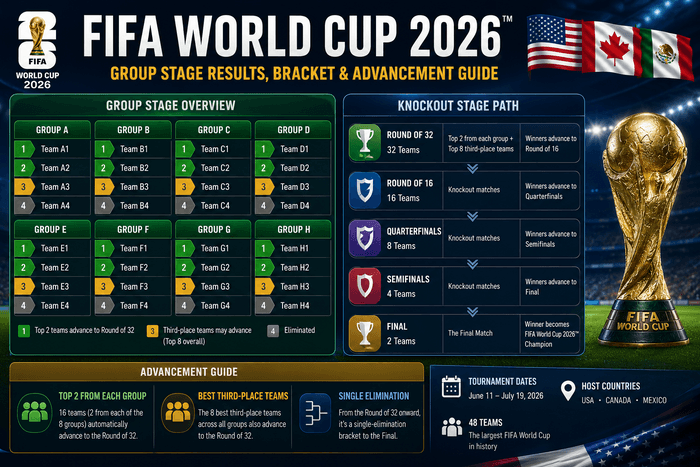
Group B features Canada, Bosnia & Herzegovina, Qatar, and Switzerland. The top two sides advance automatically, and the top eight third-place finishers also progress in the expanded 48-team format.
The expanded 2026 World Cup, running from June 11 to July 19, guarantees more teams reach the knockout phase. The top two from each group advance, plus the top eight third-place finishers move into the Round of 32. That structure softens the immediate pressure slightly, but Canada still needs points from this opener to give themselves room to breathe against Switzerland later in the group. The Opta supercomputer gives Switzerland a 91.0% chance of advancing, which means the realistic fight is for second place between Canada at 82.0% and Bosnia at 60.3%.
Canada’s remaining schedule has them traveling to BC Place in Vancouver to face Qatar on June 18 before closing the group against Switzerland on June 24, also in Vancouver. A win today at BMO Field would change the entire psychology of that run.
Predicted Lineups and Match Officials
ESPN’s predicted lineups provide the clearest picture of how both sides are expected to set up, though official team sheets were not confirmed at time of publication.
| Detail | Canada | Bosnia & Herzegovina |
|---|---|---|
| FIFA Ranking | #30 | #64 |
| Coach | Jesse Marsch | Sergej Barbarez |
| Captain / Key Player | Jonathan David (Alphonso Davies out) | Edin Džeko |
| Top Scorer (Qualifying/Career) | Jonathan David (39 intl. goals) | Edin Džeko (72 intl. goals) |
| Predicted GK | Maxime Crépeau | Nikola Vasilj |
| ESPN Predicted XI | Crépeau; Johnston, de Fougerolles, Cornelius, Laryea; Buchanan, Eustaquio, Koné, Millar; David, Larin | Vasilj; Burnić, Gigović, Muharemović, Memić; Čelić, Bašić, Bajraktarević; Mahmić, Demirović, Baždar |
| Key Injury Absences | Davies (hamstring), Bombito (tournament), Flores (ACL) | Hadžikić (replaced by Jurkas) |
Argentine referee Facundo Tello will take charge of the match, with compatriot Hernan Mastrangelo serving as VAR. The game is played at BMO Field, Toronto.
Alternative Perspectives
Canada’s home record and superior ranking make them clear favorites, but there is a reasonable case for Bosnia causing problems here. Their qualifying run, in which they scored in every match and beat Italy on penalties, shows a team capable of performing under pressure rather than folding against stronger opponents. Canada’s attacking shape without Alphonso Davies is less dynamic on the left side, and if Jonathan David is well-marked, Canada have historically struggled to find alternative ways through. Bosnia’s physical, transition-based style could exploit any defensive uncertainty from a Canadian backline that has lost its first-choice centre-back for the tournament entirely.
On the other side of that argument, BMO Field has been as close to a fortress as Canada has ever had at national team level. Winning 18 of 28 home matches in Toronto with nine draws and one loss speaks to a consistent home advantage that should not be dismissed. Jesse Marsch will have prepared for this scenario, and the depth of this Canadian generation, despite its injury issues, is considerably stronger than the 1986 or 2022 editions. The weight of history, six World Cup losses from six games, may actually sharpen rather than paralyze this group, given that they are playing in front of their own crowd for the very first time at this level. Bosnia are dangerous, but Canada have the structure, the home support, and the individual quality to control this match if they execute Marsch’s setup properly.
This article is for informational and entertainment purposes only. All statistics and results are sourced from official sports organizations. Individual outcomes may vary.
Canada vs Bosnia World Cup 2026 is more than a Group B fixture on a June afternoon. It is the first men’s World Cup match ever staged in Canada, and it arrives at a moment when this national team has the talent and the home support to make history in more ways than one. Jonathan David needs a stage this big, Jesse Marsch needs a result that justifies the project, and Canadian football as a whole needs to show that 2022 in Qatar was the beginning of something real, not a one-off appearance. Bosnia will make it hard, Džeko will be a constant threat, and the absence of Davies will be felt. But BMO Field, a crowd that has waited a long time for this, and a 34-place ranking advantage are all pointing in the same direction. Kick off is at 3:00 p.m. ET.
Frequently Asked Questions
What time does Canada vs Bosnia & Herzegovina kick off at the 2026 World Cup?
Canada vs Bosnia & Herzegovina kicks off at 3:00 p.m. ET on Friday, June 12, 2026, at BMO Field in Toronto, Ontario.
Is Alphonso Davies playing against Bosnia at the 2026 World Cup?
Alphonso Davies has been ruled out of Canada’s Group B opener against Bosnia & Herzegovina due to a hamstring injury, and his availability for subsequent group matches has not been confirmed ahead of kickoff.
Has Canada ever won a FIFA World Cup match?
Canada have never won a men’s FIFA World Cup match, losing all six of their previous games while scoring just two goals and conceding twelve, making the Bosnia opener their best opportunity yet to record that first-ever victory.
Who is Bosnia & Herzegovina’s captain and coach at the 2026 World Cup?
Bosnia & Herzegovina are captained by striker Edin Džeko, the country’s all-time leading scorer with 72 international goals, and coached by Sergej Barbarez at their second-ever World Cup appearance.