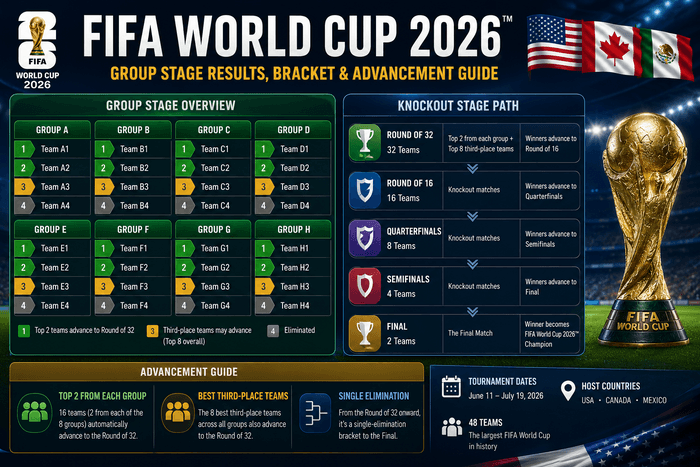
The 2026 FIFA World Cup is officially underway. Mexico and South Africa opened the tournament at the Estadio Azteca in Mexico City on June 11, kicking off what is the largest World Cup in history: 48 nations, 104 matches, spread across 16 cities in the United States, Canada, and Mexico. The final took place at MetLife Stadium in East Rutherford, New Jersey, on July 19. For the first time ever, finalists will play eight matches rather than the traditional seven. That extra game matters more than it sounds, and we’ll get to why. Follow all of our ongoing analysis at WideJournal Football coverage.
The expanded format also means 32 teams advance from the group stage, the eight best third-place finishers joining the 12 group winners and 12 runners-up into a new Round of 32. That structural change opens the bracket considerably for teams that would have gone home in previous editions. It also compresses rest windows deep into the tournament, making squad depth and rotation management as important as tactical identity. From a WideJournal Sports analysis standpoint, this is not a cosmetic tweak. It rewires how you build a World Cup roster.
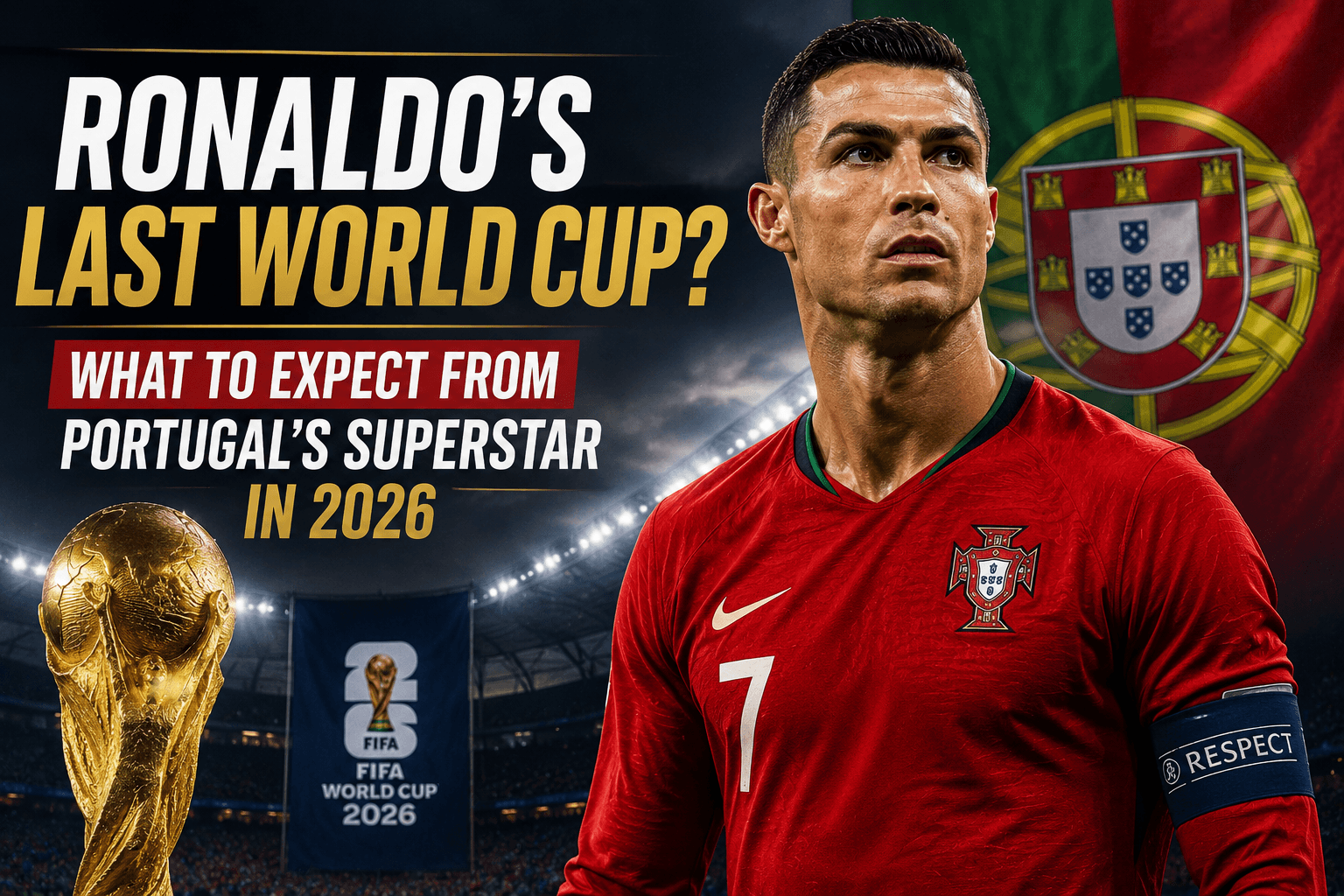
A record 1,248 players from 48 nations are registered, drawn from 449 clubs across 71 countries. Lionel Messi, Cristiano Ronaldo, and Guillermo Ochoa are each appearing in a sixth World Cup, a record shared by all three. Four nations, Cabo Verde, Curaçao, Jordan, and Uzbekistan, are making their first-ever World Cup appearances. The scale of this tournament is genuinely unprecedented, and the 2026 FIFA World Cup predictions market reflects that uncertainty: Opta’s supercomputer ran 25,000 simulations and still produced a first-time winner in 35.9% of them.
Key Takeaways
- Spain lead Opta’s win probability at 16.1%, the only team rated more likely than not to reach the quarterfinals (52.1%), and are the consensus betting favorite at approximately +450.
- France own the tournament’s most dangerous attacking depth, with Mbappé, Dembélé (2025 Ballon d’Or winner), Olise, and Barcola, but face the hardest group of any top contender, drawing Norway, Senegal, and Iraq in Group I.
- Erling Haaland scored 16 goals in eight World Cup qualifiers and 27 Premier League goals in 2025/26, making Norway a legitimate structural threat despite a 3.5% win probability per Opta.
- Messi enters this tournament three goals shy of Miroslav Klose’s all-time World Cup scoring record of 16, confirming this as his final appearance.
- Opta’s 25,000 simulations produced a first-time winner 35.9% of the time, which means the model itself is telling you the chalk can be beaten.
Spain: The Deserved Favorite and Why the Pressure Is Real
Spain lead the 2026 World Cup favorites with a 16.1% win probability per Opta, backed by an unbeaten qualifying campaign, 21 goals scored, and just two conceded. They are the reigning European champions and the only team Opta rates as more likely than not to reach the quarterfinals at 52.1%.
Spain went unbeaten through 2026 World Cup qualifying, scoring 21 goals and conceding just two. They won Euro 2024, defeating England in the final. Their projected probability of reaching the final stands at 25.6% per Opta Analyst. On paper, this is as complete a Spanish squad as we have seen since the dynasty years, and the midfield depth is the core reason. Rodri, Pedri, Fabián Ruiz, Zubimendi, Dani Olmo: that is five genuine Champions League-caliber midfielders competing for three spots. Their ability to control territory and recycle possession under pressure is the spine of everything Spain does.
The legitimate concern is Rodri. He suffered a serious ACL injury in September 2024 and only returned to competitive action in April 2025. Whether he has a full 90-minute World Cup campaign in his legs across eight potential matches, each separated by shorter rest windows than a domestic season, is not a question Spain can answer until it’s tested. If Rodri fades or picks up a recurrence, Spain’s midfield press-trigger system loses its most important moving part. That is not a reason to move them off the top of the board, but it is the single variable that could unravel the entire structure.
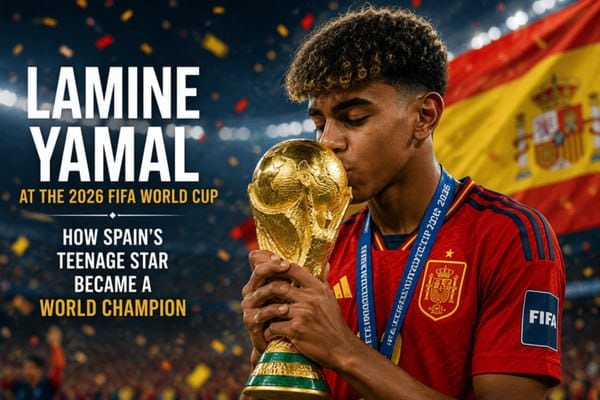
Their group draw is manageable. Spain are in Group H with Cape Verde, Saudi Arabia, and Uruguay. The Opta projection has them topping the group comfortably, and a favorable bracket draw into the knockout rounds would amplify that midfield advantage considerably. Lamine Yamal, who reportedly posted 23 goals and 15 assists for Barcelona in 2025/26 (described by Opta as the best output by a teenager in La Liga history, per fifawatch.com), provides an attacking dimension from wide areas that previous Spanish teams often lacked. Spain’s structure does not depend on a single forward. That is a feature, not a bug.
France: The Highest Ceiling, the Hardest Path
France are second in Opta’s probability model at 13.0%, with a 47.9% chance of reaching the quarterfinals and a 21.3% chance of reaching the final. Their attacking group, anchored by Mbappé, Dembélé, Olise, and Barcola, is widely considered the tournament’s deepest. The obstacle is Group I: Norway, Senegal, and Iraq.
Didier Deschamps is coaching his final tournament after 14 years at the helm of France. He guided them to two consecutive World Cup finals, winning in 2018 and finishing as runners-up in 2022 when Argentina beat them on penalties. France’s group-stage exit probability is higher than it should be for a 13% win-probability team, precisely because of the draw. Their 60.3% chance of topping Group I is the lowest of the top four favorites, per Opta. Norway, Senegal, and Iraq is not a death group by any traditional measure, but Norway alone represents a significant structural challenge.
The attacking depth is not in question. Kylian Mbappé enters with 12 career World Cup goals and is France’s designated penalty taker. Ousmane Dembélé won the 2025 Ballon d’Or. Michael Olise scored a hat trick in France’s final warm-up against Northern Ireland, per Yahoo Sports, and his club form for Bayern Munich included winning Bundesliga Player of the Season. That is genuine competition for forward minutes. The question Deschamps will face is how to deploy all of that firepower without sacrificing the defensive shape that has made France structurally sound across two tournament cycles.
France did lose to Ivory Coast in their pre-tournament warm-up, and Spain drew with Iraq in theirs, which both carry more narrative weight in press coverage than they probably deserve. Warm-up results tell you very little about tournament readiness. What matters is that France’s squad, on its worst day, is better than most opponents they will face before the semifinals. The concern is not quality. The concern is whether Deschamps can get a full, fit, motivated Mbappé for eight matches.
England and Argentina: Contenders With Specific Vulnerabilities
England sit third in Opta’s model at 11.2% with a 47.7% quarterfinal probability and 19% final probability, backed by the best qualifying record of any team in UEFA. Argentina, the defending champions, are fourth at 10.4% and face the structural challenge of repeating as World Cup winners for the first time since Brazil in 1958 and 1962.
England’s qualifying record deserves real emphasis. Eight wins from eight games, eight clean sheets, the only team in UEFA qualifying history to achieve that alongside Yugoslavia in 1954. Thomas Tuchel replaced Gareth Southgate and immediately got results. The squad he has assembled includes Harry Kane, who scored 61 goals across all competitions for Bayern Munich in 2025/26, Jude Bellingham, Declan Rice, and Bukayo Saka. That is a balanced group: defensive structure through Rice, creativity through Bellingham, and a striker whose club form this season is arguably the best of any forward in world football right now.
England are in Group L with Croatia, Ghana, and Panama. Opta gives them a 67.9% chance of topping the group, the second-highest probability among the big four. Their semi-final probability sits at 30.3%. The tactical concern with England under Tuchel is the same one that shadows any high-press system in summer heat on American turf: energy management across eight potential matches, with the final in New Jersey in July. England used cooling devices during training in Florida in pre-tournament preparations, per NBC Sports, which signals the coaching staff is aware of the problem. Whether awareness translates to a solution at full tournament intensity is a different matter.
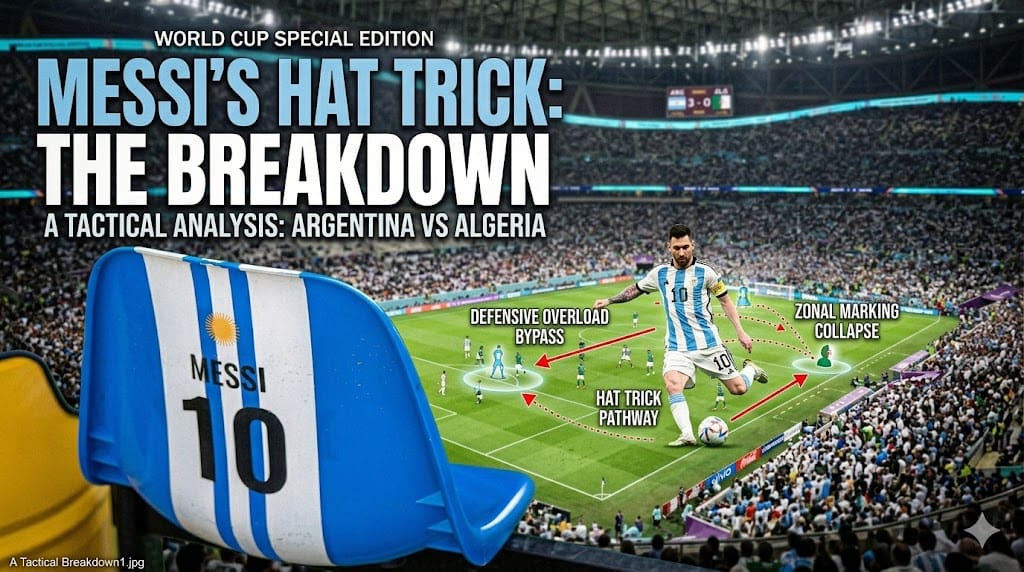
Argentina entered as defending champions trying to do something no men’s team has done since FIFA confirmed Brazil’s back-to-back titles in 1958 and 1962. Messi is 39 years old at tournament time and has confirmed this is his final World Cup. He is three goals shy of Miroslav Klose’s all-time record of 16 World Cup goals. The squad is not built exclusively around him: Lautaro Martínez, Enzo Fernández, Alexis Mac Allister, and Cristian Romero form a core that functions independently. Argentina topped Group J against Algeria, Austria, and Jordan with a 73.0% probability per Opta, the highest group-topping figure of any top contender. Their overall win probability of 10.4% reflects the difficulty of repeating, not a failure of squad quality.
Dark Horses: Norway, Netherlands, and Morocco
Opta gives Norway a 3.5% win probability, Colombia 2.1%, Morocco 1.9%, and Croatia 1.6%. Norway are the most structurally credible dark horse in the field, having scored 37 goals in eight qualifying games, one of only two teams alongside England to post a perfect UEFA qualifying record.
Norway’s case starts with the numbers and gets more interesting from there. Thirty-seven goals in eight qualifying matches, a 4.62 goals-per-game average, with Erling Haaland contributing 16 of them. Haaland added 27 Premier League goals in 2025/26. Martin Ødegaard controls midfield tempo. The structural problem is Group I, which draws them directly against France, Senegal, and Iraq. That is a brutal opening bracket for a team Opta rates as a 3.5% winner. The realistic Norway scenario is surviving the group in second or third place and then catching a favorable knockout draw, where Haaland’s volume shooting and Norway’s direct transition game become harder to neutralize over 90 minutes of knockout football.
Morocco is worth a closer look as well. Goal.com reported they are the current African champions following a 2026 AFCON win, though WideJournal is treating that as a secondary source pending further confirmation. What is not in dispute is Morocco’s 2022 World Cup semifinal run, which demonstrated they can organize defensively against elite opponents and exploit set pieces with clinical efficiency. Their Opta win probability of 1.9% reflects a small-sample tournament format where one penalty shootout can change everything. The Netherlands, meanwhile, built a qualifying record of 27 goals and only four conceded with Virgil van Dijk anchoring a back line that is genuinely difficult to break down. They sit in what Opta describes as a winnable Group F bracket, and their 3.6% overall win probability underestimates how dangerous a fully functioning Dutch defensive structure becomes once the brackets tighten.
2026 World Cup Contenders at a Glance
| Team | Opta Win % | QF Probability | Final Probability | Group | Key Player |
|---|---|---|---|---|---|
| Spain | 16.1% | 52.1% | 25.6% | Group H | Rodri / Lamine Yamal |
| France | 13.0% | 47.9% | 21.3% | Group I | Kylian Mbappé |
| England | 11.2% | 47.7% | 19.0% | Group L | Harry Kane / Jude Bellingham |
| Argentina | 10.4% | N/A | N/A | Group J | Lionel Messi / Lautaro Martínez |
| Portugal | 7.0% | N/A | N/A | Group K | Cristiano Ronaldo |
| Norway | 3.5% | N/A | N/A | Group I | Erling Haaland |
| Colombia | 2.1% | N/A | N/A | N/A | N/A |
| Morocco | 1.9% | N/A | N/A | N/A | N/A |
Win probabilities from Opta Analyst (25,000 simulations, June 2026). QF and Final probabilities shown only where confirmed by primary source. Group assignments per ESPN confirmed draw.
The Real Dark Horses: Norway, Colombia, and the Teams Built for This Moment
Every expanded World Cup produces at least one team that crashes the quarterfinals uninvited, and the field for 2026 offers several credible candidates. Norway is making its first World Cup appearance in more than two decades, with Erling Haaland headlining the squad. But the most important thing to understand about this Norwegian generation is that it is not a one-man show. Stale Solbakken’s side lost just one of their last 16 matches and won all eight qualifying games, bagging a Europe-high 37 goals, 21 of which were not scored by Haaland. The supporting cast is legitimately elite: Arsenal captain Martin Odegaard will wear the armband, while Alexander Sorloth will partner Haaland in a twin-tower attack after 20 goals this season for Atletico Madrid.
The structural obstacle for Norway is Group I. If Norway survives what amounts to the closest thing to a Group of Death at a 48-team tournament, nobody will want to play them in the knockout stage. The math is straightforward: their opening Group I game against Iraq is the most winnable fixture in the group, and a big win there should all but assure them of a place in the last 32, bolstering confidence ahead of trickier tests against Senegal and France. Given the expanded format now sends 32 teams through, Norway’s path to the Round of 16 is realistic even as a group runner-up.
Colombia is the second dark horse that carries genuine structural merit. Backed by what will be one of the largest followings outside of the host nations and with no climate issues to concern them, Colombia have plenty going for them even before you factor in Luis Diaz being one of the form players in world football right now. Opta’s 25,000-simulation model places Colombia’s tournament win probability at 2.1 percent, modest but meaningfully ahead of several nationally ranked squads. Morocco, meanwhile, bring recent tournament pedigree as 2022 semifinalists and are arguably the best-placed team outside Europe and South America to go deep, with Achraf Hakimi providing a genuine world-class option and Brahim Diaz adding attacking unpredictability.
Alternative Perspectives
Not every analyst is convinced that Norway’s qualifying numbers translate to knockout-stage success. Critics point out that Norway’s World Cup pedigree is historically modest, with just three prior appearances at the finals and only two wins in their entire tournament history, having progressed beyond the group stage just once, in 1998. There is also a legitimate concern that Haaland’s goal dominance in a qualifying campaign against relatively modest European opposition does not account for the level of defensive organization Norway will face against France or a potential last-16 opponent, and that teams without meaningful tournament experience routinely underperform in high-pressure knockout environments regardless of their group-stage firepower.
Golden Boot and Golden Ball: The Individual Awards Race
The individual awards conversation at this tournament is defined by a rare combination of proven champions and generational newcomers competing simultaneously. On the Golden Boot, France’s Kylian Mbappe is the favorite after winning the Golden Boot four years ago with eight goals, one more than Messi. His case rests not just on reputation: Mbappe’s World Cup record of 12 goals in 14 games is legitimate, and despite a turbulent debut season at Real Madrid, his numbers were exceptional with 25 goals in La Liga and 15 in the Champions League. He is also France’s designated penalty taker, which is a structural goal-scoring advantage that compounds across eight potential matches.
Harry Kane enters as the most credible challenger. Kane arrived at the World Cup on the back of an astonishing 61-goal season for Bayern Munich, and England’s all-time leading scorer won the Golden Boot in 2018 with six goals as the Three Lions finished third. With a stronger supporting cast and in the form of his life, there is every chance he could score even more this time around. Erling Haaland rounds out the top tier: there may not be a better pure goal scorer in world football, Norway’s attack runs entirely through him, and if Norway advances beyond the group stage, Haaland has the finishing ability to challenge anyone in this market.
On the Golden Ball, which is awarded by media vote to the tournament’s best overall player, the market has converged around two names. Thirteen out of 19 ESPN writers picked Lamine Yamal for best young player, and five expect him to go home with the Golden Ball for best player outright. Out of the world’s most clinical finishers, Kylian Mbappe emerged on top with seven picks for Golden Boot and three for the Golden Ball. The historical pattern matters here too: since the Golden Ball’s introduction in 1982, only two players have won both the Golden Ball and the Golden Boot in the same tournament, meaning Mbappe’s best path to the MVP award likely runs through a finals appearance rather than pure goal output alone.
Lamine Yamal’s case for the Golden Ball is partly a function of Spain’s projected deep run and partly a function of his position as the primary creative engine for the tournament’s statistical favorite. The Golden Ball usually requires both production and a deep team run, but Yamal has the profile to become the breakout star of 2026 if Spain’s possession structure consistently puts him in space. If this tournament becomes a passing-of-the-torch moment, Yamal is the name most likely to own it. One fitness caveat applies: Yamal is recovering from a torn left hamstring sustained on April 22, though he was still named La Liga Player of the Year with 16 goals and 12 assists despite missing the final six matches. He is expected to be ready for Spain’s opener.
Michael Olise deserves a mention that often gets buried in the Mbappe conversation. Olise is one of the more intriguing names in the Golden Ball market because France’s attacking depth gives him both opportunity and competition, and his rise as a creative wide player gives France a high-skill option capable of tilting matches with delivery, ball-carrying, and chance creation. The primary constraint is role clarity: France has enough elite attackers that Olise may need a defined starting role and a major knockout-stage moment to push into serious Golden Ball contention.
Our 2026 FIFA World Cup Predictions: Final Verdicts
The collective weight of the verified data points in one direction for the champion pick. Spain’s 16.1 percent win probability from Opta, their undefeated qualifying campaign, their status as reigning European champions, and a deep technically elite squad make them the most defensible selection. France, however, are not far behind and carry perhaps the most explosive attacking unit in the tournament. ESPN’s writers view Spain and France as the clear favorites, with the two European powerhouses earning 16 out of 19 votes for the winner, and Spain being the only country to appear on every ballot.
For the defending champions, the expectation is a deep run rather than a successful title defense. Messi is three goals off Miroslav Klose’s record of 16 World Cup goals, and he could potentially tie that record in the group stage alone against Algeria, Austria, and Jordan. Only two nations, Italy in 1934 and 1938, and Brazil in 1958 and 1962, have ever repeated as World Cup champion, and nothing in the 2026 data strongly suggests Argentina will become the third. Our final verdicts on the major 2026 FIFA World Cup predictions are: Spain to win the tournament, France to reach the final, Mbappe to take the Golden Boot, Yamal to claim the Golden Ball, and Norway to be the tournament’s most compelling dark horse before a quarterfinal exit. As these predictions make clear, the 2026 FIFA World Cup predictions landscape is defined by both historical pattern and a set of exceptional circumstances, including a 48-team field, an eight-game path to the trophy, and the final tournament appearances of Messi and Ronaldo, that make confident forecasting more difficult and more compelling than at any World Cup in recent memory.
Frequently Asked Questions
Who is the favorite to win the 2026 FIFA World Cup Golden Boot?
Kylian Mbappe is the consensus Golden Boot favorite heading into the 2026 FIFA World Cup. He won the award at the 2022 World Cup in Qatar with eight goals, including a hat trick in the final, and enters 2026 with 12 career World Cup goals. Harry Kane, coming off a 61-goal club season for Bayern Munich, is the primary challenger, followed by Erling Haaland, who scored 16 goals in eight World Cup qualifying matches for Norway. Historically, no male player has ever won the Golden Boot at consecutive World Cup tournaments, which adds context to how difficult Mbappe’s repeat bid would be.
Which teams are considered the biggest dark horses at the 2026 FIFA World Cup?
Norway leads most dark horse lists based on analytical and editorial consensus. The Scandinavians posted a perfect qualifying record with 37 goals in eight matches and are appearing in their first World Cup since 1998. Opta’s 25,000-simulation model gives Norway a 3.5 percent tournament win probability, the highest among non-traditional contenders. Colombia (2.1%) and Morocco (1.9%) follow. Colombia benefits from a large fan base in North America, no climate disadvantage, and Luis Diaz in strong form. Morocco brings 2022 semifinal experience and current African championship pedigree. Norway’s main obstacle is their group, which includes France and Senegal.
Has any country ever won back-to-back FIFA World Cups?
Only two nations in the history of the men’s FIFA World Cup have successfully defended the title. Italy won consecutive tournaments in 1934 and 1938, and Brazil repeated in 1958 and 1962. No nation has retained the trophy since Brazil over 60 years ago, making Argentina’s bid to follow their 2022 Qatar triumph with another championship one of the most historically unlikely outcomes in the tournament. Argentina entered 2026 with a Opta win probability of 10.4 percent, fourth overall behind Spain, France, and England.
How does the expanded 48-team format change the 2026 FIFA World Cup compared to previous editions?
The 2026 FIFA World Cup expanded from 32 to 48 teams, increasing total matches from 64 to 104 across 12 groups of four teams each. For the first time, 32 teams advanced from the group stage, consisting of all 12 group winners, 12 group runners-up, and the eight best third-place finishers. This creates an additional Round of 32 knockout stage before the Round of 16. As a result, finalists will play eight matches rather than the traditional seven, adding significant physical and tactical demands. The group stage alone accounts for 72 matches, up from 48 in previous editions, and four nations, Cabo Verde, Curacao, Jordan, and Uzbekistan, are making their first-ever World Cup appearances under this expanded system.