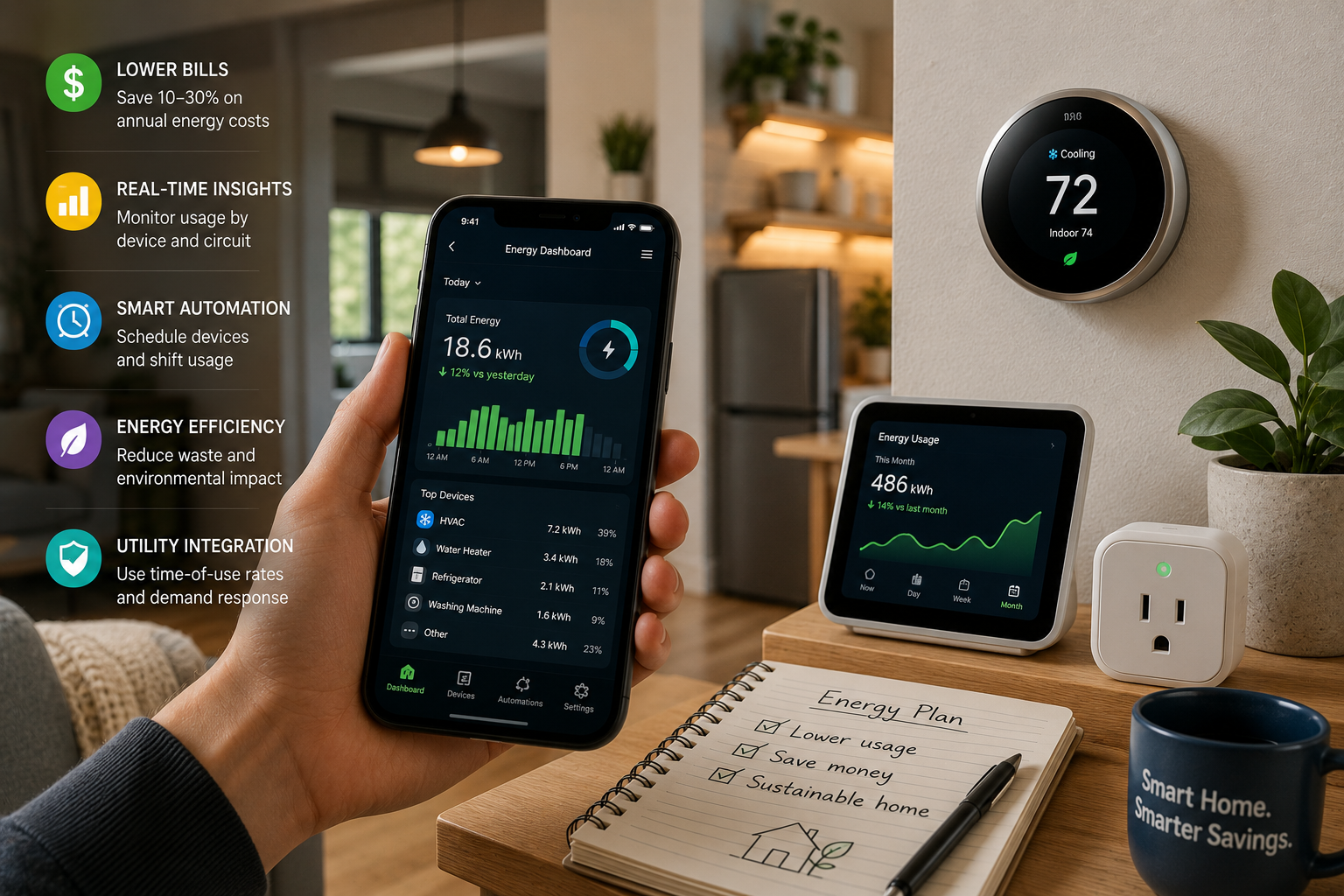
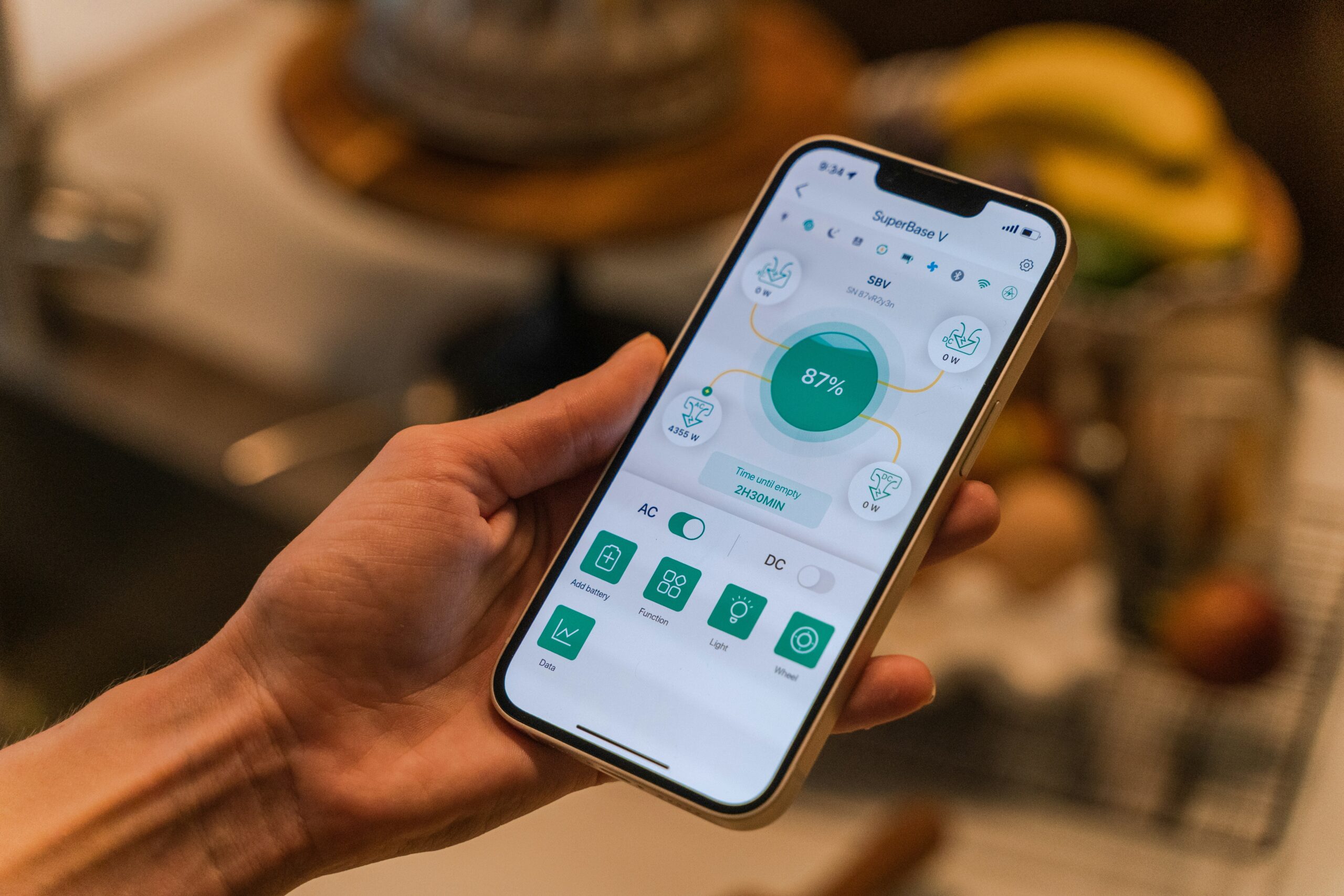
Energy costs have climbed steadily, and most households are looking for smarter ways to take control — without sacrificing comfort. A smart home energy management system puts your heating, cooling, lighting, and appliances on the same intelligent platform, learning your habits and trimming waste automatically. If you’re new to the space, our Smart Home hub is a great place to start, and you’ll find more ideas throughout our broader Home articles section. Whether you’re a renter looking for a plug-and-play thermostat or a homeowner ready for a whole-home overhaul, this guide covers real products, realistic costs, and honest advice.
The market behind these systems is growing fast. According to one analysis, the smart home energy management system market was valued at $5.6 billion in 2024 and is projected to reach $12.3 billion by 2033, driven by rising electricity prices, AI-driven optimization, and expanding utility demand-response programs. That momentum means more options — and more to evaluate — than ever before.
What Is a Home Energy Management System?
A home energy management system (HEMS) is a connected platform that monitors, automates, and optimizes your household’s electricity use across devices like thermostats, water heaters, EV chargers, and solar inverters — often using AI to reduce waste without requiring constant manual input.
At its core, a HEMS ties together sensors, smart plugs, a central hub or app, and sometimes a utility data connection. Entry-level setups might be nothing more than a smart thermostat and a couple of smart plugs. A full-featured system can monitor circuit-by-circuit consumption, shift loads to off-peak rate windows, and integrate rooftop solar or a home battery. Difficulty ranges from beginner (plug in, download an app) to advanced (licensed electrician required for panel-level monitors).
How Does AI Home Energy Automation Work?
Modern platforms increasingly rely on machine learning to build a model of your home — when rooms are occupied, how long your HVAC takes to reach temperature, which appliances draw the most power. The system then shifts non-urgent loads (like running the dishwasher or charging an EV) to cheaper overnight windows, and pre-conditions your home before peak rate hours hit. A peer-reviewed systematic review published in Springer Nature (April 2025) covering research from 2018 to 2024 found that AI and machine learning algorithms, combined with optimization techniques such as mixed-integer linear programming, are central to next-generation demand-side management in smart homes — though the review also flags data privacy as an ongoing challenge worth watching.
The Best Smart Home Energy Management Picks for 2026
The systems below span a wide range of budgets and home types — from a $150 smart thermostat that installs in 30 minutes to a whole-home monitor that requires a licensed electrician and delivers circuit-level insight.
Best Smart Thermostats for Energy Savings
A smart thermostat remains the highest-ROI entry point for most households. The Honeywell Home X2S, announced at CES 2025, adds predictive scheduling and tighter integration with utility demand-response programs. Google Nest Learning Thermostat (4th gen) and Ecobee Smart Premium are the other leading contenders, both offering room sensors and robust app ecosystems. Installation is typically DIY-friendly (30–60 minutes, no electrical license needed), and costs run $150–$280 for the device itself. Research suggests smart thermostat energy savings of 10–15% on heating and cooling bills are realistic for most households — though results vary based on climate, home insulation, and prior habits.
Safety note: If your home has older wiring without a common (C) wire, check compatibility before purchasing. Some models include an adapter; others require a simple wiring addition best handled by an HVAC technician.
Whole-Home Energy Monitors: Worth the Investment?
Devices like the Emporia Vue 3 and Sense Energy Monitor clip onto your main breaker panel and provide circuit-by-circuit or appliance-level consumption data. Installed cost runs roughly $250–$400 for the hardware, plus $150–$300 for a licensed electrician to install the current-sensing clamps safely inside your panel. The payback comes from visibility: many users discover one or two “phantom” appliances or failing HVAC components that alone justify the cost. Do not attempt panel-level installation yourself unless you are a licensed electrician — live bus bars carry lethal voltage even when the main breaker is off.
Matter 1.4 Energy Devices: The Interoperability Upgrade
The Matter 1.4 standard, finalized in late 2024, meaningfully expanded the energy device profile — covering EV chargers, water heaters, and HVAC equipment in addition to plugs and lights. If you’re building a system in 2026, prioritizing Matter 1.4 energy devices ensures your components can talk to one another regardless of brand, and future-proofs your investment against ecosystem fragmentation. Look for the Matter logo on packaging, and verify your hub (Apple HomePod, Amazon Echo, Google Nest Hub, or Samsung SmartThings) is running updated firmware that supports the 1.4 energy clusters.
Solar + Battery Integration: Does It Make Sense?
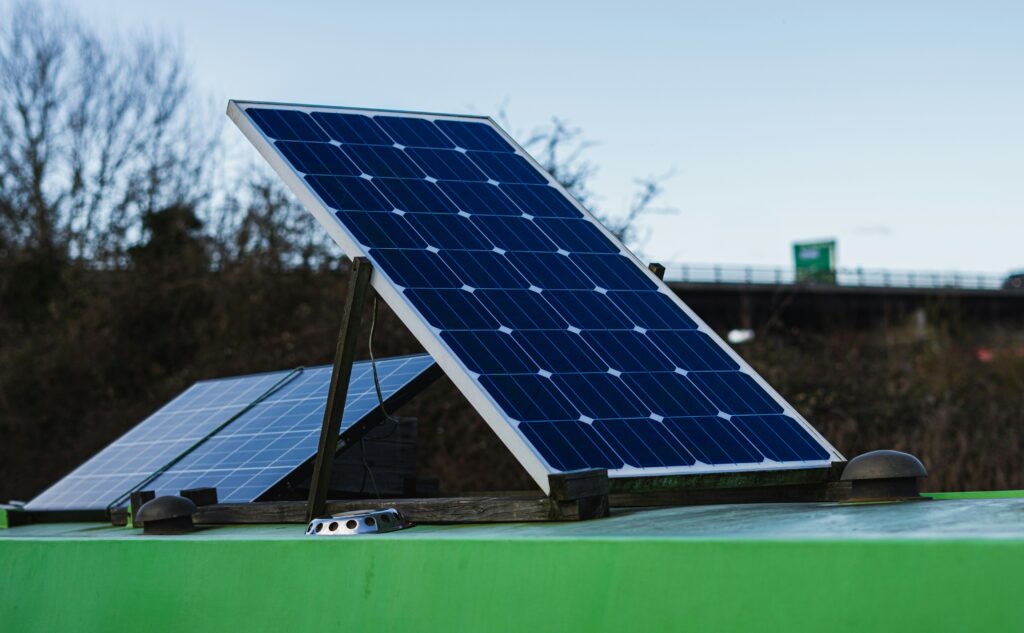
Platforms like Tesla Energy Gateway, Enphase IQ System Controller 3, and SolarEdge Home Hub go beyond monitoring to actively route energy between solar panels, a home battery, the grid, and your loads. These are powerful but expensive — system costs including installation commonly run $10,000–$25,000 or more depending on battery capacity and local labor rates. Federal tax incentives under the Inflation Reduction Act may offset 30% of qualifying costs through 2032, though tax situations vary and you should consult a tax professional. A January 2026 Mordor Intelligence report on the North America Energy Management Systems market notes that the Inflation Reduction Act has added an estimated 4.1 percentage points to the sector’s CAGR, and that ML-driven HEMS are reducing household consumption by 20% or more in well-optimized deployments.
Comparing Top Systems at a Glance
The table below compares five leading systems across the key factors most buyers care about: upfront cost, installation difficulty, protocol support, and estimated energy impact.
| System / Device | Approx. Cost (Hardware) | Install Difficulty | Protocol / Standard | Est. Energy Impact |
|---|---|---|---|---|
| Ecobee Smart Premium Thermostat | ~$250 | Beginner (DIY, 30–60 min) | Matter 1.2+, Wi-Fi, Alexa built-in | Up to 26% HVAC savings (Ecobee internal data) |
| Honeywell Home X2S | ~$220 | Beginner (DIY, 30–60 min) | Wi-Fi, demand-response ready | 10–15% heating/cooling reduction (typical range) |
| Emporia Vue 3 (whole-home monitor) | ~$250–$300 | Advanced (licensed electrician recommended) | Wi-Fi; 16 circuit sensors | Visibility-driven; savings vary by usage patterns |
| Enphase IQ System Controller 3 | $1,500+ (excl. solar/battery) | Professional install required | Zigbee, Wi-Fi, Enphase ecosystem | Optimizes solar self-consumption; grid export control |
| ABB Smart EMS (launched May 2025) | Commercial pricing; residential tiers TBA | Professional install required | Multi-protocol; Matter-compatible | AI load-shifting; consumption reduction targets 15–25% |
“According to Mordor Intelligence’s Home Energy Management Market report, AI-driven smart home energy management systems may cut household energy consumption by 10 to 30 percent, and the global HEMS market is forecast to grow from $3.80 billion in 2025 to $8.28 billion by 2030 at a compound annual growth rate of 16.86%.”
“According to Grand View Research’s Smart Home Energy Monitoring Devices Market Report, the hardware segment held 69.3% of revenue share in 2024, smart light bulbs are the fastest-growing product category at a projected 21.0% CAGR through 2033, and the overall market is expected to reach $8.51 billion by 2033.”
Is a Smart Home Energy Management System Right for You?
The honest answer depends on your home type, rate structure, and how much complexity you’re willing to manage — a simple thermostat upgrade delivers real savings for most people, while a full solar-plus-battery system makes most sense for high-consumption homeowners in markets with strong time-of-use rates.
Who Benefits Most?
Homeowners on time-of-use electricity rates see the fastest payback, because load-shifting has actual dollar value. Households with electric vehicles, heat pumps, or rooftop solar have more loads worth optimizing. Renters can still benefit from a smart thermostat and smart plugs — both are removable and portable.
Alternative Perspectives
Not everyone is convinced smart home energy systems are worth the complexity. Some energy analysts argue that improving home insulation, sealing air leaks, and upgrading to an efficient HVAC unit deliver larger, more reliable savings than layering on connected devices — and without the ongoing app management or privacy trade-offs. Privacy advocates also note that continuous monitoring of appliance usage creates detailed behavioral profiles that are stored on third-party servers. These are legitimate concerns, and some households may find that a one-time energy audit and building envelope improvements offer a better return than any smart device. Both approaches can complement each other, but the insulation-first argument deserves serious consideration before spending on hardware.
Frequently Asked Questions
Savings vary widely based on your home, climate, and existing efficiency. Research suggests AI-driven systems may reduce household energy consumption by 10–30%, with smart thermostats alone typically delivering 10–15% on heating and cooling. Results are rarely guaranteed, and a well-insulated home with an efficient HVAC unit will see smaller marginal gains than a leaky, older home.
It depends on the components. Smart thermostats and smart plugs are generally DIY-friendly with no special tools or licenses. Whole-home energy monitors that clip inside your electrical panel, and solar or battery storage systems, should always be installed by a licensed electrician. Never open your main panel yourself unless you are qualified — live busbars remain energized even with the main breaker off.
Matter is an open smart home standard developed by the Connectivity Standards Alliance. Version 1.4, finalized in late 2024, added standardized device profiles for EV chargers, water heaters, and HVAC systems. Choosing Matter 1.4-certified devices means they can communicate with any compatible hub or voice assistant, reducing the risk of ecosystem lock-in and making future upgrades easier.
Incentives vary by location and product type. In the United States, the Inflation Reduction Act offers a 30% federal tax credit on qualifying clean energy equipment including home battery storage and heat pumps through 2032 — though individual tax situations differ and you should confirm eligibility with a tax professional. Many utilities also offer rebates for smart thermostats and demand-response enrollment. Check your utility’s website and the ENERGY STAR rebate finder for current local offers.
Disclaimer: The information provided in this article is for educational and informational purposes only. Working with electrical panels and high-voltage wiring carries inherent risks of severe injury, electrocution, or property damage. Always consult and hire a licensed electrician for panel-level installations. Additionally, tax incentives and utility rebates vary significantly by location, financial situation, and policy changes. WideJournal does not provide professional financial, legal, or electrical advice. Always verify current local regulations and consult with certified professionals before making financial investments or modifying your home’s electrical system.