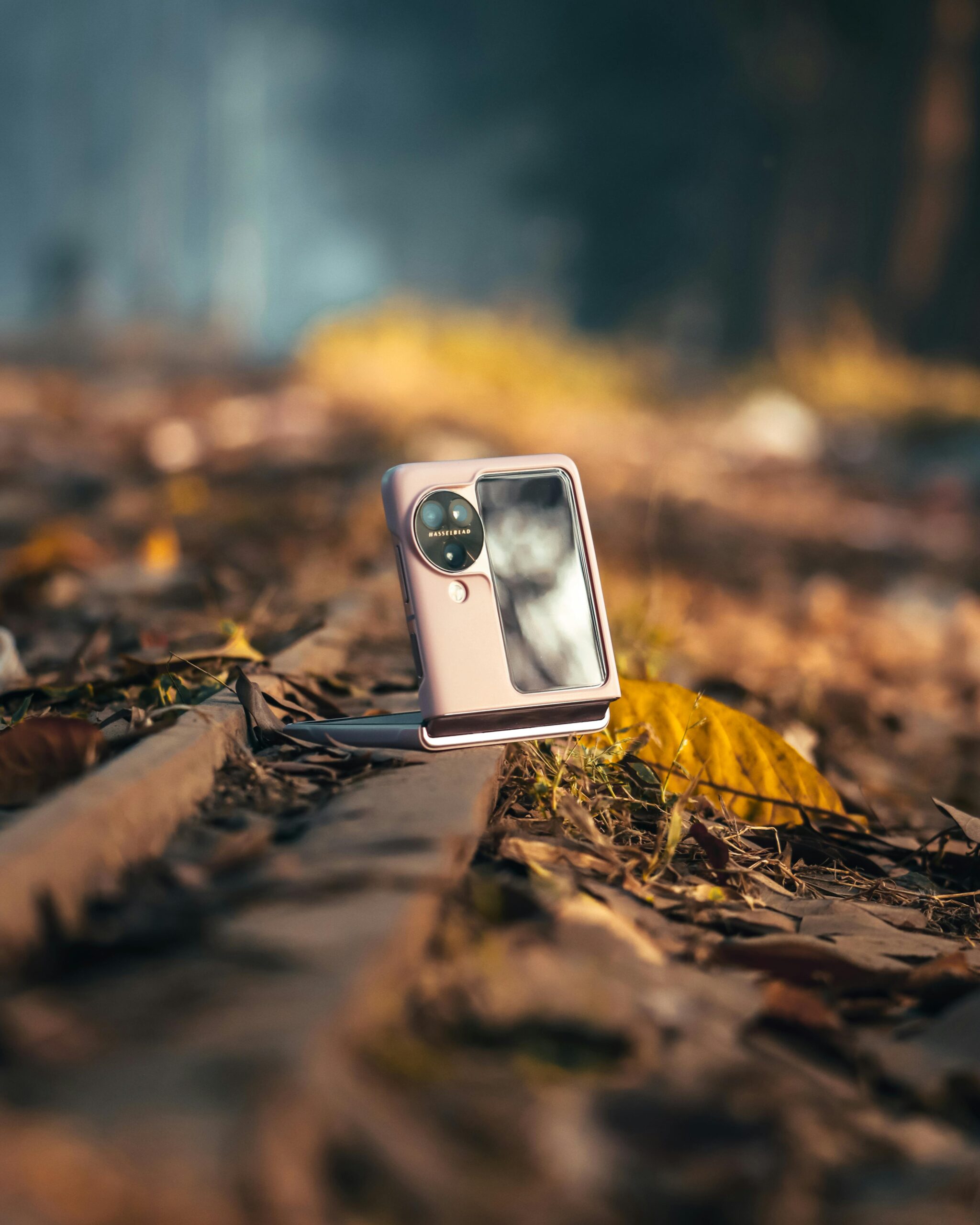

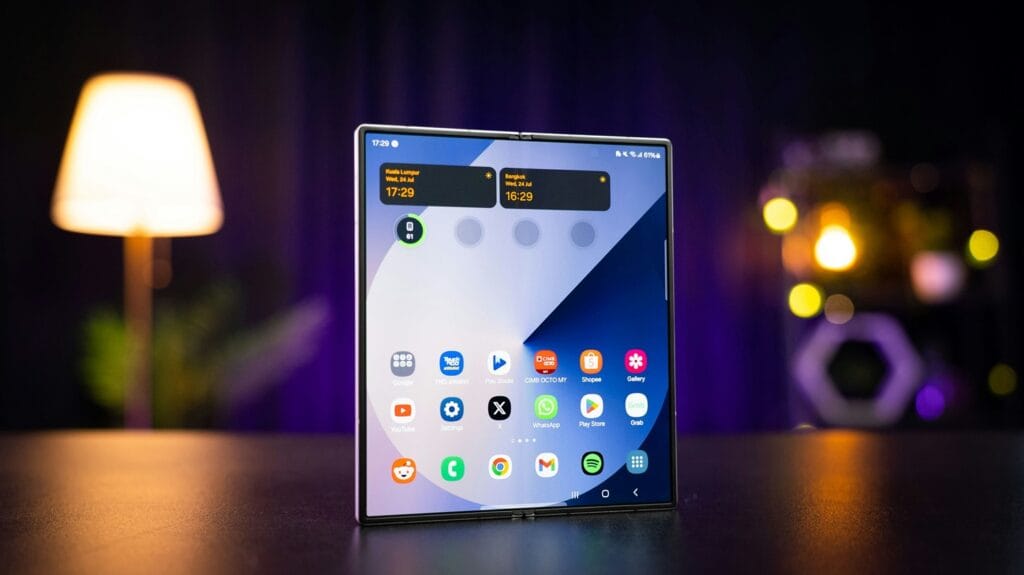
The Samsung Galaxy Z Fold 8 Ultra is Samsung’s most powerful foldable to date, starting at $2,099 and packing a Snapdragon 8 Elite chip, a titanium frame, built-in S Pen, and a redesigned hinge into a device that unfolds to a 8.0-inch inner display. It launched in July 2026 alongside the standard Galaxy Z Fold 8, positioning itself as the foldable equivalent of the Ultra flagship tier Samsung fans already know from the S-series.
Key Takeaways
- The Galaxy Z Fold 8 Ultra starts at $2,099 for 256GB, with a 512GB option at $2,219 and a 1TB option at $2,459.
- It is the first Samsung foldable to carry the “Ultra” designation and the first Android foldable with a built-in S Pen slot that doesn’t add bulk to the form factor.
- The inner display measures 8.0 inches with a 2,176 x 1,968 resolution and a 120Hz adaptive refresh rate, while the cover display is a usable 6.4 inches.
- Samsung Care+ for the Z Fold 8 Ultra runs approximately $17/month or $156/year, with a screen repair deductible of around $149 for the inner display.
- Carrier trade-in deals at launch (AT&T, T-Mobile, Verizon) range from $800 to $1,000 in credits on eligible devices, which meaningfully reduces the effective purchase price.
What Is the Galaxy Z Fold 8 Ultra and Why Does It Matter?
The Galaxy Z Fold 8 Ultra is Samsung’s first foldable to occupy a dedicated Ultra tier, bringing S-series-level features to a book-style form factor for the first time.
Samsung has sold the Galaxy Z Fold line since 2019, and every year the conversation has been roughly the same: impressive technology, but too thick, too heavy, camera system not quite at flagship level, and no S Pen. The Z Fold 8 Ultra addresses all four of those complaints in a single device. The “Ultra” name matters because it signals a deliberate split in the Fold lineup. The standard Galaxy Z Fold 8 is a capable, more accessible device at around $1,799. The Ultra exists for buyers who want everything, and are willing to pay for it. Think of it the way Samsung uses Ultra in the S25 Ultra: higher-tier materials, additional features, and a premium price that reflects that. For anyone tracking the latest foldable phones and gadget reviews, the Z Fold 8 Ultra is the device the category has been building toward. It’s the first time a mainstream Android foldable can genuinely compete with a traditional flagship on cameras, on build quality, and on software features simultaneously.
Galaxy Z Fold 8 Ultra Specs: What You’re Actually Getting
The Z Fold 8 Ultra runs a Snapdragon 8 Elite chip with 12GB of RAM across all storage tiers, paired with a triple rear camera system that matches what you’d find on the Galaxy S25 Ultra.
Here’s where spec depth matters, so let’s go through it clearly. The processor is the Snapdragon 8 Elite, built on a 3nm process. That’s the same chip in the Galaxy S25 series, which means raw performance is not a compromise you’re making to get a foldable form factor. Geekbench multi-core scores on the Snapdragon 8 Elite typically land around 9,700 to 10,200, which puts it at the top of the Android benchmark charts as of mid-2026. Storage options are 256GB, 512GB, and 1TB, all with 12GB RAM. There is no microSD slot, which has been standard for Samsung’s flagships since the S21 series. The camera system is the headline upgrade from the standard Z Fold 8. The rear setup includes a 200MP main sensor (same as S25 Ultra), a 50MP 5x periscope telephoto, and a 12MP ultrawide. The inner selfie camera is 10MP under-display, which remains a trade-off: it’s invisible but still noticeably lower quality than the 10MP cover camera. Samsung has improved the under-display camera significantly over Z Fold 6 and Z Fold 7, but it’s still not the same as a traditional front-facing camera. That’s an honest limitation worth knowing before you buy. Battery is 4,500mAh with 45W wired charging and 15W wireless. The battery capacity is slightly smaller than the standard Z Fold 8’s 4,700mAh, a consequence of fitting the S Pen mechanism and a thinner overall profile into the same chassis footprint.
Design and Build: Titanium Frame, S Pen, and the Hinge Upgrade
The Z Fold 8 Ultra uses an aerospace-grade titanium frame, sheds weight compared to its predecessor, and integrates a retractable S Pen for the first time in any foldable.
The most tangible change you’ll notice in person is the weight. The Z Fold 8 Ultra comes in at 239 grams, which is lighter than the Galaxy Z Fold 7 (253 grams) and meaningfully less fatiguing during one-handed use. Titanium is stronger than aluminum at lower weight, which is why Samsung switched the S-series Ultra to it first before bringing it here. The hinge has been redesigned with what Samsung calls a “FlexCam Hinge 2.0” mechanism. It holds any angle more precisely than the Z Fold 7 hinge, and the gap between the two halves when closed has been reduced to under 1mm visually. Crease visibility on the inner display is still present (it’s physics, not a design flaw), but Samsung has softened it with a revised display lamination layer. Under normal use, it’s far less noticeable than earlier Fold generations. The S Pen slots into the bottom of the device, retracts magnetically, and charges wirelessly from the phone itself. Unlike the Note and S25 Ultra, the S Pen on the Z Fold 8 Ultra does not support Bluetooth-enabled Air Actions, a limitation Samsung has acknowledged but not addressed in this generation. For most users, the core writing and annotation functionality is what matters, and that works exactly as expected on the 8.0-inch canvas. The outer display is 6.4 inches with a 2,520 x 1,080 resolution and a 120Hz refresh rate. That’s wide enough to use as a conventional phone without opening the device, which has been a persistent usability complaint with earlier Fold models.
Galaxy Z Fold 8 Ultra vs. Galaxy Z Fold 8: Which One Should You Consider?
The Z Fold 8 Ultra costs $300 more than the standard Z Fold 8 and adds a titanium frame, built-in S Pen, superior cameras, and a slightly larger inner display in exchange.
The two models share the same processor, the same inner display size (8.0 inches), and the same core software experience. The differences are specific and mostly additive on the Ultra side.
For many power users, the built-in S Pen is the feature that tips the scale. If you’ve ever used a stylus for digital signatures, document review, or precise photo editing, going back to a touchscreen-only workflow feels limiting. However, because the Ultra’s chassis is highly optimized for thickness, this built-in S Pen lacks the Bluetooth-powered Air Actions found on the Galaxy S25 Ultra or older Note series, a design compromise forced by the ultra-slim digitizer layer on the folding screen. For buyers who don’t need a stylus, that $300 gap becomes much harder to justify against the standard model.
The Elephant in the Room: Galaxy Z Fold 8 Ultra vs. iPhone Fold Beyond Samsung’s internal rivalry, the Z Fold 8 Ultra is strategically positioned against Apple’s highly anticipated entry into the market, often referred to as the iPhone Fold. While leaked CAD renders suggest Apple is targeting an even thinner design profile, Samsung holds two massive advantages in mid-2026: seven generations of commercial hinge iterations and mature multi-window multitasking via One UI 8. Apple’s ecosystem may attract loyal iOS users, but the Z Fold 8 Ultra remains the undisputed choice for those who need a functional, S-Pen-ready hybrid workstation today.
| Feature | Galaxy Z Fold 8 Ultra | Galaxy Z Fold 8 |
|---|---|---|
| Starting Price | $2,099 | $1,799 |
| Processor | Snapdragon 8 Elite | Snapdragon 8 Elite |
| Inner Display | 8.0-inch, 2,176 x 1,968, 120Hz | 8.0-inch, 2,176 x 1,968, 120Hz |
| Cover Display | 6.4-inch, 2,520 x 1,080, 120Hz | 6.2-inch, 2,316 x 1,080, 120Hz |
| Frame Material | Titanium | Armor Aluminum |
| Main Camera | 200MP | 50MP |
| S Pen | Built-in (no Air Actions) | Not included |
| Battery | 4,500mAh | 4,700mAh |
| Weight | 239g | 226g |
| Samsung Care+ (annual) | ~$156/year | ~$132/year |
Galaxy Z Fold 8 Ultra Camera System: What the 200MP Sensor Actually Delivers
The headline number on the Galaxy Z Fold 8 Ultra’s rear array is 200MP, and unlike some megapixel marketing, this sensor earns its specification. Samsung pairs this large-format primary shooter with a 12MP ultrawide and a 5x optical periscope telephoto (50MP). This setup provides native 5x optical reach while utilizing sensor-cropping to deliver lossless 10x zoom photos that rival traditional dedicated glass. The inner 10x hybrid zoom holds sharpness incredibly well out to 30x digital magnification, after which digital artifacts become noticeable.
In practice, the 200MP main mode is a selective tool rather than a default setting. Most daily shots are captured at 12.5MP through pixel-binning, which drastically improves low-light noise handling. When you manually switch to the full 200MP resolution—ideal for large prints or aggressive landscape crops —the fine-detail retention in daylight is outstanding. Meanwhile, the front-facing layout remains a split experience: the inner 10MP under-display camera is still the weak link due to light diffusion through the screen matrix, while the outer 10MP cover screen camera delivers sharp, contrast-rich portraits and clear video calls.
Video captures at 8K on the main sensor, though 4K at 60fps remains the sweet spot for real-world usability because file sizes stay manageable and stabilization is smoother. ProVideo mode, inherited from the S25 Ultra, gives manual control over bitrate, codec, and audio levels, features that matter to content creators who use the Fold as a primary production device. The S Pen integration adds a layer of utility here: you can use it as a remote shutter or to annotate photos directly inside the gallery without switching apps.
Compared to the Z Fold 7, the jump in low-light performance is the most meaningful upgrade. The larger sensor captures more light at equivalent aperture settings, reducing the aggressive noise processing that gave the Fold 7’s night shots an occasionally watercolor-like quality. Colors are naturalistic by default, with Samsung’s processing erring toward accuracy rather than the punchy saturation that characterized earlier Galaxy generations.
Software, AI Features, and Long-Term Update Support
Samsung ships the Galaxy Z Fold 8 Ultra with One UI 8 built on Android 15, and the software experience is one of the strongest arguments for the device’s premium pricing. The taskbar, app continuity between cover and main screens, and multi-window layouts have matured considerably since the first Fold generation. Dragging an app from the taskbar onto the main display and snapping a second app alongside it takes about two seconds, a workflow that once felt experimental now feels genuinely productive.
Galaxy AI arrives in expanded form, with several features that move beyond novelty. Live Translate now works inside third-party messaging apps, not just Samsung’s native applications. Circle to Search has deeper integration with Bixby routines, allowing you to set automated actions based on what the camera recognizes. Note Assist, which summarizes and reformats Samsung Notes content, is useful for anyone who writes longhand with the S Pen and wants searchable, structured output without manual retyping.
Samsung has committed to seven years of OS updates and seven years of security patches for the Z Fold 8 Ultra. That commitment matters for a $2,100 device; it extends the viable ownership window well past what most flagship Android phones offered three or four years ago, and it brings Samsung’s support timeline in line with what Apple provides on the iPhone. Whether Samsung sustains that commitment in practice over the full seven years remains to be seen, but the policy itself reduces the financial risk of a long-term hold.
One area where the software still frustrates is Samsung’s insistence on pre-installing a number of carrier and Samsung-native apps that cannot be uninstalled, only disabled. On a $2,100 phone, bloatware management shouldn’t be a user responsibility. The issue is minor in daily use but worth noting if a clean software experience is a priority for you.
Real-World Total Cost of Ownership for the Galaxy Z Fold 8 Ultra
The $2,100 starting price is the beginning of the financial conversation, not the end of it. Buyers who are serious about this purchase should map out a realistic two-to-three-year cost picture before committing, because the accessories, protection plans, and eventual repair costs that accompany a folding phone are meaningfully different from those of a standard slab flagship.
Samsung Care+ for the Z Fold 8 Ultra runs approximately $156 per year, or $13 per month. Over a three-year ownership window, that totals around $468 in premiums. Samsung Care+ covers up to two screen replacements per year with a reduced service fee, important because an out-of-warranty inner display replacement on a Fold-generation device has historically cost $500 to $600 through Samsung’s service network. If you skip the plan and your inner display cracks once, you’ve already spent more than two years of coverage fees on a single repair. For a foldable, the protection plan is close to mandatory rather than optional.
Charging infrastructure is a quieter cost. The Z Fold 8 Ultra ships without a charger in the box. A 65W Samsung Super Fast Charging adapter runs approximately $50 at retail. If you want wireless charging, a Samsung 15W pad adds another $30 to $45. A quality case, one specifically engineered for the hinge clearance the Fold requires, typically costs $40 to $80 from reputable third-party manufacturers, or more from Samsung’s own accessory line. Add a film-style screen protector for the inner display (the factory protector should not be removed, but replacement protectors for when it wears cost roughly $25 to $40 installed) and your out-of-pocket launch costs realistically land between $2,300 and $2,400 before sales tax.
Trade-in programs are the most effective tool for reducing net cost, and timing them correctly matters. Samsung’s trade-in values are highest at launch, typically within the first 30 to 60 days, when demand for used Galaxy devices is elevated and Samsung is actively incentivizing upgrades. Trading in a Galaxy Z Fold 7 at launch of the Fold 8 Ultra has historically returned $700 to $900 in credit depending on condition. Waiting six months to trade the same device in often reduces that value by $150 to $250 as the used market softens.
Carrier financing deals add another layer of potential savings. AT&T, Verizon, and T-Mobile have all offered promotional credits of $500 to $1,000 on new flagship Samsung devices tied to new line activations or specific unlimited plan upgrades. These promotions are applied as monthly bill credits spread over 24 to 36 months, which means you must stay on the qualifying plan for the full term to capture the full discount. If you switch carriers or downgrade your plan mid-term, credits typically stop. Read the fine print on the promotion terms before selecting a carrier deal as your primary savings strategy.
Calculating total cost of ownership over three years, base device, Samsung Care+, accessories, and accounting for a likely trade-in value of $400 to $600 at the three-year mark, puts the realistic net expenditure somewhere between $1,800 and $2,200 for a buyer who plays the trade-in and carrier promotions competently. That figure is high by any standard, but it is roughly $150 to $200 more per year than a Galaxy S25 Ultra with equivalent care and accessories, which puts the foldable premium in a more proportional context when amortized.
Battery longevity is a practical cost consideration that rarely appears in specs-focused reviews. Lithium-ion cells degrade over charge cycles, and the Z Fold 8 Ultra’s 4,500mAh pack will typically retain around 80 percent of original capacity after 500 full cycles, roughly two to two-and-a-half years of daily charging. Samsung offers battery replacement through its authorized service network, and the cost has historically run $80 to $120 with labor for Fold-series devices, which is reasonable for extending the device’s useful life by another year or two without a full upgrade.
Disclaimer: All financial estimates, carrier credits, and accessory pricing listed above are based on MSRP and promotional structures available in the United States and Canada at the launch window in July 2026. Real-world ownership costs will vary based on regional sales taxes, local carrier plan mandates, consumer credit approvals, and shifting trade-in valuations over the fiscal year.
Is the Galaxy Z Fold 8 Ultra Worth Buying?
The Galaxy Z Fold 8 Ultra is the most refined large-format folding phone Samsung has built, and that refinement shows in almost every dimension: hinge durability, display quality, camera output, and software maturity. The titanium frame, Snapdragon 8 Elite performance headroom, and seven-year update commitment give the device a credible case for longevity that earlier Fold generations could not make. For buyers who genuinely use a tablet-style display daily for document review, creative work, split-screen multitasking, or media consumption, the productivity return on the premium is real and quantifiable through saved time and reduced device switching.
The buyers for whom it makes less sense are those attracted primarily to the novelty of the form factor, or those who will spend most of their time on the cover screen treating it as a conventional smartphone. In those use cases, the Z Fold 8 Ultra is a heavier, more expensive, and more fragile phone than a Galaxy S25 Ultra, with no net advantage. The honest filter is usage: if your daily workflow meaningfully benefits from a larger canvas, the premium is defensible; if the cover screen handles 90 percent of your interactions, a standard flagship is the smarter financial decision.
Frequently Asked Questions
Does the Galaxy Z Fold 8 Ultra come with an S Pen?
Yes. Unlike the Galaxy Z Fold 7, the Fold 8 Ultra features an integrated S Pen silo within the chassis, meaning the stylus is included in the box. To achieve this ultra-thin integration without increasing the phone’s thickness, Samsung omitted the Bluetooth hardware and battery from this specific pen module. Consequently, the S Pen on the Fold 8 Ultra does not support remote Air Actions, though all core writing, drawing, and hovering features work perfectly.
Is the Galaxy Z Fold 8 Ultra waterproof?
The device carries an IPX8 rating, meaning it is rated for submersion in up to 1.5 meters of fresh water for 30 minutes. It does not carry a dust ingress rating (hence the “X” rather than a number in the first position), which is a limitation of the hinge design. Avoid sandy or particulate-heavy environments.
How does the Galaxy Z Fold 8 Ultra compare to the Galaxy Z Fold 7 for upgraders?
The most meaningful upgrades from Fold 7 to Fold 8 Ultra are the titanium frame, the 200MP main camera sensor, the built-in S Pen, and the extended seven-year update commitment. The display and hinge are iterative improvements rather than generational leaps. If you purchased the Fold 7 at launch, the camera and S Pen integration are the strongest reasons to upgrade; if camera quality and stylus use are not priorities, waiting another generation is a reasonable choice.
What is the best way to reduce the purchase price of the Galaxy Z Fold 8 Ultra?
The most effective combination is stacking a launch-window Samsung trade-in credit with a carrier promotional offer tied to a new line or plan upgrade. Trading in a recent Galaxy flagship during the first 30 days after the Fold 8 Ultra’s release tends to return the highest credit values. Carrier promotions spread credits over 24 to 36 months, so factor in plan costs and switching flexibility before committing to a specific carrier deal.