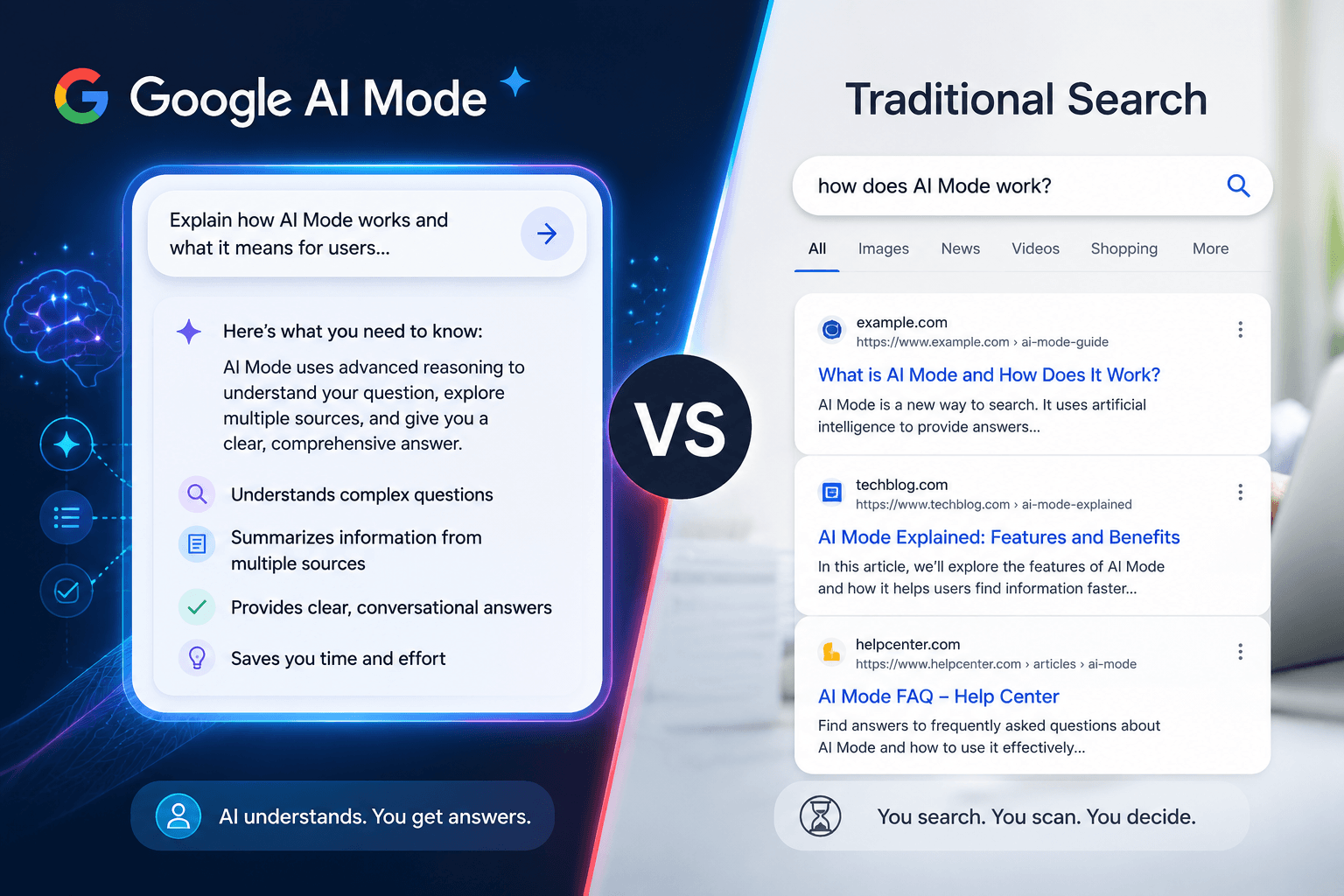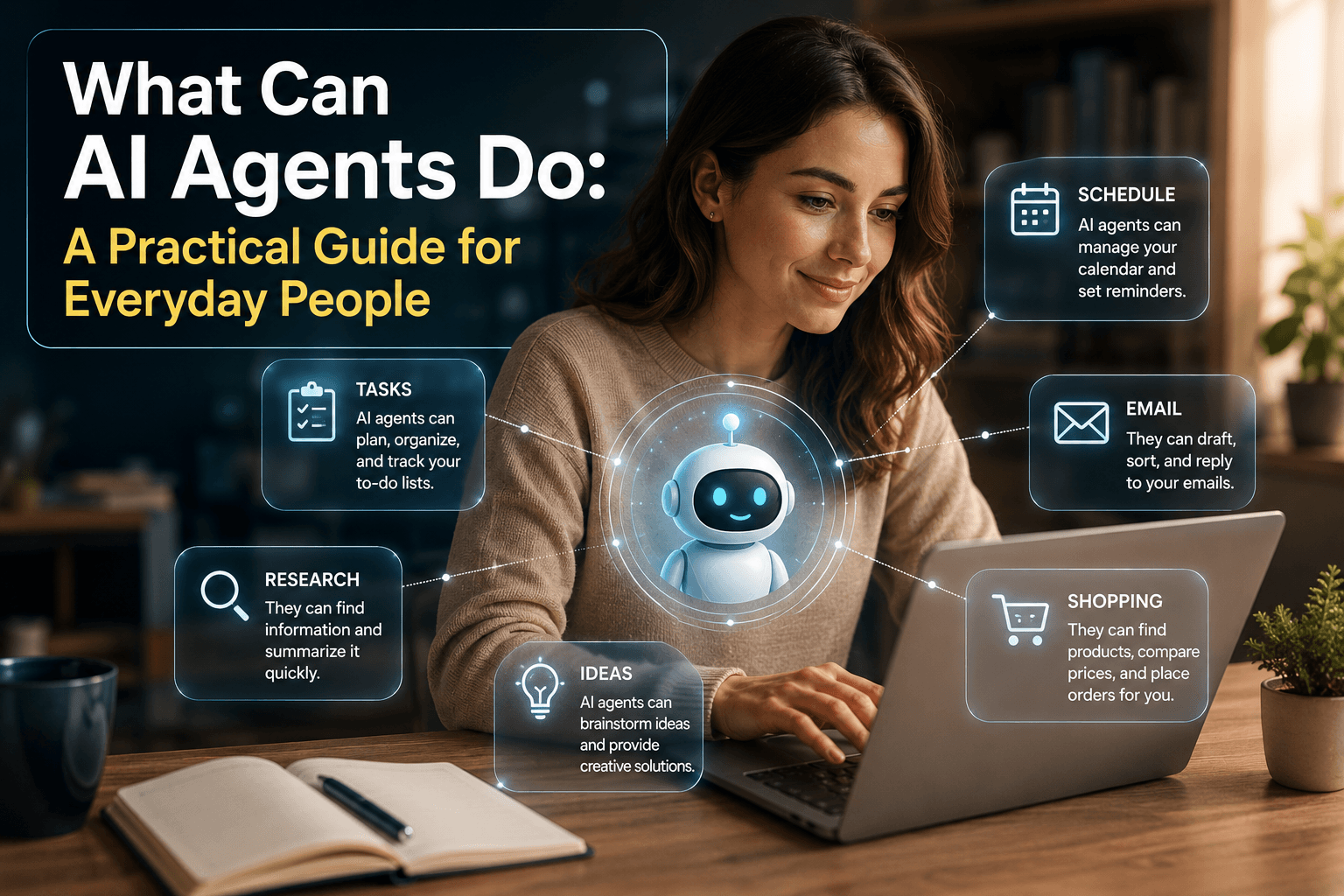

Google just redrew the map for how people find information online. At Google I/O 2026, the company unveiled a suite of Google AI search agents that go far beyond returning a list of links. These agents can research topics, compare options, and take actions on your behalf, all from inside Google Search. If you follow our AI tools and coverage or browse our broader tech articles, you already know the pace of AI development has been relentless. But this announcement feels like a genuine inflection point.
Here is what was announced, how the technology actually works, and what you can do with it starting today.
Key Takeaways
- Google AI Search Agents transform Search from a link-based engine into an agentic system capable of researching, comparing, and completing multi-step tasks autonomously.
- The new AI Mode experience, powered by Gemini 3.5 Flash, introduces features like Information Agents, Agentic Booking, Universal Cart, and dynamic Generative UI workflows.
- Access to Google’s advanced search agents currently requires a Google AI Pro or Ultra subscription, with rollout focused first on US and Canadian users.
- Publishers and SEO professionals must now optimize for AI-driven search visibility by emphasizing structured data, factual clarity, entity signals, and authoritative sourcing.
- While Google’s agentic search tools show strong early potential, accuracy, privacy, and the long-term impact on publisher traffic remain major concerns heading into 2026.
What Are Google AI Search Agents?
Google AI search agents are autonomous, task-completing systems built into Google Search that can research, reason, compare, and act on your behalf, powered by Gemini 3.5 Flash and accessible directly from the Search interface.
The term “agent” in AI refers to a system that does more than answer a single question. It plans, takes sequential steps, and completes a goal. Google’s official Search I/O 2026 announcement describes a redesigned AI Search experience built around this agentic model, where Search can now handle multi-step tasks rather than discrete queries.
The centerpiece is a new category called information agents. Ask one to help you plan a cross-country move from Chicago to Seattle, and it will not hand you ten blue links. It will research neighborhoods, compare cost-of-living data, surface housing options, and compile a structured summary, all in a single session. The experience is closer to delegating a task to a knowledgeable assistant than typing into a search box.
What Did Google Announce at I/O 2026?
Google I/O 2026 introduced information agents in Search, a redesigned AI Mode interface, agentic booking and shopping tools including a Universal Cart, and new developer resources for optimizing content for generative AI features.
The full list of 100 announcements from Google I/O 2026 covers a wide range of products, but the Search-related highlights include:
- Information agents: Embedded into AI Mode in Search, these agents handle research-heavy tasks autonomously and present synthesized results.
- Redesigned AI Search box: A new interface that signals when an agentic workflow is available for your query.
- Agentic booking: Search can now complete actions like restaurant reservations or travel bookings directly, without redirecting you to another site.
- Universal Cart: A cross-retailer shopping cart that lets you add items from multiple stores and check out in one flow.
- Generative UI with Antigravity: A framework that dynamically generates tailored interfaces for complex search tasks.
How Does the Technology Behind Them Work?
Google AI search agents run on Gemini 3.5 Flash, a model designed for fast, multi-step reasoning that can call external tools, browse the web in real time, and return structured outputs within a Search session.
The engine under the hood is Gemini 3.5 Flash. According to the official Gemini 3.5 announcement from Google DeepMind, the model was specifically designed to balance frontier-level intelligence with the speed and efficiency required for real-time agentic tasks. It can call external tools, process long contexts, and execute multi-step plans without significant latency, which is the core requirement for a responsive Search agent.
In CEO Sundar Pichai’s I/O 2026 keynote, the agentic era framing was explicit: Google sees Search evolving from a retrieval tool into a system that can complete tasks on your behalf, with Gemini models as the reasoning core. Pichai described information agents as one of the most significant shifts in how Google Search will operate going forward.
Google AI Search Agents 2026: Key Features at a Glance
| Feature | What It Does | Availability | Underlying Model | Access Tier |
|---|---|---|---|---|
| Information Agents | Multi-step research and synthesis on complex topics | Rolling out via AI Mode | Gemini 3.5 Flash | Google AI Pro and Ultra subscribers |
| Agentic Booking | Completes reservations and bookings within Search | Announced at I/O 2026 | Gemini 3.5 Flash | Google AI Pro and Ultra subscribers |
| Universal Cart | Cross-retailer checkout in a single flow | Announced at I/O 2026 | Gemini 3.5 Flash | Rolling out broadly |
| Generative UI (Antigravity) | Dynamically generates task-specific interfaces | Announced at I/O 2026 | Gemini 3.5 Flash | Integrated into AI Mode |
| Gemini Spark (in Search) | Lightweight personalized agent assistance | Announced at I/O 2026 | Gemini Spark model | Broader availability expected |
How to Use Google AI Mode Agents Explained
To access Google AI search agents, US and Canadian users need an active Google AI Pro or Ultra subscription, then enable AI Mode in Search to unlock information agents and agentic task completion.
Step-by-Step: Getting Started
Access is currently tied to Google AI Pro and Ultra subscription tiers, based on the rollout details in the Google Search I/O 2026 update. If you are already a subscriber, here is how to engage the agents:
- Open Google Search and look for the AI Mode toggle or tab at the top of results.
- Type a multi-step or research-heavy query, such as “research the general requirements for California 529 college savings plans” or “plan a Thanksgiving road trip from Dallas to Denver under $500.”
- When the agent interface activates, it will display its plan, then work through steps visibly, citing sources as it goes.
- For booking or shopping tasks, follow the in-Search prompts to authorize actions like reservations or adding items to the Universal Cart.
What Kinds of Tasks Work Best?
Information agents are designed for queries that previously required visiting five or more sites. Think tax season prep research, comparing health insurance tiers during open enrollment, or shopping for back-to-school laptops across multiple retailers. For students, these tools complement resources like the best AI tools for students in 2026 that can support learning and productivity year-round.
What About Content Creators and SEO?
Google has published a new resource for optimizing content for generative AI in Google Search, specifically addressing how publishers can structure content to be cited by AI agents. The guidance emphasizes clear structure, authoritative sourcing, and entity clarity, recognizable principles for anyone already following core SEO best practices.
According to Google Search Central’s May 2026 developer guidance, publishers should focus on demonstrating expertise, clear factual claims, and structured data to improve their content’s visibility within generative AI Search features, including information agents.
Is Agentic AI Search Ready for Everyday Use?
Google’s AI search agents show strong capability in controlled demos and early rollouts, but the technology is still maturing and may produce errors on highly specialized or rapidly changing topics.
“According to Google DeepMind’s Gemini 3.5 model card and safety documentation, the model includes built-in safety frameworks and guardrails for agentic tasks, though the company acknowledges that no model is error-free and recommends user verification for consequential decisions.”
Latency and accuracy on niche topics remain areas to watch. Agentic systems that take real-world actions, like bookings or purchases, require a higher bar for reliability than systems that only surface information. As with any early-stage rollout, independent verification of agent-generated outputs is worth the extra step, especially for financial, legal, or medical research.
Alternative Perspectives
Not everyone sees agentic Search as unambiguously positive. Some web publishers argue that agents completing tasks entirely within Search could significantly reduce click-through traffic to independent sites, raising sustainability concerns for the broader web ecosystem. Privacy advocates have raised questions about what data is retained when an agent takes real-world actions on a user’s behalf. On the other side, proponents argue that reducing friction in complex research tasks is genuinely valuable for users, and that Google’s new developer optimization guide offers publishers a path to remain visible within the agentic Search experience. Both perspectives reflect real tensions that will likely shape how this technology evolves over the next 12 to 24 months.
Frequently Asked Questions
Regular Google Search returns a ranked list of links based on your query. Google AI Mode, powered by Gemini 3.5 Flash, activates agentic workflows that can research multiple sources, synthesize information, and take actions like bookings or purchases, all within a single Search session rather than requiring you to visit individual websites.
Based on Google’s I/O 2026 announcements, information agents and agentic booking features are currently rolling out to Google AI Pro and Ultra subscribers first. Broader availability timelines have not been fully confirmed, so checking your Google account settings or the Google One subscription page for current eligibility is the most reliable approach.
Gemini 3.5 Flash, the model powering these agents, is designed for high accuracy on multi-step reasoning tasks, and Google cites strong benchmark performance in its official model documentation. That said, like all large language models, it can make errors on highly specialized, rapidly changing, or ambiguous topics. Verifying outputs independently is advisable for any consequential decision.
Potentially, yes. Google has acknowledged this shift by publishing a new developer guide specifically for optimizing content for generative AI in Search, including agent-driven results. Publishers who follow structured data best practices, maintain clear authorship signals, and demonstrate content authority are better positioned to be cited by information agents.
Disclaimer: Technology specifications, pricing, and availability are subject to change. Always verify current information with official manufacturer or developer documentation.