Veal piccata is a classic Italian pan sauce dish made by dredging thin veal cutlets in flour, sautéing them quickly in butter and olive oil, then building a bright, silky sauce with fresh lemon juice, white wine, and briny capers. The entire recipe comes together in under 30 minutes, making it one of the most achievable restaurant-quality Italian dishes you can cook at home. While high-quality veal remains the traditional choice, this exact culinary technique adapts beautifully to more accessible proteins; swapping the meat for chicken breast to make a classic Chicken Piccata is the most popular, budget-friendly alternative that delivers the same spectacular depth of flavor without the premium price tag.
Key Takeaways
- Veal cutlets should be pounded to about ¼ inch thick so they cook through in just 2 to 3 minutes per side without drying out.
- Adding cold butter off the heat at the end (a technique called “mounting”) is what gives piccata sauce its glossy, emulsified texture rather than a greasy or broken finish.
- The word “piccata” refers to the sharp, piquant flavor profile defined by lemon and capers, not a specific cut of meat; the same technique works with chicken, pork, or fish.
- Using a dry white wine with good acidity, such as Pinot Grigio or Sauvignon Blanc, in the sauce keeps the flavors clean and prevents the sauce from turning heavy or flat.
- Overcrowding the pan is the single most common mistake: it drops the pan temperature and causes the veal to steam instead of sear, resulting in a pale, soggy crust.
What Is Veal Piccata?
Veal piccata, also called vitello piccata or veal piccata al limone in Italian, is a Milanese-origin dish built around two contrasting forces: the richness of butter-basted veal and the sharp lift of lemon and capers.
The name “piccata” comes from the Italian word for “larded” or “sharp,” which perfectly describes the flavor experience. Thin slices of veal (the vitello) are lightly coated in seasoned flour, seared until golden, and then bathed in a quick pan sauce that pulls together all the browned bits left behind in the skillet. That sauce, built on white wine, fresh lemon juice, and capers, is what makes piccata instantly recognizable. Though this dish has deep roots in Northern Italian cooking, Italian-American home kitchens adopted it enthusiastically throughout the 20th century, and it became a staple on red-sauce restaurant menus across the US. Today it occupies a comfortable space between weeknight practicality and dinner-party elegance, which is exactly why it remains one of the most searched Italian veal recipes in North America. If you enjoy exploring Italian-inspired dishes like this one, you can find more guides and techniques across our Food section, and browse the full collection of step-by-step dishes in our Recipes section.
Ingredients You’ll Need
A great veal piccata recipe depends on quality, not complexity: you need fewer than 10 core ingredients, and the most important ones are the veal itself, real unsalted butter, freshly squeezed lemon juice, and good capers packed in brine rather than salt.
Here is what to gather before you start cooking:
For the Veal
- 1½ lbs veal scallopini (or veal cutlets): Look for pale pink, fine-grained slices, ideally cut from the leg. If your butcher sells them thick, you will need to pound them yourself.
- ½ cup all-purpose flour: For dredging. Season it well with salt and black pepper.
- Salt and freshly ground black pepper to taste.
- 2 tablespoons olive oil for searing.
- 2 tablespoons unsalted butter for searing (the combination of oil and butter gives you a higher smoke point with better flavor than either alone).
For the Piccata Sauce
- ½ cup dry white wine: Pinot Grigio, Sauvignon Blanc, or any dry, unoaked white you would drink. Avoid anything labeled “cooking wine,” which is typically high in sodium and low in flavor.
- ⅓ cup fresh lemon juice: About 2 medium lemons. Bottled juice may work in a pinch, but fresh gives the sauce a floral brightness that bottled cannot replicate.
- 3 tablespoons capers, drained: Brine-packed capers are softer and saltier than salt-packed ones. Either works; just rinse salt-packed capers thoroughly before using.
- ½ cup chicken stock: Low-sodium so you control the seasoning.
- 3 tablespoons cold unsalted butter, cut into cubes: This goes in last, off the heat, to mount the sauce.
- 2 tablespoons fresh flat-leaf parsley, chopped: For finishing.
- Lemon slices for garnish (optional but visually striking).
How to Make Veal Piccata: Step by Step
The entire cooking process takes about 25 minutes once your ingredients are prepped, and breaking it into clear stages (pounding, dredging, searing, and sauce building) makes each step feel manageable even for a first-time cook.
Step 1: Pound the Veal to an Even Thickness
Place each veal cutlet between two sheets of plastic wrap or inside a zip-lock bag. Using a meat mallet or the bottom of a heavy skillet, pound firmly from the center outward until each piece is uniformly about ¼ inch thick. This is not optional for texture: even thickness ensures the veal cooks through at the same rate, and the thinner surface creates more crust relative to meat, which is where piccata’s characteristic flavor lives.
Step 2: Dredge and Let Rest Briefly
Season the flour generously with salt and pepper. Dredge each cutlet lightly, shaking off all excess. A heavy coat of flour will turn gummy in the sauce; you want only a whisper-thin layer that seals the surface and thickens the pan juices slightly. Let the dredged cutlets rest on a wire rack for 5 minutes before they hit the pan. This brief rest helps the flour adhere so it does not slough off in the fat.
Step 3: Sear in Batches (This Is Critical)
Heat a large, heavy-bottomed skillet (stainless steel or cast iron, not nonstick) over medium-high heat until it is genuinely hot before you add the fat. Add the olive oil and butter together, let the butter melt and foam, then lay the veal in a single layer without overlapping. Cook undisturbed for 2 to 3 minutes until golden-brown on the first side, then flip and cook 1 to 2 minutes more. The veal is thin, so it cooks fast. Transfer to a warm plate and tent loosely with foil. If you have more than two cutlets, work in batches rather than crowding the pan. A crowded pan steams the meat instead of searing it, and you will lose the golden crust that anchors the entire dish’s flavor.
Step 4: Build the Pan Sauce
With the heat still at medium-high, pour in the white wine and scrape up every browned bit from the bottom of the pan with a wooden spoon. Those bits are fond, and they carry concentrated, savory depth that is the backbone of the sauce. Let the wine reduce by half, about 2 minutes. Add the chicken stock and lemon juice, stirring to combine. Let the sauce simmer for 3 to 4 minutes until it has reduced and thickened slightly. It should coat a spoon loosely, not run off like water. Stir in the capers.
Step 5: Mount the Sauce with Cold Butter
Remove the pan from the heat entirely. Add the cold butter cubes one or two at a time, swirling the pan or whisking constantly as each piece melts. This technique, called “mounting with butter” or “monter au beurre,” creates an emulsification that gives the sauce its glossy, velvety finish. If you add butter while the pan is still on high heat, the emulsion breaks and the sauce separates into an oily puddle. Off the heat is non-negotiable.
Step 6: Return the Veal and Finish
Nestle the veal cutlets back into the sauce and let them warm through for about 1 minute. Scatter the fresh parsley over the top, taste for salt and additional lemon, and serve immediately. Veal piccata waits for no one: the sauce begins to separate and the crust softens the longer it sits.
Ingredient Comparison: Key Variables That Affect Your Result
Small ingredient decisions in a piccata can shift the final result significantly, from a sauce that is bright and silky to one that is flat and greasy. This table breaks down the most common variables and their practical impact.
| Variable | Best Choice | Common Substitute | Impact on Dish | Recommendation |
|---|---|---|---|---|
| Lemon juice | Fresh-squeezed | Bottled lemon juice | Fresh adds floral brightness; bottled tastes flat and slightly metallic | Always use fresh if possible |
| Capers | Brine-packed, drained | Salt-packed (rinsed) | Brine-packed are softer and integrate more smoothly; salt-packed have more intense flavor if rinsed well | Either works; rinse salt-packed thoroughly |
| White wine | Dry, unoaked (Pinot Grigio, Sauvignon Blanc) | “Cooking wine” from a bottle | Good wine lifts the sauce; cooking wine adds sodium and muted flavor | Use wine you would actually drink |
| Butter (for mounting) | Cold, unsalted, cubed | Warm or room-temperature butter | Cold butter emulsifies into a glossy sauce; warm butter breaks the sauce and pools as grease | Keep it refrigerator-cold until the moment you use it |
| Pan type | Stainless steel or cast iron | Nonstick skillet | Stainless builds fond for a deeper sauce; nonstick prevents fond formation and produces a thinner, paler sauce | Use stainless or cast iron for best results |
| Veal cut | Scallopini from the leg | Pork tenderloin, chicken breast | Veal is most tender and delicate; pork and chicken need slightly longer cook times and produce a denser result | Veal preferred; chicken is the most practical swap |
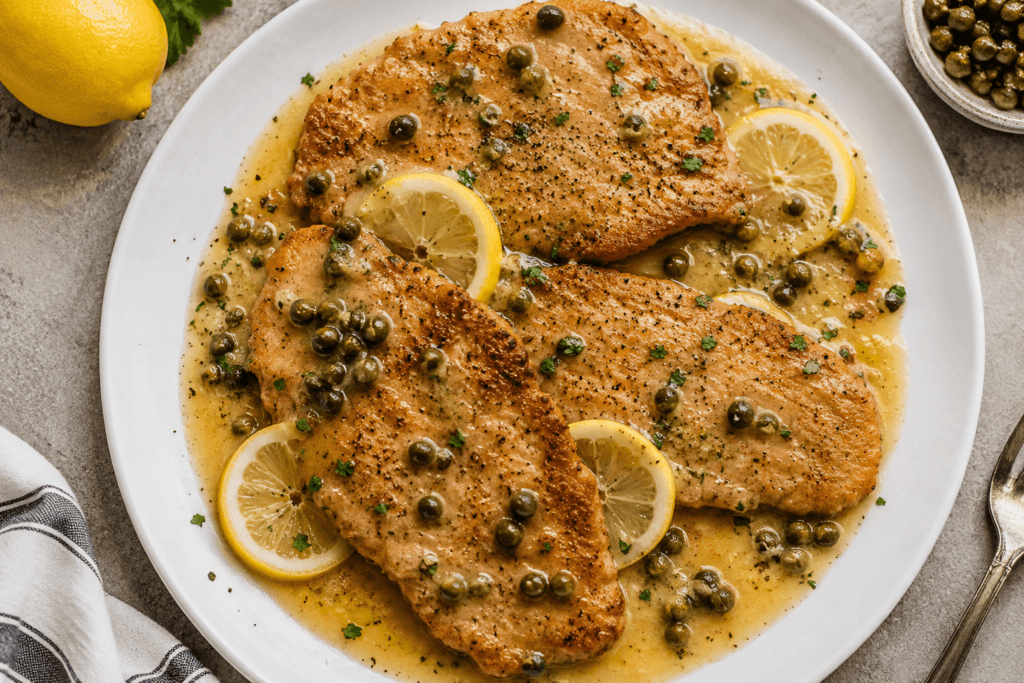
Mastering the Piccata Sauce: Lemon, Butter, and Capers in Balance
The sauce is where veal piccata either succeeds brilliantly or collapses into something flat and one-dimensional. It takes fewer than five minutes to build, but those minutes demand attention. The goal is a sauce that tastes simultaneously bright, rich, and savory without any single element overwhelming the others. Achieving that balance is a matter of sequencing, temperature, and restraint.
After removing the veal from the pan, reduce the heat to medium and add a splash of dry white wine to deglaze. Scrape up every bit of fond from the bottom of the pan with a wooden spoon. That caramelized residue is flavor concentrate, and it dissolves into the liquid to form the sauce’s backbone. Let the wine reduce by about half before adding the chicken stock. The stock enriches the sauce and gives it body without making it heavy. Again, let this reduce until the liquid barely coats the back of a spoon.
Now add the capers. Rinsed brined capers are standard and widely available, but if you can find salt-packed capers from Sicily, rinse them thoroughly and use them instead. They have a more complex, floral brininess that pairs exceptionally well with lemon. Add them early enough that they warm through and release their flavor into the sauce, but not so early that they lose their texture entirely.
The lemon goes in next: freshly squeezed juice only. Bottled lemon juice contains preservatives and lacks the volatile aromatic compounds responsible for that clean citrus brightness. Squeeze half a lemon directly into the pan, taste immediately, and decide whether the sauce needs the other half. The right amount of lemon should make the sauce feel alive and sharp without making it pucker. If you accidentally add too much, a few extra drops of stock and an extra knob of butter will pull it back toward balance.
The final step is the butter mount, called monter au beurre in classical French technique. Remove the pan from direct heat and add cold, unsalted butter cut into small cubes, swirling the pan continuously rather than stirring. The cold butter emulsifies into the warm sauce, creating a glossy, cohesive texture that coats the veal rather than pooling beneath it. If the pan is too hot at this point, the butter will break and the sauce will turn greasy. If it is too cool, the butter will not emulsify properly and the sauce will remain thin. The window is narrow, which is exactly why this technique separates competent cooks from excellent ones.
Return the veal cutlets to the pan for no more than sixty seconds, spooning the sauce over them. Any longer and the veal will overcook and tighten. Plate immediately and spoon any remaining sauce generously over the top. A few thin lemon slices and a scattering of fresh flat-leaf parsley complete the dish.
The Most Common Mistakes Home Cooks Make With Veal Piccata
Even experienced home cooks stumble on the same handful of problems when making veal piccata for the first time. Knowing where the pitfalls are before you start is the difference between a dish that impresses and one that frustrates.
The most frequent mistake is overcrowding the pan. When too many cutlets are cooked at once, the pan temperature drops sharply and the meat steams rather than sears. Steamed veal is pale, soft in an unpleasant way, and lacks the golden crust that gives the dish its textural contrast. Cook in batches, giving each cutlet room to breathe. Wipe out the pan between batches if the flour residue starts to burn, but reserve any liquid that accumulates from resting cutlets and add it back into the sauce.
The second mistake is under-pounding the veal. Scallopini should be no thicker than a quarter inch. Thicker cutlets cook unevenly: the exterior is done while the center is still cold, which leads cooks to leave the meat in the pan too long and produce tough, rubbery results. A proper pounding also breaks down the muscle fibers so the finished cutlet is genuinely tender rather than merely thin.
Third is using salted butter for the sauce mount. Salted butter disrupts the balance because the sauce already contains salt from the capers, the fond, and the seasoned flour. Using unsalted butter gives you control. Taste at the end and adjust with a pinch of kosher salt if needed, rather than trying to correct a sauce that is already too salty.
Fourth, and perhaps most damaging to the final dish, is overworking the sauce after the butter is added. Piccata sauce is delicate. Vigorous whisking after the butter mount creates too much air, changes the texture, and accelerates the breakdown of the emulsion. Gentle swirling is all it needs. Serve it within a minute or two of completion, because the sauce will not hold perfectly once it sits.
Finally, do not salt the veal before dredging. Season the flour instead. Salting the meat directly before dredging draws out surface moisture, which creates steam in the pan and prevents proper browning. The seasoned flour does the same job without the drawback.
What Wine to Drink With Veal Piccata
Wine pairing with veal piccata comes down to one central challenge: the lemon. Acidic food demands a wine with matching or higher acidity, or the wine will taste flat and dull by comparison. A wine that seemed vibrant on its own can suddenly taste thick and flabby when set against a lemony butter sauce. This is the core reason most red wines struggle with piccata, and why crisp, high-acid whites work so naturally alongside it.
Soave from the Veneto region of northeastern Italy is the pairing most closely tied to the dish by geography and tradition. Made primarily from the Garganega grape, a good Soave Classico carries almond and citrus blossom notes with clean, mineral acidity that mirrors the lemon in the sauce without duplicating it. It is light enough not to overwhelm the veal and structured enough to stand up to the butter and capers. Look for a producer from the Classico zone, which covers the hillside vineyards where the grapes develop more complexity than those grown on the surrounding plains.
Sauvignon Blanc, particularly from the Loire Valley appellations of Sancerre and Pouilly-Fumé, is another excellent choice. Loire Sauvignon Blanc has a stony, mineral quality and vibrant citrus acidity that locks in perfectly with a lemon-forward sauce. New Zealand Sauvignon Blanc, while popular, often leans too heavily on tropical fruit and green herb notes that can pull the pairing in a direction that feels disconnected from the Italian character of the dish. A Sancerre is the more elegant, traditional option.
Chablis, made from unoaked or lightly oaked Chardonnay in northern Burgundy, is a particularly sophisticated pairing. Its hallmark flinty, almost chalky mineral quality and bright green apple acidity complement both the butter richness and the lemon brightness simultaneously. Premier Cru Chablis is worth the modest price increase over village-level Chablis, as the extra concentration holds its own better alongside a sauce as flavorful as piccata.
Other whites worth considering include Vermentino from Sardinia, which adds a slight herbal bitterness that plays well against capers, and Greco di Tufo from Campania, which has an almost peachy richness balanced by firm acidity. Dry Pinot Grigio from Alto Adige in northern Italy, as opposed to the neutral, mass-market versions, also works well.
On the red side, the argument is more difficult to win. A light, low-tannin red like a young Barbera d’Asti, served slightly chilled, can manage alongside piccata because Barbera has unusually high natural acidity for a red grape. It lacks the tannin weight that would clash with lemon, and its sour cherry brightness finds a functional echo in the sauce. That said, it remains a compromise rather than an ideal pairing.
Avoid Cabernet Sauvignon, Syrah, Barolo, and any heavily oaked red entirely. The tannins in these wines react with lemon acidity to produce a harsh, metallic sensation on the palate that diminishes both the wine and the food. This clashing reaction is rooted in structural food chemistry. The tactile perception of taste is heavily dictated by pH levels; when the intense citric acid of a lemon sauce hits your palate, it alters your saliva’s buffering capacity, causing the bitter polyphenols in heavy red wines to precipitate violently. As detailed in the UC Davis Waterhouse Lab analysis of wine tannins, this chemical shift strips away oral lubrication, exaggerating roughness and turning a structured wine unpleasantly astringent and flat.
In a restaurant setting, if the menu leans Italian and the by-the-glass list is limited, ask specifically for something from northeastern Italy or a French white with high acidity. When ordering a bottle for the table and the group is divided between fish, chicken piccata, and red meat dishes, a white Burgundy at the village level is the most versatile diplomatic choice. Its acidity handles the piccata while its weight and depth satisfy those eating richer dishes.
“Pairing wine with dishes built around high-acid sauces requires matching the sauce’s acidity, not the protein. The lemon is the dominant flavor component in piccata, and it should drive the pairing decision from the start.”
Culinary Institute of America, The Professional Chef, 9th Edition
“Volatile aromatic compounds in freshly squeezed lemon juice, particularly limonene and citral, are highly reactive. They interact with tannins in red wine to produce astringent off-notes that are best avoided by selecting low-tannin or tannin-free white wines with complementary citrus profiles.”
Institute of Food Technologists, Journal of Food Science — Flavor Chemistry and Sensory Evaluation
Veal piccata rewards the cooks who take it seriously without overcomplicating it. The dish is built on a small number of ingredients and a handful of precise techniques, which means every element matters more than it would in a longer, more forgiving recipe. Pound the veal thin, dredge lightly, build the fond, mount the butter off the heat, and squeeze the lemon fresh. Serve it with a cold glass of Soave or Chablis. These are not elaborate demands, and the result they produce, a plate of golden, tender veal draped in a silky sauce that tastes of lemon, herbs, and the sea, is one of the most satisfying things Italian-American cooking has to offer.
Frequently Asked Questions
Can I make veal piccata ahead of time?
Veal piccata is best made and served immediately. The cutlets lose their golden crust quickly once they sit in the sauce, and the butter emulsion in the sauce begins to break down within a few minutes of standing. If you need to prepare components in advance, you can pound and dredge the veal up to two hours ahead and keep it refrigerated on a wire rack. Make the sauce fresh when you are ready to serve.
What is the difference between piccata and francese?
Both preparations use thin cutlets in a lemon butter sauce, but the coating differs. Piccata dredges the cutlet in seasoned flour only, which produces a lightly crisp, relatively dry exterior. Francese dips the flour-coated cutlet in beaten egg before sautéing, creating a thicker, eggier crust that absorbs more sauce. Piccata has a cleaner, lighter texture; francese is richer and more substantial. The sauce compositions are also slightly different, with francese typically using more egg and less caper brine.
How do I prevent the butter sauce from breaking?
The most reliable way to prevent the butter sauce from breaking is to remove the pan from direct heat before adding the cold butter. The residual heat in the pan is sufficient to melt and emulsify the butter without overheating it. Add the butter in small pieces and swirl the pan constantly rather than stirring. If the sauce does break and the butter separates into greasy pools, add a tablespoon of cold water or cold stock and swirl vigorously over low heat to re-emulsify it.
Are there any good substitutes for capers?
If capers are unavailable, finely chopped green olives provide a similar briny, slightly bitter quality, though the flavor profile shifts toward a more savory, less acidic character. Some cooks use very finely diced pickled cucumber or caper berries sliced thin as a substitute. None of these alternatives replicate the caper precisely, but they preserve the fundamental idea of a salty, tangy counterpoint to the lemon butter. According to the USDA Agricultural Marketing Service, brined capers are graded by size, with the smallest nonpareil variety (under 7mm) delivering the most concentrated flavor relative to their size and generally preferred for piccata.