Starting a GLP-1 medication like semaglutide (sold as Ozempic or Wegovy) or tirzepatide changes more than your appetite. It changes your entire relationship with food. You may feel full after just a few bites, experience new food aversions, or find that meals you once loved now sit heavily in your stomach. Understanding what to eat on GLP-1 medications is not just helpful. It is essential for staying nourished, preserving muscle, and feeling your best throughout treatment. This guide, rooted in nutrition science and practical kitchen wisdom, gives you a high-fiber diet basics framework tailored specifically to life on these medications. For more recipe ideas and eating strategies, explore our Food articles.
Key Takeaways
- GLP-1 medications change eating patterns by slowing digestion and reducing appetite, making nutrient-dense choices more important than total food volume.
- Protein should come first at every meal to help preserve lean muscle mass during periods of lower calorie intake and appetite suppression.
- Non-starchy vegetables provide fiber, vitamins, and minerals while remaining easy to fit into smaller portions and reduced appetites.
- Slow-digesting carbohydrates like oatmeal, lentils, quinoa, and sweet potatoes can support steadier energy and improved digestive comfort.
- A simple meal structure works well: half vegetables, one-quarter lean protein, one-quarter fiber-rich carbohydrates, plus a small amount of healthy fat.
- Foods commonly linked to worse side effects include fried foods, greasy meals, sugary snacks, carbonated drinks, and alcohol.
- Hydration requires intentional effort because reduced food intake and gastrointestinal side effects may increase dehydration risk.
- Success on GLP-1 medications is usually less about following a strict diet and more about building smaller, protein-focused meals that are easy to tolerate consistently.
How GLP-1 Medications Change the Way You Eat
GLP-1 receptor agonists slow gastric emptying and reduce appetite, which means smaller meals become the norm. Choosing nutrient-dense foods at every meal is more important than ever because total food volume drops significantly.
GLP-1 medications work by mimicking the glucagon-like peptide-1 hormone your gut naturally produces after eating. According to the U.S. Food and Drug Administration, approved semaglutide products regulate blood sugar and reduce appetite through this hormonal pathway. The practical result is that your stomach empties more slowly, nausea can appear if you overeat, and portions that once felt modest may now feel overwhelming.
This shift means every bite counts more. A small bowl of nutrient-poor food leaves you just as full as a small bowl of something genuinely nourishing, so building meals around protein, fiber, and healthy fats becomes the smartest strategy you can adopt.
The GLP-1 Diet Plan: Core Principles to Follow
A well-designed GLP-1 diet plan prioritizes protein at every meal, incorporates high-fiber vegetables, and limits fatty or greasy foods that may worsen nausea and digestive discomfort.
Prioritize Protein First
Protein is the cornerstone of eating well on these medications. Because your overall calorie intake drops, the risk of losing lean muscle mass alongside fat is real.
A 2021 study published in Obesity Reviews found that higher dietary protein intake during caloric restriction is associated with greater preservation of lean muscle mass, making adequate protein consumption a key concern for individuals on appetite-suppressing therapies.Aim to eat your protein source first at every meal, before vegetables or grains, to ensure you hit your target even when your appetite cuts the meal short. Good options include:
- Eggs, scrambled soft or poached, which are gentle on a sensitive stomach and pack around 6 grams of protein each
- Grilled or baked chicken breast, mild in flavor and easy to portion into small, satisfying servings
- Plain Greek yogurt, thick and slightly tangy, with roughly 15 to 20 grams of protein per cup
- Canned salmon or tuna, convenient pantry staples that work well in small portions on crackers or salad
- Cottage cheese, creamy and mild, which pairs well with fresh fruit for a quick high-protein snack
- Tofu or tempeh for plant-based eaters, both of which absorb marinades beautifully and hold up to sautéing
Build Half Your Plate from Non-Starchy Vegetables
Non-starchy vegetables are high in fiber, low in calories, and full of micronutrients that support overall health. Steamed zucchini, roasted asparagus, sautéed spinach, crisp cucumber slices, and tender-cooked broccoli are all easy on digestion and satisfying in small amounts. Cooking vegetables until they are soft rather than raw makes them easier to tolerate if nausea is a factor.
Choose Slow-Digesting Carbohydrates
Since gastric emptying is already slowed by the medication, pairing that effect with slow-digesting, high-fiber carbohydrates helps maintain steady energy without blood sugar spikes. According to the Mayo Clinic, foods high in soluble fiber may help regulate blood glucose and support digestive health. Good carbohydrate choices on a GLP-1 meal plan include oatmeal, quinoa, sweet potato, lentils, and whole grain bread eaten in modest portions.
What to Put on Your Ozempic Diet Plate: A Practical Meal Framework
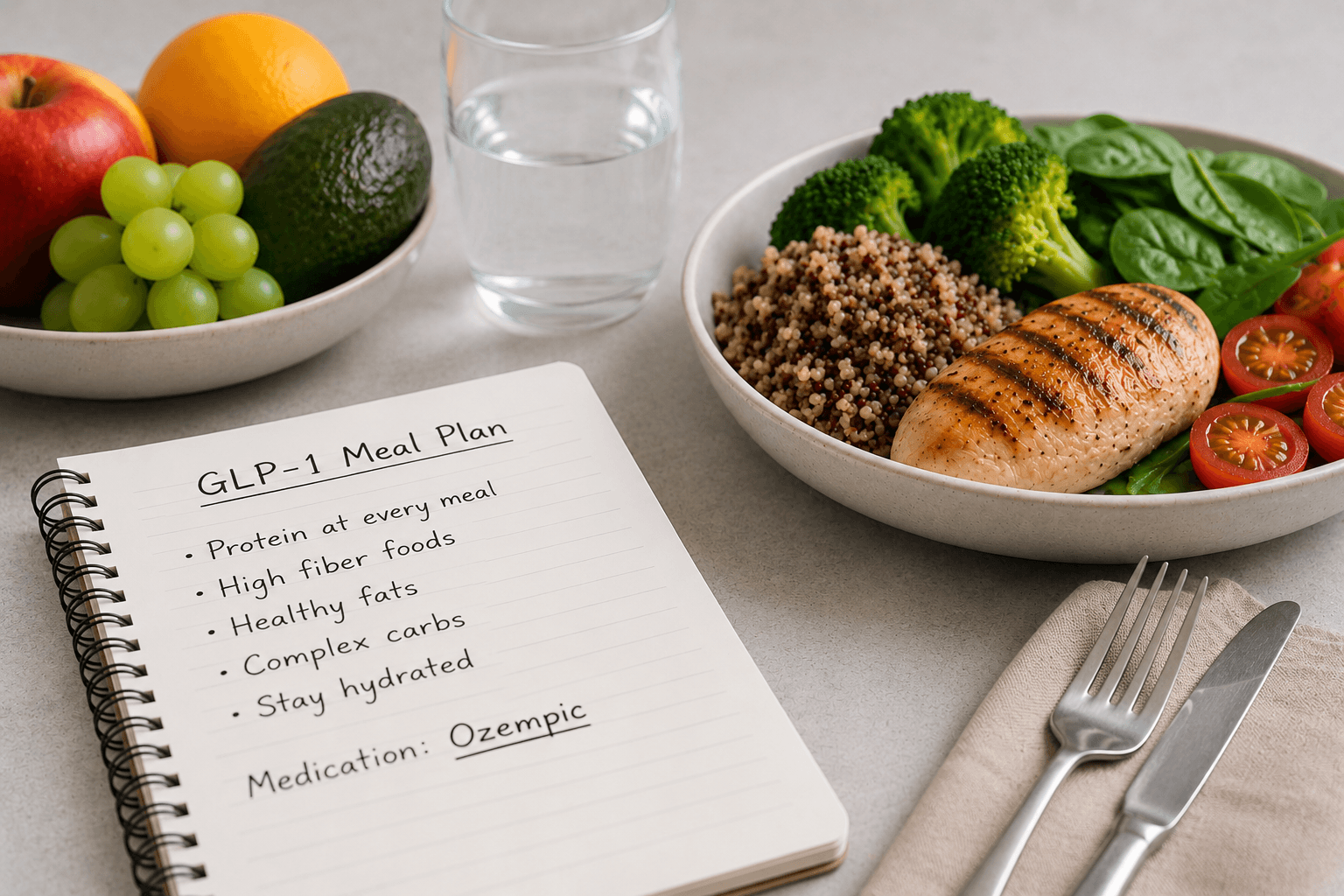
For an Ozempic diet, what to eat at each meal should follow a simple framework: one-half non-starchy vegetables, one-quarter lean protein, and one-quarter whole-grain or fiber-rich carbohydrate, with a small source of healthy fat.
GLP-1 Friendly Foods at a Glance
| Category | Best Choices | Why It Works | Portion Tip |
|---|---|---|---|
| Lean Protein | Chicken breast, eggs, Greek yogurt, tofu, cottage cheese | Supports muscle preservation during reduced calorie intake | 3 to 4 oz per meal, eaten first |
| Non-Starchy Vegetables | Spinach, broccoli, zucchini, cucumber, asparagus | High fiber, high micronutrients, low calorie density | Fill half the plate; cook soft if nausea is present |
| Whole-Grain Carbohydrates | Oatmeal, quinoa, sweet potato, lentils, whole grain bread | Slow-digesting fiber helps stabilize blood sugar | Quarter of the plate or roughly ½ cup cooked |
| Healthy Fats | Avocado, olive oil, nuts, chia seeds | Supports satiety and nutrient absorption; choose small amounts | 1 tablespoon oil or ¼ avocado per meal |
| Hydration | Water, herbal tea, diluted broth, low-sugar electrolyte drinks | Dehydration risk rises when food intake drops; fluids are critical | Sip between meals rather than during to avoid fullness |
GLP-1 Foods to Avoid: What Makes Side Effects Worse?
Certain foods are consistently associated with worsened nausea, acid reflux, and digestive discomfort in people taking GLP-1 medications. Fatty, fried, and heavily processed foods top the list.
Because GLP-1 medications slow how quickly food leaves your stomach, high-fat meals can linger uncomfortably and intensify nausea. Common GLP-1 foods to avoid or limit include:
- Fried foods like french fries, fried chicken, or donuts, which are slow to digest and high in inflammatory fats
- Greasy fast food, which often combines high fat with high sodium in portions that are hard to manage
- Carbonated beverages, which introduce gas into an already-slowed digestive system and can cause painful bloating
- High-sugar foods like candy, pastries, and sweetened cereals, which can trigger blood sugar swings and worsen energy crashes
- Alcohol, which is harder for the body to metabolize during caloric restriction and may increase the risk of low blood sugar
- Spicy foods, for those who notice they aggravate heartburn or stomach upset while on medication
According to researchers at the National Institutes of Health, dietary fat intake is closely linked to the severity of gastrointestinal side effects in patients using GLP-1 receptor agonists, suggesting that a lower-fat eating pattern may meaningfully improve tolerability during treatment.
Building a Wegovy Meal Plan for a Real Week
A practical Wegovy meal plan focuses on small, frequent meals built around soft, easy-to-digest proteins and vegetables, with hydration spaced between rather than during eating.
Sample Day of Eating on GLP-1 Medications
Breakfast could be a small bowl of old-fashioned oatmeal topped with a tablespoon of almond butter and a handful of blueberries, eaten slowly over 20 minutes. Lunch might be a half-cup of cottage cheese alongside sliced cucumber and a few whole grain crackers, light and refreshing without overwhelming your stomach. Dinner could center on 3 ounces of baked salmon, a half-cup of roasted asparagus finished with a drizzle of olive oil and a squeeze of lemon, and a small serving of quinoa. A mid-afternoon snack of a hard-boiled egg or a small handful of unsalted almonds rounds out the day’s protein.
Sipping water or herbal tea between meals rather than with them helps prevent that stuffed, uncomfortable feeling that often cuts meals short before enough protein is consumed.
Alternative Perspectives
Some registered dietitians emphasize that GLP-1 users should follow an individualized plan rather than a one-size-fits-all food list, noting that tolerability varies widely from person to person. Others caution that very low calorie intake while on these medications could increase the risk of nutrient deficiencies, particularly in vitamin B12, iron, and calcium, and recommend working with a healthcare provider to assess whether supplementation is appropriate. Additionally, some nutrition researchers debate whether the appetite suppression from GLP-1 medications is sufficient on its own for long-term dietary change, or whether behavioral and psychological nutrition counseling should be considered a parallel component of treatment. Readers are encouraged to consult a registered dietitian for guidance tailored to their specific health profile.
Medical Disclaimer: The information in this article is for educational and informational purposes only and does not constitute medical or nutritional advice. GLP-1 medications are prescription therapies that require strict medical supervision. Always consult your healthcare provider or a registered dietitian before making any changes to your medication, dosage, or dietary plan.
Frequently Asked Questions
Most people find their appetite decreases significantly, making large or heavy meals uncomfortable. Eating smaller, more frequent meals built around lean protein, fiber-rich vegetables, and whole grains is generally better tolerated than trying to maintain previous portion sizes.
Fried foods, greasy fast food, carbonated drinks, high-sugar snacks, and alcohol are most commonly associated with worsened nausea, bloating, and digestive discomfort while taking GLP-1 medications. Reducing or eliminating these foods may noticeably improve how you feel day to day.
According to the USDA Dietary Guidelines, most adults need around 0.8 grams of protein per kilogram of body weight daily, though some clinicians recommend higher intake during caloric restriction to help preserve lean muscle mass. A registered dietitian can help you determine the right target for your specific situation.
No single prescribed diet is required, but focusing on nutrient-dense, easy-to-digest foods is strongly advisable. Because appetite suppression reduces total food intake, every meal becomes an opportunity to meet your nutritional needs. A diet rich in lean proteins, vegetables, and fiber-containing carbohydrates is widely recommended by healthcare providers working with GLP-1 patients.