Sardinia is Italy’s second-largest island and one of the most rewarding Mediterranean destinations worth the long-haul flight for American travelers, offering world-class beaches, ancient archaeological sites, and a distinct culture that feels nothing like mainland Italy. Most visitors fly into Olbia or Cagliari via a connection in Rome, Milan, or another European hub, with total travel time from the US East Coast typically running 12 to 16 hours. The best time to visit is late May through June or September through early October, when crowds are thinner and temperatures stay comfortably in the mid-70s to low 80s°F.
Key Takeaways
- No nonstop flights from the US to Sardinia exist as of mid-2026; expect one connection through Rome (FCO), Milan (MXP/LIN), or another European gateway, adding 2 to 4 hours to your total journey.
- A rental car is essentially non-negotiable for exploring Sardinia beyond the main resort areas; public transportation between towns is limited and infrequent.
- Sardinia’s Nuoro province is recognized by the Blue Zones Project as one of five longevity hotspots on earth, with some of the highest concentrations of male centenarians ever recorded.
- Peak season (July and August) brings intense heat above 95°F, crowded beaches, and hotel prices that can double or triple compared to shoulder season rates.
- US citizens do not need a visa for stays under 90 days in Italy, but must ensure their passport is valid for at least three months beyond their planned departure date.
Why Sardinia Should Be on Your Italy Itinerary
Sardinia offers a travel experience that is fundamentally different from Rome, Florence, or the Amalfi Coast: raw coastline, prehistoric stone towers, and a cuisine shaped more by shepherds than by Renaissance kitchens.
Most Americans who visit Italy stick to the well-worn trail of Rome, Tuscany, and Venice. Sardinia sits about 120 miles west of the Italian peninsula in the Mediterranean Sea, and it has spent millennia cultivating its own identity. The language, the food, the archaeology, and the pace of life here belong to something older and more isolated than what you find on the mainland.
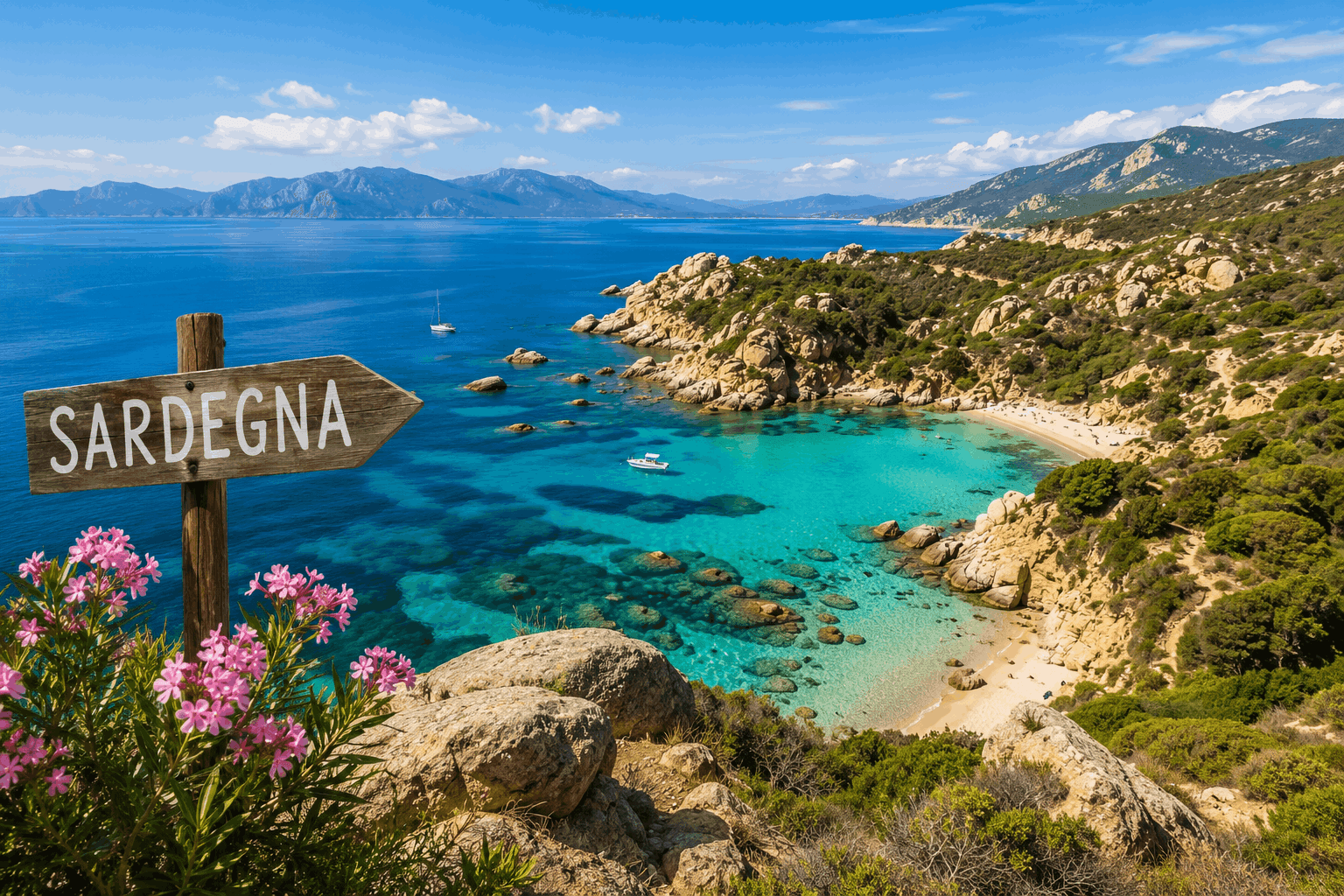
The beaches alone would be reason enough. Sardinia’s coastline stretches roughly 1,150 miles, ranging from the famous turquoise coves of the Costa Smeralda in the north to the dramatic limestone cliffs of the Gulf of Orosei in the east. The water clarity rivals anything in the Caribbean, and several beaches consistently rank among the best in Europe year after year.
Beyond the coast, Sardinia holds more than 7,000 nuraghe, Bronze Age stone towers built between 1900 and 730 BCE that dot the landscape like ancient sentinels. No other culture produced structures quite like them, and many are still standing in the middle of open fields you can walk right up to. For American travelers who find European history compelling but often feel it is packaged too neatly, Sardinia offers something genuinely raw.
The island also carries a quieter kind of fame: its mountain interior, particularly the Nuoro province, is one of the world’s original Blue Zones, where people statistically live far longer than almost anywhere else on earth. That combination of coastal beauty, archaeological mystery, and documented human longevity makes Sardinia a destination with real intellectual and emotional weight, not just a pretty place to eat pasta near the water.
Best Time to Visit Sardinia for American Travelers
Shoulder season in May, June, and September gives you warm water, open beaches, and manageable crowds without the punishing heat and price spikes of July and August.
Sardinia has a classic Mediterranean climate: dry, hot summers and mild, wetter winters. For most American visitors, that translates to a fairly narrow window of ideal travel conditions.
May and June are widely considered the sweet spot. Daytime temperatures run from the upper 60s to the low 80s°F, the sea is warm enough for comfortable swimming by mid-June, and the island has not yet filled with European vacationers on summer holiday. Wildflowers are still in bloom in May, and the interior looks green rather than scorched.
July and August are the peak months, and they come with real trade-offs. Temperatures regularly exceed 95°F inland, beaches in popular areas like the Costa Smeralda become genuinely crowded, and prices for hotels and car rentals spike sharply. If you are visiting in peak season, book accommodations at least four to six months in advance and plan beach outings for early morning.
September and early October rival May and June for pleasant conditions. The sea temperature peaks in late summer, so September swimming is actually warmer than June. Crowds thin noticeably after the first week of September, and hotel rates drop. This is arguably the best month of the year for a first visit, particularly if you want to combine beach time with inland exploration.
Winter (November through March) is quiet, cool (45 to 55°F on the coasts), and inexpensive, but many resort hotels and beach restaurants close entirely. The interior villages and Cagliari stay open year-round and offer a more local, unhurried experience for travelers who do not mind gray skies.
Getting to Sardinia from the US: Flights and Logistics
No US carrier operates nonstop service to Sardinia; the standard route involves flying to Rome or another European hub and connecting to Olbia, Cagliari, or Alghero.
Sardinia has three commercial airports: Olbia Costa Smeralda (OLB) in the northeast, Cagliari Elmas (CAG) in the south, and Alghero-Fertilia (AHO) in the northwest. Your choice of airport should match where you plan to spend most of your time.
From the US, the most common routing is a transatlantic flight to Rome Fiumicino (FCO), followed by a connecting flight to whichever Sardinian airport fits your itinerary. ITA Airways, Ryanair, easyJet, and Volotea all operate frequent routes between Rome and Sardinia. The connection typically adds one to two hours, plus layover time. From the US East Coast, total door-to-door travel time runs roughly 14 to 18 hours depending on your layover.
Other viable European connections include Milan Malpensa (MXP), Barcelona (BCN), and London Heathrow (LHR), all of which have regular onward service to Sardinia. If you are planning a broader Italy trip, positioning yourself in Rome first and then flying to Sardinia is the most logical and cost-efficient structure.
Round-trip flights from major US hubs to Rome typically range from $600 to $1,100 in economy, with connecting legs to Sardinia adding $60 to $200 depending on the season and how far in advance you book. Booking the transatlantic and connecting segments separately often yields lower total costs than a single itinerary, though it does increase your exposure to missed connections.
Once on the island, renting a car is the single most important logistical decision you will make. Sardinia’s public bus network, operated by ARST, connects major towns but runs infrequently and does not reach most beaches, nuraghe sites, or mountain villages. A compact car rental for a week typically costs $300 to $600 in shoulder season, rising significantly in July and August when demand peaks. International driver’s licenses are not legally required for US citizens driving in Italy, but carrying one alongside your US license is recommended.
Sardinia’s Best Beaches: What Americans Should Know Before They Go
Sardinia’s beaches range from easily accessible resort strands to remote coves that require a boat or a serious hike, and knowing the difference before you arrive saves real frustration.
The island’s most celebrated coastal areas divide roughly into four regions, each with a distinct character.
The Costa Smeralda in the northeast, centered around Porto Cervo, is Sardinia’s most famous stretch of coast and its most expensive. The water is extraordinary, ranging from pale jade to deep sapphire depending on depth, but the area was developed in the 1960s as a luxury playground and carries that energy. Beaches like Spiaggia del Principe and Liscia Ruja are genuinely beautiful and accessible by car, though parking is limited and crowded in summer.
The Gulf of Orosei on the east coast produces some of Europe’s most dramatic coastal scenery. Cala Goloritzé, often called the island’s most beautiful beach, can only be reached by boat from Cala Gonone or by a strenuous two-hour hiking trail down limestone cliffs. Cala Luna, another standout, is similarly remote. Budget for a half-day boat tour from Cala Gonone (typically $40 to $70 per person) if you want to see multiple coves in a single day.
The northwest coast around Alghero offers a different mood: longer sandy beaches, less glamour, and a Catalan-influenced old town nearby. La Pelosa near Stintino is frequently photographed for its lagoon-like shallows and is one of the most instantly recognizable images of Sardinia, though access is now managed with a timed-entry reservation system in summer to protect the seagrass.
The south coast around Cagliari and the Sulcis region is often overlooked by first-time visitors but offers excellent beaches like Chia, Tuerredda, and Villasimius with far fewer crowds than the north. Villasimius in particular has become a favorite among Italian travelers who want Costa Smeralda-quality water without the price tag.
Sardinia Beach Comparison: Key Facts for Planning
| Beach / Area | Region | Access | Crowd Level (July–Aug) | Best For |
|---|---|---|---|---|
| Spiaggia del Principe | Costa Smeralda (NE) | Car + short walk | High | Iconic scenery, easy access |
| Cala Goloritzé | Gulf of Orosei (E) | Boat or 2-hr hike | Moderate (capacity-limited) | Dramatic cliffs, serious hikers |
| Cala Luna | Gulf of Orosei (E) | Boat only (or long trail) | Moderate | Remote cove experience |
| La Pelosa | Northwest (Stintino) | Car + timed-entry reservation | Very high | Shallow turquoise lagoon |
| Tuerredda | South (Sulcis) | Car + short walk or shuttle | Low to moderate | Quieter alternative to north |
| Villasimius area | Southeast | Car | Moderate | Value, water clarity, local vibe |
Getting Around Sardinia: Transportation Tips for American Visitors
Sardinia rewards travelers who come prepared for its geography. The island is larger than most Americans expect — roughly the size of New Hampshire and Vermont combined — and public transportation between towns ranges from limited to nonexistent in rural areas. Renting a car is not just convenient here; for most itineraries, it is the only practical option.
International driver’s licenses are not legally required for Americans driving in Italy, but carrying one alongside your U.S. license is strongly recommended. You can obtain one through AAA before departure. Book your rental car well in advance if you are visiting between June and August, because supply genuinely runs short at peak season and last-minute prices become punishing. Compact and small SUV categories tend to suit Sardinia’s winding coastal roads better than larger vehicles.
Fuel stations in rural parts of the island sometimes close on Sunday afternoons and public holidays, a quirk that catches many visitors off guard. The habit of keeping your tank above half in less populated areas will save you real stress. Tolls are not a major factor on Sardinian roads the way they are on the Italian mainland, and the island’s main artery, the SS131 highway cutting north to south, is fast and well-maintained.
If you fly into Cagliari (the southern hub) and plan to work your way north, or vice versa via Olbia or Alghero, one-way car rentals are available but carry a drop fee. Budgeting for that fee upfront is smarter than reorganizing your route. Taxis and ride-share apps exist in Cagliari and Olbia but are sparse elsewhere. Ferry connections between major coastal towns are scenic and occasionally practical for day trips, though they should not be relied upon as a primary transport backbone.
Parking near popular beaches in summer is its own logistics exercise. Many of the most visited spots now use paid lots, timed-entry systems, or shuttle buses from designated parking areas several kilometers away. La Pelosa, mentioned in the beach section, pioneered this model and several others have followed. Arriving before 9 a.m. or after 4 p.m. sidesteps the worst of it.
Eating and Drinking in Sardinia: What Americans Need to Know
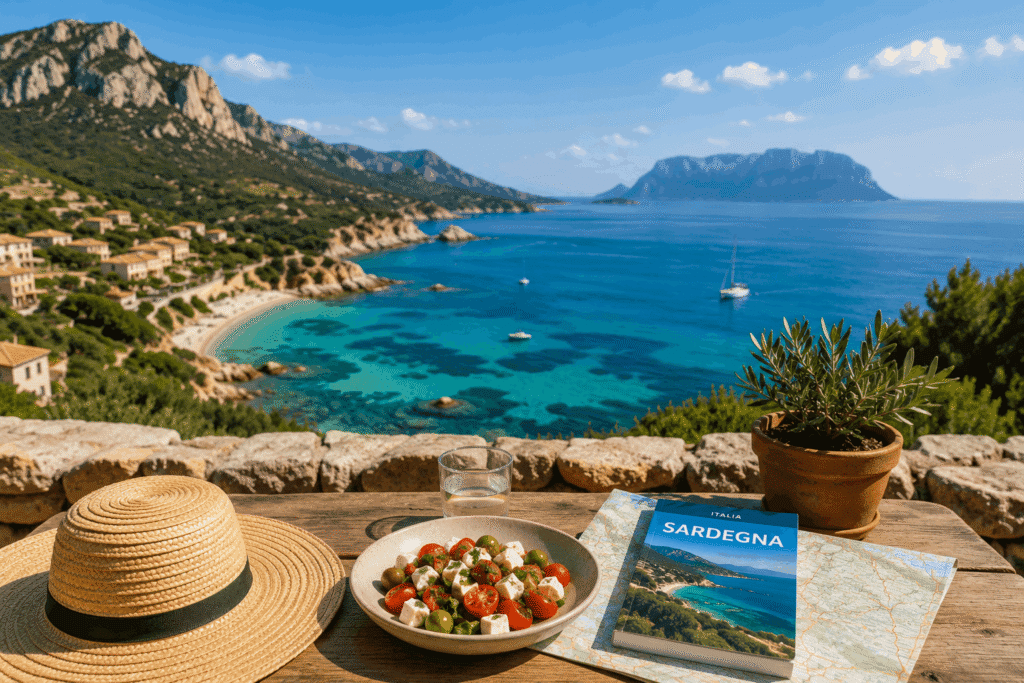
Sardinian cuisine is its own distinct tradition, separate from the Italian-American food most visitors grew up with and even meaningfully different from the cuisine of mainland Italy. The cooking here is rooted in the interior of the island — the shepherding culture — rather than the sea, which surprises many travelers who assume a Mediterranean island will be primarily about seafood. Both traditions coexist, but the inland pantry defines what makes Sardinian food genuinely distinctive.
Pane carasau, the paper-thin, twice-baked flatbread, appears at almost every table and is worth seeking out fresh from a local bakery rather than packaged. Culurgiones are the island’s signature pasta: pillowlike dumplings sealed with an intricate wheat-ear fold, typically filled with potato, pecorino, and mint. Malloreddus — small ridged semolina dumplings — are often served with a sausage-rich tomato ragu in what locals call alla campidanese style. Porcetto, the whole-roasted suckling pig traditionally cooked over myrtle wood, is the centerpiece of festive meals and something any meat-eating visitor should try at least once.
Pecorino sardo is the island’s hard sheep’s-milk cheese, aged in several stages from fresh and mild to sharp and crumbly. Casu marzu, the intentionally fermented cheese containing live insect larvae, exists and is offered to curious tourists, but it is genuinely an acquired taste and technically falls outside EU food safety regulations — knowing that going in is useful. You are not obligated to try it to have a complete Sardinian food experience.
Cannonau di Sardegna is the local red wine, made from a grape genetically linked to Grenache but with a long presence on the island that may predate mainland European cultivation. It tends to be full-bodied and high in polyphenols, a characteristic researchers have connected to the island’s longevity patterns. Vermentino is the primary white, dry and aromatic, and pairs naturally with seafood. Mirto, a liqueur distilled from myrtle berries, is the traditional digestivo and is served at the end of meals across the island.
Meal timing follows Italian convention rather than American schedules. Lunch is the main meal of the day, served from roughly 1 to 3 p.m. Dinner rarely starts before 8 p.m. and 9 p.m. is normal in summer. Restaurants that open at 6 or 7 p.m. are almost exclusively catering to tourists. Eating on local timing makes a visible difference in the quality of what you are served and whom you eat alongside.
Tipping is not customary in Italy and Sardinia is no exception. A coperto charge — a small per-person cover fee for bread and table service — appears on most bills and is legitimate. Tipping on top of that is appreciated but not expected, and leaving a few euros on the table after a genuinely outstanding meal is more than sufficient.
Sardinia’s Blue Zone: A Practical American Traveler’s Guide to the World’s Longevity Villages
Sardinia holds a distinction that no other Mediterranean island shares: a mountainous inland region where men live to 100 at a rate roughly ten times the average for industrialized nations. This is the original Blue Zone, a term coined by researcher Dan Buettner and his team after demographic work identified the Nuoro province and surrounding Ogliastra highlands as having an extraordinary concentration of centenarians. For Americans who have watched Live to 100: Secrets of the Blue Zones on Netflix, or who follow longevity research closely, this is not incidental background color. It is the reason they booked the trip.
The science behind the designation is real. Research published in Experimental Gerontology first documented the unusual male longevity pattern in Sardinia’s mountain villages, tracing it partly to genetic factors specific to the population’s long geographic isolation and partly to lifestyle characteristics that converged in ways researchers are still working to fully understand. The isolation that preserved those genetics also preserved a way of life — daily physical activity integrated into ordinary tasks, strong multigenerational family bonds, a plant-forward diet supplemented by small amounts of meat and local wine, and a social structure that kept older people embedded in community rather than marginalizing them. None of these factors operates independently; the interaction between them is what researchers find most instructive.
For travelers, understanding the geography is the first practical step. The Blue Zone is not a single village or a marked tourist trail. It is a loose cluster of small mountain communities in the central-eastern highlands, most of them in or near the Ogliastra region and the Gennargentu massif. The town of Ovodda, the village of Seulo, Arzana, and the better-known Orgosolo are among the communities that have contributed the most documented centenarians per capita. Orgosolo is also famous for its striking political murals painted across village walls beginning in the 1960s, which gives it a built-in cultural visit alongside its demographic significance. Budget at least two hours to walk the murals properly.
Basing yourself for a Blue Zone itinerary is a logistical decision that shapes everything else. Nuoro, the provincial capital, is the natural hub. It has a modest but functional hotel and B&B infrastructure, a good regional ethnography museum (the Museo della Vita e delle Tradizioni Popolari Sarde), and road access to most of the surrounding villages within thirty to sixty minutes. Oristano to the west is a second viable base if your itinerary combines the highlands with the Sinis Peninsula. Neither city has the resort infrastructure of the Costa Smeralda, which is exactly the point — staying inland keeps you closer to the texture of daily life that defines the Blue Zone rather than observing it from a distance.
What you actually do in these villages matters more than where you sleep. Guided visits exist, but the most meaningful experiences here tend to be unstructured. Walk the main street of a village in the late morning when older residents gather outside. Stop at a bar for coffee and make conversation if your Italian or Sardinian phrase book allows it. Visit a local market if your timing aligns with one. The longevity culture is not a performance put on for visitors; it is visible in the pace of daily life, in the fact that an 85-year-old is walking uphill with groceries rather than driving, in the way three generations share a lunch table on an ordinary Tuesday.
Several agriturismo farms in the Ogliastra highlands offer stays that bring the dietary component into direct, practical focus. These are working farms where meals are prepared from what the land produces — legumes, seasonal vegetables, aged pecorino, small portions of meat, local wine in modest quantities. An overnight or two at an agriturismo is the most efficient way to experience the Blue Zone diet as a living practice rather than an abstract concept. Prices are typically very reasonable by American standards, often including dinner and breakfast in the room rate.
The Gennargentu National Park overlaps with the Blue Zone geography and offers another dimension for active travelers. The terrain that historically limited outside influence on these villages also created a landscape of genuine rugged beauty. Hiking routes range from accessible half-day walks to multi-day traverses for experienced trekkers. The physical activity embedded in mountain life is not incidental to the longevity research — it is central to it — and spending a day walking the same hills where centenarians have herded sheep for decades connects that research to something felt rather than just read.
A practical note on timing: the interior highlands are best visited in May, June, September, or October. July and August bring heat that makes hiking uncomfortable and draws domestic Italian tourists to the coastal towns, leaving the mountain villages slightly emptier and quieter than usual but also warmer than ideal for walking. Spring, when the hillsides are green and wildflowers are thick, is the most visually striking season, and the mild temperatures make village walking genuinely pleasant for full days.
Americans approaching this part of Sardinia with longevity in mind are sometimes surprised to find that no one in these villages is particularly focused on longevity as a concept. Centenarians here are not following a program. They are simply living the way their community has always lived — with movement, purpose, family, food from close to home, and enough social connection to make every day feel inhabited rather than endured. That is, in the end, the most useful thing a traveler can take home.
Planning Your Sardinia Trip: Final Thoughts
Sardinia is one of the few destinations in the Mediterranean that still manages to feel genuinely unhurried, even in a world where most of its counterparts have been thoroughly optimized for mass tourism. The island asks a certain amount of effort from visitors — the long flight, the rental car, the willingness to eat at nine in the evening and navigate roads with no English signage — and it repays that effort generously. Americans who come expecting a streamlined, English-speaking resort experience sometimes find the adjustment steep in the first day or two. Those who come expecting a place with its own rules, its own rhythms, and its own very particular way of deciding what matters tend to leave counting the days until they can return. The beaches alone would justify the trip. The food, the wine, the highland villages, and the quiet revelation of a place where people simply live longer and seem to know why — those are the parts that stay with you.
Frequently Asked Questions: Sardinia Travel Guide for Americans
Do Americans need a visa to visit Sardinia?
No. Sardinia is part of Italy, which is a member of the European Union’s Schengen Area. As of 2025, Americans can visit Italy and all Schengen countries for up to 90 days within any 180-day period without a visa. The EU’s ETIAS travel authorization system — a pre-travel registration requirement similar to Australia’s ETA — has been under development and Americans should check the current status before departure, as it may be in effect by the time you travel. The U.S. State Department’s Italy travel page maintains updated entry requirements.
What is the best time of year for Americans to visit Sardinia?
Late May through mid-June and September through mid-October offer the best balance of warm weather, manageable crowds, and full services. July and August are peak season: the water is warm, every beach is open, and every restaurant is staffed, but prices are at their highest, crowds are intense at famous beaches, and accommodation books up months in advance. Spring visits are ideal for hiking and cultural travel, particularly for the Blue Zone highland villages. Winter travel is quiet and inexpensive but many coastal hotels and beach-oriented restaurants close from November through March.
How much should an American budget for a week in Sardinia?
A comfortable mid-range week for two people — including car rental, B&B or three-star hotel accommodation, restaurant meals twice a day, beach parking, and occasional entrance fees — runs roughly $200 to $280 per day total in shoulder season (May to June, September). Peak July and August costs run 30 to 50 percent higher across almost every category. Budget travelers staying at agriturismos or guesthouses and cooking some of their own meals can manage the same week for around $120 to $150 per day for two. The Costa Smeralda operates at a different price level entirely and should be budgeted separately if it is on your itinerary.
Which airport should Americans fly into for Sardinia?
The answer depends almost entirely on your itinerary. Cagliari Elmas Airport in the south is the largest and has the most frequent connections; it is the right choice if you are starting in the south, exploring the Blue Zone highlands, or planning a loop of the whole island. Olbia Costa Smeralda Airport in the northeast is best for travelers whose trip centers on the Emerald Coast, La Maddalena, or the northern beaches. Alghero Fertilia Airport in the northwest suits itineraries focused on Alghero itself and the La Pelosa beach area. Most Americans connect through Rome Fiumicino (FCO) or Milan Malpensa (MXP), with Cagliari and Olbia being the most reliably served onward destinations from those hubs.