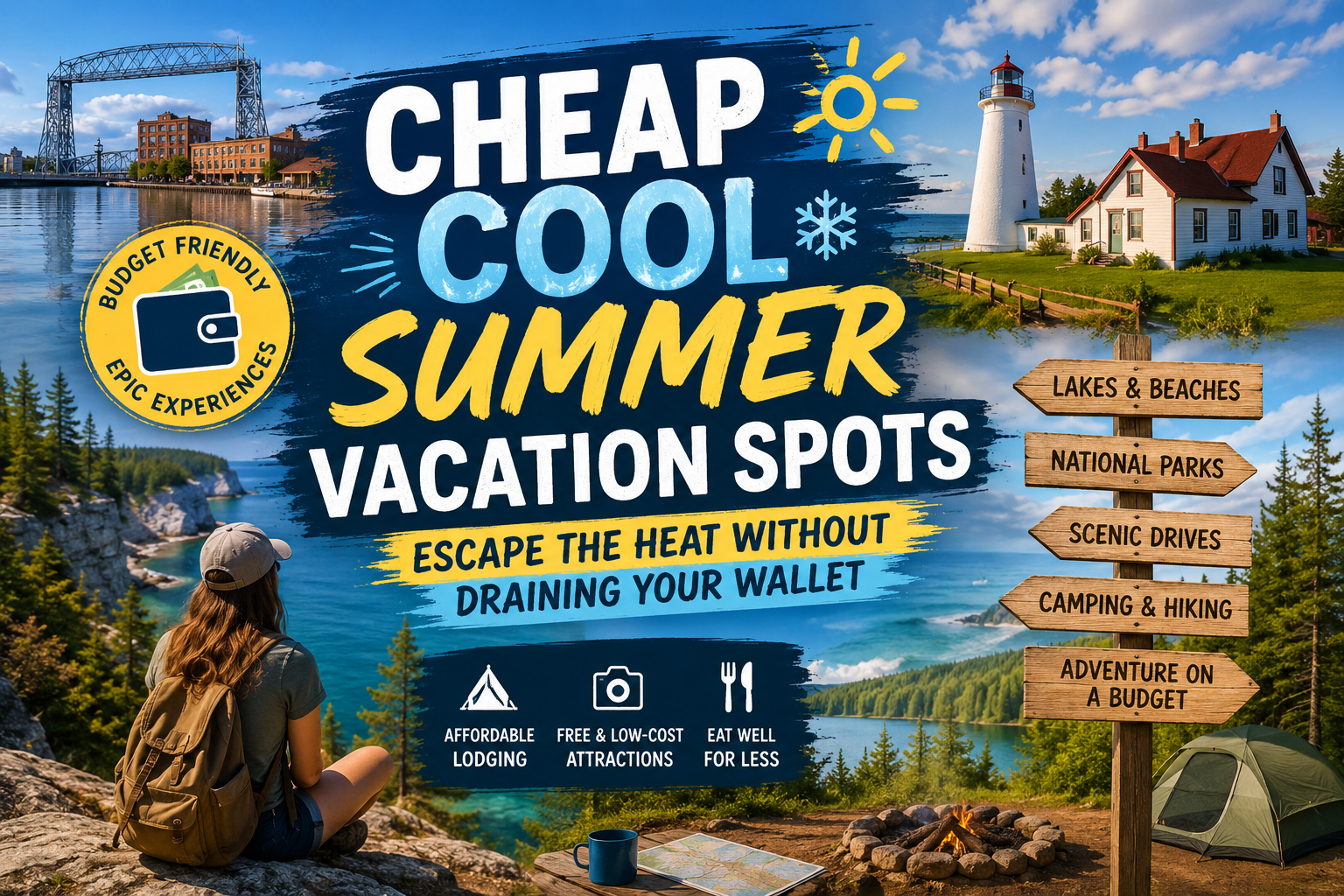
The average high temperature in Phoenix hits 106°F in July, and Dallas isn’t far behind at 95°F, yet the average American family still plans a summer vacation during peak heat season. What if the smartest travel move you could make this summer isn’t booking a beach resort, but pointing your car or your browser north? Colocation travel, the deliberate choice to escape extreme heat by heading to cooler latitudes, has surged in popularity as heat waves grow longer and more intense across the southern and central US.
The good news: you don’t need a passport to find relief (though having one opens even more doors), and you don’t need to spend a fortune either. From the fog-draped coast of northern California to the lakeside towns of Ontario, there’s a genuinely impressive spread of cheap cool summer vacation spots that stay comfortable when the rest of the country is baking. Flights, gas, lodging, and food costs in many of these regions run significantly lower than popular warm-weather destinations like Miami or Cancun. For more ways to keep costs down on the road, check out these budget road trip tips and browse our full library of Travel articles for destination inspiration.
This guide covers specific cities, regions, and practical budget figures so you can actually plan a trip, not just dream about one. Prices and entry requirements are subject to change, so verify with official sources before booking.
Key Takeaways
- Average July highs in destinations like Duluth, MN and Prince Edward Island, Canada stay below 75°F, roughly 20 to 30 degrees cooler than major southern US cities.
- Americans can visit Canada for up to six months without a visa, though a valid US passport is required at all land and air border crossings.
- Budget travelers can realistically plan a 5-night colocation in the Pacific Northwest or Great Lakes region for under $500 per person, including lodging and food, when using state parks, hostels, and free attractions.
- The CDC has identified extreme heat as the leading weather-related cause of death in the US, making temperature-based destination planning a genuine health consideration, not just a comfort preference.
- Canada’s provincial parks offer camping fees as low as $15 to $30 CAD per night, making them among the most affordable cool-weather lodging options accessible to American travelers.
Why Northern Destinations Make Financial Sense This Summer
Choosing a cooler northern destination isn’t just about comfort. It often translates to lower overall trip costs, less crowded attractions, and reduced spending on AC-dependent indoor activities.
Popular warm-weather summer destinations like Orlando, Myrtle Beach, and Las Vegas see their highest room rates in June, July, and August. By contrast, many northern destinations are in their sweet spot during summer, meaning pleasant weather without the price premiums of ski season or fall foliage. A mid-range hotel room in Traverse City, Michigan costs considerably less in July than a comparable room in Miami the same week.
There’s also a hidden cost to hot-weather travel that rarely shows up in budget calculators: heat forces you indoors. Theme parks, zoo visits, and outdoor sightseeing become miserable or even dangerous above 95°F, pushing families toward expensive air-conditioned alternatives like malls, movie theaters, and restaurants. In a place where the high is 68°F, you can hike, kayak, and explore for free all day.
According to the CDC’s official guidance on extreme heat, heat is the leading weather-related cause of death in the United States, and the health risks disproportionately affect people over 65, young children, and individuals with chronic conditions. Planning travel around cooler temperatures is a meaningful harm-reduction strategy for vulnerable travelers.
Top Affordable Northern US Destinations to Beat the Heat
Several northern US cities and regions offer average July temperatures well below 80°F combined with low-cost lodging, free outdoor attractions, and easy drive-to access from major population centers.
Duluth, Minnesota: The Coolest City You’re Overlooking
Sitting at the western tip of Lake Superior, Duluth averages a high of just 73°F in July. Lake breezes keep things even cooler near the waterfront, and the city is remarkably affordable. Canal Park is free to walk, the Lakewalk stretches nearly 8 miles of free pedestrian paths, and Gooseberry Falls State Park charges just $7 per vehicle for a day pass. Budget motels along the waterfront run $80 to $120 per night in July, and the city is a 2.5-hour drive from the Twin Cities.
Olympic Peninsula: Cheap Pacific Northwest Trips
Port Angeles and the surrounding Olympic Peninsula see July highs around 65 to 70°F, with frequent cloud cover that keeps temperatures even more moderate. Olympic National Park’s entrance fee is $35 per vehicle for a 7-day pass, but free camping is available in dispersed areas of the national forest adjacent to the park. The ferry from Port Townsend to Coupeville on Whidbey Island costs about $16 for a walk-on passenger and opens up an entirely different stretch of cool, scenic coastline.
Upper Peninsula of Michigan: Underrated and Underpriced
Michigan’s Upper Peninsula, often called the UP, is perpetually overlooked by summer travelers, which keeps prices low. Tahquamenon Falls State Park charges $9 per vehicle. Pictured Rocks National Lakeshore is free to enter, though some boat tours run $40 to $50 per adult. Campgrounds at Porcupine Mountains Wilderness State Park start around $22 per night. July highs average 74°F, and Lake Superior keeps the air crisp even on warmer days.
Budget Canada Travel for Americans: What You Actually Need to Know
Americans can visit Canada visa-free for up to six months with a valid US passport, making it one of the most accessible international cool-weather escapes available.
According to the US State Department’s official Canada travel information, US citizens traveling to Canada by air must have a valid US passport. Land border crossings also accept a passport card or Enhanced Driver’s License where applicable. No visa is required for stays under six months, though border officers determine final admission at entry. Always carry proof of sufficient funds and a return itinerary.
Prince Edward Island: Canada’s Quietest Bargain
PEI averages 75°F in July, with cool Atlantic breezes and far fewer crowds than Nova Scotia or Quebec. Provincial park campgrounds run $28 to $42 CAD per night. Green Gables Heritage Place charges around $8 CAD for adult admission. A round-trip flight from Boston to Charlottetown on budget carriers can fall under $200 USD when booked in advance, though prices fluctuate significantly.
Thunder Bay, Ontario: Gateway to Canadian Wilderness
Thunder Bay sits on the north shore of Lake Superior with July highs around 75°F. Sleeping Giant Provincial Park, a short drive from the city, offers camping from $18 to $35 CAD per night and some of the most dramatic lakeside scenery in Ontario. The city itself has affordable dining, free waterfront access, and a cost of living that makes it noticeably cheaper than Toronto or Vancouver for traveling Americans.
According to a 2023 report published through the National Institutes of Health, climate-attributable heat deaths in the US are projected to increase sharply through the remainder of this century, with the greatest risk concentrated in the South and Southwest. This context matters for travelers planning multi-week or multi-generational summer trips.
Budget Breakdown: Can You Really Do It for Under $500?
A 5-night solo or per-person budget of $500 is realistic for many northern US and Canadian destinations when combining state park camping, free attractions, and self-catered meals.
| Destination | Avg. July High | Lodging (5 Nights, Budget) | Key Free or Low-Cost Attractions | Estimated 5-Night Total (Per Person, Excl. Long-Distance Travel) |
| Duluth, MN | 73°F | $80–$120 USD/night (Motel) | Canal Park, Lakewalk, Gooseberry Falls ($7 USD) | $350–$500 USD |
| Olympic Peninsula, WA | 65–70°F | $25–$35 USD/night (National Forest/Camp) | Olympic National Park ($35 USD pass), free public beaches | $250–$450 USD |
| Upper Peninsula, MI | 74°F | $22–$40 USD/night (State Park Camping) | Pictured Rocks (Free entry), Tahquamenon Falls ($11 USD) | $200–$400 USD |
| Prince Edward Island, Canada | 75°F | $28–$42 CAD/night (Provincial Park) | Free beaches, Green Gables ($9 CAD), free cycling trails | $350–$500 USD (Excl. flights) |
| Thunder Bay, ON, Canada | 75°F | $18–$35 CAD/night (Provincial Park) | Sleeping Giant Provincial Park, Marina Park waterfront | $250–$450 USD (Drive-to trip) |
Alternative Perspectives
The case for staying closer to home: Not every traveler benefits from heading north. For families with young children, long drives to destinations like the Upper Peninsula or Olympic Peninsula can be exhausting and expensive when factoring in gas, food stops, and the unpredictability of kids on the road. A local community pool, a nearby lake cabin two hours away, or a staycation with a window AC unit may deliver more actual rest at lower cost.
Weather risk in northern destinations: Cool doesn’t always mean predictable. The Pacific Northwest can see prolonged rain in July, and Lake Superior weather can shift dramatically. Travelers who book non-refundable camping reservations months in advance may find themselves in a cold drizzle for a week. Travel insurance and flexible booking policies matter more on weather-dependent trips.
Canada’s currency advantage cuts both ways: While the exchange rate often favors Americans spending Canadian dollars, international transactions on US debit cards sometimes carry foreign transaction fees of 1 to 3%, which erodes savings on a tight budget. Use a no-foreign-fee credit card or withdraw CAD in larger amounts from ATMs to minimize this.
Disclaimer. Travel information including prices, visa requirements, and entry rules is subject to change. Always verify current requirements with official government and airline sources before booking.
FAQ
Yes. A valid US passport is required for air travel to Canada. For land border crossings, a passport card or Enhanced Driver’s License is also accepted in states that issue them. Verify current requirements with the US State Department at travel.state.gov before your trip, as entry rules are subject to change.
Minnesota, Michigan’s Upper Peninsula, Washington State (particularly the Olympic Peninsula and San Juan Islands), Maine, and northern Wisconsin consistently offer July temperatures below 75°F. State park systems in Minnesota and Michigan are especially affordable, with day passes under $10 and campsites from $20 to $35 per night.
Yes, for drive-to destinations, a 5-night budget under $500 per person is achievable when combining state or provincial park camping, self-prepared meals, and free outdoor attractions. The main variables are lodging and transportation. Flying to a destination like PEI adds significant cost unless you find advance-purchase deals on budget carriers, so factor that in separately.
State and provincial park campsite reservations in popular northern destinations like the Upper Peninsula and Olympic National Park often open months in advance and sell out for peak summer weeks. Book campsites as early as the reservation window allows, typically 6 months out for national parks. For motels and hostels, mid-June through mid-August is peak season, so booking 60 to 90 days out is advisable. Prices and availability are subject to change, so monitor official park reservation systems directly.