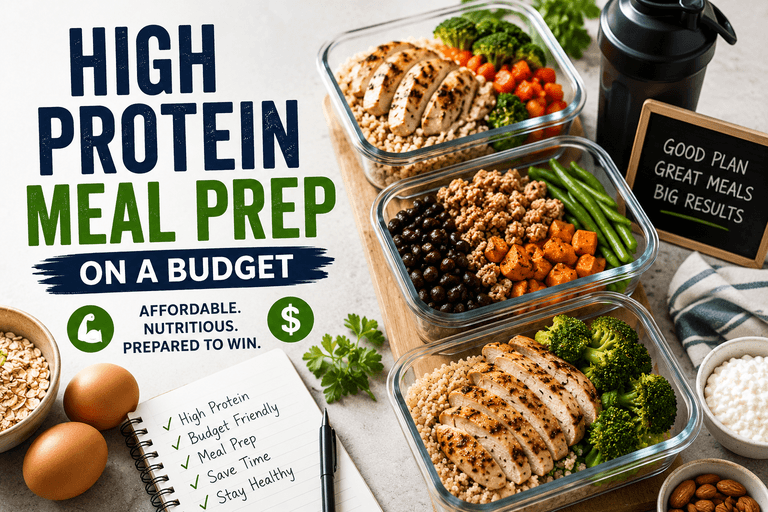
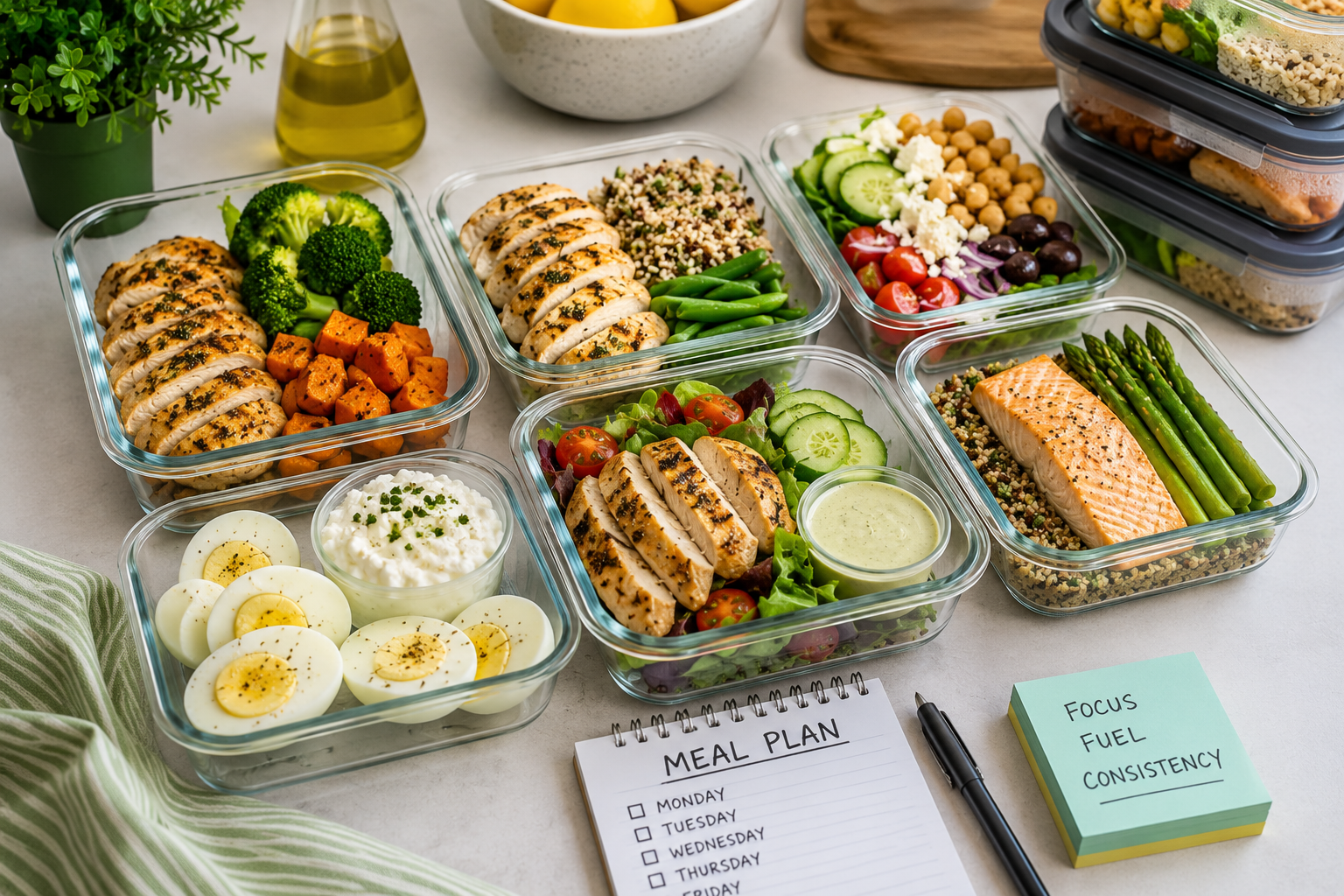
People who prepare meals at home consume roughly 140 fewer calories per day than those who rely on restaurant or takeout food, according to a study published in the American Journal of Preventive Medicine. That gap, sustained over weeks, can meaningfully shift your energy balance without requiring any dramatic dietary overhaul. The secret is not willpower. It is having the right food already in your refrigerator when hunger hits at 6:47 p.m. on a Tuesday.
High-protein, low-calorie eating sits at the center of most evidence-backed weight management approaches for a practical reason: protein is the most satiating macronutrient. When you structure your meal prep ideas around lean proteins, fiber-dense vegetables, and controlled portions, you get plates that feel generous while staying within a calorie range that may support fat loss. The challenge is making those plates taste worth eating again on Thursday.
This guide walks you through a realistic weekly prep system built on foods that are affordable, widely available at US grocery stores, and actually satisfying. For more practical kitchen strategies, browse our Food articles covering everything from pantry organization to sheet-pan cooking. Whether you are brand new to batch cooking or just tired of the same grilled chicken and rice, there is a workable plan below.
Key Takeaways
- Adults eating 25 to 40 grams of protein per meal show greater satiety and reduced overall calorie intake compared to lower-protein eating patterns, according to a 2023 comprehensive systematic review and meta-analysis published in Nutrients.
- The updated 2025–2030 Dietary Guidelines for Americans pivot toward weight-based nutrition, with weight loss typically requiring a deficit of 500 to 750 calories below maintenance, per recent NIH behavioral data.
- A high-protein meal prep plan built around chicken breast, eggs, Greek yogurt, legumes, and cottage cheese can deliver 120 to 150 grams of protein daily at roughly $60 to $80 per week in groceries.
- Batch-cooking proteins and grains once or twice per week reduces daily decision fatigue, a factor associated with poor food choices in behavioral nutrition research.
- Common failure points include skipping flavor variety, under-seasoning proteins, and prepping too much of one food, leading to boredom by day three.
Why High Protein Supports Weight Management
Protein increases the hormones that signal fullness while reducing ghrelin, the hunger hormone, making it easier to maintain a calorie deficit without feeling deprived.
Protein does three things that matter for anyone managing their weight. First, it triggers a stronger satiety response than carbohydrates or fat. Second, it has a higher thermic effect, meaning your body burns more calories digesting it. Third, it helps preserve lean muscle mass during a calorie deficit, which keeps your resting metabolic rate from dropping significantly.
According to Mayo Clinic guidance on healthy weight loss strategies, sustainable fat loss generally occurs at a rate of 1 to 2 pounds per week, achieved through modest calorie reduction paired with regular physical activity. Crash diets that strip protein tend to cause muscle loss alongside fat loss, making long-term weight maintenance harder.
How Much Protein Do You Actually Need?
The 2025–2030 Dietary Guidelines for Americans set the Recommended Dietary Allowance for protein at 0.8 grams per kilogram of body weight, but sports nutrition research and weight management studies consistently suggest that 1.2 to 1.6 grams per kilogram is more effective for body composition goals. For a 160-pound adult, that translates to roughly 87 to 116 grams of protein per day.
The Weekly Meal Prep Blueprint
A two-hour Sunday prep session covering proteins, grains, and pre-chopped vegetables can cover four to five days of lunches and dinners with minimal weeknight effort.
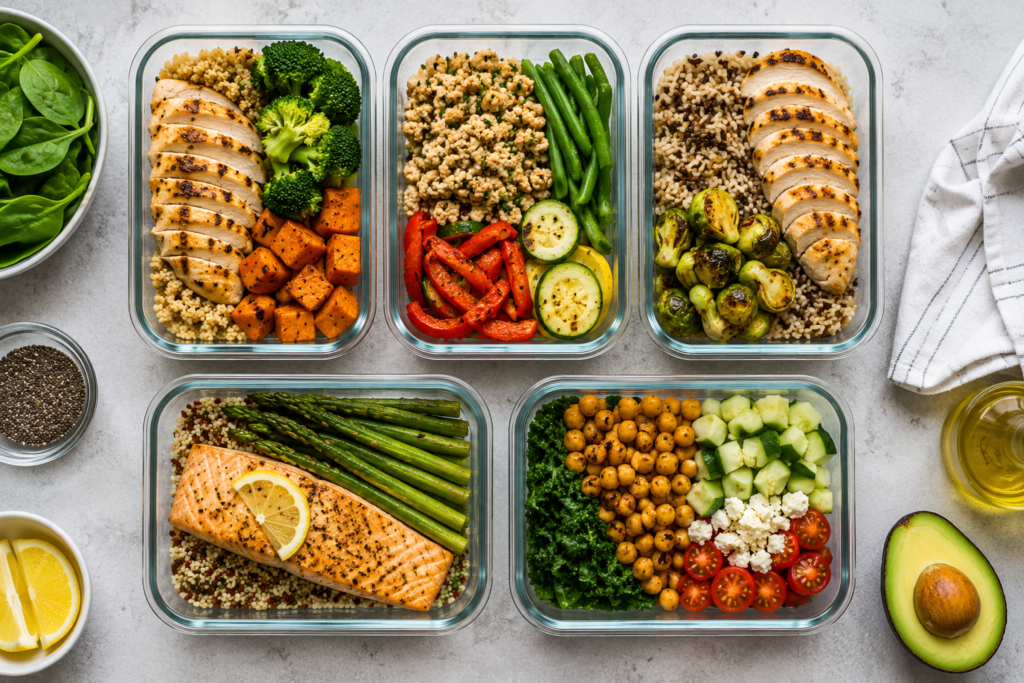
The most efficient high-protein, low-calorie prep system follows a modular format: cook proteins and bases in bulk, prep vegetables separately, and combine them into different flavor profiles throughout the week. This prevents the monotony that kills most meal prep habits by day four.
Core Proteins to Batch Cook
Chicken breast is the workhorse of low-calorie lunch meal prep, offering about 31 grams of protein per 100 grams at roughly 165 calories. Season one batch with smoked paprika and cumin, another with lemon and garlic, so the same protein spans different meals. Other high-return proteins include extra-firm tofu (pressed and baked), hard-boiled eggs, canned light tuna in water, and 0% fat Greek yogurt used as a base for sauces or parfaits.
Vegetables and Fiber Sources
Cruciferous vegetables like broccoli, cauliflower, and Brussels sprouts roast well in large batches and hold their texture for three to four days refrigerated. Pair them with legumes, specifically black beans, lentils, or chickpeas, for additional protein and soluble fiber. A 2019 study published in Nutrients found that increased dietary fiber intake is associated with lower body weight and improved metabolic markers in adults following a calorie-restricted diet.
Sample Five-Day High-Protein Meal Prep Plan
This five-day plan targets approximately 1,500 to 1,700 calories daily with 120 to 140 grams of protein, suitable for most adult women in a moderate calorie deficit.
| Day | Breakfast | Lunch | Dinner | Approx. Calories | Approx. Protein |
|---|---|---|---|---|---|
| Monday | Greek yogurt parfait with berries and hemp seeds | Lemon garlic chicken over quinoa with roasted broccoli | Lentil and spinach soup with a boiled egg | 1,520 kcal | 128 g |
| Tuesday | Egg muffins (3 eggs, spinach, feta) | Tuna and white bean salad over arugula | Smoked paprika chicken with cauliflower rice and black beans | 1,490 kcal | 134 g |
| Wednesday | Cottage cheese bowl with cucumber and Everything Bagel seasoning | Leftover lentil soup with whole grain crackers | Baked tofu stir-fry with edamame and brown rice | 1,540 kcal | 121 g |
| Thursday | Overnight oats with protein powder and chia seeds | Chicken and quinoa bowl with roasted Brussels sprouts and tahini drizzle | Turkey and chickpea stuffed bell peppers | 1,580 kcal | 139 g |
| Friday | Scrambled eggs with salsa and a corn tortilla | Greek yogurt chicken salad lettuce wraps | Shrimp and vegetable sheet pan with lemon and herbs | 1,470 kcal | 126 g |
Common Meal Prep Mistakes That Derail Progress
The most frequent failure points in healthy meal prep for beginners are flavor fatigue, unsafe storage practices, and prepping too much of one ingredient without a plan to use it.
Flavor boredom is the leading reason people abandon their meal prep habits. If every container tastes the same by Wednesday, motivation collapses and the drive-through wins. Use at least two distinct seasoning profiles per protein batch and rotate your sauce bases, swapping between a tahini lemon dressing, a light miso vinaigrette, and a Greek-style herb yogurt sauce across the week.
Food safety is a non-negotiable element that recipe content often glosses over. The FDA advises that cooked proteins stored in the refrigerator should be consumed within three to four days. If you are prepping for five days, freeze the Thursday and Friday portions on Sunday and pull them out mid-week. This matters especially for chicken and seafood.
According to a 2023 meta-analysis in Nutrients, distributing 25 to 40 grams of protein evenly across daily meals optimizes metabolic satiety and significantly curbs spontaneous food cravings compared to standard lower-protein patterns. The NIH National Institute of Diabetes and Digestive and Kidney Diseases states that a calorie deficit of 500 to 750 calories per day is associated with a weight loss rate of approximately 1 to 1.5 pounds per week and is considered a safe, sustainable approach for most adults without underlying medical conditions.
Is High-Protein Meal Prep Right for Everyone?
High-protein eating plans are not universally appropriate, particularly for individuals with kidney disease or certain metabolic conditions, and a healthcare provider should be consulted before significantly increasing protein intake.
High-protein diets are well-studied and generally safe for healthy adults, but they carry real limitations. People with chronic kidney disease (CKD) are often advised by nephrologists to restrict protein intake because the kidneys filter protein metabolic byproducts. Increasing protein without medical clearance in this population may accelerate kidney function decline.
A peer-reviewed study on high-protein diets and satiety for weight management on PubMed outlines the benefits of higher protein intake but also notes that the quality of protein sources matters significantly. Ultra-processed high-protein products, such as many protein bars and powders with long ingredient lists, often contain added sugars, seed oils, and artificial sweeteners that may offset the benefits of their protein content.
Alternative Perspectives
Plant-based advocates argue that a high-protein plan does not require animal products, and evidence supports this. A well-constructed vegan meal prep built around lentils, tempeh, edamame, hemp seeds, and nutritional yeast can meet the same protein targets with added benefits from phytonutrients and fiber. The practical challenge is that plant proteins are less bioavailable and require larger volumes of food to reach equivalent amino acid profiles.
Intuitive eating proponents caution that aggressive macro-tracking and structured meal prep can increase anxiety around food for individuals with a history of disordered eating. For this group, a less regimented approach focused on food quality and mindful eating may produce better long-term outcomes than any specific macro ratio.
Budget-constrained households may find that the most protein-dense, affordable foods are not always the ones featured in aspirational meal prep content. Canned tuna, dried lentils, frozen edamame, and store-brand cottage cheese consistently deliver the best protein-per-dollar ratio and should anchor any budget-conscious high-protein plan.
Disclaimer
This content is for informational and entertainment purposes only. It is not intended as medical advice, diagnosis, or treatment. Consult a qualified healthcare professional before making significant changes to your diet, particularly if you have a medical condition or are taking medication.
Frequently Asked Questions
The 2025–2030 Dietary Guidelines suggest 1,600 to 2,400 calories per day as a starting range for adult women and 2,000 to 3,200 for adult men, depending on age and activity level.
The FDA recommends consuming cooked proteins and prepared dishes within three to four days when stored in airtight containers at or below 40°F. For a five-day plan, freeze the last one to two days of meals on prep day and thaw them in the refrigerator mid-week. Grains and roasted vegetables typically keep well for four to five days refrigerated.
The most beginner-friendly options are chicken breast, eggs, 0% fat Greek yogurt, canned light tuna, low-fat cottage cheese, black beans, and lentils. These foods are widely available, inexpensive, easy to cook in large batches, and flexible enough to work across multiple flavor profiles throughout the week.
Some research suggests that focusing on food quality and protein intake without strict calorie tracking can produce weight loss results for certain individuals, particularly those transitioning away from highly processed diets. However, portion awareness remains important even without formal tracking. Using consistent container sizes and built-in portion guides, such as filling half a container with vegetables, a quarter with protein, and a quarter with a grain, can approximate calorie control without a food diary.