Summer 2026 is shaping up to be one of the most historically significant travel seasons in American history. The country celebrates its 250th anniversary, and Route 66 marks its centennial, making this the perfect moment to hit the open road. Whether you are a seasoned road tripper or planning your first cross-country adventure, smart planning can keep your costs manageable without sacrificing the experience. Explore our budget travel tips hub for more money-saving strategies, and browse all our Travel articles for destination inspiration across the US and beyond. Prices and entry requirements are subject to change, so always verify with official sources before booking.
KEY TAKEAWAYS
- Summer 2026 marks both America’s 250th anniversary and the 100th anniversary of Route 66 Centennial, creating a unique road-trip season with nationwide celebrations.
- A two-week U.S. road trip can cost approximately $1,500–$3,500 per person depending on lodging, fuel use, route length, and travel style.
- Splitting fuel, accommodations, and supplies with travel companions is one of the easiest ways to reduce overall expenses.
- Budget-friendly overnight options include camping, dispersed public-land camping, and small-town motels instead of expensive city stays.
- Driving historic Route 66 can be affordable because many memorable roadside attractions are free or low cost.
- The America the Beautiful Pass offers strong value for travelers visiting multiple national parks during one trip.
- Booking campsites and lodging early, traveling midweek, and arriving at attractions before peak hours can help avoid crowds and higher prices.
- Prepare before departure by inspecting your vehicle, downloading offline maps, packing snacks, and setting aside an emergency fund for unexpected costs.
Why Summer 2026 Is a Once-in-a-Generation Road Trip Opportunity
Summer 2026 aligns the 250th anniversary of American independence with the 100th anniversary of Route 66, creating a travel season packed with commemorative events, special programming, and patriotic energy across the country.
According to the official America 250 commemoration organization, sanctioned events and celebrations are planned in cities and towns from coast to coast. At the same time, Route 66, the legendary highway stretching roughly 2,400 miles from Chicago to Santa Monica, reaches its centennial milestone. According to the Federal Highway Administration, Route 66 passes through eight states and dozens of communities that are actively planning centennial programming. This convergence of anniversaries creates a rare window for road trippers to experience living history while keeping costs in check with proper planning.
How Much Does a Budget Road Trip USA Summer 2026 Cost?
A two-week budget road trip in the US may cost between $1,500 and $3,500 per person depending on your vehicle, accommodation choices, route length, and how many paid attractions you visit.
Costs vary considerably based on your starting point, travel style, and group size. Traveling with two or more people is one of the most effective ways to lower per-person expenses, since fuel, lodging, and campsite fees can be split evenly. The table below offers a general cost comparison for common road trip expense categories to help you build a realistic budget.
| Expense Category | Budget Option | Estimated Daily Cost (Per Person) | Mid-Range Option | Estimated Daily Cost (Per Person) |
|---|---|---|---|---|
| Accommodation | Tent camping / dispersed camping | $5 to $20 | Budget motel / hostel | $40 to $75 |
| Food | Grocery store / self-catering | $15 to $25 | Mix of cooking and diners | $35 to $55 |
| Fuel (sedan, split 2 people) | Fuel-efficient compact car | $10 to $20 | SUV or crossover | $20 to $40 |
| Attractions / Activities | Free national parks on fee-free days | $0 to $5 | Mix of paid and free sites | $15 to $30 |
| Miscellaneous (parking, tolls, supplies) | Minimal toll routes, free parking | $3 to $8 | Some toll roads and paid parking | $10 to $20 |
Route 66 Budget Tips: Stretching Your Dollar on the Mother Road
Driving Route 66 on a budget is very achievable if you plan your stops in advance, prioritize free attractions, and avoid peak weekend surges in major cities like Chicago and Los Angeles.
Should You Drive Route 66 From East to West or West to East?
The direction you drive Route 66 can affect your fuel costs and lodging availability. Driving west to east, from Santa Monica toward Chicago, means you may encounter fewer crowds in the first half of your trip since most tourists start in Chicago. Either direction offers the same iconic stops, so choose based on your departure city to minimize the initial drive to the route. According to the Federal Highway Administration, much of the original alignment is still drivable and well-documented through state and federal highway resources.
Free and Low-Cost Stops Along Route 66
Some of the most memorable Route 66 experiences cost nothing at all. Cadillac Ranch in Amarillo, Texas, is a free outdoor art installation on public land. The Blue Hole in Santa Rosa, New Mexico, charges a minimal fee and delivers a striking turquoise swimming hole. Many small towns along the corridor have free historic districts, murals, and diners where a filling meal rarely exceeds $12. Budget travelers should also look for free public lands managed by the Bureau of Land Management in New Mexico, Arizona, and California, where dispersed camping is often permitted at no cost.
How to Save Money on a Road Trip Using National Parks in 2026
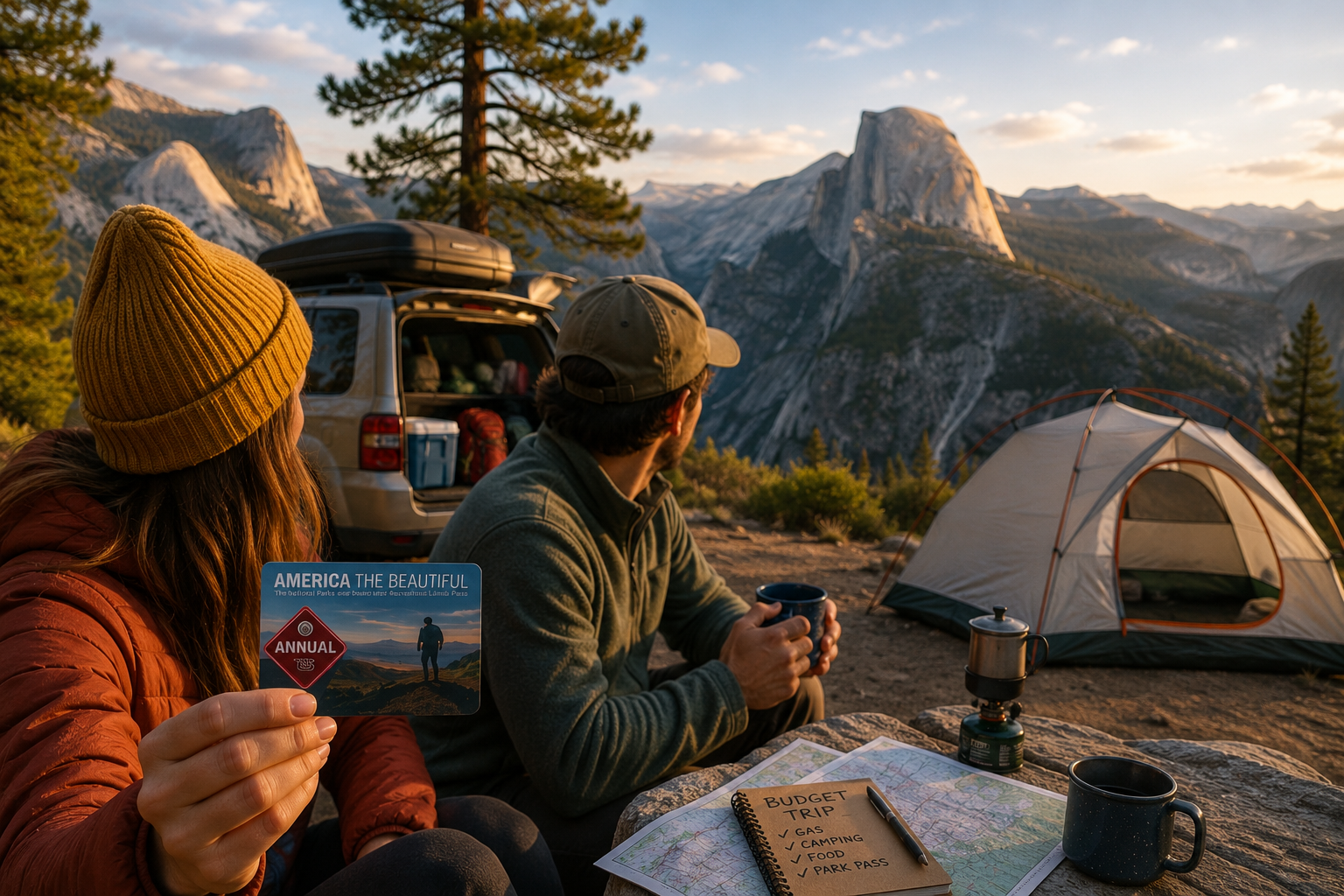
The America the Beautiful Annual Pass costs $80 and covers entrance fees at over 2,000 federal recreation sites, making it one of the best single purchases for a summer 2026 road trip that includes multiple national parks.
According to the National Park Service, several fee-free dates are designated each year when entrance to all national parks is waived. For 2026, NPS typically announces these dates in advance on their official site, and at least one fee-free day falls near the Fourth of July weekend, which aligns perfectly with America 250th anniversary programming. If you plan to visit more than three or four parks, the $80 annual pass typically pays for itself quickly. Check the NPS website directly for the confirmed 2026 fee-free schedule before your trip.
According to researchers at the University of Utah’s Institute for Outdoor Recreation and Tourism, national parks generate significant economic activity in gateway communities, and visitor spending in these regions tends to concentrate in food, lodging, and fuel, meaning budget travelers who plan meals and overnight stays in gateway towns rather than inside park boundaries can often find lower prices.
Cheap Road Trip Ideas: Campgrounds vs. Motels
KOA campgrounds, state park campgrounds, and dispersed public land camping are the three main affordable overnight options for road trippers. State park campgrounds typically range from $15 to $35 per night and offer hookups, restrooms, and sometimes shower facilities. Dispersed camping on BLM or National Forest land is often free but requires more self-sufficiency. Budget motels along Route 66 in smaller towns frequently run between $50 and $80 per night in summer, though prices in larger cities like Albuquerque, Flagstaff, and Oklahoma City can be higher during the 2026 anniversary season.
America 250th Anniversary Travel Deals: Where to Look
Special commemorative programming for America’s 250th anniversary may bring reduced or waived admission at certain historic sites, though travelers should confirm deals directly with each site since availability and terms vary widely.
Many state tourism offices are coordinating with local attractions to offer commemorative promotions tied to the anniversary. Checking individual state tourism websites and the official America 250 site closer to your travel dates is the most reliable way to find verified deals. National monuments, battlefields, and historic parks operated by the NPS are natural focal points for anniversary programming and often offer ranger-led programs at no additional charge beyond the park entrance fee.
A 2023 study published in the Journal of Travel Research found that travelers who engaged in pre-trip planning using official destination resources reported higher satisfaction scores and lower overall trip costs compared to those who booked spontaneously, suggesting that early research pays dividends both financially and experientially.
Is a Summer Road Trip in 2026 Worth the Crowds?
Summer 2026 will likely draw higher-than-usual crowds due to the dual anniversaries, meaning popular stops may require advance reservations and flexible scheduling to avoid long waits and inflated last-minute prices.
Tips for Avoiding Peak Crowds on a Budget
Traveling mid-week rather than on weekends can make a noticeable difference at popular parks and Route 66 landmarks. Arriving at attractions early in the morning, ideally before 9:00 a.m., helps you beat both crowds and the afternoon heat in desert regions where summer temperatures in states like Arizona and New Mexico can exceed 100 degrees Fahrenheit. Booking campgrounds and any paid lodging three to six months in advance is strongly recommended for summer 2026 given the anticipated commemorative travel surge.
Alternative Perspectives
Not every traveler agrees that summer 2026 is the ideal time for a budget road trip. Some experienced road trippers argue that the anniversary hype will inflate prices at key stops, particularly in cities with major celebration events, and that waiting until fall 2026 would offer the same historic sites with lower crowds and potentially better deals. Others point out that flying into a central hub and renting a car for a shorter regional loop may be more cost-effective than a full cross-country drive, especially given fuel costs and vehicle wear. Both approaches have merit depending on your budget, schedule, and comfort with crowds.
Quick Budget Planning Checklist Before You Go
Before you load up the car, a few practical steps can protect your budget. Get a vehicle inspection and address any known issues before departure, since roadside repairs in tourist areas tend to cost more. Pack a cooler with snacks and easy meals for the first several days to avoid expensive convenience store stops. Download offline maps for states with limited cell coverage, particularly in rural New Mexico and the Mojave Desert. And keep a small emergency fund of at least $300 to $500 set aside for unexpected costs that fall outside your planned budget.
Disclaimer: Travel information including prices, visa requirements, and entry rules may change. Always verify with official government and airline sources before booking.
Frequently Asked Questions
A realistic budget for a two-week road trip ranges from roughly $1,500 to $3,500 per person, depending on whether you camp or stay in motels, how far you drive, and how many paid attractions you visit. Traveling with a partner and splitting costs significantly lowers the per-person expense. Prices and availability are subject to change, so build in a buffer of 15 to 20 percent above your estimated total.
Driving the Route 66 corridor itself is free since it runs along public state and federal highways. However, some individual attractions, museum stops, and campgrounds along the route charge admission or overnight fees. Many iconic roadside stops such as Cadillac Ranch and most small-town historic districts are free to visit.
America’s 250th anniversary, known as the Semiquincentennial, commemorates the signing of the Declaration of Independence in 1776. In 2026, events are planned nationwide from July 4th and throughout the summer. According to the official America 250 organization, celebrations span historic sites, national parks, and communities across all 50 states. Expect higher crowds and stronger demand for lodging near major events, making early booking essential.
The National Park Service designates several fee-free entrance days each year. Historically these have included Martin Luther King Jr. Day, the first day of National Park Week, Juneteenth, Independence Day, and Veterans Day. For confirmed 2026 dates, check the National Park Service website directly at nps.gov, as dates are announced officially each year and may vary.