The United States National Park System protects over 85 million acres across more than 400 sites, yet the average American household spends just $35 on national park entrance fees per year, according to the National Park Service’s own visitor spending reports. That gap between what’s available and what people actually experience comes down to one thing: knowing how the system works before you show up at the gate.
Entrance fees alone can reach $35 per vehicle at parks like Yellowstone and Grand Canyon, and that’s before you factor in campsite reservations, gear rentals, or the fuel to get there. But the federal government has quietly built a remarkably generous set of tools for budget-minded visitors, from free entrance days to subsidized passes for fourth graders. The trick is that almost none of it is advertised at the entrance booth. You can find more travel articles on WideJournal to help plan your next adventure, including detailed budget road trip tips that pair well with a national park itinerary.
This guide breaks down every major cost-cutting strategy for visiting America’s national parks, with honest notes on where the savings are real and where the fine print can catch you off guard. Prices and entry requirements are subject to change, so verify with official sources before booking.
Key Takeaways
- For most U.S. residents, the America the Beautiful Annual Pass costs $80 and covers entrance fees at over 2,000 federal recreation sites, paying for itself after just three visits to fee-charging parks.
- The National Park Service designates several fee-free entrance days each year, including Martin Luther King Jr. Day, National Park Week, Juneteenth, National Public Lands Day, Veterans Day, and the anniversary of the Great American Outdoors Act.
- National park campground fees range from $0 at primitive backcountry sites to $45 or more per night at developed campgrounds with hookups, with most front-country sites falling between $15 and $30.
- Fourth graders and their families receive a free America the Beautiful pass through the Every Kid Outdoors program, valid for an entire school year.
- More than 100 NPS units, including national monuments and historic sites, never charge entrance fees at all, offering free access year-round without any pass required.
Is the America the Beautiful Pass Worth It?
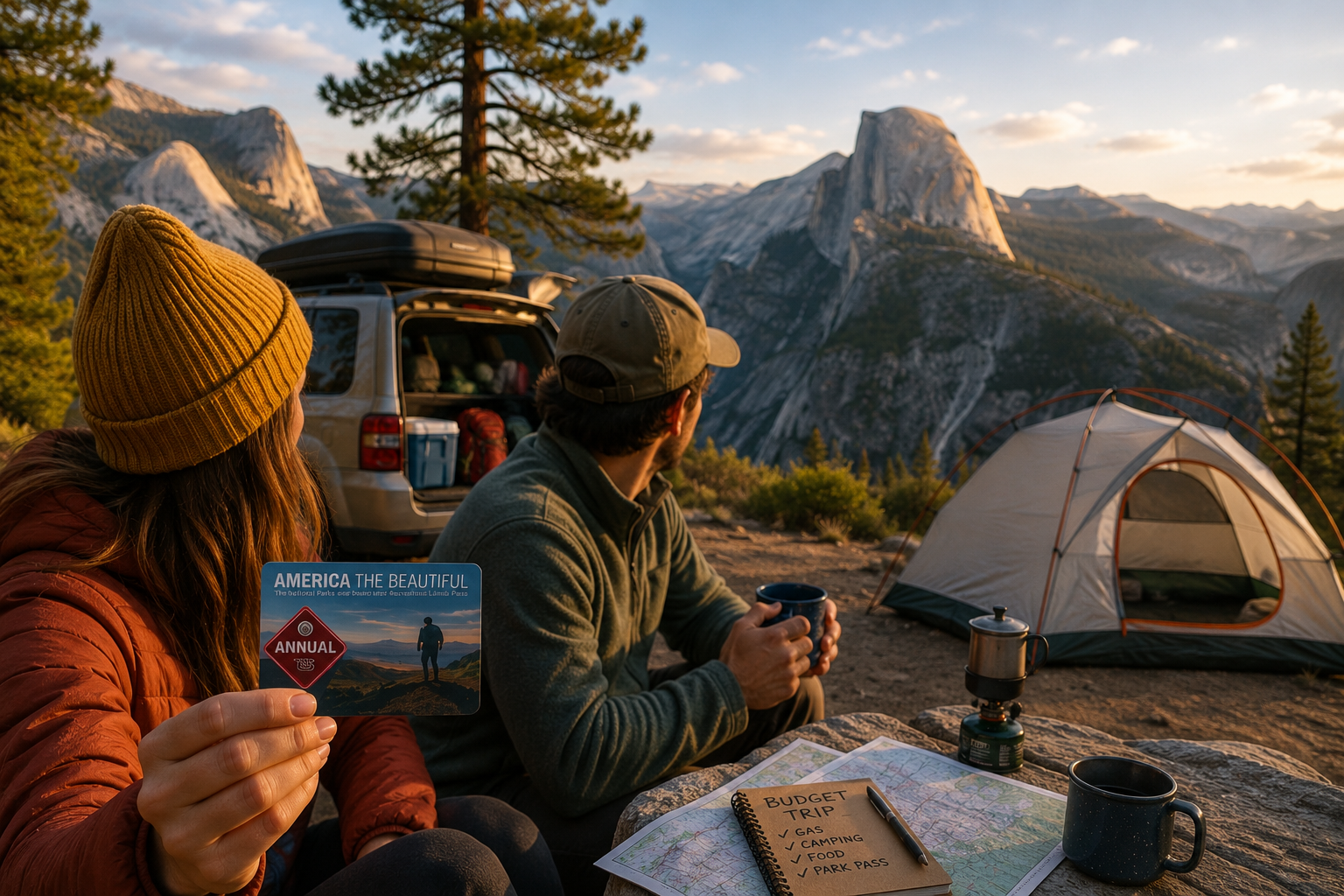
The $80 America the Beautiful Annual Pass covers entrance fees at over 2,000 federal sites for 12 months. For most families visiting two or more major parks in a year, it pays for itself quickly.
At $80 per year for a standard adult pass, the America the Beautiful pass is the single most effective budget tool for repeat national park visitors. A family driving to Grand Canyon ($35), Zion ($35), and Bryce Canyon ($35) in one trip would spend $105 at the gate without a pass. With it, they spend $80 total for the entire year, covering those parks and every other NPS fee site they visit through the expiration date.
The pass is available at most park entrance stations, online through the USGS store, and at many REI locations. It covers the pass holder and up to three accompanying adults at sites that charge per-person (not per-vehicle). At vehicle-fee sites, it covers everyone in the car.
Who Qualifies for a Free or Discounted Pass?
Several groups receive significant discounts or free passes. U.S. military members and their dependents receive a free annual pass through the NPS Military Pass program. U.S. residents with permanent disabilities receive a free lifetime pass. U.S. citizens and permanent residents aged 62 or older can purchase a lifetime pass for $80 (a one-time fee) or an annual senior pass for $20. The Every Kid Outdoors pass gives fourth graders and their families free access for the entire school year, which is one of the most overlooked deals in American family travel.
Where the Pass Falls Short
The pass does not cover camping fees, boat launch fees, parking fees (which are increasingly common at high-traffic parks like Arches), guided tours, or permit fees for sites like the Wave in Arizona or Half Dome in Yosemite. Some visitors purchase the pass expecting it to cover their entire trip cost and are surprised at the gate when campsite reservations cost extra. Know what it covers before you budget around it.
How to Time Your Visit Around Free National Park Days
The NPS designates several days each year when all entrance fees are waived at every fee-charging park. Planning a trip around these dates can save a family of four $35 or more on entry alone.
For 2026, the National Park Service has designated several fee-free entrance days, including Martin Luther King Jr. Day (January 19), the first day of National Park Week (April 18), Juneteenth National Independence Day (June 19), the anniversary of the Great American Outdoors Act (August 4), National Public Lands Day (September 26), and Veterans Day (November 11). Visitors should note that reservations, timed-entry requirements, and other fees may still apply even when entrance fees are waived.
The practical catch is that free days draw significantly larger crowds. Parking lots at parks like Arches and Rocky Mountain fill before 8 a.m. on peak free days, and timed entry systems may still apply even when entrance fees are waived. For less popular or lesser-known parks, free days remain genuinely low-crowd opportunities.
National Park Camping Fees: What You’ll Actually Pay
Camping inside a national park is almost always cheaper than nearby hotels, but fees vary widely by site type. Knowing the difference between developed and primitive camping can cut your accommodation costs significantly.
| Campsite Type | Typical Fee Range | Example Location | Reservable? | Key Limitation |
|---|---|---|---|---|
| Primitive / Backcountry | $0 to $10/night | Canyonlands National Park | Sometimes (permit required) | No water, no restrooms; high physical demand |
| Standard Front-Country | $15 to $30/night | Smoky Mountains, Shenandoah | Yes, via recreation.gov | Sites book out weeks to months in advance |
| Developed with Hookups | $30 to $45+/night | Yellowstone (Fishing Bridge RV) | Yes, highly competitive | RV or large camper required for best value |
| Group Campsites | $25 to $75/night (shared) | Yosemite, Grand Teton | Yes, often far in advance | Minimum group size requirements apply |
| First-Come, First-Served | $10 to $25/night | Death Valley, Big Bend | No reservations accepted | No guarantee of availability; arrive early |
| Free Dispersed Camping (adjacent National Forest) | $0 | Areas bordering Glacier, Zion | No, but length-of-stay limits apply | Not inside the park; some distance from attractions |
Reservations for the most popular campgrounds inside national parks open on recreation.gov as far as six months in advance. Yosemite Valley campgrounds in particular can fill within minutes of opening. Setting a recreation.gov alert for cancellations is one of the most effective strategies for last-minute campers.
Cheap National Park Trips: Cost-Cutting Strategies That Actually Work
The biggest savings on a national park trip come from combining an annual pass with off-peak timing and adjacent public lands camping, not from cutting corners on gear or safety equipment.
Visit in the Shoulder Season
Entrance fees don’t change by season, but nearly everything else does. Campsite availability increases dramatically in May, September, and October at most western parks. Some parks like Zion and Bryce Canyon actually offer better weather and trail conditions in shoulder months than in peak July heat. A week in Yellowstone in late September can feel like a different park entirely compared to August.
Use Adjacent National Forests and BLM Land
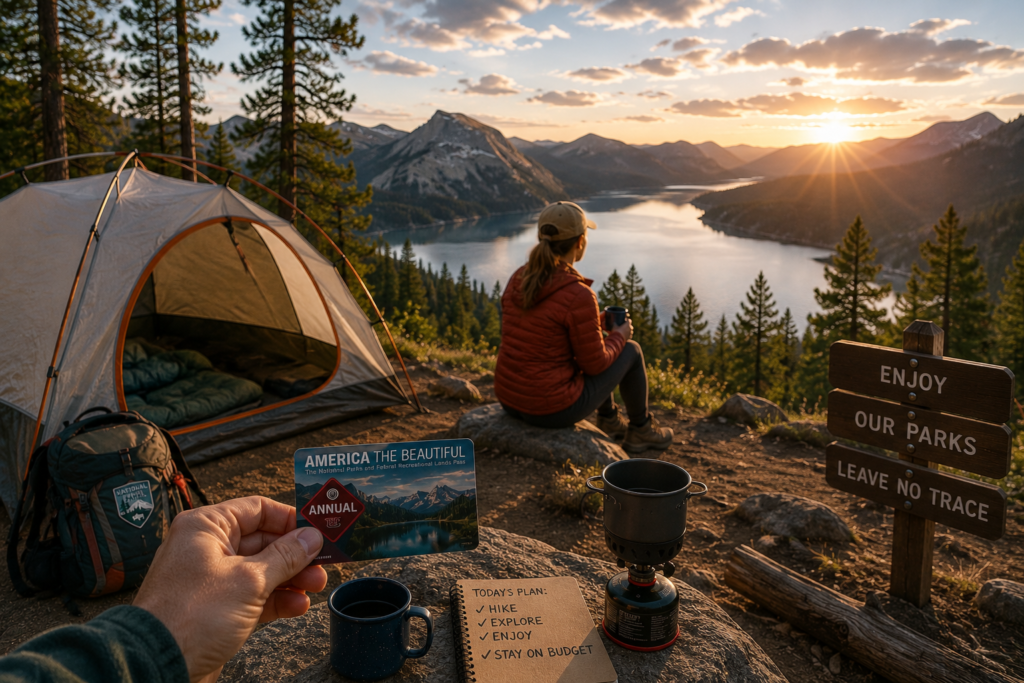
National parks are surrounded by National Forest and Bureau of Land Management (BLM) land where dispersed camping is often free with no permit required. Camping just outside Zion National Park in the Dixie National Forest, for example, can put you within 20 minutes of the park entrance at zero accommodation cost. This strategy requires research and a tolerance for basic conditions, but it’s legitimate and widely used by experienced visitors.
Focus on No-Fee NPS Units
Over 100 NPS units charge no entrance fee. These include many national monuments, historic sites, national seashores, and recreation areas. Sleeping Bear Dunes National Lakeshore in Michigan, Assateague Island National Seashore in Maryland and Virginia, and the Cuyahoga Valley National Park in Ohio all offer significant natural experiences at no gate cost.
Alternative Perspectives
The case against the America the Beautiful Pass for occasional visitors: If you visit only one or two national parks per year and those parks charge vehicle fees of $25 to $35, the $80 pass may not offer savings compared to paying per visit. Solo travelers who visit primarily per-person fee sites (rather than per-vehicle) may also find the math less favorable.
The argument for paying peak-season entrance fees: Some conservationists and park rangers argue that user fees directly fund trail maintenance, visitor services, and habitat protection under the Federal Lands Recreation Enhancement Act. Choosing to pay per-entry rather than using a pass at some parks means those individual parks retain a larger share of the revenue, which matters at underfunded sites.
Free days vs. uncrowded days: Budget travelers who prioritize a calm, uncrowded experience may find that a Tuesday in late April without a free day offers a far better visit than a free entrance Saturday in peak season. Entrance fee savings can be offset by hours lost in traffic or waiting for a parking spot.
According to National Park Service visitor spending and fee retention reports, park units that charge entrance fees retain 80% of collected recreation fees for local projects, while the remaining 20% is distributed across the National Park System to support sites without fee authority. This funding structure directly links visitor spending to on-the-ground trail and facility maintenance.
Many experienced national park visitors consider camping inside park boundaries one of the most rewarding ways to experience public lands. Beyond reducing accommodation costs, camping often provides earlier trail access, darker night skies, and more time within the park compared to staying in nearby towns.
Disclaimer
National park entrance fees, camping reservations, permit requirements, parking regulations, and fee-free entrance dates are subject to change. Always verify current information through the National Park Service (NPS), Recreation.gov, and other official sources before planning your trip.
FAQ
Great Smoky Mountains National Park does not charge an entrance fee, although visitors parking longer than 15 minutes must display a valid parking tag. Shenandoah National Park charges a standard entrance fee, while more than 100 National Park Service units remain free year-round.
True free camping inside national park boundaries is rare but exists at some primitive and backcountry sites. Most front-country campgrounds charge between $15 and $45 per night. Free dispersed camping is available on adjacent National Forest and BLM land outside park boundaries, which is a widely used legal strategy for reducing trip costs.
In 2026, National Park Service fee-free days include January 19 (Martin Luther King Jr. Day), April 18 (National Park Week opening day), June 19 (Juneteenth), August 4 (Great American Outdoors Act anniversary), September 26 (National Public Lands Day), and November 11 (Veterans Day). Timed-entry reservations and other park-specific fees may still apply.
The America the Beautiful pass covers entrance fees at over 2,000 federal recreation sites operated by the NPS, U.S. Forest Service, BLM, and other agencies. It does not cover camping fees, special use permits, parking fees, or reservations for sites like Half Dome or the Wave. Always check whether a specific park charges separate parking or permit fees in addition to entrance.