If your grass lawn feels like a never-ending chore of mowing, fertilizing, and watering, you’re not alone. Millions of North American homeowners are quietly replacing traditional turf with clover lawns, a grass alternative that requires a fraction of the upkeep while improving soil health, supporting pollinators, and staying green through summer dry spells. Whether you want a full conversion or just a clover-grass blend, the shift is more affordable and achievable than most people expect.
This guide walks you through everything you need to know: choosing the right seed, preparing your soil, planting correctly, and keeping your clover lawn looking good season after season. For more practical outdoor projects, browse our gardening guides and explore related home articles across the Wide Journal site.
Clover was a standard ingredient in lawn seed mixes throughout the mid-20th century before herbicide manufacturers removed it to sell more weed killer. Its comeback is well-earned. This is a plant that fertilizes itself, tolerates drought, crowds out weeds, and feeds bees without any extra effort on your part.
Key Takeaways
- A clover lawn can use 25% to 33% less water than a conventional grass lawn, according to Oregon State University Extension research on low-input ecolawns.
- White clover fixes nitrogen from the air through root bacteria, raising nitrogen levels in adjacent turfgrass by 17% to 27%, reducing or eliminating the need for synthetic fertilizer.
- White clover lawn seed costs roughly $5 to $15 per pound; a typical 1,000-square-foot lawn requires about 2 to 4 ounces of seed for overseeding into existing grass.
- Clover lawns support native pollinators significantly: University of Minnesota research shows Dutch white clover in bee lawn mixes meaningfully increases bee activity compared to grass-only turf.
- Microclover varieties stay shorter and blend more easily with turfgrass, making them a practical option for homeowners who want pollinator benefits without a fully natural look.
What Is a Clover Lawn and Why Are Homeowners Switching?
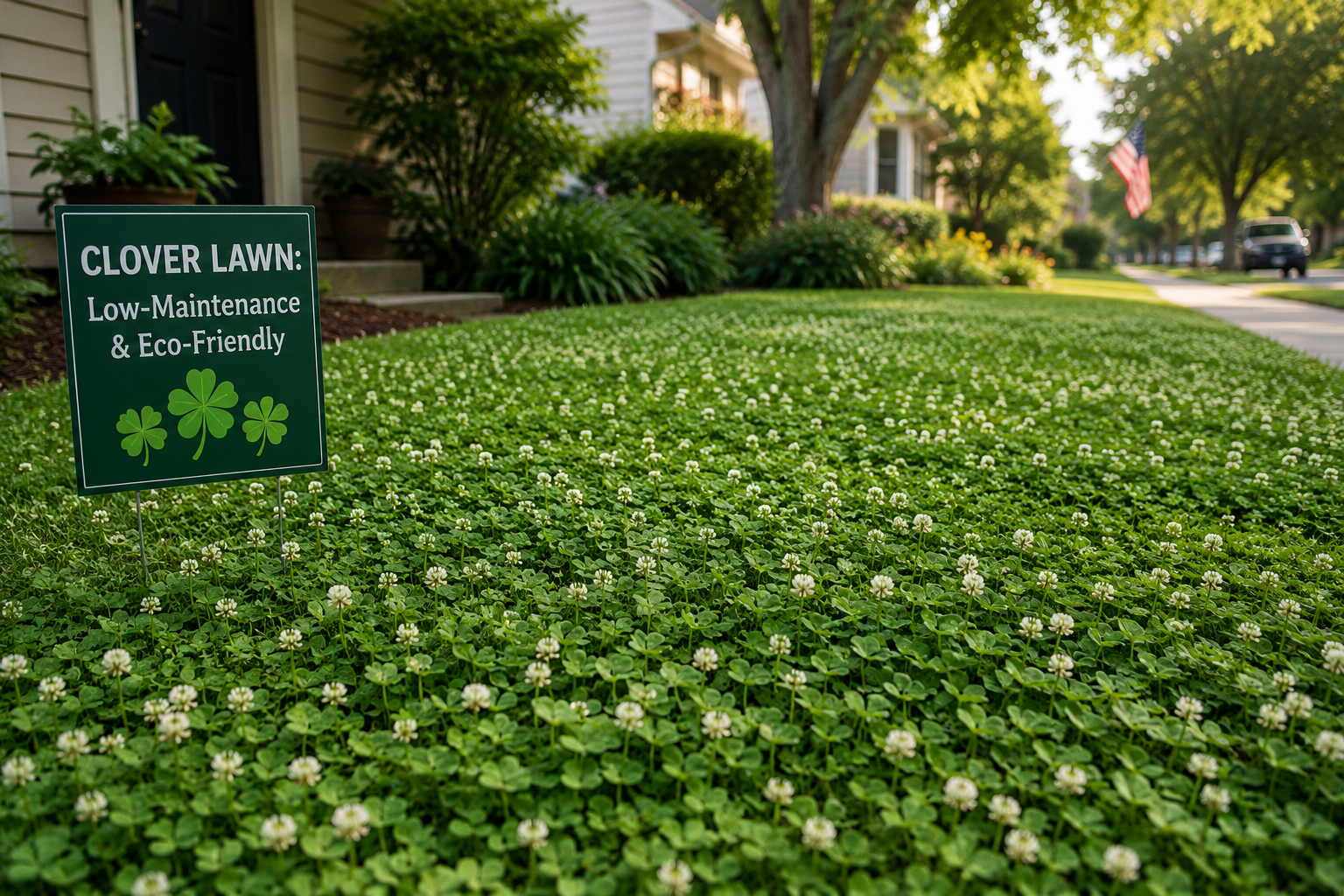
A clover lawn replaces or supplements traditional turfgrass with low-growing clover species that fix nitrogen, resist drought, and require minimal mowing. Homeowners switch primarily to cut water bills, eliminate fertilizer costs, and reduce yard maintenance time.
The most common choice for a clover lawn is Dutch white clover (Trifolium repens), a low-growing perennial that tops out at 4 to 8 inches if left unmowed. Microclover, a dwarf cultivar of white clover, grows even shorter and blends seamlessly into existing grass blends. Both species fix atmospheric nitrogen through a symbiotic relationship with Rhizobium bacteria in their roots, which means the lawn fertilizes itself rather than depending on bag applications from the hardware store.
According to OSU Extension’s ecolawn research, low-input lawns built around clover and similar species need roughly one-quarter to one-third of the water a conventional grass lawn requires. For homeowners in drought-prone regions like the Southwest or during a dry Midwest summer, that difference shows up directly on a water bill.
Clover Lawn vs. Grass: Which One Is Right for You?
Clover wins on water savings, fertilizer cost, and pollinator value. Grass wins on durability under heavy foot traffic, shade tolerance in dense tree cover, and year-round visual uniformity. A mixed clover-grass lawn captures most of the benefits of both. Homeowners with dogs who sprint across the yard all summer, or with kids playing sports on the lawn, may find a blend more practical than a pure clover stand, since clover alone can thin out under concentrated wear.
Choosing the Right White Clover Lawn Seed
Dutch white clover and microclover are the two best options for most North American lawns, with microclover better suited for blended turf and white clover ideal for a naturalized or full-conversion planting.
White clover lawn seed is widely available at garden centers and online retailers. Expect to pay $5 to $15 per pound for standard Dutch white clover seed and slightly more for microclover cultivars. Seed is typically sold inoculated (pre-coated with Rhizobium bacteria) or uninoculated. Inoculated seed is worth the small price premium if you’re planting in a lawn that has never grown legumes, since it jumpstarts the nitrogen-fixing relationship from day one.
The University of Illinois Extension highlights microclover as a self-fertilizing, weed-suppressing option that also prevents soil compaction over time. Its smaller leaf size makes it less visually distinct from grass blades, which matters to homeowners in HOA communities or neighborhoods with traditional lawn aesthetics. Note that both white clover and microclover are shade-intolerant and struggle in lawns beneath dense tree canopies, which is an honest limitation to plan around before you buy seed.
How to Grow a Clover Lawn Step by Step
Growing a clover lawn from seed takes one to two weekends of preparation and planting, with visible coverage typically appearing within 7 to 14 days and full establishment by the end of the first growing season.
Step 1: Test and Prepare Your Soil
Clover prefers a soil pH between 6.0 and 7.0. A basic soil test, available at most cooperative extension offices for $10 to $20, will tell you whether you need to add lime to raise pH or sulfur to lower it. Skip this step and you may find your clover germinating poorly despite doing everything else correctly. Mow existing grass short (2 inches or less) and rake away thatch before overseeding.
Step 2: Seed at the Right Time
In most of the US and Canada, the best windows for seeding a clover lawn are early spring (mid-March through May) or late summer into early fall (late August through September). Spring planting takes advantage of cool, moist soil. Fall planting works well in regions where summers stay hot and dry. Avoid seeding in peak summer heat, when germination rates drop and young seedlings stress quickly.
Step 3: Overseed or Start Fresh
To overseed into existing grass, mix white clover seed with sand at a ratio of about 1 part seed to 3 parts sand to improve even distribution, then broadcast over the lawn with a hand spreader. Use 2 to 4 ounces per 1,000 square feet for overseeding, or up to 6 to 8 ounces per 1,000 square feet for a dense standalone planting. Rake lightly to press seed into soil contact without burying it deeper than one-quarter inch.
Step 4: Water and Establish
Keep the seed bed moist for the first two weeks, watering lightly once or twice per day if rain doesn’t cooperate. Once clover is established, its drought tolerance kicks in and supplemental watering becomes largely unnecessary in most regions except during extended dry stretches. The University of Nevada Reno Cooperative Extension’s lawn alternatives guide recommends this establishment approach for water-limited landscapes across the arid West.
Step 5: Mowing and Ongoing Care
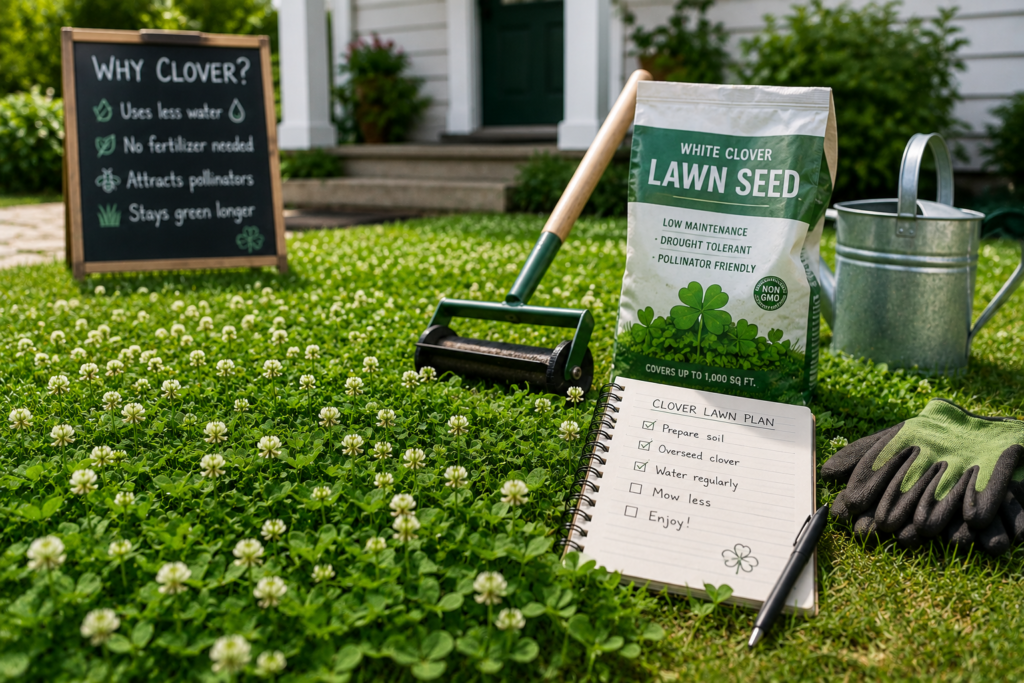
Mow your clover lawn to about 3 inches once or twice a month during the growing season, or not at all if you prefer a more naturalized look. Avoid mowing during peak bloom if pollinator support is a priority, since clover flowers are a primary nectar source for honeybees and native bees. According to University of Minnesota Extension’s bee lawn research, allowing Dutch white clover to bloom substantially increases pollinator activity in residential yards.
Pollinator Benefits and Nitrogen Fixation: What the Research Shows
Peer-reviewed research confirms that clover lawns actively boost both soil fertility and pollinator populations, making them one of the most ecologically productive grass alternatives available to homeowners.
A 2021 USDA-NIFA funded study published in Sustainability from the University of Kentucky found that dwarf white clover in turfgrass systems elevated nitrogen levels in adjacent grass by 17% to 27% and documented meaningful bee assemblage diversity. The same research found that clover monocultures suppressed root-feeding grubs, reducing one of the most common causes of patchy, damaged lawns. In blended clover-grass systems, grub suppression was less pronounced, which is a real limitation to keep in mind if Japanese beetle grubs are a recurring problem in your yard.
“Microclover is a self-fertilizing, biodiverse alternative to conventional turf that suppresses weeds and prevents soil compaction, while its small leaf size makes it more compatible with traditional lawn aesthetics.” (University of Illinois Extension, 2023)”Ecolawns including clover blends typically require one-quarter to one-third of the water needed by conventional lawns, offering meaningful savings for homeowners in water-restricted areas.” (Oregon State University Extension, ecolawn research)
Cost Comparison: Clover Lawn vs. Conventional Grass
A clover lawn costs significantly less to establish and maintain annually than conventional turfgrass, primarily because it eliminates most fertilizer and reduces irrigation needs.
| Cost Category | Conventional Grass Lawn | Clover Lawn (1,000 sq ft) |
|---|---|---|
| Seed or Sod (initial) | $50–$300+ | $5–$20 |
| Annual Fertilizer | $40–$120 | $0–$10 (minimal or none) |
| Annual Water Cost | $100–$300 (climate-dependent) | $25–$100 (25–33% less) |
| Mowing Frequency | Weekly (May–Oct) | 1–2 times per month |
| Herbicide Use | Frequent (clover is herbicide-sensitive) | Rarely needed; clover suppresses weeds |
| Year 1 Total Estimate | $200–$700+ | $30–$150 |
Alternative Perspectives
Clover lawns are not a perfect fit for every homeowner or every yard. HOA rules in some communities prohibit non-grass ground covers, and clover’s blooms attract bees, which may be a concern for households with members who have bee-sting allergies. Clover also goes dormant and browns in cold-winter climates, which some homeowners find less visually appealing than evergreen grass through the winter months. In heavy-shade yards, neither white clover nor microclover performs well, and shade-tolerant ground covers like creeping thyme or fine fescue blends may be better alternatives. For high-traffic athletic areas or yards used intensively for sports and play, a clover-only stand may thin out faster than a well-maintained grass lawn. A blended approach, mixing 5% to 20% clover seed into a standard turfgrass mix, gives most homeowners the practical middle ground between low maintenance and durability.
Disclaimer
DIY projects involve risk. Always follow local building codes and safety regulations. Consult licensed professionals for electrical, structural, plumbing, or gas-related work. Results may vary.
Frequently Asked Questions
How long does it take for a clover lawn to establish?
White clover seed typically germinates in 7 to 14 days under good conditions (moist soil, temperatures between 50°F and 65°F). Full ground coverage develops over one full growing season. Overseeding into existing grass may look patchy in year one before the clover fills in evenly by year two.
Will a clover lawn survive winter in cold climates?
Dutch white clover is a perennial hardy to USDA zones 3 through 10, so it returns each spring after winter dormancy in most of the US and Canada. It will go brown and dormant below freezing. In zones 3 to 5, expect it to look sparse in early spring before rebounding once soil temperatures warm above 50°F consistently.
Can I use broadleaf herbicides on a clover lawn?
No. Broadleaf herbicides (including common products containing 2,4-D or dicamba) will kill clover along with dandelions and other broadleaf plants. If you’re converting to or maintaining a clover lawn, hand-pull weeds or spot-treat carefully. This is one of the most common mistakes homeowners make after overseeding with clover into a lawn they continue treating with standard weed-and-feed products.
Is a clover lawn safe for dogs and kids?
White clover is non-toxic to dogs and children. The primary safety consideration is bee activity during bloom periods, since a clover lawn in full flower will attract more bees than a grass lawn. Mowing during bloom reduces flower density and bee presence if this is a concern. Always check with a physician or veterinarian if you have specific allergy concerns.