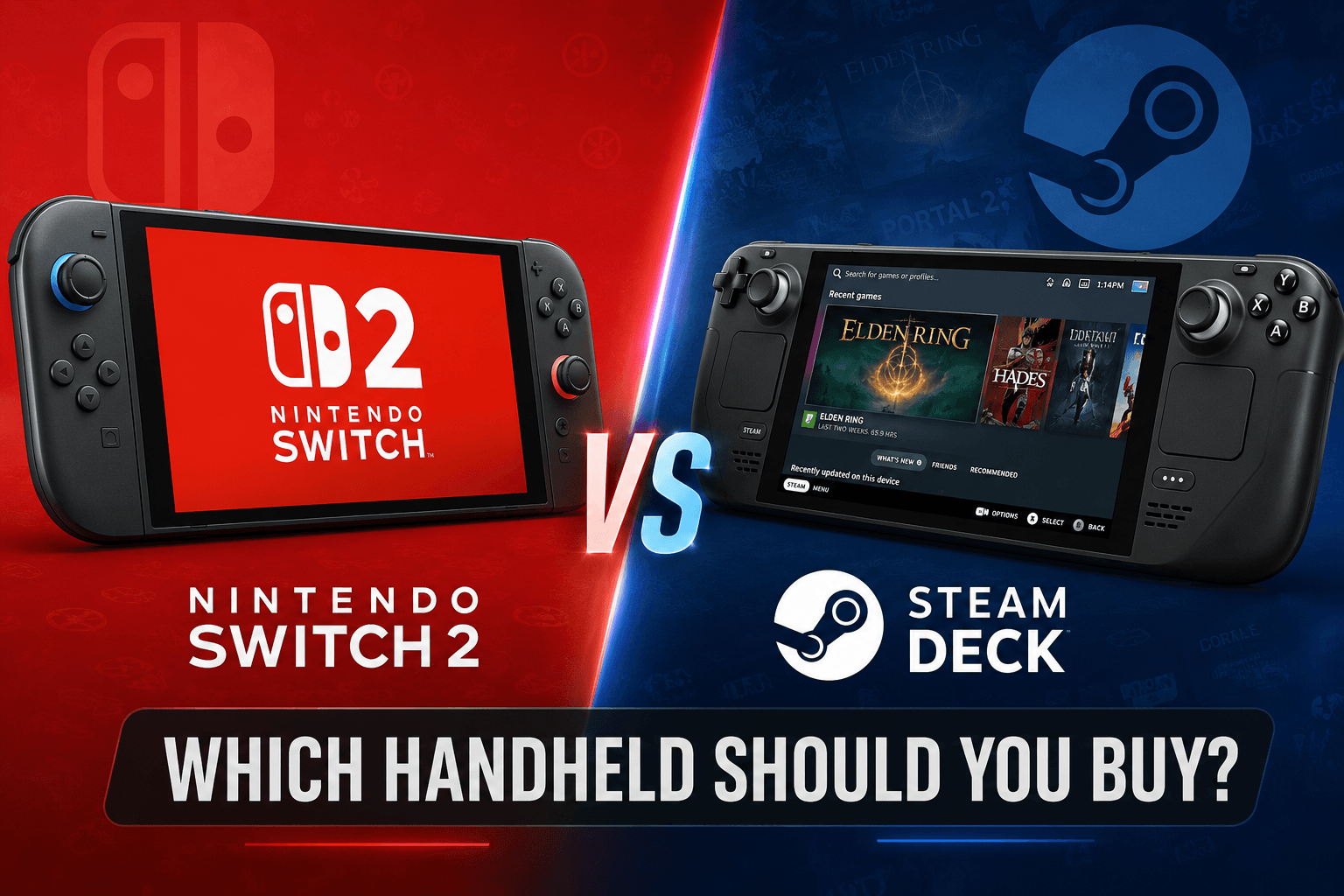
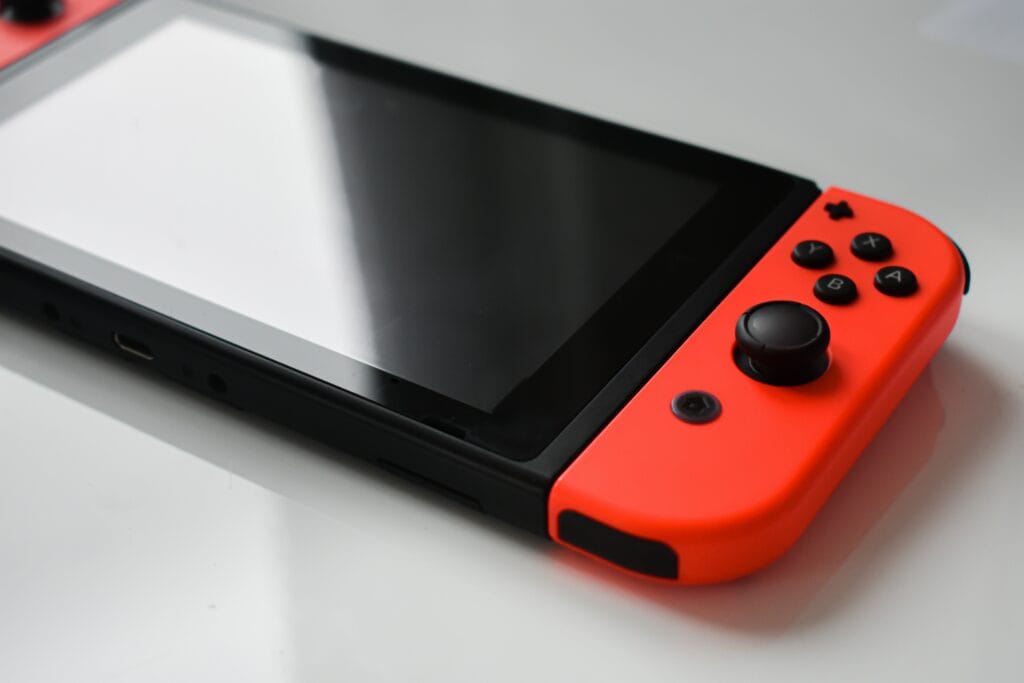
The handheld gaming market just got a lot more competitive. Nintendo launched the Switch 2 in June 2025 at $449.99, and Valve’s Steam Deck OLED remains the benchmark for PC gaming on the go at $549.99 for the 512GB model. Both devices target different players with fundamentally different philosophies, and choosing the wrong one is a real mistake with real money on the line. This comparison breaks down exactly what each console delivers, where each falls short, and which one fits your specific situation.
If you follow our gaming hub at WideJournal, you already know that neither device is a universal winner. The Switch 2 locks you into Nintendo’s ecosystem and its curated library of first-party titles. The Steam Deck OLED opens up a library of thousands of PC games but demands more technical patience. Both ship with trade-offs that manufacturers downplay in press releases. Our broader tech articles section covers the full consumer electronics landscape, but this comparison focuses exclusively on what matters for handheld gaming buyers in 2026.
The handheld gaming console market is estimated to be worth over $5 billion globally, and both Nintendo (NTDOY) and Valve are competing aggressively for that spending. Understanding the real differences between these two devices, specs, software, ergonomics, and total cost of ownership, is the only way to make a confident purchase decision.
Key Takeaways
- The Nintendo Switch 2 launched in June 2025 at $449.99 and runs a custom NVIDIA T239 chip with up to 1080p handheld output and 4K docked; the Steam Deck OLED uses a custom AMD APU (Zen 2 / RDNA 2) and outputs up to 800p natively on its 7.4-inch 90Hz OLED screen.
- The Steam Deck OLED’s library includes over 13,000 Steam-verified or playable titles as of early 2026; the Switch 2 launched with roughly 100 native Switch 2 titles and full backward compatibility with Switch 1 cartridges and digital purchases.
- Switch 2 battery life ranges from 2 to 6.5 hours depending on game load; the Steam Deck OLED averages 3 to 12 hours depending on settings and game intensity, making it more flexible for travel with power management enabled.
- The Switch 2 requires a Nintendo Switch Online subscription ($19.99 to $49.99/year) for online multiplayer; Steam has no mandatory subscription, and thousands of titles are available for free or deeply discounted during Steam Sales.
- Neither device is without hardware issues: Switch 2 units shipped with Joy-Con 2 drift reports in early batches, while the Steam Deck OLED has known compatibility gaps with certain anti-cheat systems including Easy Anti-Cheat and BattlEye.
Specs and Performance: What Are You Actually Getting?
The Switch 2 and Steam Deck OLED use fundamentally different chip architectures that determine not just raw performance but what software each device can run.
The Switch 2 runs on NVIDIA’s custom T239 system-on-chip, featuring an 8-core ARM Cortex-A78C CPU and an Ampere-generation GPU with 1,534 CUDA cores. Detailed NVIDIA custom silicon specifications confirm 12GB of LPDDR5X RAM. In handheld mode it targets 1080p at 60fps for supported titles , scaling up to 4K at 60fps when docked via NVIDIA DLSS upscaling. Nintendo confirmed 12GB of LPDDR5X RAM. Real-world performance varies: Mario Kart World hits a locked 60fps in handheld mode, but third-party ports like Cyberpunk 2077 run at reduced settings with visible compromises.
The Steam Deck OLED uses a custom AMD APU combining a 4-core Zen 2 CPU (up to 3.5GHz) with an 8-CU RDNA 2 GPU alongside 16GB of LPDDR5 RAM. Its 7.4-inch OLED display runs at 800p and 90Hz, which is a meaningful visual upgrade over the original LCD Steam Deck. While the resolution yields a modest 203 PPI, the real-world experience tells a different story: thanks to the self-lit OLED pixels, it delivers infinite contrast and vibrant color reproduction. Furthermore, the 90Hz refresh rate ensures that gameplay feels subjectively smoother and more responsive than on standard 60Hz handhelds. GPU performance sits roughly 20 to 25% below what you would get from a budget gaming laptop. Valve’s SteamOS 3.x handles most of this well through Proton compatibility, but demanding titles like Elden Ring: Shadow of the Erdtree require manual settings tweaks to stay above 40fps.
Thermal and Fan Noise Performance
The Switch 2 runs warmer than its predecessor during intense sessions, with body temperatures reaching approximately 95°F (35°C) near the top vent under sustained load. Nintendo’s fan ramps audibly during AAA gameplay. The Steam Deck OLED is the louder device under full load, with fan noise reaching 42 to 45 dB in demanding scenes, noticeable in quiet environments.
Game Library: Which Platform Has the Games You Want?
Your game library preferences are the single most important factor in choosing between these two handhelds.
Nintendo’s first-party exclusives remain genuinely unmatched. High-profile launch window titles tailored specifically for the system’s upgraded hardware, alongside system-selling staples like the next generation of 3D Mario and Metroid Prime 4: Beyond, are completely unavailable on any other platform. If these iconic franchises drive your purchase, that decision is already made. Crucially, the Switch 2 supports full backward compatibility with physical Switch 1 cartridges and your existing digital library, which is a massive value proposition for anyone who already owns a deep catalog of older titles like The Legend of Zelda: Tears of the Kingdom.
The Steam Deck’s library advantage is breadth. Steam holds over 50,000 games, and Valve’s official Steam Deck Verified Game Catalog had catalogued more than 13,000 titles as of early 2026. You can play Baldur’s Gate 3, Hades II, Elden Ring, Counter-Strike 2 (with caveats around anti-cheat), and essentially any indie game released in the last decade. Epic Games Store and GOG titles can run through third-party launchers via Desktop Mode, though setup requires technical comfort.
Anti-Cheat Compatibility: A Real Limitation
This is where the Steam Deck OLED stumbles with competitive titles. Games using kernel-level anti-cheat systems, specifically Riot’s Vanguard (blocking Valorant and League of Legends) and certain BattlEye implementations, do not run on SteamOS. Valve and game developers are working toward solutions, but as of early 2026 those titles remain inaccessible without installing Windows (which voids the simplified SteamOS experience and requires a USB-C hub and external storage).
Price, Ecosystem Costs, and Long-Term Value
The sticker price is only the beginning: subscription costs, game pricing, and accessory needs significantly affect total cost of ownership over two to three years.
The Switch 2 base unit is $449.99. A Nintendo Switch Online + Expansion Pack subscription runs $49.99/year for full online multiplayer access and the retro game library. First-party Switch 2 titles retail at $69.99 to $79.99 each. A carrying case, extra Joy-Con 2 set, and USB-C dock for a secondary TV add another $100 to $200 in realistic accessory spend. Over two years, a typical Switch 2 owner spending on 6 first-party titles and a subscription is looking at roughly $1,000 to $1,100 total.
The Steam Deck OLED 512GB model costs $549.99. Steam has no mandatory subscription. Steam Sales routinely discount major titles 50 to 80%, and thousands of free-to-play games work out of the box. A carrying case and USB-C hub add around $50. Two years of game spending on Steam, using typical sale pricing, can easily come in under $300 for a substantial library. The higher upfront cost frequently inverts over a 24-month window compared to Switch 2 game spending.
| Feature | Nintendo Switch 2 | Steam Deck OLED |
|---|---|---|
| Launch Price (USD) | $449.99 | $549.99 (512GB) |
| Display | 7.9-inch LCD, 1080p, 60Hz | 7.4-inch OLED, 800p, 90Hz |
| Processor | NVIDIA T239 (ARM Cortex-A78C + Ampere GPU) | AMD APU (Zen 2 CPU + RDNA 2 GPU) |
| RAM | 12GB LPDDR5X | 16GB LPDDR5 |
| Battery Life (Estimated) | 2 to 6.5 hours | 3 to 12 hours |
| Online Subscription Required | Yes ($19.99 to $49.99/year) | No |
| Backward Compatibility | Switch 1 cartridges and digital library | Full Steam library (via Proton) |
| Weight | Approx. 0.93 lbs (with Joy-Con 2) | Approx. 1.34 lbs |
Alternative Perspectives
The case for the Switch 2: Families with younger players, anyone invested in Nintendo’s exclusive franchises, and buyers who want a device that works reliably without configuration will find the Switch 2 easier to justify. Its lighter weight, TV docking capability, and local multiplayer with detachable Joy-Con 2 controllers serve a specific use case that the Steam Deck cannot replicate. Nintendo also has a decades-long track record of software support across console generations.
The case for the Steam Deck OLED: Adult gamers with existing Steam libraries, players who prioritize visual quality (the OLED panel is objectively superior for media and gaming), and buyers comfortable with light technical setup get more raw value per dollar over time. The open Linux-based SteamOS also makes the Steam Deck a capable emulation device and light productivity machine, something the Switch 2 cannot do.
“Nintendo Switch 2 has exceeded our initial sales projections in North America and Japan, driven by strong attach rates for first-party software titles in the launch window.” (as cited by Reuters)
“Proton compatibility continues to improve across our verified title catalog, and we remain committed to expanding anti-cheat support in partnership with developers.”
12-Month Outlook: What Changes by Mid-2027?
Hardware revisions, software updates, and competitive pricing shifts are likely for both platforms within the next year.
Nintendo (NTDOY) historically paces its hardware iterations to maximize the lifecycle of its baseline consoles. While a minor internal revision or a budget-focused “Switch 2 Lite” is highly unlikely to debut before mid-to-late 2027, early adopters in 2026 are still paying a standard launch premium. Historically, hardware bundles or minor retail discounts don’t begin to surface until the platform crosses its 18-month threshold. Instead of hardware iterations, the upcoming 12 months will lean heavily on software optimization; the first-party pipeline through early 2027 remains the primary vector for driving console sales, with several major tentpole titles expected to be unveiled at upcoming Nintendo Direct showcases.
Valve’s Steam Deck line is less predictable. Valve has not announced a Steam Deck 2, but AMD’s next-generation mobile APU platform (expected RDNA 3 or RDNA 4 derivatives) would represent a meaningful performance jump if adopted. In the near term, SteamOS updates are the more likely improvement vector, including expanded anti-cheat support and better power management profiles. Valve has also indicated interest in bringing SteamOS to third-party handheld hardware, which could affect the broader competitive landscape for devices like the ASUS ROG Ally X and Lenovo Legion Go.
Who Should Buy Which Device?
The right answer depends almost entirely on your existing game library, household situation, and technical comfort level.
Buy the Nintendo Switch 2 if: Nintendo exclusive franchises are a primary draw, you want a device usable by the whole family including younger children, you prefer plug-and-play simplicity, or you already own a significant Switch 1 library. The $449.99 price point is reasonable for what it delivers in the Nintendo ecosystem.
Buy the Steam Deck OLED if: you have an existing Steam library, you play primarily third-party or indie games, you value display quality (the OLED screen is genuinely better for extended sessions), or you are comfortable with occasional settings configuration to optimize individual games. The higher upfront cost at $549.99 is offset meaningfully by lower ongoing game spending over time.
Do not buy either device expecting the other’s strengths. The Switch 2 will not run your Steam library. The Steam Deck will not play The Legend of Zelda. That distinction, obvious as it sounds, is where most purchase regret originates.
Disclaimer: Technology specifications, pricing, and availability are subject to change. Always verify current information with official manufacturer or developer documentation.
Frequently Asked Questions
Can the Nintendo Switch 2 play Steam games?
No. The Nintendo Switch 2 runs Nintendo’s proprietary operating system and cannot run Steam or any PC game software. It is backward compatible with Nintendo Switch 1 game cartridges and digitally purchased Switch titles, but the platform is closed to third-party storefronts.
Does the Steam Deck OLED work as a home console when docked?
Yes, with limitations. The Steam Deck OLED outputs video via USB-C (using a compatible hub or dock) to an external monitor or TV. Performance remains tied to the device’s APU, so output resolution and frame rates are the same as handheld mode. It does not match a dedicated gaming PC or console in docked performance.
Is the Steam Deck OLED display significantly better than the Switch 2?
For standalone handheld use, it is a trade-off between sharpness and vibrant fluid motion. The Switch 2’s 7.9-inch 1080p LCD screen is technically sharper, boasting a higher pixel density of around 279 PPI for clean text and edges. However, the Steam Deck OLED (at 203 PPI) wins subjectively on image quality. Its OLED panel offers true inky blacks, infinitely higher contrast, and a 90Hz refresh rate that makes action feel much smoother than the Switch 2’s locked 60Hz LCD. When docked to a TV, however, the Switch 2 takes the lead thanks to its 4K DLSS upscaling capability.
Which handheld has better battery life for travel?
The Steam Deck OLED generally offers better battery range when power management settings are configured. At 40fps caps with reduced TDP, it can reach 8 to 12 hours on lighter titles. The Switch 2 ranges from 2 hours under heavy load to around 6.5 hours on less demanding games. For long flights without outlets, the Steam Deck OLED with optimized settings is the stronger choice.