
Physical game discs are not dead yet, but the industry is clearly phasing them out. Sony’s disc-less PS5 Digital Edition, retailer pressure on physical stock, and publishers shipping “physical” copies that contain nothing but a download code all signal that the disc is in its final decade. For gamers who buy, sell, or preserve games, the consequences are significant and already underway.
Key Takeaways
- Digital game sales now account for roughly 70% of console game revenue in North America, up from under 20% a decade ago, reflecting a dramatic shift away from physical retail.
- Sony has already released a disc-free PS5 Digital Edition and is expected to continue the pattern with its next hardware generation, narrowing physical options at the console level.
- At least 146 documented US releases have shipped as “physical” editions containing only a download code inside the box, raising active consumer protection and false advertising concerns.
- When you buy a digital-only game, you license it rather than own it, meaning a publisher or storefront can remove your access if servers go offline or terms change.
- The collapse of physical game retail eliminates the used game market for those titles, handing publishers complete price control with no competitive pressure from resale.
The Shift From Physical to Digital Is Already Happening
The gaming industry’s move away from physical media is not a future scenario; it is a present reality reshaping how games are sold, priced, and preserved right now.
A decade ago, walking into a GameStop to pick up a disc on launch day was the default gaming experience for most console players. That default has changed fast. Digital storefronts now generate the majority of console game revenue in North America, and the physical section at big-box retailers like Walmart and Best Buy has shrunk to a fraction of its former shelf space. Sony’s decision to launch a disc-free PS5 Digital Edition was the move that made the industry’s direction undeniable. The Digital Edition was not positioned as a niche budget option; it was marketed as a mainstream choice, priced $100 less than the disc-drive model and sold widely. When Sony later released the PS5 Slim, it shipped the disc drive as a separately purchased add-on, a decision that reframes the optical drive as optional hardware rather than a standard component. If that logic carries into the PS6, a fully disc-free flagship console from Sony becomes a realistic outcome rather than a fringe concern. Microsoft has pushed even harder in this direction. Several Xbox models have launched without disc drives, and the Xbox Game Pass subscription model explicitly deprioritizes disc ownership. When the platform holder’s entire business model revolves around streaming and subscriptions, physical media becomes a liability in their catalog strategy rather than an asset. None of this happened because consumers demanded it. Publishers and platform holders benefit enormously from digital-only sales: no manufacturing costs, no retailer margin cuts, no used game competition, and complete control over pricing for the life of a title. The incentive structure points entirely away from the disc, and the hardware decisions reflect that reality. For those who want to stay current on how these developments unfold week to week, the latest gaming news and reviews at WideJournal track the ongoing shifts across all major platforms.
Will Physical Games Disappear Entirely? Here Is the Honest Answer
Physical games will not vanish overnight, but the shrinking number of disc-compatible consoles and titles means the format is heading toward a niche market rather than remaining a mainstream option.
The honest answer to whether physical games will disappear is: not entirely, and not soon, but the trajectory is clear. Niche publishers and boutique labels like Limited Run Games have built entire business models around producing small-run physical editions of games that would otherwise be digital-only. Collectors and preservation-focused buyers support that market, and it will likely survive for years as a premium segment. But the mainstream physical market, new releases on store shelves, day-one disc purchases at Target, trade-ins at GameStop, is contracting in ways that may become irreversible. Once major platform holders stop including disc drives in their flagship hardware, retailers lose the incentive to dedicate shelf space to physical games. Once shelf space shrinks, publishers lose the incentive to press physical runs. It is a feedback loop that ends with the disc becoming what the UMD became after the PSP era: a format that persisted briefly before quietly disappearing. Some analysts argue that the used game market provides enough demand to sustain physical for another generation or two. The used game ecosystem at retailers like GameStop still moves significant volume, and budget-conscious players who cannot afford $70 new releases rely on used physical copies to access games at $20 or $30. But that argument depends on physical remaining a default option at launch, and that assumption is weakening every console cycle. GTA 6 crystallizes the anxiety here. Rockstar’s next release is one of the most anticipated games in history, and whether a GTA 6 physical copy disc becomes a collector’s item or a normal retail purchase will tell us a great deal about where the mainstream sits by the time it ships. If a game of that scale defaults to digital-first or ships physical copies with download codes rather than actual disc content, it signals that even blockbuster releases have crossed the line.
What Happens to the Used Game Market in a Digital-Only World?
A digital-only gaming ecosystem eliminates the used game market entirely, removing the only mechanism that gave budget-conscious players access to games at competitive prices after launch.
The used game market has been one of the most persistent friction points between publishers and players for thirty years. Publishers have never loved it because they earn nothing from a secondhand sale. Players have relied on it precisely because it keeps game prices honest: if a new title is overpriced, you wait six months and buy it used for half the cost. Digital licenses cannot be resold. That is not a policy preference from publishers, it is baked into how digital storefronts are structured. When you buy a game on the PlayStation Store or Xbox Marketplace, you are purchasing a license to access that game under terms the platform holder sets. You cannot transfer that license to another player, sell it back to a retailer, or even give it away. The moment physical media disappears as the primary format, that secondhand market disappears with it. What that means practically is that publishers gain complete control over the price of every game for its entire commercial life. A title that would have dropped to $29.99 at retail within three months of launch, driven down by used copy competition, can now sit at $59.99 digitally for eighteen months because there is no market pressure to move it. Sony, Microsoft, and Nintendo all operate walled digital gardens with no cross-platform competition between storefronts, which compounds the pricing power further. For players in lower-income households, this is not an abstraction. A family that relied on used game purchases to give their kids access to a dozen titles a year at a total cost of $150 to $200 will face a very different calculation in a digital-only environment. The social equity dimension of this shift rarely appears in the coverage that celebrates the convenience of digital storefronts, but it is real and worth taking seriously.
PlayStation Ending Physical Games Would Affect Everyone, Not Just Disc Buyers
Even players who already prefer digital downloads stand to lose in a disc-free future, because physical media creates competitive pressure that keeps digital prices lower and storefronts accountable.
A common dismissal of disc-death concerns goes something like: “I haven’t bought a physical game in years, so this doesn’t affect me.” It is a reasonable-sounding position that misunderstands how market competition works. Physical game retail creates a price ceiling on digital sales. When a game launches at $69.99 digitally and $69.99 on disc, the disc version will eventually hit used sales at GameStop for $35. That creates pressure on the digital storefront to discount, because if the digital version never drops below $50 and physical used copies circulate for $30, players migrate toward physical. Publishers know this. Digital sale pricing responds, however imperfectly, to physical market conditions. Remove physical entirely and that external pressure disappears. There is no longer a used copy market setting a price floor that digital has to compete with. Sony, Microsoft, and Nintendo become the sole arbiters of when, whether, and how much a digital title discounts. Historically, digital storefronts have shown they will hold prices high when there is no competitive reason to drop them. This mirrors what happened across the broader software industry, a trend worth examining alongside the broader shifts reshaping the tech industry in media and software more generally. Internet access is another factor that digital-only advocates routinely undercount. Roughly 14 million households in the United States lack broadband access, according to Federal Communications Commission estimates, with rural and lower-income communities disproportionately affected. A 100GB game download that takes thirty minutes on a fiber connection can represent hours on a rural DSL connection, or an impossible task on a data-capped mobile plan. Physical media solved that problem by default. A disc-only console does not require a fast or stable internet connection to play a game you already own.
Physical vs. Digital Gaming: A Side-by-Side Comparison
| Factor | Physical Disc | Digital Download |
|---|---|---|
| Ownership | You own the disc and can resell, lend, or keep it indefinitely | You license the game; access can be revoked if storefront closes or terms change |
| Used Game Market | Can be sold or purchased secondhand, creating price competition | No resale rights; licenses are non-transferable on all major platforms |
| Price Over Time | Market-driven; used copies create competitive downward pressure | Controlled entirely by platform holder; discounts happen on their schedule |
| Internet Dependency | One-time authentication usually sufficient; playable offline | Requires download; some titles require persistent online connection |
| Long-Term Preservation | Disc remains playable as long as hardware exists, independent of servers | Dependent on storefront remaining online; historical examples of library loss exist |
| Storage Requirements | Physical media handles the bulk; smaller patch installs only | Full game size installs to console storage; a 100GB+ title can fill a drive quickly |
| GTA 6 Physical Copy Availability | Expected at launch but format of disc content remains unconfirmed | Digital pre-order confirmed across PlayStation and Xbox storefronts |
The Generational Divide: Who Still Buys Physical Games and Why
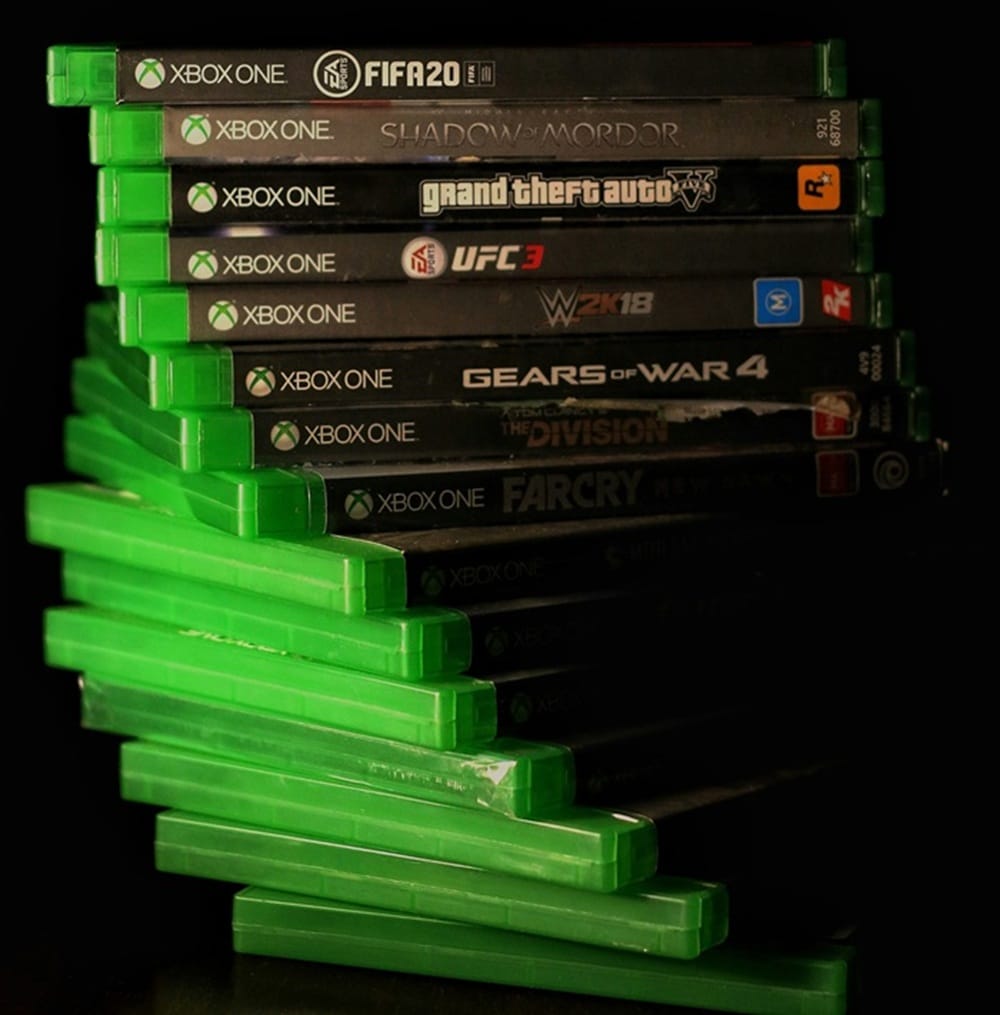
Walk into any GameStop or Best Buy today and the shrinking shelf space tells a story numbers alone cannot. Physical game sales have been declining year over year, but the demographic holding the line is more specific than the industry often acknowledges. Older players, those who grew up with cartridges and jewel cases, tend to place a concrete value on owning something they can hold, lend, resell, or display. For them, a disc is not a delivery mechanism; it is the product itself.
Collectors represent a particularly resilient pocket of physical buyers. Limited editions, steel books, and region-specific releases have built an entire secondary economy that digital storefronts structurally cannot replicate. A mint-condition copy of a beloved title can appreciate in value over decades, while a digital license purchased the same day has no resale value whatsoever and exists only as long as the platform chooses to honor it. That is not a hypothetical risk; Microsoft, Sony, and Nintendo have all, at various points, quietly sunset storefronts or announced the removal of previously purchased content, reminding buyers that digital libraries are more accurately described as long-term rentals.
Younger players entering the market with their first consoles show far less attachment to the physical format, which tracks with broader generational shifts in media consumption. Streaming over owning is the default posture for music, film, and now games. The friction of going to a store, the wait for shipping, or even the minor inconvenience of swapping discs is enough to push a teenager toward a one-click digital purchase. Publishers know this and price their storefronts accordingly, with day-one digital releases often priced identically to physical copies despite having zero manufacturing or distribution costs, a margin advantage the industry has been reluctant to pass on to consumers.
Internet access reliability also continues to shape the physical market in ways urban-centric industry commentary tends to overlook. Rural players, those on metered connections, and gamers in regions with inconsistent broadband infrastructure still rely on physical media as a practical necessity rather than a nostalgic preference. A 150GB download that takes three days on a slow rural connection is not a minor inconvenience; it is a functional barrier to playing a game someone already paid for. Physical discs solve that problem immediately, which is one reason the format has not vanished as quickly as some analysts predicted it would.
How Retailers and Publishers Are Accelerating the Format’s Decline
The disc’s decline is not purely organic consumer behavior, it is being actively engineered by the two groups most positioned to profit from its disappearance. Publishers earn significantly higher margins on digital sales, cutting out the retailer, the distributor, and the resale market in a single move. A $70 digital sale delivers far more revenue per unit than the same title sold on disc, where Walmart or GameStop takes a cut and the buyer can resell it the following week, generating zero additional revenue for the developer.
Retailer behavior has followed accordingly. Physical game sections in major electronics chains have contracted sharply, with floor space increasingly redirected toward accessories, merchandise, and gift cards, items with better margins and no secondhand competition. When a customer cannot easily find a physical copy in store, the path of least resistance becomes digital. The reduction in shelf presence is itself a sales funnel, and neither publishers nor platform holders have any incentive to fight it.
Sony’s decision to launch a disc-free PlayStation 5 model and subsequently make that the standard console in several markets sent an unambiguous signal about the platform’s direction. Microsoft has been even more transparent, with executive statements framing the long-term Xbox vision as a streaming and subscription service rather than a hardware-and-disc business. Nintendo remains the most physical-friendly of the three major platform holders, continuing to release cartridge versions of its titles across Switch generations, though even Nintendo has expanded its digital-first approach on smaller releases.
The subscription model compounds this pressure further. When PlayStation Plus Premium or Xbox Game Pass offers access to hundreds of titles for a monthly fee, the calculus of buying a single physical game for $70 becomes harder to justify for casual players. Subscriptions are designed to reduce the perceived need for ownership entirely, training consumers to think of games as a rotating access service rather than a permanent library they build. Once that mental model takes hold at scale, the physical disc has no remaining foothold in the conversation.
The “Code in a Box” Legal Crisis: When “Physical” Becomes False Advertising
The practice of selling a retail box containing nothing but a paper insert with a download code has been spreading quietly for years, but the wave of attention surrounding GTA 6’s physical release plans brought it into mainstream focus with unusual force. Consumers walking into a store, paying full retail price for what they reasonably understand to be a physical product, and opening the box to find a slip of paper are not experiencing an edge case; they are encountering a structural shift in how the word “physical” is being used by the games industry, and the legal system is beginning to catch up.
Consumer protection law in most jurisdictions hinges on whether a transaction involved a material misrepresentation, a false or misleading claim that influenced a purchasing decision. When a publisher labels a product as a “physical edition,” markets it alongside a picture of a disc or cartridge, and sells it through retail channels alongside genuinely disc-based products, the argument that a buyer was not misled becomes increasingly difficult to sustain. According to the Federal Trade Commission, deceptive practices include not just outright false statements but implied representations that create a false impression in the reasonable consumer’s mind. A box designed to look like a game disc case, sold in the game disc aisle, creates exactly that kind of impression.
Several European consumer advocacy organizations have already raised formal complaints with national regulators over code-in-a-box releases, arguing that they violate EU consumer rights directives that require goods to conform to their description at the point of sale. The United Kingdom’s Consumer Rights Act similarly provides remedies when goods do not match their description. In the United States, state-level consumer protection statutes, particularly in California, New York, and Washington, give attorneys general and private litigants room to challenge misleading product descriptions without needing to clear the higher bar of federal fraud law.
What makes the GTA 6 situation a potential inflection point is scale. Rockstar’s releases move tens of millions of units globally. If the physical edition ships as a code-in-a-box, the sheer volume of transactions creates a litigation surface that class action attorneys will not ignore. Even a single successful state-level consumer protection action could force the industry to either clearly label code-in-a-box products as digital products sold at retail, stripping away the “physical” framing, or return actual data to the disc. Neither outcome is comfortable for publishers who have spent years using physical packaging as a premium price anchor while quietly hollowing out its contents.
The deeper legal question is what “ownership” means in a post-disc transaction. Courts have generally found that digital game licenses are not property in the traditional sense. You cannot resell them, bequeath them, or transfer them without platform permission. A physical disc, by contrast, is covered by the first-sale doctrine under copyright law, which historically allowed the lawful owner of a copy to resell, lend, or give it away. A code in a box is a license sold in the guise of a product, and legal scholars have begun arguing that this distinction —consistently obscured by industry marketing—is precisely the kind of gap that consumer protection frameworks exist to address. The disc-death debate is no longer just about nostalgia; it is about whether the products being sold actually are what they are represented to be, and that is a question with consequences that extend well beyond gaming.
What Gamers Can Do Right Now
The decline of physical game media may be structurally inevitable, but consumers are not without options or leverage in the transition. Buying physical copies where they genuinely contain complete game data, rather than download codes, directly signals to publishers that the format has sustained commercial value. Checking product listings carefully before purchase, specifically looking for language like “game disc included” versus vague references to a “physical edition,” has become a practical necessity rather than optional due diligence. Advocacy organizations focused on consumer rights in digital markets, such as the FTC’s consumer protection division, accept complaints about misleading product descriptions, and enough volume from gaming consumers has historically prompted regulatory attention in other product categories.
Preserving access to games you already own means rethinking how digital libraries are treated. Backing up game files where platform terms permit, maintaining older hardware capable of running disc-based software, and supporting organizations dedicated to game preservation all extend the functional life of titles that might otherwise disappear when a storefront shuts down. The conversation around are physical game discs dying tends to focus on what is being lost culturally, but the more actionable question is what steps individual players and organized advocacy can take to ensure that the transition to digital does not silently strip away the ownership rights that physical media, whatever its inconveniences, reliably provided.
Frequently Asked Questions
Are physical game discs still being manufactured in 2026?
Yes. Major publishers still manufacture physical discs for PlayStation 5 and Xbox Series X, and cartridges for Nintendo Switch. However, production volumes are declining, and an increasing number of retail packages contain only a digital download code instead of data on the disc.
Will GTA 6 have a physical disc release?
Yes, but with limitations. Rockstar Games confirmed physical retail editions for PlayStation 5 and Xbox Series X. However, due to the game’s massive file size exceeding standard single-disc capacity, retail versions may require multiple discs or utilize a “code-in-a-box” digital voucher system depending on the region.
What is the first-sale doctrine and does it apply to digital games?
No, it does not apply to digital purchases. The first-sale doctrine (U.S. Copyright Law) grants consumers the legal right to resell, lend, or donate lawfully purchased physical media (like game discs). Courts consistently rule that digital games are software licenses, not physical property, meaning they are non-transferable and excluded from first-sale rights.