Keeping a manageable grocery budget in 2026 has become one of the most pressing household challenges for families across the US and Canada. Between persistent food inflation and the downstream effects of new tariffs on imported goods, the average shopping cart now costs measurably more than it did even one year ago. This guide, part of our broader series of Finance articles, walks through practical, evidence-based strategies to reduce grocery spending without sacrificing nutrition or convenience. Whether you are building a formal household plan or simply trying to stop the bleed at checkout, the budgeting strategies and guides in this article give you a clear starting point.
Key Takeaways
- Grocery prices in 2026 continue to rise due to persistent food inflation and the lasting impact of 2025 trade tariffs, putting additional pressure on household budgets.
- Weekly meal planning remains one of the most effective ways to reduce grocery spending by limiting impulse purchases and cutting food waste.
- Switching to store brands, frozen vegetables, canned goods, and lower-cost protein sources can help households maintain nutrition while lowering overall food costs.
- USDA Food Plan benchmarks provide a practical way for families to compare their current grocery spending against realistic national budget targets.
- Small behavioral changes — including shopping sales cycles, using loyalty apps, buying staples in bulk, and improving food storage — can collectively generate meaningful monthly savings over time.
Understanding Why Your Grocery Bill Keeps Climbing in 2026
Food-at-home prices rose 2.9% year-over-year through April 2026, with some categories like fresh tomatoes surging nearly 40%, driven by a combination of persistent food inflation and tariff pass-through costs now fully embedded in retail prices.
Before cutting costs, it helps to understand exactly what is driving them. The price pressure you feel at the register comes from at least two overlapping forces: ongoing food-sector inflation and the compounding effect of trade tariffs on imported ingredients, packaging, and produce.
According to the USDA Economic Research Service Food Price Outlook (May 2026), food-at-home prices increased 2.9% year-over-year through April 2026, with fresh vegetables up 11.5% and fresh tomatoes up a striking 39.7%. The full-year 2026 forecast projects food-at-home prices rising an additional 3.2%, with fresh vegetables expected to climb another 7.8%.
Tariffs add a separate layer of pressure. Research published in April 2026 by the Federal Reserve found that trade policy changes enacted in 2025 have already fully passed through to consumer prices, with meaningful effects on everyday goods.
According to a Federal Reserve FEDS Notes analysis (April 2026), the 2025 tariff rounds raised core goods PCE prices by an estimated 3.1% through February 2026 and boosted overall core PCE by 0.8%, with pass-through now considered effectively complete. This means the higher costs are already baked into retail shelf prices, not still incoming.
The Bureau of Labor Statistics April 2026 CPI release confirms the picture at the macro level: the all-items CPI rose 3.8% over the past 12 months, with food-at-home up 0.7% in April alone. Meanwhile, a BLS year-in-review of 2025 food prices showed that meats, poultry, fish, and eggs rose 3.9% across the year, and beverages climbed 5.1%.
Setting a Realistic Grocery Budget Baseline
The USDA publishes four official food plan tiers monthly, giving households a government-benchmarked spending target based on family size, which is a useful anchor before applying any cost-cutting tactics.
Many households try to reduce grocery spending without first knowing where they stand. The USDA Food and Nutrition Service publishes official monthly benchmarks through its Cost of Food monthly reports, which track Thrifty, Low-Cost, Moderate-Cost, and Liberal food plan costs for households of different sizes and ages. Checking your current monthly spending against the Thrifty or Low-Cost tier gives you a realistic reduction target rather than an arbitrary number.
How to Use the USDA Food Plan Tiers Practically
The Thrifty Plan represents the lowest-cost nutritionally adequate diet USDA models. If your household is already spending at or below the Thrifty tier, aggressive further cuts may compromise nutrition. If you are spending at the Moderate or Liberal tier, however, there is meaningful room to reduce grocery spending in 2026 without sacrificing health outcomes. Use the monthly USDA update as a benchmark reset, particularly after summer break, Thanksgiving, or other high-spending seasons.
Meal Planning: The Single Highest-Impact Strategy to Save Money on Groceries
Consistent weekly meal planning can significantly reduce impulse purchases and food waste, which together account for a substantial share of the average household grocery budget overage.
Meal planning is consistently cited by nutrition economists and household finance researchers as the most cost-effective behavioral change a household can make. The mechanism is straightforward: when you enter a store with a specific list tied to planned meals, you are less likely to purchase items that spoil unused or duplicate what you already own.
A Practical Weekly Meal Planning Framework
Start by auditing your pantry before each shopping trip. Build meals around proteins you already have, then fill in produce and carbohydrates. Plan for one or two “flexible” meals each week that use whatever perishables remain from earlier in the week. This approach, sometimes called “use-it-up” cooking, can meaningfully reduce the food waste that inflates effective grocery costs.
Which Foods Offer the Best Nutritional Value Per Dollar in 2026?
Given that fresh tomatoes are up nearly 40% year-over-year and fresh vegetables overall are up 11.5%, shifting toward frozen, canned, or dried alternatives where appropriate may help households maintain nutritional intake while managing costs. According to the USDA, frozen and canned fruits and vegetables retain most of their micronutrient content and are generally significantly less expensive per serving than their fresh counterparts at current prices.
Grocery Cost-Saving Strategies: Estimated Impact Comparison (2026)
| Strategy | Potential Monthly Savings | Time Investment | Difficulty Level | Best For |
|---|---|---|---|---|
| Weekly meal planning with a written list | $50-$150 (estimated) | 1-2 hours/week | Low | All households |
| Switching to store/private-label brands | $30-$80 (estimated) | Minimal | Very Low | Budget-conscious shoppers |
| Reducing fresh produce in favor of frozen/canned | $20-$60 (estimated) | Minimal | Low | Households hit by 2026 produce inflation |
| Buying proteins in bulk and portioning/freezing | $40-$100 (estimated) | 2-3 hours/month | Medium | Families with freezer space |
| Using store loyalty apps and digital coupons | $15-$45 (estimated) | 15-30 min/week | Low | Tech-comfortable shoppers |
| Reducing food waste through better storage | $25-$70 (estimated) | Low ongoing | Low | Households with high current waste |
Note: Savings estimates are approximations based on USDA food plan benchmarks and general household budgeting research. Actual results vary by household size, location, and current spending habits.
Grocery Budget Tips for US and Canadian Households: Store Selection and Timing
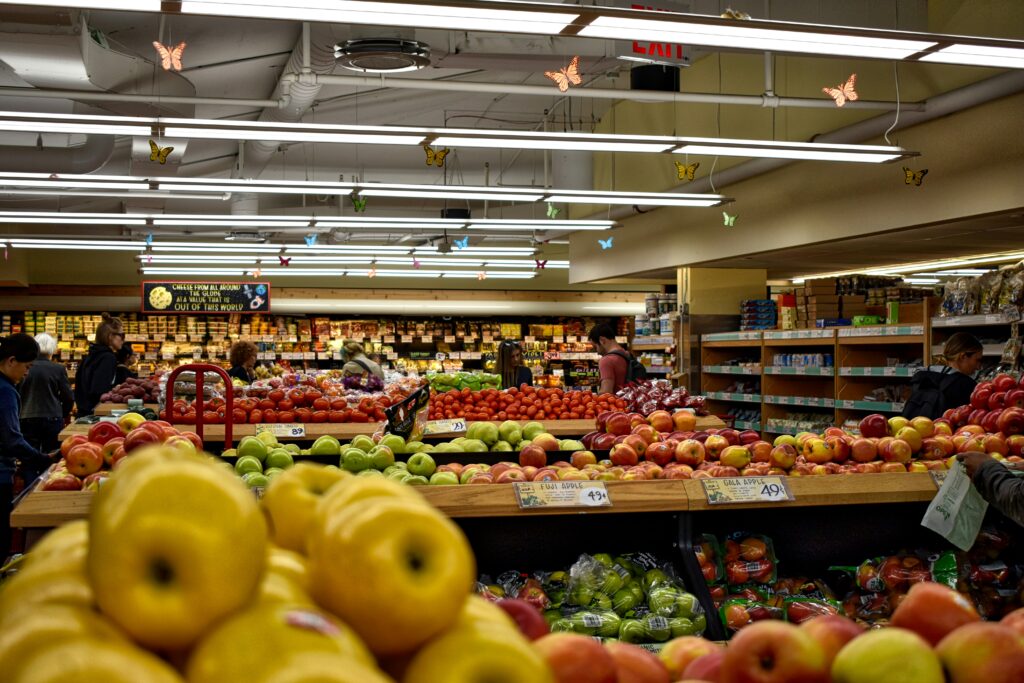
Where and when you shop may matter as much as what you buy, with discount grocers, warehouse clubs, and strategic timing around weekly sale cycles all offering legitimate ways to reduce food costs.
Does Shopping at Discount Grocers Actually Save Money?
Discount grocery chains and warehouse clubs generally offer lower per-unit prices on shelf-stable staples and proteins compared to conventional supermarkets. The trade-off is that larger pack sizes at warehouse clubs require more storage space and upfront spending, which may not suit all households. For families with storage capacity, buying staples like dried beans, rice, pasta, canned goods, and frozen proteins in bulk may meaningfully lower per-serving costs over a month.
Timing Purchases Around Sales Cycles and Seasonal Context
Most US grocery chains rotate weekly sale cycles, with markdown patterns that tend to repeat. Proteins like chicken and pork often go on sale in rotation with beef. Planning meals around what is on sale that week, rather than choosing meals first and shopping second, is a simple behavioral inversion that can reduce costs over time. Back to School season in August and September, for example, typically drives promotional pricing on lunchbox staples, while post-Thanksgiving and post-Super Bowl periods often see markdowns on bulk proteins and entertaining goods.
How to Reduce Grocery Spending Without Cutting Nutrition
Shifting protein sources toward eggs, legumes, and canned fish rather than premium cuts of red meat remains one of the most evidence-supported methods to reduce food spending while maintaining adequate protein intake, according to USDA dietary guidance.
Protein Swaps That Protect Your Budget and Your Health
According to USDA dietary guidelines, eggs, canned tuna and salmon, dried lentils, and canned beans provide complete or near-complete protein at a fraction of the cost per gram of beef or pork loin at 2026 prices. Given that the meats, poultry, fish, and eggs category rose 3.9% in 2025 overall, strategic protein substitution may cushion households against continuing price pressure in that category.
What to Do When Grocery Costs Spike Unexpectedly
Sudden price spikes, such as the fresh tomato surge of nearly 40% year-over-year, can disrupt even well-planned grocery budgets. Having a modest household emergency cushion specifically earmarked for cost-of-living shocks can prevent a spike from cascading into credit card debt. For a deeper look at building that buffer, see our guide on how to build an emergency fund in 2026, which covers strategies specifically relevant to households managing rising fixed costs.
Alternative Perspectives
Not all financial and nutrition researchers agree that aggressive grocery budget-cutting is always the right move. Some dietitians and public health researchers caution that over-optimizing for the lowest possible food cost can lead to nutritionally incomplete diets, particularly for children and older adults. The USDA Thrifty Food Plan represents an intentional floor, not a universal ideal, and households with specific medical or dietary needs may find that spending somewhat above that benchmark is appropriate and cost-effective compared to downstream health costs.
Additionally, some economists note that encouraging households to shift exclusively toward discount or bulk retailers may reduce competition in local grocery markets over time, which could affect long-run pricing dynamics. Shopping behavior is both a personal financial decision and a structural market signal.
Frequently Asked Questions
According to the USDA Economic Research Service, food-at-home prices were up 2.9% year-over-year through April 2026, and the full-year 2026 forecast projects a 3.2% increase. Some categories have risen far more sharply, with fresh tomatoes up 39.7% and fresh vegetables up 11.5% year-over-year. The BLS April 2026 CPI report separately shows food-at-home rose 0.7% in April alone.
Yes, according to Federal Reserve research published in April 2026, the tariff rounds enacted in 2025 raised core goods PCE prices by an estimated 3.1% through February 2026. The Fed considers the pass-through to retail consumer prices effectively complete, meaning those tariff-driven cost increases are already embedded in current grocery shelf prices rather than still working their way through the supply chain.
The USDA Food and Nutrition Service publishes monthly Cost of Food reports with four official tiers: Thrifty, Low-Cost, Moderate-Cost, and Liberal. These benchmarks are updated monthly using CPI data and provide household-size-specific targets. Checking your spending against the Thrifty or Low-Cost plan for your household composition is the most reliable government-based way to assess whether your current grocery budget is above, at, or below a reasonable baseline.
According to USDA dietary guidance, frozen and canned vegetables generally retain most of their micronutrient content and are considered nutritionally comparable to fresh in most contexts. With fresh vegetable prices up 11.5% year-over-year through April 2026, substituting frozen or low-sodium canned alternatives for some fresh produce may allow households to maintain nutritional intake while reducing grocery costs meaningfully.
Disclaimer: This article is for informational purposes only and does not constitute financial, investment, or tax advice. Always consult a qualified financial advisor before making investment decisions. Past performance does not guarantee future results.