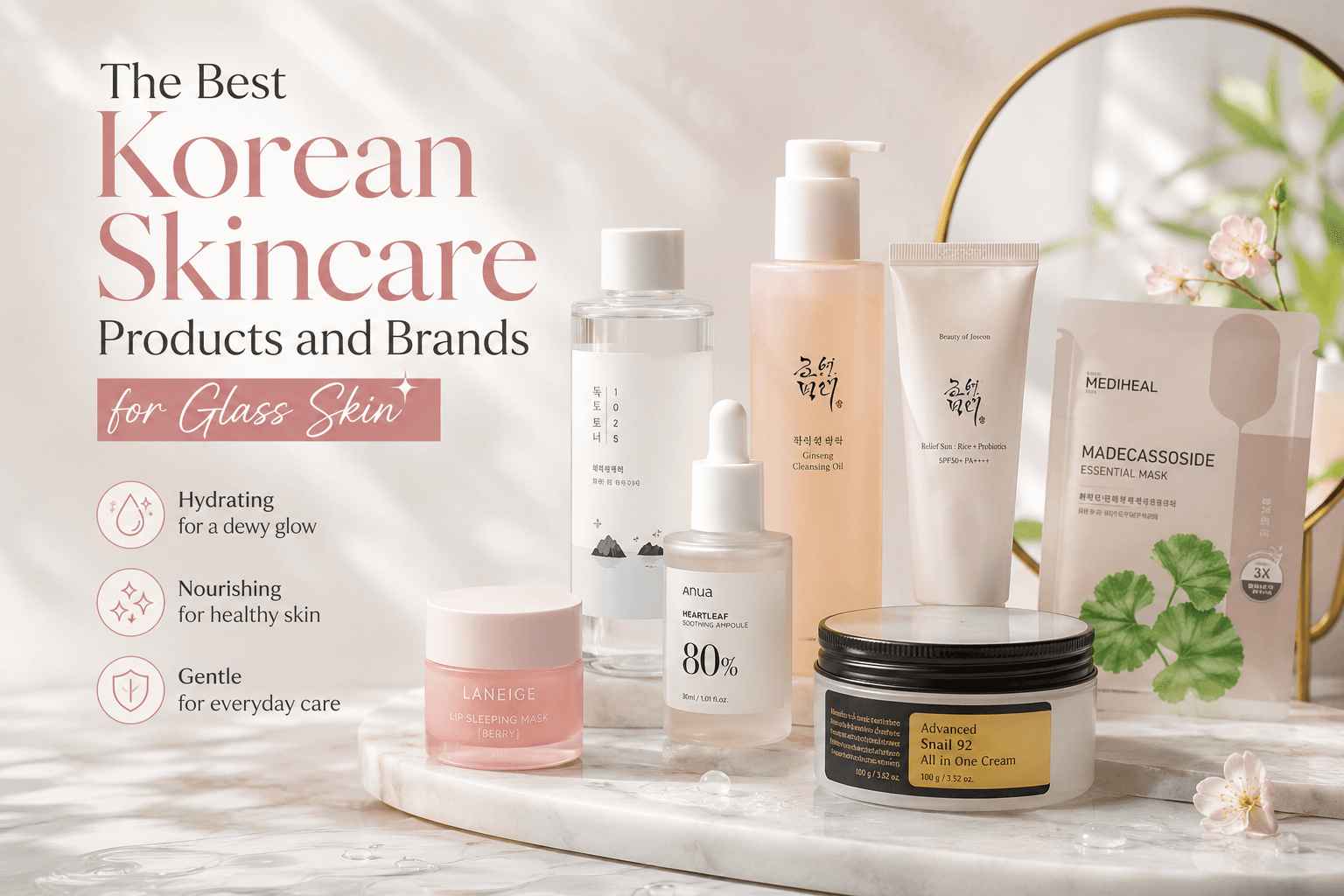
Korean skincare delivers radiant, glass-like skin through a layered, barrier-first approach that combines lightweight hydrators, active ingredients like niacinamide and snail mucin, and rigorous sun protection. The best Korean skincare brands include COSRX, Innisfree, Some By Mi, Laneige, and Dr. Jart+, offering clinically-backed formulas available at most US retailers for $10 to $60. Consistent use of a core routine built around a gentle cleanser, toner, essence, and moisturizer typically shows visible results within four to eight weeks.
Key Takeaways
- The K-beauty 10-step routine is a framework, not a mandate: most dermatologists recommend starting with 4 to 5 core steps and building gradually to avoid barrier disruption.
- COSRX’s Advanced Snail 96 Mucin Power Essence, one of the category’s best-sellers, contains 96% snail secretion filtrate, which research suggests supports wound healing and moisture retention.
- Korean sunscreens consistently outperform many US formulas in texture and UVA protection because South Korea requires a PA++++ rating system that covers a broader UVA spectrum than FDA-mandated SPF alone.
- Glass skin is not a skin type but a finish, achievable by layering hydrating toners and essences over a repaired skin barrier rather than relying on any single product.
- Laneige Water Sleeping Mask, priced at around $34 for 2.5 oz, remains one of the highest-rated overnight moisturizers on Sephora and Ulta, with consistently strong reviews across oily, dry, and combination skin types.
What Is Korean Skincare and Why Does It Work?
Korean skincare is a philosophy built around prevention, hydration, and layering lightweight products to strengthen the skin barrier over time, rather than targeting blemishes reactively. Its effectiveness comes from a combination of innovative textures, well-studied ingredients, and a routine structure that delivers activities gradually without overwhelming the skin.
K-beauty entered mainstream Western consciousness around 2011 to 2013, driven largely by beauty bloggers and early YouTube tutorials breaking down the now-famous 10-step routine. But the appeal was never really about the number of steps. It was about the logic behind them: each product is formulated to layer cleanly over the last, driving hydration deeper while keeping irritation low. For more Beauty articles covering everything from sunscreen rankings to ingredient deep-dives, the wider beauty section has you covered.
The skin barrier, technically the stratum corneum, is the outermost layer of skin and acts as both a shield against environmental stressors and a lock that keeps moisture in. Korean skincare’s emphasis on ceramides, humectants like hyaluronic acid and glycerin, and soothing agents like centella asiatica makes it one of the most barrier-conscious skincare philosophies available today. That focus is a key reason dermatologists have warmed to it: rebuilding barrier function addresses the root cause of dryness, sensitivity, and uneven tone rather than masking symptoms.
One analytical conclusion worth drawing here is that K-beauty’s commercial success in the US (the global K-beauty market was valued at approximately $12.26 billion in 2023) reflects a genuine consumer shift away from harsh, stripping routines toward gentler, hydration-forward approaches. That shift has forced Western brands to reformulate products with ingredients that K-beauty popularized, including centella asiatica, galactomyces ferment, and snail mucin. For skincare tips and reviews that go deeper on individual ingredients and routine building, our full skincare section is a useful companion resource.
Best Korean Skincare Brands Worth Knowing
The best Korean skincare brands range from accessible drugstore lines like COSRX and Some By Mi to premium names like Sulwhasoo and Dr. Jart+, each with a distinct philosophy and ingredient focus. Knowing which brand aligns with your skin concern saves time and prevents the temptation to buy indiscriminately.
COSRX
COSRX is arguably the most recognizable K-beauty brand in North America, built on a small, targeted product range with high active concentrations. Its Advanced Snail 96 Mucin Power Essence and the AHA/BHA Clarifying Treatment Toner are perennial bestsellers. The brand’s ethos is minimal ingredients, maximum function, which makes it a good starting point for sensitive or reactive skin. Prices run $15 to $30 at Ulta, Amazon, and Target.
Laneige
Laneige is best known for its Water Sleeping Mask and Lip Sleeping Mask, both of which leverage the brand’s proprietary “Water Science” technology to deliver multi-layered hydration overnight. Laneige occupies a mid-premium price point ($28 to $55) and is widely available at Sephora and Target, making it one of the most accessible premium K-beauty brands for US shoppers. The brand performs particularly well for combination and oily skin types looking for weightless hydration.
Some By Mi
Some By Mi built its reputation on its AHA-BHA-PHA 30 Days Miracle Toner, a chemical exfoliant series that became a viral phenomenon partly because of before-and-after documentation shared across Reddit’s r/SkincareAddiction. The brand focuses heavily on acne-prone and uneven skin tone concerns, with most products priced under $25. It remains widely available through YesStyle, Amazon, and select Ulta locations.
Innisfree
Innisfree’s identity is rooted in Jeju Island botanicals, particularly green tea extract, volcanic clusters, and canola honey. Its Green Tea Seed Serum became a cult product for its ability to deliver antioxidant protection alongside hydration, and the brand’s price accessibility (most items $15 to $35) makes it a practical entry point. Innisfree’s focus on ingredient sourcing and sustainability also resonates with the growing segment of US consumers who factor environmental transparency into purchasing decisions.
Dr. Jart+
Dr. Jart+ (“Doctor + Joins Art”) is one of the most clinically oriented K-beauty brands, known for its Cicapair Tiger Grass line targeting redness and its Ceramidin line targeting barrier repair. The brand tends to price between $32 and $52, positioning itself in the prestige segment. It is exclusively available through Sephora in the US, which has helped reinforce its premium perception. Dr. Jart+ is a strong pick for those dealing with chronic barrier damage, rosacea-prone skin, or post-procedure sensitivity.
Best Korean Skincare Products by Category
Shopping Korean skincare by category rather than by brand helps you build a logical, layered routine where each product serves a distinct function. The following picks represent consistent top performers across editor testing, verified customer reviews, and ingredient transparency.
Best Korean Cleanser
COSRX Low pH Good Morning Gel Cleanser ($14) uses a pH of around 5.0 to clean without stripping the acid mantle, which is the skin’s natural slightly acidic film that supports barrier integrity. Harsh alkaline cleansers (most bar soaps sit above pH 9) are a common and underappreciated cause of ongoing dryness and sensitivity. This cleanser contains tea tree oil and betaine salicylate for light exfoliation without irritation.
Best Korean Toner
Klairs Supple Preparation Unscented Toner ($22) is a fragrance-free, alcohol-free first step for hydration layering. It contains beta-glucan, hyaluronic acid, and panthenol, and is widely recommended by dermatologists for its minimal-irritant profile. It preps skin to absorb the next steps more efficiently, a function that the “7-skin method” (applying toner in multiple thin layers) relies on.
Best Korean Essence
COSRX Advanced Snail 96 Mucin Power Essence ($25) is the product that puts snail secretion filtrate on the map for Western shoppers. The formula contains 96% snail mucin, which research suggests may support collagen synthesis, moisture binding, and skin repair. It has a slightly sticky texture on first application that disappears quickly into the skin, and works well under serums and moisturizers for all skin types.
Best Korean Serum
Some By Mi Snail Truecica Miracle Repair Serum ($22) combines snail mucin with centella asiatica for a dual-action approach to soothing and repairing. It is particularly well-regarded for post-breakout marks and uneven texture. For those focused more on brightening, Innisfree Brightening Pore Minimizing Serum ($30) uses niacinamide at a 5% concentration alongside Jeju green tea, a pairing that may help reduce the appearance of enlarged pores and hyperpigmentation with consistent use.
Best Korean Moisturizer
Laneige Water Bank Blue Hyaluronic Cream ($45) is a standout Korean moisturizer for normal to oily skin, using a blend of three molecular weights of hyaluronic acid to hydrate at multiple skin depths without heaviness. For drier skin types, Dr. Jart+ Ceramidin Cream ($48) delivers a ceramide-rich formula that actively works to rebuild the lipid barrier. Both sit at accessible price points for the prestige segment and are available without a trip to a specialty retailer.
Best Korean Sunscreen
Beauty of Joseon Relief Sun Rice + Probiotics SPF 50+ PA++++ ($16) has earned near-universal praise for its lightweight, non-white-cast formula at a price point that removes every excuse to skip sun protection. Korean sunscreens are formulated under different regulatory guidelines than US sunscreens, allowing for UV filter combinations (like Tinosorb S and Tinosorb M) not yet approved by the FDA for domestic manufacture. This is why many K-beauty devotees import their sunscreens specifically.
Best Korean Sheet Mask
Mediheal N.M.F Aquaring Ampoule Mask ($2 to $3 per sheet) uses a hydrogel-adjacent sheet soaked in sodium hyaluronate and allantoin to deliver a concentrated moisture surge in 20 minutes. Sheet masks are best used two to three times per week rather than daily, as overuse can paradoxically weaken the skin barrier by interfering with its natural moisture regulation.
Quick Comparison: Top Korean Skincare Products at a Glance
This table covers the key specs across the most-recommended K-beauty products, so you can compare price, skin type suitability, and hero ingredient before buying.
| Product | Category | Hero Ingredient | Best For | Price (USD) |
|---|---|---|---|---|
| COSRX Advanced Snail 96 Mucin Power Essence | Essence | Snail Secretion Filtrate 96% | All skin types, repair focus | ~ $25 |
| Laneige Water Bank Blue Hyaluronic Cream | Moisturizer | Hyaluronic Acid (3 molecular weights) | Normal to oily skin | ~ $45 |
| Beauty of Joseon Relief Sun SPF 50+ PA++++ | Sunscreen | Rice extract, Probiotics | All skin types, daily wear | ~ $16 |
| COSRX Low pH Good Morning Gel Cleanser | Cleanser | Tea Tree Oil, Betaine Salicylate | Acne-prone, oily skin | ~ $14 |
| Dr. Jart+ Ceramidin Cream | Moisturizer | Ceramides (5-Cera Complex) | Dry, barrier-damaged skin | ~ $48 |
| Some By Mi AHA-BHA-PHA 30 Days Miracle Toner | Toner | AHA, BHA, PHA blend | Acne-prone, uneven texture | ~ $22 |
| Klairs Supple Preparation Unscented Toner | Toner | Beta-glucan, Panthenol | Sensitive, fragrance-sensitive skin | ~ $22 |
| Mediheal N.M.F Aquaring Ampoule Mask | Sheet Mask | Sodium Hyaluronate, Allantoin | All skin types, weekly hydration boost | ~ $2–$3/sheet |
How to Build a Korean Skincare Routine That Actually Works
One of the most common misconceptions about Korean skincare is that you need ten steps to see results. The reality is that the number of steps matters far less than understanding why each product exists in your routine and how to layer them correctly. K-beauty is fundamentally a philosophy of working with your skin rather than against it, and that philosophy scales to any schedule or budget.
The foundation of any effective K-beauty routine starts with a clean canvas. Double cleansing, where an oil-based cleanser removes sunscreen and makeup and a water-based cleanser follows to clear the skin itself, is considered non-negotiable by most Korean skincare practitioners. From there, products are applied thinnest to thickest: toners and essences first, followed by serums, ampoules, moisturizers, and sunscreen as the final daytime step. Skipping that sequence is where most beginners lose the benefits layering is designed to deliver.
A realistic beginner routine needs only five to six products: an oil cleanser, a gentle foam or gel cleanser, a hydrating toner, a lightweight moisturizer, and a broad-spectrum SPF. Once your barrier is stable and your skin has adjusted, you can introduce activities like vitamin C in the morning or a low-percentage retinol at night. Rushing that process is the single most common reason people report irritation or breakouts when starting a new K-beauty regimen.
Consistency matters more than comprehensiveness. Skin cell turnover takes roughly 28 days in younger adults and lengthens with age, which means most products need at least four to six weeks of regular use before their full effect becomes visible. Photographing your skin in consistent lighting every two weeks helps you track changes you might otherwise miss day to day.
Understanding K-Beauty Ingredients: A Closer Look at What the Labels Actually Mean
Korean skincare formulations have popularized ingredients that Western dermatology has since validated in clinical research, but the ingredient names on packaging can still be confusing without a reference point. Learning what a handful of key activities do makes it significantly easier to choose products for your specific concerns rather than relying entirely on brand marketing.
Snail secretion filtrate, often listed as snail mucin, is one of K-beauty’s most recognizable signatures. It contains glycoproteins, hyaluronic acid, and glycolic acid in naturally occurring concentrations, making it simultaneously hydrating and mildly exfoliating. Numerous users with post-acne scarring and uneven texture report measurable improvement, and it is generally well tolerated even by sensitive skin types because its delivery mechanism is slow and non-irritating.
Niacinamide has become perhaps the most universally recommended K-beauty ingredient outside Korea as well, and for good reason. At concentrations of two to five percent, it visibly reduces hyperpigmentation by interfering with melanin transfer between cells. At higher concentrations it also strengthens the skin barrier by stimulating ceramide synthesis. Most Korean serums and toners keep niacinamide in that two-to-five percent sweet spot, which explains why even sensitive skin types tolerate it.
Centella asiatica, marketed under names like Cica, Centella, or TECA, is another ingredient worth understanding. Its primary actives, madecassoside and asiaticoside, promote wound healing and reduce redness by calming inflammatory pathways in the skin. Products featuring Centella asiatica have earned a strong following among people with rosacea, chronic redness, and compromised barriers, partly because K-beauty brands have invested heavily in standardizing the extract rather than using weak, filler-grade concentrations.
Galactomyces ferment filtrate, a yeast-derived ingredient popularized by SK-II’s Pitera and found in many more affordable Korean essences, supports barrier function and brightening. Bifida ferment lysate, found in Estee Lauder’s Advanced Night Repair and in Korean alternatives like Some By Mi’s products, helps maintain the microbiome balance of the skin. Both illustrate K-beauty’s long-running interest in fermentation technology, which increases ingredient bioavailability and reduces the molecular size of actives so they penetrate more effectively.
Korean Skincare for Perimenopause and Menopause: What Actually Works for Hormonal Skin
Perimenopause and menopause represent one of the most significant biological shifts skin undergoes across an entire lifetime, and most skincare content treats women in this demographic as though they have exactly the same needs as a 25-year-old dealing with breakouts. They do not. As estrogen levels decline, the skin loses one of its primary drivers for collagen synthesis, hyaluronic acid production, and barrier lipid regulation simultaneously. The result is skin that becomes thinner, drier, more reactive, and slower to heal, often within a relatively short window of time.
The Korean skincare philosophy is, perhaps without intending to be, exceptionally well suited to this transition. Its central emphasis on barrier repair, strategic layering of hydration, and long-term prevention rather than aggressive correction aligns closely with what perimenopausal and menopausal skin actually needs. Where harsh Western anti-aging routines often recommend high-strength retinoids and acid peels that a compromised estrogen-depleted barrier struggles to tolerate, K-beauty offers a gentler and often more effective alternative entry point.
Ceramides become especially critical at this stage. According to the American Academy of Dermatology, ceramides are essential lipids that hold skin cells together and prevent transepidermal water loss, and their natural production declines significantly with age and estrogen loss. K-beauty brands like Dr. Jart+, IOPE, and Etude have developed ceramide-rich formulations that deliver these lipids in lamellar structures designed to integrate with the skin’s existing barrier rather than simply sitting on top of it. Products like the Dr. Jart+ Ceramidin Cream and the Klairs Midnight Blue Calming Cream work well for this demographic specifically because they prioritize restoration over immediate cosmetic effect.
Peptides are the other category worth prioritizing. Estrogen normally stimulates fibroblasts, the cells responsible for producing collagen and elastin, and as its levels fall, that stimulation disappears. Signal peptides like acetyl hexapeptide-3 and palmitoyl pentapeptide-4 (Matrixyl) communicate directly with fibroblasts to prompt collagen synthesis through a different pathway, effectively providing a workaround. Korean brands like Mediheal, Missha, and Primera have developed peptide serums at accessible price points that rival far more expensive Western alternatives in formulation quality.
Snail mucin deserves special attention for this life stage as well. Because it supports wound healing and tissue repair at a cellular level, it addresses the slowed regeneration that accompanies hormonal skin changes. Women in perimenopause often notice that their skin bruises more easily, takes longer to recover from minor irritation, and develops small wounds that linger. Incorporating snail mucin into a daily routine, through a product like COSRX Advanced Snail 96 Mucin Power Essence, provides consistent low-level repair stimulation that hormonal skin is no longer generating on its own.
Sheet masking frequency is also worth recalibrating at this stage. Where weekly masking may be sufficient for younger skin types, perimenopausal skin often benefits from two to three sessions per week using deeply hydrating masks with sodium hyaluronate, panthenol, and beta-glucan. The occlusive environment a sheet mask creates drives activities deeper than leave-on products alone can achieve, and the short treatment window means it does not disrupt the rest of a layered routine.
One ingredient to approach carefully during this transition is alcohol denat, which appears in many Korean toning waters as a texture enhancer. On estrogen-depleted skin with reduced sebum production, alcohol-based products can accelerate barrier compromise and increase sensitivity. Checking ingredient lists for alcohol denat in the first five positions is a simple screen that protects against inadvertently undermining the barrier work other products are doing.
It is also worth noting that topical skincare, no matter how well formulated, cannot replicate the systemic effects of estrogen on skin. But K-beauty’s layered approach to hydration and barrier support provides a meaningful and well-evidenced way to manage the visible and tactile changes that come with this life stage, without the irritation risk that accompanies more aggressive anti-aging protocols.
“Skin barrier function declines with age, and products that restore intercellular lipids, including ceramides, cholesterol, and fatty acids, in their natural ratio have been shown to more effectively repair barrier integrity than those delivering a single lipid class alone.”
Journal of Investigative Dermatology, published via PubMed (National Library of Medicine)
“The skin undergoes significant structural and functional changes during menopause, including decreased collagen content, reduced skin thickness, impaired wound healing, and increased dryness. These changes are primarily attributed to estrogen deficiency and can substantially affect quality of life.”
Cleveland Clinic, Dermatology and Plastic Surgery Institute
The Bottom Line on Korean Skincare
Korean skincare has earned its reputation not through clever branding alone but through a genuine commitment to formulation science, ingredient innovation, and a preventive philosophy that Western beauty has only recently begun to mirror. Whether you are building your first routine, troubleshooting a compromised barrier, navigating the hormonal shifts of midlife, or simply trying to understand what is actually inside the products you have been using, K-beauty offers a coherent and evidence-supported framework. The most effective approach is a patient one: start with barrier basics, layer deliberately, and introduce activities one at a time so you know exactly what your skin is responding to. Most people who struggle with Korean skincare do so because they overcomplicated their routine before their barrier was ready, not because the products themselves failed to deliver. With the right foundation, glass skin is less a trend than a natural result of treating your skin with consistent, informed care, and if you have a skin condition, are on prescription medications, or are experiencing significant hormonal changes, a board-certified dermatologist can help you adapt any routine to your specific biology before you invest in a full product overhaul.
Frequently Asked Questions
Is Korean skincare suitable for sensitive or reactive skin?
Yes, and it is arguably better suited to sensitive skin than many Western skincare approaches. K-beauty has a strong tradition of fragrance-free, low-irritant formulations built around barrier-repair ingredients like centella asiatica, beta-glucan, and panthenol. Brands like Klairs, Dr. Jart+ Cicapair line, and Round Lab were specifically developed with reactive skin in mind. The key is to patch test every new product on the inner arm for 24 hours before applying it to your face, and to introduce only one new product per week so you can identify any trigger clearly.
Do you really need ten steps in a Korean skincare routine?
No. The ten-step routine is more of a maximum framework than a daily prescription, and most Korean women do not follow all ten steps every day. The core of an effective K-beauty routine is closer to five steps: a thorough double cleanse, a hydrating toner or essence, a targeted serum, a moisturizer, and a broad-spectrum sunscreen in the morning. Additional steps like sheet masks, ampoules, and eye creams are used situationally or as add-ons based on current skin concerns rather than as mandatory daily components.
What Korean skincare ingredients work best for hyperpigmentation?
Niacinamide is the most well-researched K-beauty ingredient for hyperpigmentation and is found at effective concentrations of two to five percent in dozens of accessible Korean serums and toners. Tranexamic acid, which appears in products from brands like Some By Mi and Medicube, has shown strong evidence for reducing melasma and post-inflammatory hyperpigmentation. Alpha arbutin, vitamin C derivatives like ascorbyl glucoside, and galactomyces ferment filtrate are also widely used in K-beauty brightening lines and offer meaningful results with consistent use over eight to twelve weeks.
How does Korean sunscreen differ from Western sunscreen?
Korean sunscreens are formulated under different regulatory standards than those in the United States, and most skincare enthusiasts consider them significantly more elegant in texture. They typically use UV filters not yet FDA-approved in the US, such as Tinosorb S, Tinosorb M, and Uvinul A Plus, which provide broader UVA protection and tend to be less white-casting and more comfortable to wear under makeup. Korean SPF products are also more likely to double as skincare, incorporating hydrating or brightening activities into the sunscreen formula itself, which makes daily compliance easier. The American Academy of Dermatology recommends SPF 30 or higher with broad-spectrum UVA/UVB protection as a daily non-negotiable regardless of which country the sunscreen originates from.