
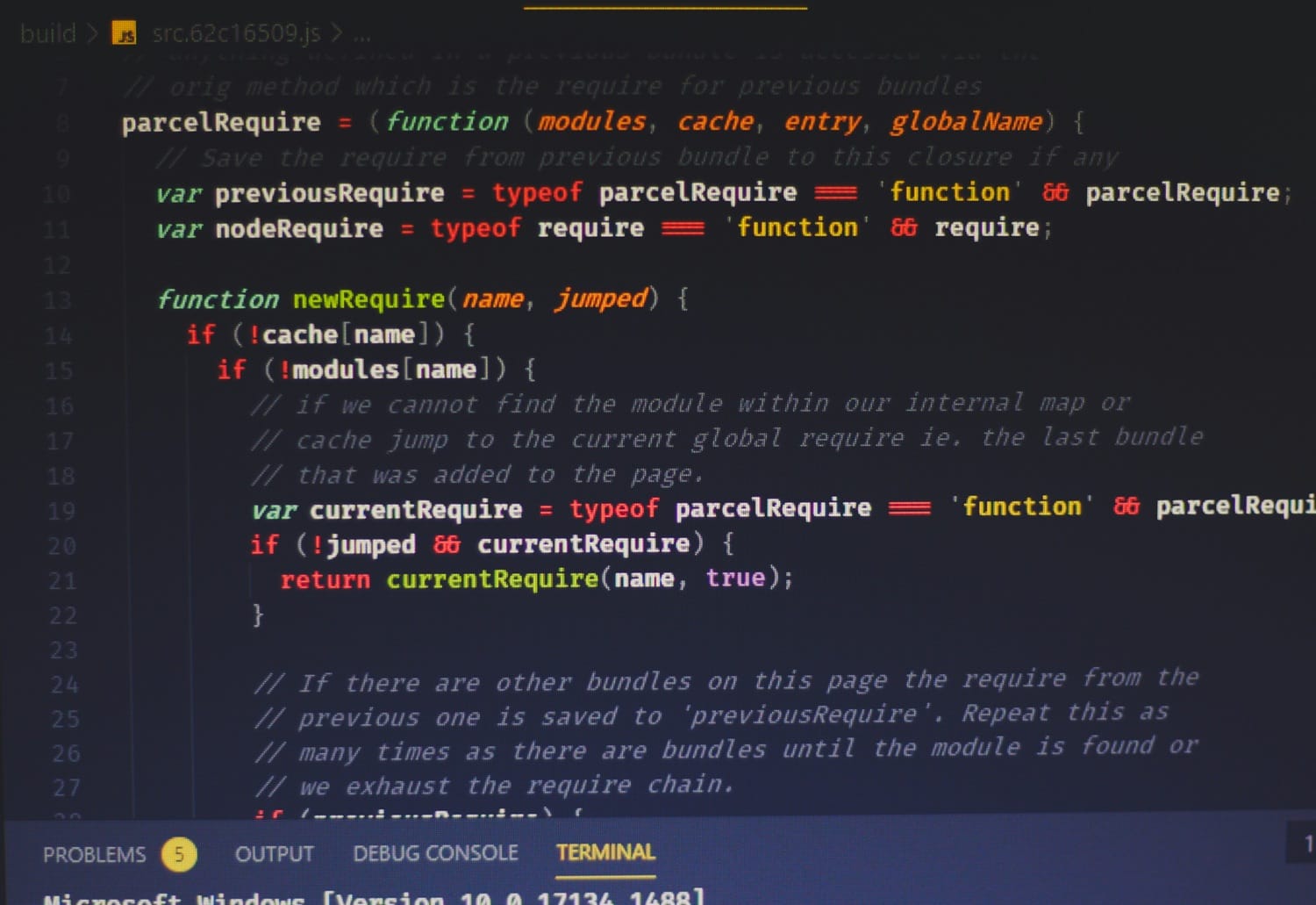
Vibe coding security risks are real and measurable: AI-generated code regularly introduces SQL injection flaws, hardcoded credentials, insecure authentication patterns, and vulnerable third-party dependencies, because large language models optimize for functionality, not security. When no human reviews that output before it ships, those vulnerabilities go live in production systems with no audit trail and no clear accountability.
Key Takeaways
- Studies analyzing AI-generated code have found security vulnerabilities in roughly 40% of code samples produced by popular LLMs, including issues that would fail a basic OWASP Top 10 review.
- Hardcoded API keys and credentials are among the most common outputs of unreviewed AI-generated code, and once committed to a repository, they are extremely difficult to fully revoke across all downstream forks and caches.
- A 2024 security incident involving the Lovable AI app builder exposed a class of vibe coding vulnerability where the model could be prompted to build functional phishing pages, illustrating how AI tools bypass traditional guardrails when given natural-language instructions.
- Dependency injection is a structural blind spot in vibe coding: AI models suggest packages based on training data that may be months or years out of date, meaning recommended libraries may carry known CVEs at the time of use.
- HIPAA, GDPR, and SOC 2 compliance frameworks require documented evidence of how code handles sensitive data, a standard that AI-generated, unreviewed code structurally cannot meet without supplemental human audit processes.
What Is Vibe Coding?
Vibe coding is a development approach where a user describes what they want in plain language and an AI model writes the actual code, often with the user accepting outputs without reading or reviewing them. The term was popularized by OpenAI co-founder Andrej Karpathy in early 2025 and has since attached itself to a wider movement of AI-assisted development tools including Cursor, Lovable, Bolt, and GitHub Copilot.
The core mechanic is straightforward: instead of writing code line by line, a developer or non-developer types something like “build me a login page with email and password fields that connects to my PostgreSQL database” and the AI produces the code. The user runs it, sees it works, and moves on. That workflow is genuinely fast. Early-stage founders, solo developers, and product teams have used tools like Lovable and Bolt to ship functional web applications in hours rather than weeks. For prototyping, internal tooling, and low-stakes projects, the speed advantage is real and significant. The security problem emerges from a structural gap in that workflow. AI models generate code that is syntactically correct and functionally plausible, but they do not have a security review process baked into their output. They pattern-match from training data, which means they reproduce the most statistically common ways a given function has been written across the internet, including the insecure ones. This is where vibe coding diverges from traditional AI-assisted development. A senior developer using GitHub Copilot for autocomplete still reads the suggestion before accepting it. In true vibe coding, the defining characteristic is that the human is not in the loop for code review. The AI writes, the human ships. Our software tools and development coverage has tracked how this category of tools has grown from novelty to a legitimate development pipeline used by startups, agencies, and individual builders across North America.
Why Vibe Coding Creates Security Risks
The security risks in vibe coding are not random or incidental: they follow predictable patterns rooted in how language models are trained and what they optimize for. Understanding those patterns is the first step toward mitigating them.
Large language models are trained on vast corpora of publicly available code, documentation, Stack Overflow threads, GitHub repositories, and tutorial content. That training data is not curated for security best practices. It reflects how code has historically been written in the wild, which includes years of insecure patterns that predate modern security standards. When an LLM generates a database query, it is not consulting NIST guidelines or running a static analysis tool. It is producing the most probable token sequence given the prompt. If the most common way that type of query appears in training data uses string concatenation instead of parameterized queries, the model will produce that pattern because it statistically fits. There is a second structural issue: context window limitations. A model generating a 500-line application does not maintain consistent awareness of security decisions made in earlier sections of that same code. It may implement a secure password hashing function at line 20 and then undermine it with an insecure session token implementation at line 340, not because it “forgot,” but because each generation step is locally coherent without being globally secure. The third issue is user behavior. Vibe coding attracts users precisely because they do not need to understand the code. A founder who would never attempt to write a Node.js backend from scratch will happily ship one generated by Lovable or Cursor because it looks correct and the demo worked. That confidence gap, between functional appearance and genuine security, is where most real-world incidents originate.
Common Vibe Coding Vulnerabilities in AI-Generated Code
AI-generated code tends to cluster around a predictable set of vulnerability classes, most of which map directly to the OWASP Top 10 and would be caught by a competent human reviewer in minutes.
SQL Injection and Input Validation Failures
SQL injection remains one of the most frequently introduced flaws in AI-generated code. When a model generates database interaction logic, it often constructs queries using direct string interpolation, embedding user input directly into SQL strings rather than using parameterized queries or prepared statements. The practical consequence: a login form built by an AI tool with no review may be trivially bypassable using classic injection strings. This is not a theoretical edge case. Security researchers testing popular vibe coding platforms have consistently found this pattern in generated output. For instance, instead of using safe parameterized boundaries, an LLM often falls back to vulnerable string interpolation where user input is directly concatenated into the database command. If an attacker inputs a classic injection payload like a closing quote followed by an OR condition, the internal logical evaluation of the database query shifts. The conditional expression simplifies from a strict variable check to a tautology, where the statement evaluates as universally true for every row in the database. This mathematical bypass completely overrides the authentication layer and grants full unauthorized access to the system.
Insecure Authentication and Authorization Logic
Authentication code generated by LLMs often implements the visible parts of auth correctly while missing the critical security properties underneath. Password hashing may use MD5 or SHA-1 rather than bcrypt or Argon2. Session tokens may be generated with insufficient entropy. Role-based access control may be implemented client-side rather than enforced server-side, meaning any user who modifies a front-end variable can access resources they should not. The Lovable app security flaw documented by researchers in 2024 illustrated a related pattern: the platform’s AI could be prompted with carefully constructed natural-language instructions to generate functional phishing infrastructure. The model had no mechanism to distinguish between a legitimate login page and a credential-harvesting replica. This is not a Lovable-specific problem. It reflects how all current-generation AI coding assistants handle intent: they respond to what is described, not what is meant.
Hardcoded Secrets and Credentials
This is one of the most consistently observed failure modes in AI-generated codebases. When a model needs to show how an API connection works, it often includes placeholder credentials in the code itself, in formats that look real and are structurally identical to live credentials. Developers who accept that output without review may commit actual secrets in the same pattern. Beyond the generation step, AI tools will sometimes suggest using environment variables while simultaneously providing fallback hardcoded values “for testing,” which then migrate into production. Once a secret is committed to a Git repository, it may persist in history even after deletion, and if the repo is public, automated scanning tools operated by malicious actors will find it within minutes.
Insecure Dependencies and Supply Chain Exposure
AI models recommend packages and libraries based on training data with a knowledge cutoff. A model trained on data from 2023 may confidently suggest a library version that carried a critical CVE (Common Vulnerabilities and Exposures) patched in early 2024. The suggestion is plausible, the package installs without error, and the vulnerability ships in production. This problem is compounded by a phenomenon security researchers have called dependency confusion and package hallucination: some models occasionally suggest package names that do not exist in official registries, which malicious actors can pre-register and populate with malicious code. A developer who runs npm install on an AI-suggested package list without verifying each entry may inadvertently install attacker-controlled code.
Vibe Coding Security Risk Comparison by Vulnerability Class
| Vulnerability Class | OWASP Category | Frequency in AI-Generated Code | Typical Detection Method | Severity if Exploited |
|---|---|---|---|---|
| SQL Injection | A03: Injection | High: consistent across tested platforms | SAST tools, manual code review | Critical: full database exposure possible |
| Hardcoded Credentials | A02: Cryptographic Failures | High: especially in tutorial-style prompts | Secret scanning tools (e.g., GitGuardian, Trufflehog) | Critical: direct account or infrastructure compromise |
| Broken Access Control | A01: Broken Access Control | Moderate to High | Manual review, penetration testing | High: unauthorized data or feature access |
| Insecure Dependencies | A06: Vulnerable Components | Moderate: tied to model knowledge cutoff | SCA tools (e.g., Snyk, Dependabot) | Variable: depends on CVE severity in suggested package |
| Weak Authentication | A07: Auth Failures | Moderate: especially in auth scaffolding | SAST, auth library audits | High: account takeover, session hijacking |
| Prompt Injection (LLM-specific) | Emerging: LLM-specific threat | Low to Moderate: application-context dependent | Manual prompt testing, red-teaming | High: can redirect AI agent behavior at runtime |
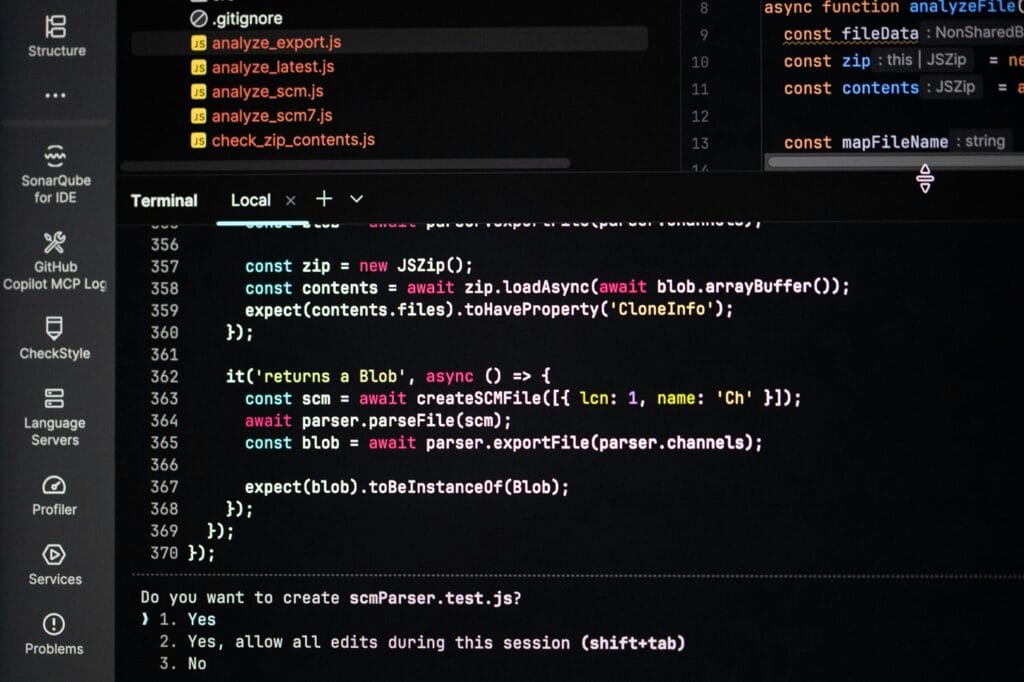
When AI-Generated Code Meets Real-World Attackers
The gap between writing code and defending it has never been wider than it is in vibe coding workflows. AI models are trained to produce code that works, that passes tests, compiles cleanly, and satisfies the prompt. They are not trained to anticipate the specific, evolving techniques that threat actors use against production systems. That mismatch becomes dangerous the moment vibe-coded software goes live.
Consider how AI models handle cryptography. Most popular models will reach for deprecated or weak primitives when a prompt doesn’t specify otherwise: MD5 for hashing, ECB mode for block ciphers, static initialization vectors, because these patterns appear abundantly in their training data. The generated code works perfectly in development. It fails catastrophically when an attacker exploits the weak cipher. A developer who didn’t write the code and didn’t review it has no intuition that anything is wrong, because the application behaves exactly as expected until the breach.
Race conditions represent another class of vibe coding vulnerability that rarely surfaces in casual testing. AI-generated concurrency code often appears structurally correct yet lacks the subtle ordering guarantees that prevent time-of-check-to-time-of-use (TOCTOU) attacks. An attacker who can manipulate the timing window between a permission check and a file operation can escalate privileges in ways that no unit test in a typical vibe coding workflow would catch. Static analysis tools help here, but only if someone configures and runs them, and vibe coding culture, with its emphasis on frictionless shipping, often skips that step entirely.
Dependency confusion attacks have grown in sophistication precisely because AI code generators frequently suggest package names without verifying their registry origin. When a model suggests pip install internal-utils or npm install company-helpers, it may be pattern-matching from training examples where those names were private packages. An attacker who registers those names on a public registry can intercept the install. The developer sees a successful build; the attacker has code execution in the build pipeline. Security teams at several large enterprises have discovered this attack vector through red-team exercises long before vibe coding normalized the pattern; now the exposure is orders of magnitude larger.
Building a Security-Aware Vibe Coding Practice
Vibe coding is not inherently incompatible with security. The problem is not AI assistance itself; it is the absence of structured checkpoints that would catch what AI assistance gets wrong. Teams that have found a workable equilibrium tend to share a few practices that are worth examining in concrete terms rather than as abstract principles.
The most effective single intervention is treating the AI’s output as an unreviewed pull request from an enthusiastic junior developer. That framing changes behavior immediately. Developers who wouldn’t ship a PR without reading it tend to apply the same discipline to AI-generated code when the social contract is explicit. Practically, this means designated review cycles, not necessarily line-by-line for every function, but threat-model-guided review that focuses attention on authentication boundaries, data serialization, external API calls, and any code that touches the filesystem or executes shell commands.
Automated tooling fills the gaps that human review misses at scale. A minimal viable security pipeline for vibe-coded projects should include a SAST scanner integrated into CI (Semgrep, Bandit, or Snyk depending on the language), software composition analysis to flag vulnerable or typosquatted dependencies, and secrets detection to catch API keys that AI models occasionally include in generated configuration files drawn from training examples. According to NIST’s Cybersecurity Framework, the identify-protect-detect cycle is most effective when automated controls operate continuously rather than at scheduled intervals, a principle that maps directly onto CI-gated scanning for vibe coding environments.
Prompt engineering itself is underutilized as a security control. Developers who prepend security-specific context to their prompts, specifying frameworks, explicitly requiring parameterized queries, naming the OWASP categories they want the model to avoid, receive measurably better output. This is not a guarantee, but it narrows the attack surface before code is even generated. Some teams maintain a library of security-prefixed prompt templates for common tasks: auth scaffolding, file handling, database interaction, and external HTTP calls. The overhead is low; the improvement in baseline output quality is consistent.
Finally, red-teaming vibe-coded applications requires a different mindset than traditional penetration testing. Testers need to account for the statistical nature of AI output; the same prompt can produce different code across sessions, and a codebase may contain several implementations of similar functionality with inconsistent security properties. Automated fuzzing and property-based testing help surface these inconsistencies in ways that scripted penetration tests may miss.
Legal Liability and Regulatory Exposure from Vibe-Coded Software
The legal surface area created by vibe coding is almost entirely absent from mainstream security discourse, and that omission is quietly creating serious exposure for developers, CTOs, and the companies they work for. The risks cluster around three distinct areas: intellectual property ownership, regulatory compliance evidence, and product liability, and they interact in ways that compound the underlying problem.
On copyright, the situation is genuinely unresolved. In the United States, the Copyright Office has consistently held that works lacking human authorship are not eligible for copyright protection, and several formal guidance documents have reinforced that position for AI-generated output. If a vibe-coded application is substantially composed of AI-generated code with minimal human creative contribution, the developer may own nothing they ship; they cannot sue for infringement if a competitor copies it. However, the boundary of what constitutes sufficient “human authorship” in development remains legally fluid. Courts and regulators increasingly evaluate cases on an individual basis, looking at the complexity, sequence, and specific customization of the natural-language prompts used to direct the AI. That problem runs in the other direction too. AI training data includes an enormous volume of open-source code, some of it under copyleft licenses like the GPL. If a model reproduces substantial portions of GPL-licensed code in its output and that code ships in a commercial product without disclosure, the company may be in violation of the license terms. The developer who didn’t read the code doesn’t know it happened. Legal teams at several major software companies have begun requiring AI-output audits before open-source releases, but this practice has not reached the broader vibe coding community.
Regulatory exposure is more immediate for companies operating in governed industries across North America. HIPAA requires covered entities and their business associates to maintain documentation demonstrating that software handling protected health information was developed with appropriate security controls. A vibe-coded application with no code review records, no threat model documentation, and no audit trail of security testing decisions creates a compliance gap that a regulator examining a breach will find immediately. In Canada, this exposure is further amplified under the Artificial Intelligence and Data Act (AIDA), which mandates strict risk assessments and development logging for high-impact software systems. Failing to provide a clear human-led audit trail under AIDA, or violating provincial privacy frameworks like Quebec’s Law 25, places direct regulatory liability on the enterprise. The regulation doesn’t prohibit using AI tools; it requires evidence of due diligence. Vibe coding as commonly practiced produces no such evidence. GDPR creates analogous obligations for data protection by design and by default, Article 25 requires that privacy controls be built in from the outset, and demonstrating that they were requires documentation that vibe coding workflows rarely generate.
Product liability is the longest-horizon risk, but it is no longer theoretical. As software becomes more deeply embedded in physical systems, medical devices, vehicles, industrial controls, the legal framework around defective software is evolving toward standards that more closely resemble product liability for manufactured goods. A company that ships safety-relevant software produced entirely by an AI model, without documented review, is building a negligence narrative that plaintiff’s attorneys will find straightforward to construct after an incident. The fact that AI wrote the code is not an exculpatory argument; it is evidence that the company’s quality control process was inadequate. CTOs who understand this exposure are beginning to require that security review records, dependency manifests, and testing documentation be treated as business records with the same retention policies as financial documents. That discipline is harder to retrofit after a breach than it is to build into a vibe coding workflow from the start.
What Responsible Vibe Coding Actually Looks Like
The developers and teams who use AI code generation without accumulating dangerous security debt share a set of habits that are worth naming plainly. They treat the AI as an accelerator for implementation, not a replacement for design thinking. Security architecture, deciding where authentication happens, how secrets are stored, what data is logged and what isn’t, remains a human decision made before a prompt is written. The AI generates the implementation; the developer owns the design. That division of responsibility keeps the human in the loop at the decisions that matter most from a security standpoint.
They also maintain what some practitioners call a “vibe coding bill of materials”, a record of which portions of the codebase were AI-generated, which prompts produced them, and what review they received. This is not bureaucratic overhead; it is the foundation of the audit trail that HIPAA, GDPR, and future regulations will require. It is also the artifact that makes post-incident forensics possible. When a vulnerability surfaces in production, knowing which AI session produced the affected code and what context was provided narrows the investigation considerably.
The broader industry is catching up to the security implications of AI-assisted development, but it is doing so slowly and unevenly. The IEEE has begun developing guidance on AI-generated software quality, and academic researchers have documented the vulnerability patterns that appear most frequently in AI-generated code. The tooling ecosystem is responding with AI-aware SAST rules and dependency verification designed for the vibe coding workflow. None of this means vibe coding is safe by default; it means the infrastructure for making it safer is being built, and developers who engage with it now will be substantially better positioned than those who treat security as someone else’s problem until a breach makes it theirs.
Frequently Asked Questions
What are the most common vibe coding security risks developers face?=
The most frequently observed vibe coding security risks include SQL injection from unparameterized queries in AI-generated database code, insecure deserialization, weak or outdated cryptographic primitives, hard-coded credentials included in generated configuration files, and vulnerable third-party dependencies suggested without version vetting. These risks are compounded when developers ship AI-generated code without running static analysis or conducting any manual review of security-sensitive code paths.
Does using AI to write code expose a company to GDPR or HIPAA violations?
AI-assisted development doesn’t automatically create regulatory violations, but vibe coding as typically practiced can. HIPAA and GDPR both require demonstrable evidence of security controls built into software that handles protected data. If a company cannot produce code review records, threat model documentation, or testing evidence because none of those steps occurred, regulators examining a breach will treat the absence of documentation as evidence of inadequate due diligence. The use of AI tools is not itself the liability; the lack of process documentation is.
Can AI models reliably generate secure code if given the right prompts?
Security-specific prompting meaningfully improves AI output quality, but it does not make AI-generated code reliably secure on its own. Models produce better results when prompts explicitly reference frameworks, name specific vulnerability classes to avoid, and require parameterized inputs, but they still produce subtle errors in concurrency, cryptographic implementation, and session management that require human review and automated tooling to catch. Prompt engineering is a useful control layer, not a substitute for a security review process.
Who is legally responsible when AI-generated code causes a security breach?
Current legal frameworks place responsibility on the developer or organization that shipped the software, not on the AI tool or its maker. Terms of service for AI coding assistants consistently disclaim liability for security defects in generated output. If a breach occurs, the legal inquiry will focus on what the developer or company knew, what review processes they had in place, and whether they acted with reasonable care, not on which tool generated the code. Shipping AI-generated code without review does not transfer liability; it tends to strengthen a negligence argument against the organization that shipped it.