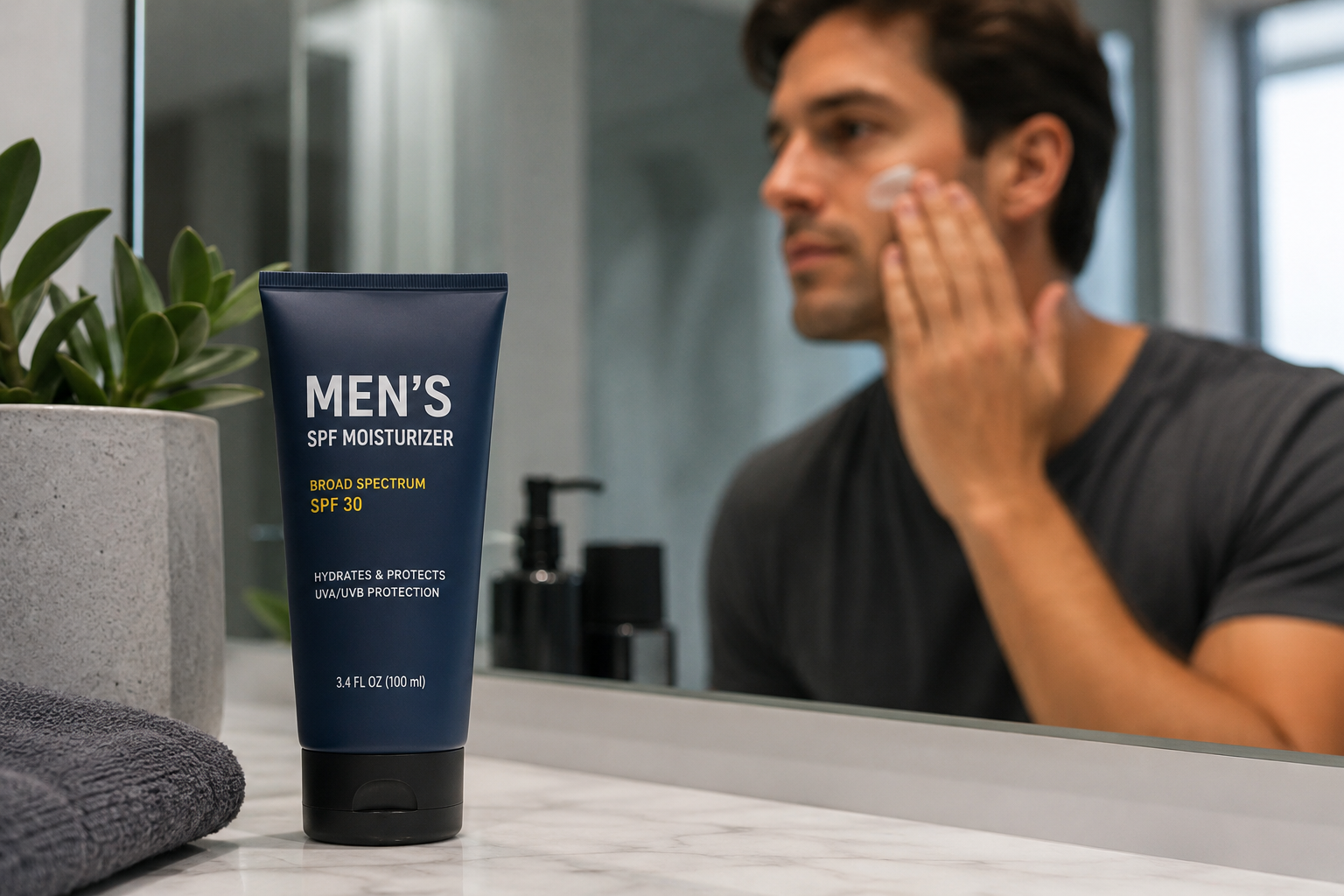
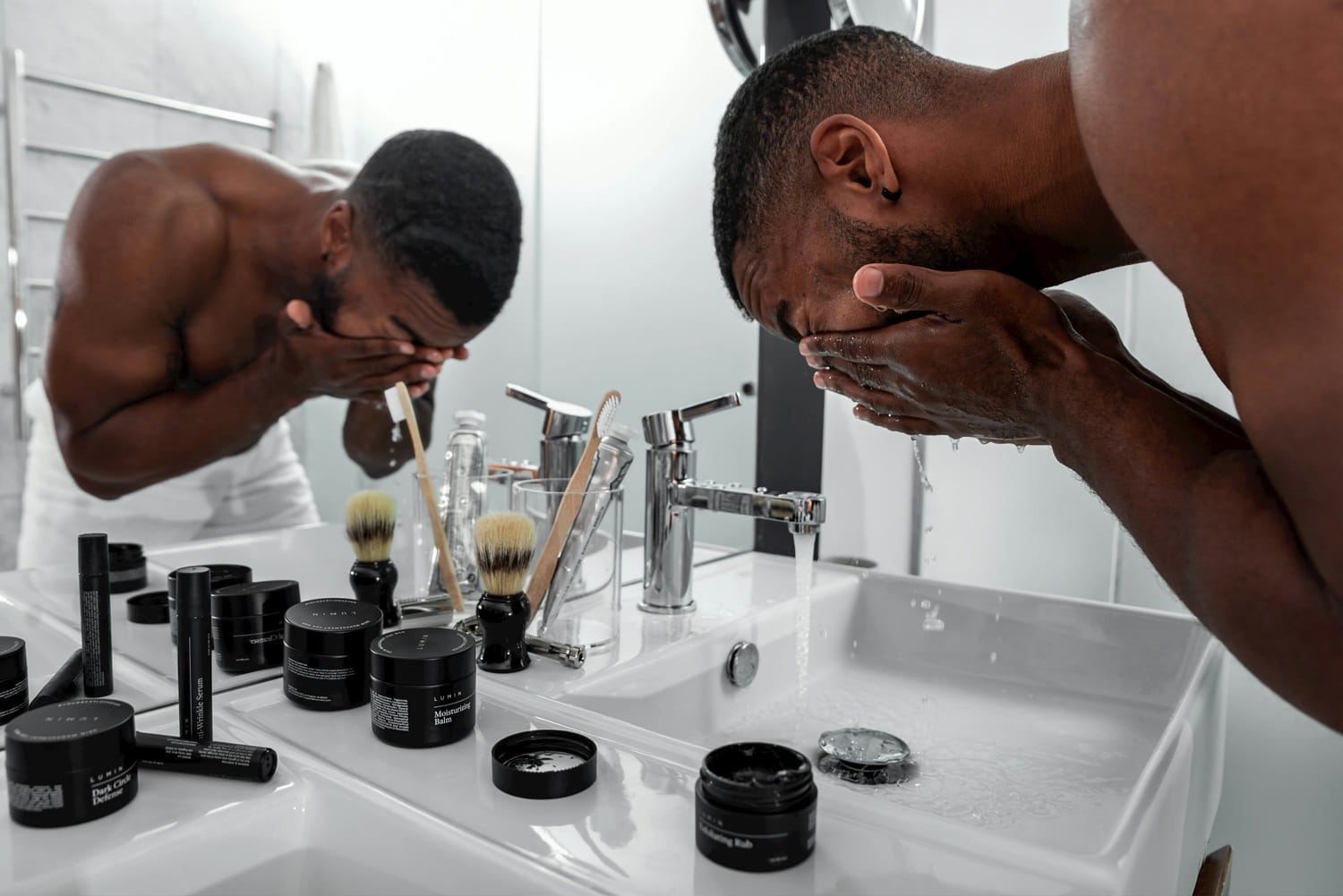
A solid post-shave skincare routine for men starts with rinsing in cool water, applying an alcohol-free aftershave or toner, layering a barrier-supporting moisturizer, and finishing with SPF during the day. Each step targets a specific consequence of shaving: inflammation, moisture loss, and UV vulnerability on freshly exposed skin.
Key Takeaways
- Shaving removes roughly one layer of the stratum corneum (the skin’s outermost barrier), which is why post-shave products are doing real structural repair work, not just comfort care.
- Alcohol-based aftershaves close the pores temporarily but can dry out the skin barrier and delay healing, especially for men who shave three or more times per week.
- Niacinamide (vitamin B3) at 4 to 5 percent concentration has been shown in clinical research to reduce post-inflammatory hyperpigmentation, making it one of the most useful actives in a post-shave routine for men with medium to dark skin tones.
- SPF is not optional if you shave in the morning: freshly shaved skin absorbs UV radiation more readily, raising the risk of irritation and long-term pigmentation changes.
- Razor burn, ingrown hairs, and persistent dark spots are all downstream effects of a damaged skin barrier, meaning consistent post-shave care prevents most of them before they start.
What Shaving Actually Does to Your Skin
Every pass of a razor strips away more than just hair. It also disrupts the outermost layer of your skin, leaving it temporarily more vulnerable to irritation, moisture loss, and environmental damage.
The skin’s protective surface layer, called the stratum corneum, is only about 10 to 20 micrometers thick. Shaving physically abrades that layer. Even a clean, sharp blade creates micro-tears in the skin and removes a measurable amount of surface cells with every pass. Drag a dull blade across the same patch of skin twice and the damage compounds fast.
What follows is a brief but real inflammatory response. Blood flow increases to the area, the skin reddens, and nerve endings that sit just below the surface become sensitized. This is why freshly shaved skin stings when you apply certain products, why it feels tight within minutes, and why it sunburns faster than unshaved skin.
Post-shave care is not a luxury ritual. It is a direct response to a physical process that happens every time you pick up a razor. The products and steps in a good routine are not arbitrary. Each one addresses a specific biological consequence of what the blade just did.
For a broader look at building smart daily habits around shaving and skincare, our men’s grooming tips and product guides cover everything from blade selection to long-term skin health.
Step-by-Step: The Post-Shave Skincare Routine for Men
The most effective post-shave care routine follows four steps in a specific order: cool water rinse, aftershave or toner, moisturizer, and SPF. Skipping steps or reversing the order reduces the benefit of each product.
Step 1: Rinse With Cool Water
Hot water feels satisfying after a shave, but it keeps the skin flushed and slightly inflamed. Cool water (not ice cold, just off the heat setting) causes surface blood vessels to constrict slightly, which reduces redness and calms the initial sting. Pat your face dry with a clean towel. Do not rub. Rubbing adds friction to skin that has already taken friction damage from the razor.
Step 2: Apply an Aftershave or Toner
Traditional alcohol-based aftershaves do two things: they feel immediately bracing, and they cause a surface tightening sensation that people often mistake for skin-healing. What they are actually doing is temporarily stripping the surface moisture layer and causing mild dehydration. For men who shave frequently, this can compound into a chronically dry, reactive barrier over time.
A better option for most skin types is an alcohol-free aftershave balm or a hydrating toner that contains ingredients like witch hazel (in low concentrations), aloe vera, or allantoin. These calm redness without pulling moisture out of the skin. If you prefer the classic alcohol-based splash for sensory or cultural reasons, that is a reasonable choice, but follow it immediately with a moisturizer to compensate for the moisture loss.
Step 3: Apply a Moisturizer That Supports the Barrier
This is the most consequential step in the routine. A moisturizer applied immediately after toning works while the skin is still slightly damp, which helps it absorb more effectively. You are looking for three types of ingredients working together: humectants that pull water into the skin (like glycerin or hyaluronic acid), emollients that smooth and soften (like squalane or shea butter), and occlusives that seal everything in (like petrolatum or dimethicone).
For men with oily or acne-prone skin, lighter gel-based formulas with glycerin and niacinamide tend to absorb cleanly without leaving residue. For men with dry or sensitive skin, a richer cream with ceramides, which are lipid molecules that naturally occur in the skin barrier, will do more to restore what shaving disrupted.
Dermatologists also recommend choosing moisturizers that contain ceramides, as these lipids help restore the skin’s protective barrier and reduce moisture loss after shaving. Replenishing ceramides can improve skin hydration, strengthen barrier function, and make the skin less prone to irritation, especially for men with dry or sensitive skin.
Avoid moisturizers with fragrance, denatured alcohol, or menthol as primary ingredients. These may feel pleasant but they can stall barrier repair on skin that is already stressed from shaving.
Step 4: Apply SPF (Morning Shaves)
Freshly shaved skin has a thinner surface layer, which means UV radiation penetrates more easily. Applying a broad-spectrum SPF 30 or higher as the final step in your morning routine is not excessive. It is functionally protective. Many men skip sunscreen because they are not going to the beach, but incidental sun exposure during commuting, running errands, or sitting near a window adds up over months and years and is a meaningful driver of uneven skin tone, particularly along the jaw and neck.
If you resist the idea of a separate sunscreen product, look for a moisturizer that includes SPF. CeraVe AM Facial Moisturizing Lotion with SPF 30 and EltaMD UV Clear Broad-Spectrum SPF 46 are two widely available options that sit well on post-shave skin without heavy residue. Dermatologists also emphasize that daily sun protection plays an important role in preventing post-inflammatory hyperpigmentation, especially after shaving when the skin barrier has been temporarily disrupted. According to the American Academy of Dermatology, consistent use of a broad-spectrum sunscreen with SPF 30 or higher helps reduce UV-triggered pigmentation and supports the fading of existing dark spots over time. For evening shaves, skip the SPF and let the moisturizer do all the work.
Aftershave vs. Moisturizer: What Is the Actual Difference?
Aftershave and moisturizer are not interchangeable. They address different post-shave problems, and for most men, both have a place in the routine rather than one replacing the other.
Aftershave, in its original form, was an antiseptic product. The alcohol content was meant to prevent infection from the small nicks and abrasions that older blade styles caused more frequently. Modern cartridge and safety razors, used correctly, cause fewer open wounds, which means the antiseptic rationale matters less than it once did.
Today, aftershaves range from classic alcohol splashes (still useful for that antiseptic function if you nick yourself regularly) to balms, gels, and serums that prioritize soothing inflammation over disinfection. They are formulated to work in the first minute or two after shaving, when the skin is most reactive.
Moisturizers are a separate category. They are designed to restore and maintain hydration over hours, not to address the acute post-shave sting. A good moisturizer takes longer to absorb and creates a lasting film on the skin that supports barrier function throughout the day. Using only aftershave without moisturizer leaves the skin calm for a few minutes but unprotected for the rest of the day. Using only moisturizer without addressing the initial inflammation may slow the absorption of the moisturizer itself.
The practical answer: use an alcohol-free aftershave or toner to calm the skin first, then apply a moisturizer while the skin is still slightly damp to lock in the benefit of both steps.
Common Post-Shave Problems and What Actually Causes Them
Razor burn, ingrown hairs, and persistent redness are the three complaints men search most after shaving. All three share a root cause: barrier disruption from blade friction, compounded by products or habits that prevent recovery.
Razor Burn
Razor burn is a friction injury, not an allergic reaction. It appears as red, burning patches most often on the neck, where the blade has to navigate multiple growth directions. The primary causes are a dull blade, shaving without adequate lubrication, or going over the same area too many times. Post-shave, a cool compress followed by an aloe-based balm or 1 percent hydrocortisone cream (used sparingly and short-term) can reduce the inflammation within 24 to 48 hours. The longer-term fix is technique and blade maintenance.
Ingrown Hairs
Ingrown hairs happen when a cut hair curls back into the follicle instead of growing outward. Men with tightly coiled hair (a common characteristic in Black men and some Latino men) are more prone to ingrowns, particularly along the neck and jaw. A chemical exfoliant like glycolic acid or salicylic acid used two to three times per week, not immediately after shaving but as part of a separate routine, can help clear dead skin cells that trap hairs. Avoid picking or squeezing ingrowns, which introduces bacteria and increases the risk of post-inflammatory dark spots.
Persistent Redness and Sensitivity
If redness does not resolve within a few hours of shaving and recurs with every shave, the barrier is likely in a chronically compromised state. Repeated shaving without adequate recovery time, frequent use of harsh products, or an underlying condition like rosacea or seborrheic dermatitis can all contribute. Switching to a gentler razor, reducing shave frequency temporarily, and building a ceramide-based moisturizer into the daily routine typically produces visible improvement within two to four weeks.
Post-Shave Product Comparison: Key Ingredients at a Glance
| Ingredient | Type | Primary Benefit After Shaving | Best Skin Types | Watch Out For |
|---|---|---|---|---|
| Glycerin | Humectant | Draws moisture into the skin surface | All skin types | Less effective in very dry climates without an occlusive layer on top |
| Niacinamide (Vitamin B3) | Active / Multi-function | Reduces redness, strengthens barrier, fades post-shave dark spots at 4-5% | All types, especially oily and medium-to-dark tones | High concentrations (above 10%) may cause temporary flushing in sensitive skin |
| Ceramides | Lipid / Emollient | Replenishes the lipid layer shaving strips away | Dry, sensitive, barrier-compromised | Heavier formulas may feel greasy on oily skin |
| Aloe Vera | Soothing agent | Calms acute inflammation and razor burn | Sensitive, reactive | Dries quickly; works better layered under a moisturizer than used alone |
| Allantoin | Skin protectant | Promotes skin cell turnover, reduces irritation | Sensitive, post-razor burn | Few downsides; gentle enough for daily use |
| Alcohol (Denatured / SD) | Antiseptic / Astringent | Disinfects nicks, creates bracing sensation | Oily skin (short term) | Strips moisture, disrupts barrier with regular use; avoid as a primary aftershave if you shave daily |
| Hyaluronic Acid | Humectant | Holds water in the surface layers of the skin | All types, especially dry | Apply to damp skin; on dry skin in dry air it can pull moisture out rather than in |
Building Your Post-Shave Routine Step by Step
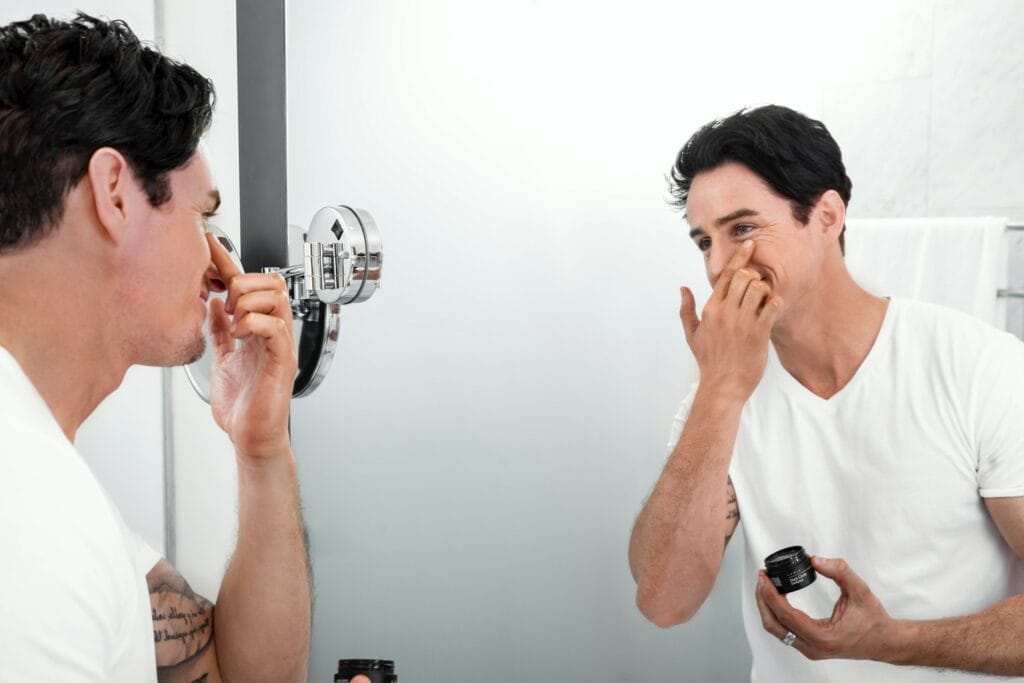
Knowing which ingredients work is only useful if you apply them in the right order. Skincare layering follows a simple logic: thinnest to thickest, water-based before oil-based. After shaving, your skin is more permeable than usual, which means both beneficial actives and potentially irritating ingredients absorb faster and more deeply. Getting the sequence right matters more on a freshly shaved face than at any other point in the day.
Start by rinsing with cool water immediately after your final pass with the razor. This is not optional. Cool water constricts blood vessels, reduces surface inflammation, and removes any residual shaving cream or soap that would otherwise sit in open follicles. Pat, do not rub with a clean towel. Rubbing drags bacteria across micro-cuts and stresses already-disrupted skin.
While your skin is still slightly damp, apply any water-based active serums first. A few drops of a niacinamide or panthenol serum pressed gently into the skin will absorb within thirty to sixty seconds. Follow immediately with your hydrating layer, a fragrance-free moisturizer containing ceramides, squalane, or glycerin. This seals the humectants in and begins the occlusion needed to keep transepidermal water loss from spiking as the barrier recovers. If you shave in the morning, a mineral SPF 30 or higher applied over the moisturizer completes the sequence. UV exposure after shaving accelerates both redness and long-term post-inflammatory hyperpigmentation.
The entire routine should take under four minutes. Anything that stings noticeably at the serum or moisturizer step, tingling is one thing, burning is another, is a signal that the formulation is too aggressive for freshly shaved skin. Swap it out rather than pushing through. Tolerance does not improve the barrier; appropriate ingredients do.
When Your Skin Type Changes the Equation
A universal post-shave routine is a starting point, not a prescription. Skin type significantly affects which steps deserve the most attention and which ingredients to prioritize or avoid entirely.
Men with oily or acne-prone skin often assume they should skip moisturizer to avoid clogging pores. This is one of the most persistent and damaging myths in men’s skincare. When the barrier is stripped by shaving and then left without a moisturizer, the skin’s sebaceous glands frequently compensate by increasing oil production. The result is a face that is simultaneously dehydrated below the surface and oily at the surface, a combination that makes breakouts worse, not better. The solution is not to skip moisture but to choose non-comedogenic, lightweight formulas: gel-based moisturizers with hyaluronic acid and niacinamide, for instance, hydrate without adding occlusive weight.
Dry and sensitive skin types have the opposite problem; they lose water rapidly through a barrier that is structurally thinner and less lipid-dense to begin with. For these skin types, occlusion is the priority. Heavier emollients like shea butter, squalane, and ceramide-rich creams are appropriate even in the morning routine. Alcohol-containing products of any kind should be avoided completely, and anything with fragrance, even naturally derived, should be treated with suspicion.
Men with darker skin tones face a distinct challenge that goes beyond immediate irritation. Melanin-rich skin has a higher density of active melanocytes, which means it is significantly more prone to post-inflammatory hyperpigmentation. Any friction, ingrown hair, or razor bump that causes even mild inflammation triggers melanin overproduction in the healing tissue. The discoloration that results can persist for months. Barrier protection after shaving is therefore not just a comfort issue for these skin types; it is a direct strategy for preventing a chronic cosmetic concern that no aftershave balm alone will resolve.
Post-Shave Dark Spots: How to Prevent and Treat Hyperpigmentation After Shaving
The redness fades in a few hours. The bumps flatten in a day or two. But the dark patches left behind after razor burn or an ingrown hair heals can linger for six weeks to six months, sometimes longer. This is post-inflammatory hyperpigmentation, or PIH, and it is a part of shaving damage that almost no men’s grooming guide ever addresses directly within the context of the post-shave routine itself. For men with medium to deep skin tones especially, it is frequently the most frustrating and visible consequence of shaving.
PIH occurs because the skin’s melanocytes, the cells that produce pigment, respond to inflammation by releasing excess melanin into the surrounding tissue. The injury does not need to be severe. A stubborn ingrown hair, repeated passes over the same patch of skin, or a week of razor burn on the neck are all sufficient triggers. The resulting discoloration is not a scar in the structural sense; there is no change to the dermis. The pigment is deposited in the epidermis and sometimes the upper dermis, which is why it fades over time but not quickly.
Prevention is where the post-shave routine does its real long-term work. Every step that reduces inflammation during the first twenty-four hours after shaving reduces the melanocyte signal that drives hyperpigmentation. Applying a niacinamide serum immediately after shaving is particularly relevant here: niacinamide inhibits the transfer of melanin from melanocytes to surrounding keratinocytes, addressing pigmentation at the cellular mechanism rather than simply bleaching the surface. It also calms the inflammatory response simultaneously, making it one of the most efficient dual-purpose actives available for post-shave skin. According to the American Academy of Dermatology, niacinamide is among the evidence-supported topical ingredients for managing post-inflammatory hyperpigmentation in all skin tones.
For treating existing PIH spots that have already formed, the post-shave routine is the logical integration point because the skin is already in active recovery mode and ingredient absorption is higher. Azelaic acid at concentrations of ten to twenty percent is a strong option: it inhibits tyrosinase, the enzyme required for melanin synthesis, while also being anti-inflammatory and well-tolerated on sensitive skin. It will not cause the photosensitivity that comes with stronger actives, which matters because freshly shaved skin and sun exposure are a particularly poor combination. Alpha arbutin is another well-tolerated melanin inhibitor that can be layered into the same serum step without irritation concerns.
A Word of Caution for Sensitive Skin: Active ingredients like 10% to 20% azelaic acid or vitamin C are highly effective but can cause severe stinging or contact dermatitis if applied directly to freshly shaved, compromised skin. If you have sensitive skin, do not apply these actives immediately after shaving. Instead, separate them in time: shave in the morning, and apply your active treatments in the evening after your skin barrier has had time to calm down and recover.
Vitamin C in stable forms, ascorbyl glucoside or sodium ascorbyl phosphate are more stable and less irritating than straight L-ascorbic acid on reactive post-shave skin, provides additional antioxidant coverage against UV-triggered pigmentation while also inhibiting tyrosinase. Apply it in the morning under SPF. The SPF itself is non-negotiable for anyone actively trying to fade existing hyperpigmentation: UV exposure without protection will re-darken spots faster than any treatment ingredient can lighten them, and this cycle repeats indefinitely if sun protection is skipped.
Patience is a genuine requirement. Even with a consistent routine using effective ingredients, the timeline for meaningful fading in the epidermis is typically eight to twelve weeks. Deeper dermal pigmentation takes longer. The key variable within your control is consistency, missing days allows the melanin transfer cycle to continue unchecked. Building the brightening step into the existing post-shave routine, rather than treating it as a separate skincare concern, is what makes that consistency achievable for most men.
One thing to avoid while treating PIH is physical exfoliation in the affected areas during active inflammation. Scrubs, rough washcloths, or any friction-based exfoliation on a spot that is still red or bumped will trigger another inflammatory event and reset the hyperpigmentation clock. Chemical exfoliants, a low-concentration glycolic or lactic acid used two to three evenings per week, not immediately after shaving, can support cell turnover and help bring pigmented cells to the surface more quickly, but only once the immediate inflammation has fully resolved.
The post-shave routine is the only daily skincare moment when men with recurring PIH have their skin in a maximally receptive state for barrier-repair and pigmentation-management ingredients at the same time. Using that window consistently, applying niacinamide while still damp, sealing with a moisturizer that contains azelaic acid or alpha arbutin, finishing with SPF in the morning, is a materially different approach from treating dark spots as a separate problem to be solved later. It treats the cause and the consequence in a single, integrated routine.
Building a deliberate post-shave barrier routine is one of the simplest upgrades a man can make to his skin’s long-term health. Shaving is one of the most mechanically aggressive things most men do to their skin on a daily or near-daily basis, and the five minutes immediately after have a disproportionate influence on how that skin looks and functions over years. Starting with cool water, layering barrier-supportive actives on damp skin, sealing with a ceramide-rich moisturizer, and using mineral SPF in the morning covers the essential framework. Adjusting for skin type, addressing hyperpigmentation as an integrated part of the routine rather than an afterthought, and choosing fragrance-free formulas where possible refines it into something that genuinely compounds over time. The goal is not a complicated system; it is a consistent one, built around what the skin actually needs in the moments when it is most vulnerable.
Frequently Asked Questions
How long should I wait after shaving before applying moisturizer?
Apply moisturizer while your skin is still slightly damp, ideally within sixty to ninety seconds of patting dry. This window is when your barrier is most permeable and when an occlusive moisturizer will be most effective at preventing transepidermal water loss. Waiting until your skin is completely dry before moisturizing reduces how well the product absorbs and allows more moisture to evaporate from the skin surface before it is sealed in.
Can I use retinol as part of my post-shave skincare routine?
Not immediately after shaving. Retinol is a potent keratinocyte-stimulating ingredient that significantly increases skin sensitivity, and applying it to freshly shaved skin, which already has a disrupted barrier and elevated sensitivity, creates a high risk of irritation, redness, and inflammation. If you use retinol, apply it on evenings when you are not shaving that morning, or leave at least several hours between your shave and retinol application. Once your routine is established and your barrier is stronger, some men tolerate low-concentration retinol on shave-day evenings, but it is not where to start.
Why do I keep getting dark spots on my neck after shaving even though I don’t have bad razor burn?
Even mild, subclinical inflammation, the kind that does not produce visible redness or bumps, is enough to trigger post-inflammatory hyperpigmentation in melanin-rich skin. Each shaving session causes a small degree of mechanical trauma to the follicle and the surrounding epidermis, and repeated low-grade inflammation in the same area accumulates over weeks and months into visible discoloration. The neck is particularly prone to this because the hair grain is irregular, making it difficult to shave without some degree of cross-grain friction. Consistent use of niacinamide in your post-shave routine, combined with daily SPF, is the most practical long-term strategy for preventing this cycle from continuing.
Is SPF really necessary after shaving if I’m mostly indoors?
For anyone actively managing post-shave hyperpigmentation, SPF is not optional regardless of how much time you spend indoors. UVA radiation, the wavelength most directly responsible for triggering and deepening pigmentation, passes through glass, meaning window exposure during a commute or at a desk near a window is sufficient to slow or reverse the fading of dark spots. For general barrier recovery alone, SPF reduces the UV-induced inflammation that stresses a freshly shaved barrier and contributes to collagen degradation over time. Mineral SPF 30 applied as the final morning step adds roughly thirty seconds to the routine and delivers meaningful long-term protection.