Sun protection is no longer optional, and the skincare industry has finally caught up with what dermatologists have been saying for decades. Whether you’re spending summer break at the beach, commuting through a Texas July, or just running errands between meetings, UV exposure adds up fast. This guide breaks down how to choose and use the best SPF moisturizer for men in 2026, with honest ingredient insights and no-nonsense routine advice. For more tips across every step of your grooming regimen, explore our Men’s Grooming guides, or browse our broader Beauty articles for additional skincare deep dives.
Key Takeaways
- Daily broad-spectrum SPF use helps protect men’s skin from UV-related aging, hyperpigmentation, and long-term sun damage.
- SPF 30 is generally considered the minimum daily recommendation, while SPF 50 may provide added protection for outdoor lifestyles.
- Men with oily or acne-prone skin typically do better with lightweight gel, fluid, or oil-free SPF moisturizers instead of thick cream formulas.
- Broad-spectrum protection matters because UVA rays contribute to deeper skin aging and remain present year-round, even on cloudy days.
- Consistency matters more than an overly complicated skincare routine, and an SPF moisturizer can simplify daily sun protection into one practical step.
Why Men’s Sunscreen Habits Are Changing in 2026
Men are increasingly adopting daily SPF moisturizers as awareness of skin cancer risk and visible aging grows. Research suggests consistent use may help reduce UV-related skin damage over time, though results vary.
For a long time, sunscreen felt like something you grabbed from a cooler at a Fourth of July cookout and slathered on before jumping into a lake. That perception has shifted. According to the CDC, skin cancer is the most common cancer in the United States, and men over 50 have a significantly higher rate of melanoma than women of the same age. Younger men are not off the hook either: cumulative UV exposure begins in childhood and compounds over decades.
The good news is that the product category has evolved. SPF moisturizers for men now address specific concerns like oily skin, post-shave sensitivity, and greasiness, making it easier to fit sun protection into a real daily routine without feeling like you’re wearing sunscreen at all.
How to Read an SPF Label: What Actually Matters?
SPF measures protection against UVB rays, but broad-spectrum coverage also blocks UVA rays, which penetrate deeper into skin. The American Academy of Dermatology recommends SPF 30 or higher for daily use.
SPF measures how effectively a sunscreen helps protect skin from UVB-related sunburn under standardized testing conditions. The difference sounds small, but for daily use it is meaningful, especially if you are fair-skinned or spend time outdoors for work.
What the number does not tell you is whether the product protects against UVA rays, which are responsible for deeper skin aging and are linked to melanoma risk. Look for the words “broad-spectrum” on the label. According to the American Academy of Dermatology, broad-spectrum SPF 30 or higher is the baseline recommendation for daily sun protection.
According to researchers at the University of Queensland, daily sunscreen application was associated with 24% less skin aging over a 4.5-year period compared to discretionary use, suggesting that consistent daily habits may matter more than occasional high-SPF applications.
SPF Moisturizer for Men with Oily Skin: What to Look For
Men with oily or acne-prone skin tend to do better with lightweight, oil-free, or gel-based SPF moisturizers that use chemical or hybrid filters rather than heavy mineral formulas.
If you have oily skin, the last thing you want is a thick, white-cast moisturizer that clogs your pores and makes your face shine under fluorescent lights. The good news is that formulation technology has improved significantly. Here is what to look for on ingredient labels:
Niacinamide is a water-soluble vitamin B3 derivative that some studies indicate may help regulate sebum production and reduce the appearance of large pores over time. Many newer SPF moisturizers for men include it at 2-5% concentrations. Zinc oxide at lower concentrations (under 10%) provides mineral UV protection with less of the chalky residue associated with older formulas. Hyaluronic acid adds lightweight hydration without contributing to oiliness. Chemical filters like octinoxate and avobenzone tend to feel lighter on skin than heavy mineral blends, though some people with sensitive skin may prefer mineral-only formulas.
Building a Men’s Sunscreen Routine for Summer: Step by Step
A simple men’s sunscreen routine for summer involves cleanser, optional treatment serum, SPF moisturizer, and reapplication every two hours during outdoor activity. Consistency matters more than complexity.
Step 1: Cleanse First
Start with a gentle, fragrance-free cleanser. Sunscreen applied over sweat, oil, and pollution from the previous night will not adhere as evenly, and you may end up with uneven coverage. For a post-shave routine, use a non-stripping cleanser to avoid sensitizing the skin barrier before applying SPF.
Step 2: Apply Any Serums or Treatments
If you use a retinol or vitamin C serum, apply it before your SPF moisturizer and allow it to absorb for about 60 seconds. Some early research suggests antioxidant serums like vitamin C may complement sunscreen protection when layered under SPF, though sunscreen remains the primary form of UV protection.
Step 3: Apply Your SPF Moisturizer
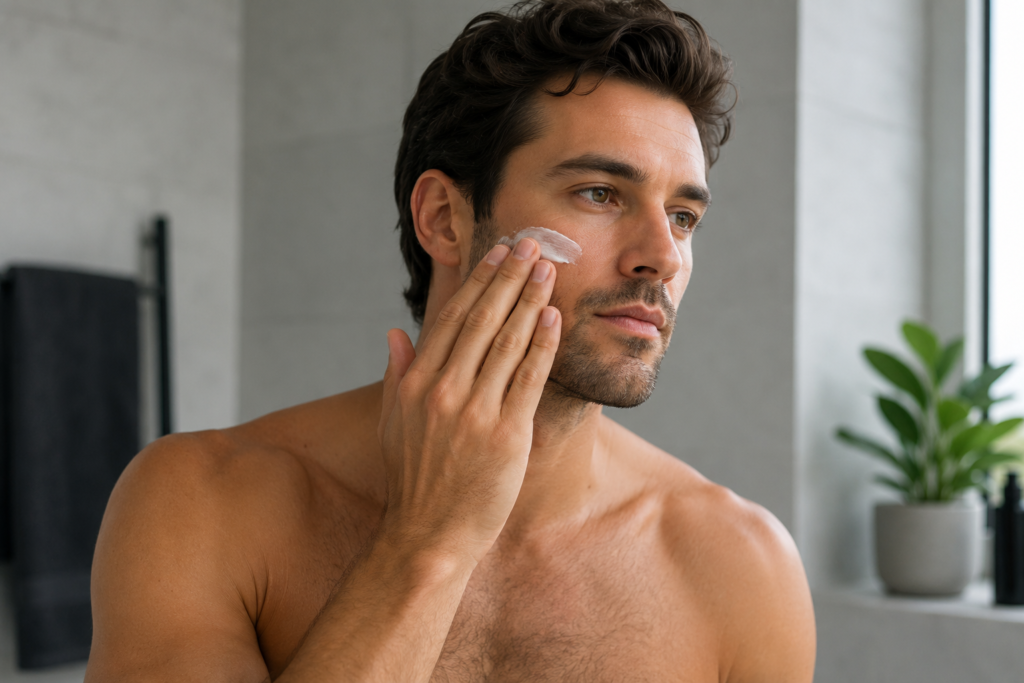
Use a nickel-sized amount (roughly 1/4 teaspoon) for the face and neck. Most men underapply, which reduces the tested SPF significantly. Apply sunscreen 15-20 minutes before sun exposure to allow the formula to settle evenly on the skin. Mineral formulas work immediately on application.
Step 4: Reapply During Prolonged Outdoor Exposure
Reapplication every two hours matters most when you are actually outdoors. If you spend most of the day indoors with minimal direct sun exposure, many dermatologists consider a morning SPF application reasonable, though outdoor activity and prolonged window exposure still increase UV exposure. On a summer weekend at a backyard barbecue or a back-to-school soccer game on the sideline, reapplication is essential. SPF powder or stick formats make midday touch-ups easier over moisturizer or beard stubble.
SPF Moisturizer Comparison: Key Formulas at a Glance
| Formula Type | Best For | Texture | White Cast? | Key Ingredients |
|---|---|---|---|---|
| Mineral (Zinc/Titanium) | Sensitive, reactive skin | Cream to lotion | Possible at higher % | Zinc oxide, titanium dioxide |
| Chemical Filter | Oily, darker skin tones | Lightweight gel or fluid | None | Avobenzone, octinoxate, homosalate |
| Hybrid (Mineral + Chemical) | Most skin types | Fluid lotion | Minimal | Zinc oxide + avobenzone blend |
| Tinted SPF Moisturizer | Even skin tone, redness | Light coverage fluid | None (color-matched) | Iron oxides + SPF filters |
| SPF + Niacinamide Formula | Oily, acne-prone skin | Matte gel-cream | None | Niacinamide 4-5%, chemical filters |
Best SPF Moisturizers for Men in 2026
1. Best Overall — CeraVe AM Facial Moisturizing Lotion SPF 30
One of the most practical daily SPF moisturizers for men because it combines broad-spectrum sun protection with a lightweight, non-greasy formula that works well for everyday office and casual wear. The inclusion of ceramides and niacinamide also makes it a strong option for maintaining the skin barrier without adding unnecessary complexity to a grooming routine.
Why it stands out:
- lightweight daily texture
- fragrance-free formula
- includes ceramides and niacinamide
- suitable for normal to slightly oily skin
- easy beginner-friendly SPF moisturizer
2. Best for Oily Skin — La Roche-Posay Anthelios Clear Skin SPF 60
This oil-free sunscreen became especially popular among men with oily or acne-prone skin because it delivers strong sun protection without the heavy greasy finish associated with traditional SPF creams. The matte finish also helps reduce shine throughout the day.
Strong points:
- oil-absorbing finish
- lightweight feel
- good for humid climates
- high SPF 60 protection
- works well for acne-prone skin
3. Best for Sensitive Skin — EltaMD UV Clear Broad-Spectrum SPF 46
A dermatologist-favorite formula frequently recommended for sensitive, redness-prone, or post-shave irritated skin. The lightweight texture layers easily into a daily grooming routine while niacinamide helps support calmer-looking skin.
Best for:
- sensitive skin
- redness-prone skin
- post-shave irritation
- lightweight daily wear
- men transitioning into skincare routines
4. Best Budget Option — Neutrogena Hydro Boost Water Gel Lotion SPF 50
This formula stands out for combining strong SPF protection with a lightweight gel texture that feels noticeably less heavy than traditional sunscreens. The hyaluronic-acid-focused formula works especially well for men who dislike thick moisturizers.
Why people like it:
- affordable price
- lightweight gel consistency
- minimal greasy residue
- beginner-friendly texture
- widely available
5. Best Premium Pick — Jack Black Double-Duty Face Moisturizer SPF 20
A long-standing men’s grooming favorite that blends moisturizer and SPF into a simple one-step routine. While SPF 20 is lower than some dermatologists prefer for prolonged outdoor exposure, many men appreciate the lightweight feel and easy daily usability.
Best for:
- minimalist grooming routines
- office environments
- men new to skincare
- lightweight hydration
- simple all-in-one products
6. Best Lightweight Finish — Supergoop! Unseen Sunscreen SPF 40
This invisible gel formula became extremely popular because it feels more like a lightweight primer than traditional sunscreen. It leaves virtually no white residue and works especially well for men with facial hair or those who dislike the heavy feel of classic SPF creams.
Strongest features:
- invisible finish
- lightweight gel texture
- excellent under beard areas
- no white cast
- smooth skin-like feel
Is Daily SPF for Men Worth the Effort?
Research consistently links daily broad-spectrum SPF use to reduced UV-related skin damage over time. For men, who statistically see dermatologists less frequently, building the habit early may help catch and prevent concerns before they escalate.
A 2022 study published in the Journal of the American Academy of Dermatology found that men were significantly less likely than women to use sunscreen daily and less likely to seek shade, suggesting that targeted education and accessible product formats may improve male sun-protective behaviors. Results from behavioral interventions in this area are promising but ongoing.
The daily SPF habit does not need to be complicated. A moisturizer with built-in broad-spectrum SPF 30 or 50 consolidates two steps into one, reducing the friction that keeps many men from applying sunscreen at all. Some users report improved skin texture over months of consistent use, though results vary considerably by skin type, lifestyle, and sun exposure levels.
Alternative Perspectives
Not all dermatologists agree on the optimal SPF number for daily use. Some argue that SPF 30 is sufficient for a standard indoor-office lifestyle in northern states, while others advocate for SPF 50 across the board given how frequently people underestimate their outdoor exposure. There is also ongoing debate about chemical versus mineral sunscreen safety: the FDA has called for additional safety data on some chemical UV filters, while major dermatology organizations including the AAD continue to recommend both types as safe and effective options. Consumers with specific sensitivities, or those who prefer to wait on additional research, may opt for mineral-only formulas as a precaution. On the topic of reef-safe claims, Hawaii and several other states have restricted certain chemical filters like oxybenzone for environmental reasons, which may influence purchasing decisions beyond skin type alone.
Disclaimer
This content is for informational and educational purposes only and does not constitute medical, dermatological, or professional skincare advice. SPF moisturizers, sunscreen ingredients, and skincare formulations may affect individuals differently depending on skin type, sensitivity, lifestyle, climate, and underlying skin conditions. Product recommendations and ingredient discussions are based on publicly available manufacturer information, dermatology guidance, and published research available at the time of writing. Always patch test new skincare products before full use and consult a board-certified dermatologist for personalized recommendations, especially if you have acne, rosacea, eczema, hyperpigmentation, sensitive skin, or a history of skin cancer concerns. WideJournal does not guarantee specific cosmetic, medical, or skincare outcomes from the use of any products mentioned in this article.
Frequently Asked Questions About SPF Moisturizers for Men
Men with oily skin tend to do well with lightweight, oil-free gel or fluid formulas that use chemical or hybrid UV filters. Look for labels that include niacinamide, which may help manage sebum over time, and avoid heavy cream formulas with occlusives like petrolatum as a primary ingredient. Results vary by skin type.
According to the American Academy of Dermatology, daily sunscreen use is recommended year-round, not just in summer. UVA rays are present even on overcast days and through glass windows, making a daily SPF moisturizer a practical option regardless of season.
Yes. SPF protection is determined by the UV filters and their concentration, not by gender-specific marketing. Many products sold as “for women” contain the same effective ingredients as men’s versions. The main functional differences tend to be fragrance, packaging, and sometimes texture. If a formula works for your skin type, the gender label is largely irrelevant.
Most dermatologists recommend approximately 1/4 teaspoon (about a nickel-sized amount) for the face and neck. Studies suggest that many people apply only 25-50% of the amount needed to achieve the labeled SPF. Applying too little reduces protection substantially, so a generous, even application is important for daily SPF for men.