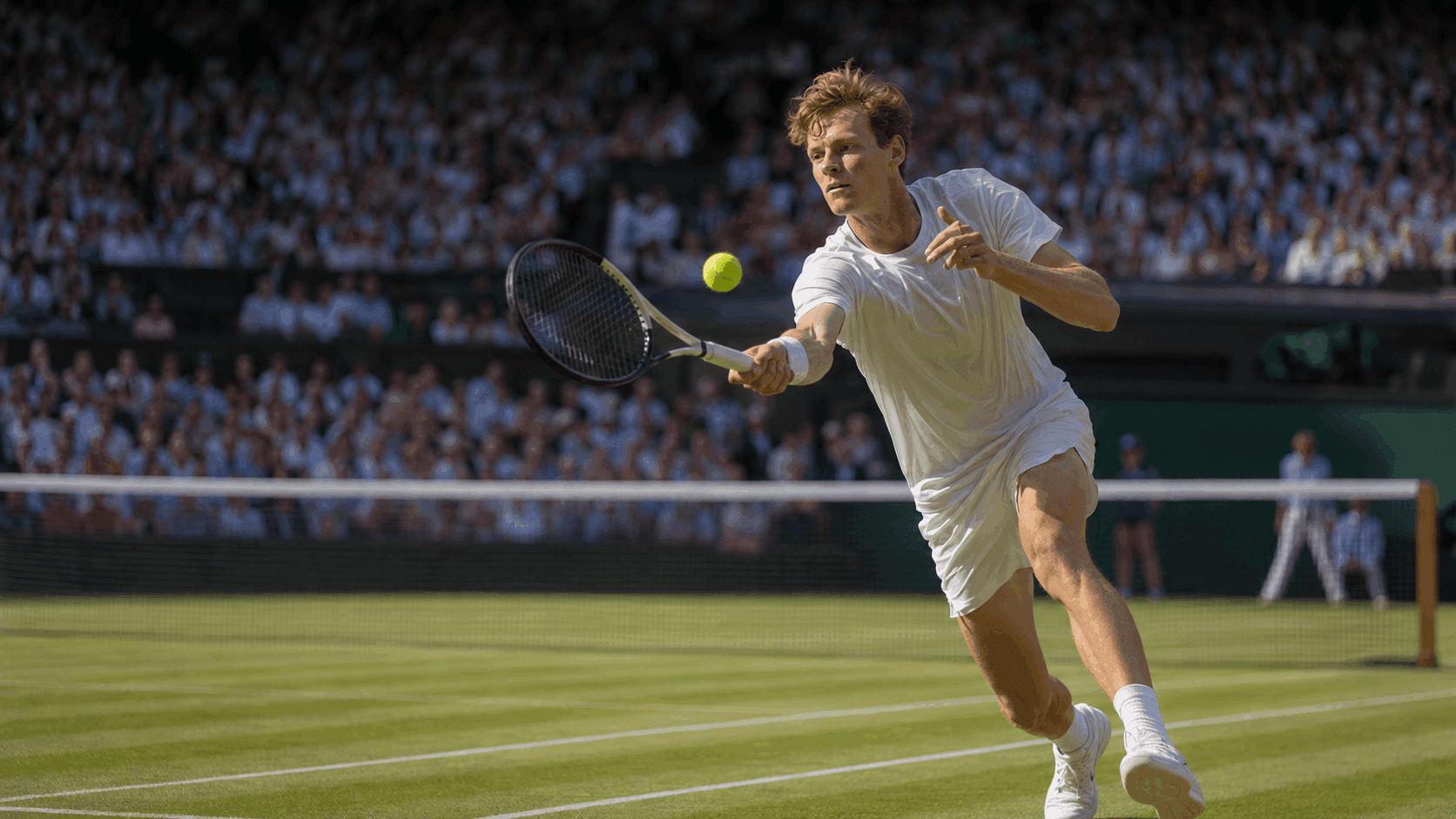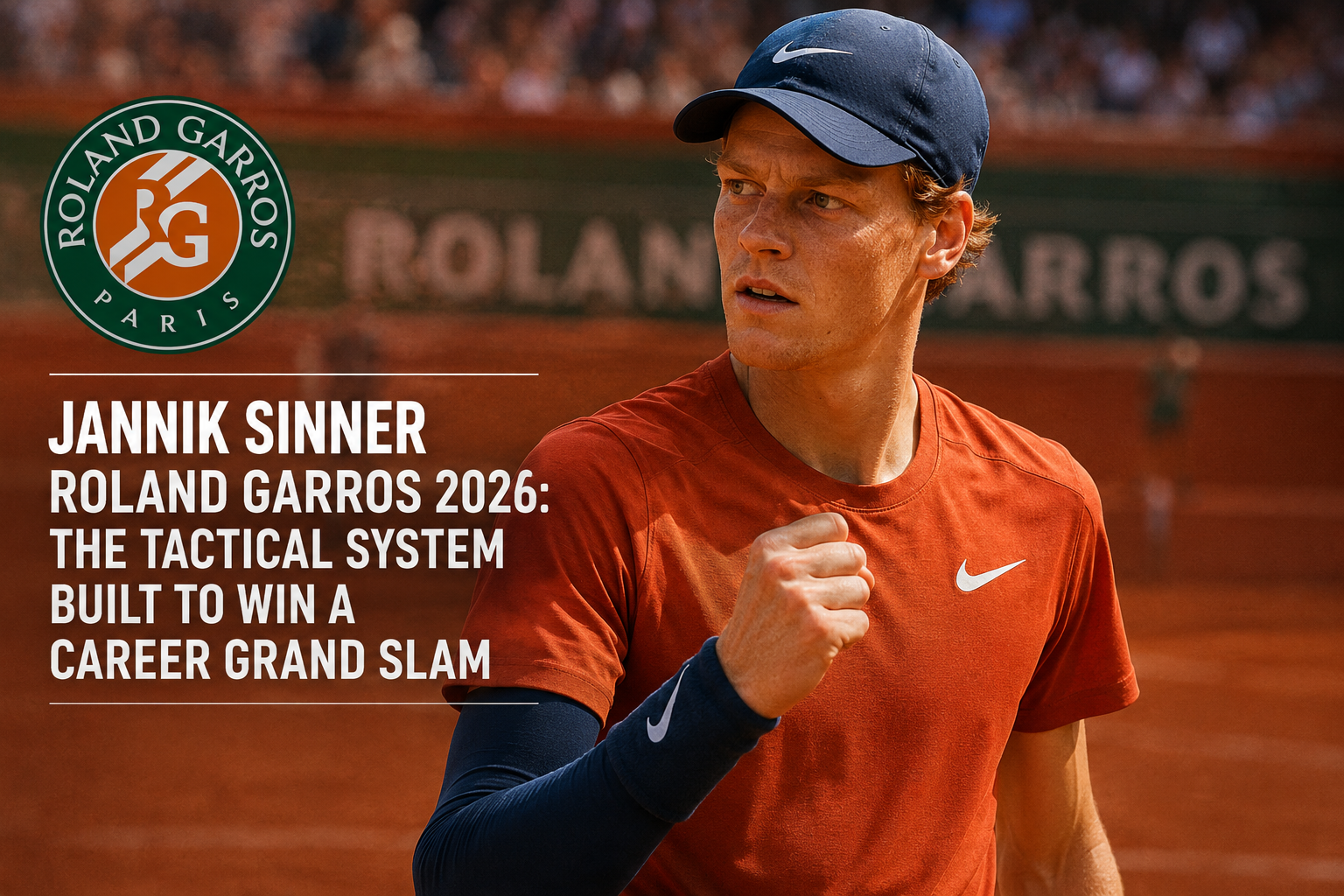
Jannik Sinner arrives at Roland Garros 2026 carrying something far bigger than momentum. The world No. 1 enters Paris with a 29-match winning streak, improved clay-court form, and what many analysts see as the clearest opening of his career to finally win the French Open.
Carlos Alcaraz’s withdrawal from the tournament has dramatically reshaped the men’s draw. For the first time in years, the dominant force on clay will not stand in Sinner’s path in Paris. That does not guarantee a title, but it changes the pressure, expectations, and overall balance of the tournament.For Sinner, the stakes extend beyond a single trophy. After winning the Australian Open, US Open, and Wimbledon, Roland Garros remains the only Grand Slam missing from his résumé. A title in Paris would complete the Career Grand Slam and place the Italian among the rarest company in tennis history.
Carlos Alcaraz’s Withdrawal Completely Changes the Men’s Draw
Carlos Alcaraz’s withdrawal from Roland Garros 2026 instantly reshaped the tournament narrative and removed the player many considered the most dangerous clay-court opponent in men’s tennis.
The Spaniard had dominated the Paris clay over the last two seasons and remained one of the few players capable of consistently pressuring Jannik Sinner in long best-of-five matches. His absence does not automatically hand Sinner the title, but it undeniably changes the psychological and tactical landscape of the draw.
For much of the past two years, conversations around Roland Garros revolved around one central question: who could survive a potential Alcaraz run in Paris? With that obstacle removed, attention now shifts toward whether Sinner can handle the pressure of becoming the clear tournament favorite.
The timing matters as much as the withdrawal itself. Sinner arrives in Paris playing the most complete clay-court tennis of his career. His movement has improved significantly compared to earlier Roland Garros appearances, and his ability to extend rallies patiently on slower surfaces has become a major strength rather than a weakness.
Still, the field remains dangerous.
Alexander Zverev continues to be one of the most reliable performers on clay and has repeatedly shown he can survive physically demanding Grand Slam matches in Paris. Casper Ruud’s consistency at Roland Garros also cannot be ignored after multiple deep runs at the tournament. Stefanos Tsitsipas, despite inconsistent recent form, remains capable of producing elite-level tennis on slower clay courts when his confidence builds early in a draw.
What changes most with Alcaraz out is not necessarily the level of competition, but the margin for expectation around Sinner. Anything short of a final appearance will now be viewed by many analysts as a disappointment.
What a French Open Title Would Mean for Sinner
For Jannik Sinner, Roland Garros 2026 is about far more than winning another major title. It is about completing one of the rarest achievements in modern tennis: the Career Grand Slam.
After capturing the Australian Open, US Open, and Wimbledon titles over the last several seasons, the French Open remains the only Grand Slam missing from Sinner’s résumé. A victory in Paris would place him in an elite historical group of players who have won all four major tournaments during their careers.
That list includes some of the defining names of the Open Era — Roger Federer, Rafael Nadal, Novak Djokovic, Andre Agassi, and Rod Laver among them. Joining that company at just 24 years old would instantly elevate Sinner’s place in the modern tennis conversation.
What makes this pursuit especially significant is how dramatically Sinner’s clay-court game has evolved. Earlier in his career, questions surrounded whether his aggressive baseline style could consistently succeed in long clay-court battles. Roland Garros traditionally rewards patience, physical endurance, and defensive adaptability as much as pure shot-making.
Over the past two seasons, however, Sinner has become far more comfortable constructing points on slower surfaces. His movement has improved, his serve has become more effective on clay, and his ability to absorb pace before redirecting rallies now makes him a serious threat in extended exchanges.
That growth was already visible during his deep Roland Garros run in 2025, where he reached the final and proved he could compete physically with the best clay-court players in the world over two demanding weeks in Paris.
Winning Roland Garros would not simply confirm Sinner as the best player of the current season. It would strengthen the argument that men’s tennis has fully entered the post-Big Three era with a new all-surface superstar capable of dominating every major environment.
French Open 2026 Predictions: Who Can Stop Sinner?
Even with Carlos Alcaraz out of the tournament, Roland Garros 2026 is far from a guaranteed path to the title for Jannik Sinner. The men’s draw still includes several proven clay-court players capable of disrupting the Italian’s pursuit of a Career Grand Slam.
Alexander Zverev remains one of the most dangerous threats in the field. The German has consistently produced deep runs in Paris and continues to be one of the tour’s most physically durable players in best-of-five matches. His serve, defensive coverage, and ability to extend rallies on clay make him a difficult matchup for any opponent over a long Grand Slam match.
Casper Ruud also cannot be overlooked despite inconsistent results outside of clay season. Few active players are more comfortable on the Roland Garros surface, and his ability to construct points patiently remains one of the most effective styles in Parisian conditions. Ruud’s multiple finals appearances at Roland Garros give him a level of tournament experience that very few players in the draw can match.
Stefanos Tsitsipas enters the tournament with more questions surrounding his recent form, but his history on clay still commands respect. When confident, Tsitsipas remains one of the most aggressive shot-makers on slower courts and has previously shown he can reach the latter stages of Roland Garros.
Still, the spotlight remains firmly on Sinner.
The world No. 1 enters Paris playing some of the most controlled tennis of his career. His improved movement on clay, stronger defensive transitions, and growing confidence in long rallies have transformed him from a dangerous hard-court player into a legitimate all-surface threat.
The biggest challenge for Sinner may not be tactical, but psychological. For the first time at Roland Garros, he arrives not as a rising contender — but as the player many expect to win the tournament.
Key Contenders at a Glance
| Player | Best Roland Garros Result | 2026 Clay Season Form | ATP Ranking (May 2026) | Status |
| Jannik Sinner | Finalist (2025) | Multiple deep runs | No. 1 | Active |
| Carlos Alcaraz | Champion (2024, 2025) | Strong before injury | No. 2 | Withdrawn |
| Alexander Zverev | Runner-Up (2024) | Strong clay season | No. 3 | Active |
| Casper Ruud | Runner-Up (2022, 2023) | Dangerous on clay | Top 10 | Active |
| Stefanos Tsitsipas | Runner-Up (2021) | Inconsistent but dangerous | Top 10 | Active |
Can Coco Gauff Defend Her Roland Garros Title?
While much of the attention in Paris is focused on Jannik Sinner’s pursuit of a Career Grand Slam, the women’s draw at Roland Garros 2026 may be even more competitive.
Coco Gauff enters the tournament as the defending champion after capturing the biggest clay-court title of her career in 2025. Her victory last season confirmed what many analysts had long believed: Gauff’s movement, defensive coverage, and physical endurance make her one of the most naturally effective players on clay.
Unlike faster hard courts, Roland Garros rewards players who can absorb pressure, extend rallies, and transition smoothly between defense and attack. Those qualities have increasingly become central strengths in Gauff’s game over the past several seasons.
Still, defending a Grand Slam title in Paris is rarely straightforward.
Iga Swiatek remains one of the most dangerous players on clay despite increased competition across the WTA Tour. Her history at Roland Garros and ability to dominate baseline exchanges continue to make her a major threat in any draw at Philippe-Chatrier.
Aryna Sabalenka also enters the tournament as one of the strongest contenders after consistently producing deep runs at major events. Her power-first style can overwhelm opponents even on slower surfaces when her level remains controlled over multiple matches.
Elena Rybakina and Qinwen Zheng are also viewed by many analysts as dangerous dark-horse contenders capable of disrupting the balance of the women’s field.
What makes the women’s draw particularly compelling in 2026 is the absence of a single dominant storyline. Unlike the men’s tournament, where Sinner enters as the clear headline favorite following Alcaraz’s withdrawal, the WTA field feels significantly more open and unpredictable.
For Gauff, that creates both pressure and opportunity. A successful title defense would strengthen her growing legacy on clay and reinforce her position as one of the defining players of the current WTA generation.
Why Roland Garros 2026 Could Be Sinner’s Defining Moment
Every era in men’s tennis eventually reaches a moment when potential turns into legacy. Roland Garros 2026 may represent that moment for Jannik Sinner.
For years, Sinner was viewed primarily as a hard-court specialist with elite ball-striking ability but lingering questions about whether his game could fully translate to the physical demands of clay-court tennis. While his shot-making talent was never in doubt, winning Roland Garros requires a different level of patience, endurance, and tactical discipline than most tournaments on the ATP Tour.
That perception has changed dramatically over the last two seasons.
Sinner now enters Paris not simply as a contender, but as the world No. 1 and arguably the most complete player in the men’s game. His evolution on clay has been one of the biggest developments in modern tennis, particularly in how comfortably he now handles long rallies and defensive exchanges on slower courts.
The timing of this year’s tournament also adds another layer of significance. With Carlos Alcaraz absent from the draw, the pressure surrounding Sinner has intensified. Opportunities to complete a Career Grand Slam do not appear often, even for elite players, and tournaments shaped by unexpected absences can quickly become defining moments in sports history.
At the same time, expectations can create their own complications.
Grand Slam tournaments are rarely decided purely by rankings or recent form. Momentum can shift quickly over two weeks in Paris, especially on clay where physical wear, weather conditions, and match endurance often become deciding factors deep into a tournament.
That reality is part of what makes Roland Garros such a difficult major to win consistently — and why this tournament could ultimately become one of the most important tests of Sinner’s career.
If he succeeds, Roland Garros 2026 will likely be remembered as the moment Sinner fully established himself as the leading figure of tennis’ new generation. If he falls short, the pressure and expectations surrounding future French Open campaigns may only grow stronger.
Alternative Perspectives
Despite the growing belief that Roland Garros 2026 represents Sinner’s best opportunity to win the French Open, not everyone sees the tournament as a straightforward path to the title.
Some analysts continue to question whether Sinner can consistently maintain his highest level through the physical demands of a full two-week clay-court Grand Slam. While his movement and defensive game have improved significantly, Roland Garros has historically rewarded players with years of experience managing long matches on slower surfaces.
There are also tactical concerns surrounding potential matchups against elite clay-court specialists. Alexander Zverev’s defensive consistency and ability to extend rallies could create difficult conditions for Sinner in a semifinal or final scenario. Casper Ruud’s comfort level on clay and experience in deep Roland Garros runs also make him a more dangerous opponent in Paris than his ranking alone may suggest.
Others believe the psychological pressure surrounding Sinner may become one of the tournament’s defining factors. Entering a Grand Slam as the clear favorite often changes expectations entirely, especially when discussions about legacy and a Career Grand Slam begin before the tournament even starts.
At the same time, supporters of Sinner argue that this version of the Italian is far more complete than the player who struggled in earlier Roland Garros appearances. His improved patience on clay, stronger physical conditioning, and growing confidence in long rallies have transformed him into one of the most balanced players on tour.
That contrast between expectation and uncertainty is part of what makes Roland Garros 2026 one of the most anticipated tournaments of the season.
Frequently Asked Questions
Roland Garros 2026 is widely viewed as one of Jannik Sinner’s strongest opportunities to win the French Open because he enters the tournament as the world No. 1 in excellent form while Carlos Alcaraz, one of the most dominant clay-court players in recent years, is out of the draw due to injury.
No. Entering Roland Garros 2026, Sinner has never won the French Open. His best result in Paris came in 2025, when he reached the final.
A victory at Roland Garros 2026 would complete the Career Grand Slam for Sinner, meaning he would have won all four major tournaments: the Australian Open, Roland Garros, Wimbledon, and the US Open.
Alexander Zverev, Casper Ruud, and Stefanos Tsitsipas remain among the most dangerous players in the men’s draw due to their experience and success on clay courts. Zverev’s physical consistency and Ruud’s history in Paris are viewed as particularly important factors.
Clay courts generally produce longer rallies, slower conditions, and more physically demanding matches. Earlier in his career, Sinner’s aggressive baseline style was considered more naturally suited to hard courts, though his movement and defensive game on clay have improved significantly over the past two seasons.
Yes. Coco Gauff enters Roland Garros 2026 as the defending women’s singles champion after winning the tournament in 2025.
Alongside Coco Gauff, players such as Iga Swiatek, Aryna Sabalenka, Elena Rybakina, and Qinwen Zheng are widely viewed as major contenders in the women’s tournament due to their recent form and experience on clay.