Kimi Antonelli won the 2026 Canadian Grand Prix on May 25 to claim his fourth consecutive Formula 1 victory, extending his Drivers’ Championship lead to 43 points over teammate George Russell. Five rounds into the season, the 19-year-old from Bologna has not just matched the pace of this sport’s established names — he has outscored every driver on the grid combined since Round 2. For comprehensive coverage of where this season goes from here, follow WideJournal’s 2026 Formula 1 coverage.
The Canadian result — a comfortable 10.7-second margin over Lewis Hamilton at the line — looked cleaner than it was. Russell led from pole and matched Antonelli lap for lap through the opening stint, the two Mercedes drivers trading positions and briefly making wheel-to-wheel contact at the final chicane. It was only Russell’s power unit failure on Lap 30 that broke the deadlock, handing Antonelli a 25-point swing and his most fortunate win of the streak. “Not really the way I wanted,” Antonelli said after the podium ceremony, a quote that said a lot about where his head is right now. He wanted to beat Russell clean. That battle is not finished.
Key Takeaways
- Kimi Antonelli’s four-race winning streak has turned the 19-year-old Mercedes driver into the early favorite for the 2026 Formula 1 championship.
- Mercedes’ W17 has gained a major edge under the new regulations through advanced energy recovery systems and superior hybrid efficiency.
- George Russell remains Antonelli’s closest challenger, but reliability issues and intra-team pressure are already shaping the title battle.
- Ferrari and McLaren still have enough development potential to threaten Mercedes as the season shifts into the crucial European stretch.
- Antonelli’s record-breaking start is not just statistically historic — it signals the emergence of Formula 1’s next generational contender.
The Winning Streak, Race by Race
Kimi Antonelli has won four consecutive Formula 1 races — Rounds 2 through 5 of the 2026 season — setting multiple all-time records in the process, including becoming the first driver in F1 history to win each of his first four career victories consecutively.
The streak started quietly in China, where Antonelli qualified on pole in a record-breaking 1:32.064 lap — the fastest any driver under 20 has ever set an F1 pole, beating Sebastian Vettel’s record by nearly two years. He then converted it into a five-second race win over Russell, becoming the second-youngest Grand Prix winner in the sport’s history and the first Italian to win a Formula 1 race in roughly twenty years.
Suzuka followed. A second straight win moved Antonelli to the top of the championship standings, making him the youngest driver ever to lead the points table, beating the previous record by almost three years. He also became the first Italian to lead the Drivers’ Championship since Giancarlo Fisichella in 2005. At Miami, he became the first driver in F1 history to convert his first three pole positions into race victories. When Charles Leclerc jumped him off the line with a sharp reaction time, Antonelli recovered, managed his tires, and pulled clear for the win.
Canada closed out the four-race run with a different kind of story. Russell was the faster qualifier, the cleaner starter, and by all appearances the harder driver on the day. The power unit failure that ended his race on Lap 30 was the decisive moment, not a strategic masterstroke from the Antonelli side of the garage. GP Blog confirmed that Antonelli became the first driver to claim all four of his first career victories in succession, a fact that will remain in the record books regardless of the circumstances.
What the Championship Table Actually Looks Like
After five rounds of the 2026 Formula 1 season, Kimi Antonelli leads the Drivers’ Championship with 131 points, 43 ahead of second-placed George Russell. Mercedes leads the Constructors’ Championship by 72 points over Ferrari.
| Pos. | Driver | Team | Points | Gap to Leader |
|---|---|---|---|---|
| 1 | Kimi Antonelli | Mercedes | 131 | Leader |
| 2 | George Russell | Mercedes | 88 | -43 |
| 3 | Charles Leclerc | Ferrari | 75 | -56 |
| 4 | Lewis Hamilton | Ferrari | 72 | -59 |
| 5 | Lando Norris | McLaren | 58 | -73 |
| 6 | Oscar Piastri | McLaren | 48 | -83 |
| 7 | Max Verstappen | Red Bull Racing | 43 | -88 |
| 8 | Pierre Gasly | Alpine | 20 | -111 |
| 9 | Oliver Bearman | Haas | 18 | -113 |
| 10 | Liam Lawson | Racing Bulls | 16 | -115 |
The 43-point gap to Russell is significant, but what stands out equally is the structure of the threat beneath him. Motorsport.com confirmed the standings after Canada, and the math is clear: Leclerc and Hamilton sit within 60 points of the lead, meaning Ferrari is still very much in this fight if Mercedes has a rough weekend. Max Verstappen’s 43-point tally through five rounds is a quiet alarm bell for Red Bull. He picked up his first podium of the season in Canada, finishing third behind Hamilton, but he is already 88 points off the pace at a track where he would normally expect to contend.
How the W17 Is Built for These Regulations
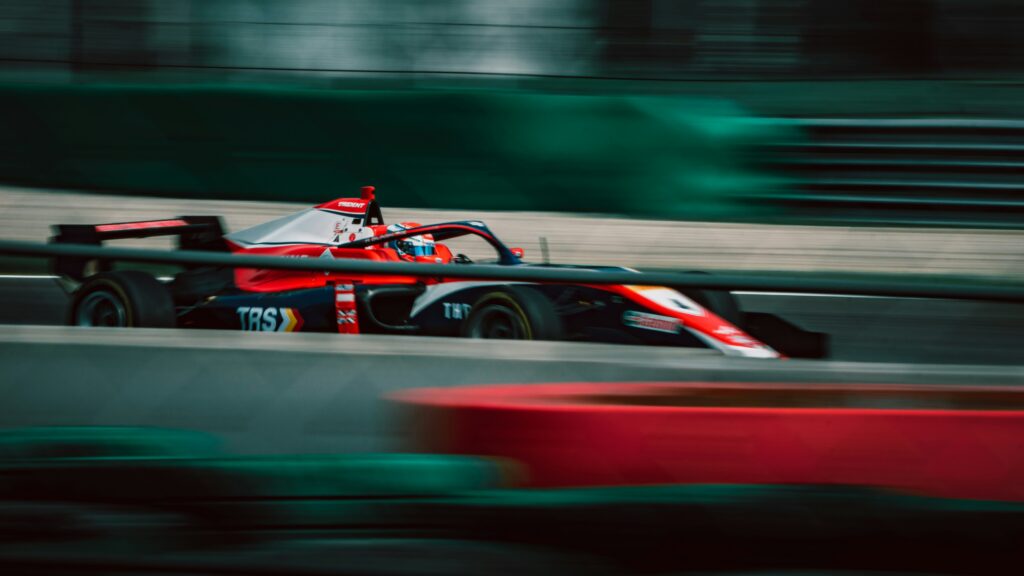
Mercedes’ dominance in 2026 is rooted in superior energy management under the new hybrid regulations, where up to 350kW of electrical power and a near 50/50 power split make battery efficiency as important as outright engine performance.
The 2026 technical regulations represent the most significant overhaul in years: a near 50/50 power split between the internal combustion engine and electric motor, a maximum 350kW MGU-K replacing the old 120kW unit, removal of the MGU-H, active aerodynamics replacing the traditional DRS system, and cars that are 30kg lighter, 100mm narrower, and 200mm shorter in wheelbase. On paper, it leveled the field. In practice, it handed Mercedes an advantage they had been quietly building toward.
Autosport’s technical analysis identified the core of that advantage: with only 7 MJ of energy available per lap, how teams deploy and recover electrical power is as important as the raw combustion output. The W17 uses what engineers have described as “super clipping,” keeping the rear wing open to recharge through high-speed sections rather than relying on lift-and-coast. It arrives at braking zones faster than rival cars while simultaneously topping up the battery for the next deployment phase. That cycle, repeated every lap, adds up.
Toto Wolff’s decision to keep Mercedes competitive in Formula E through the hybrid transition years is paying dividends now. The team’s battery management software and energy recovery calibration are operating at a level its rivals have not yet matched. Autosport noted that despite McLaren running the same Mercedes power unit as a customer team, the gap between the works car and the Woking squad remains substantial, pointing to the chassis and energy management systems as the differentiating factor. In Australia, the W17 put eight-tenths of a second between itself and the next group of top teams in qualifying alone.
Canada: Tactics, Tire Calls, and the Russell Wildcard
The 2026 Canadian Grand Prix was tactically more complex than the final margin suggests, with McLaren’s tire strategy gamble and a real intra-team Mercedes battle both shaping the outcome before Russell’s retirement on Lap 30.
The Circuit Gilles Villeneuve does not reward the same energy harvesting profile that made Australia, China, and Suzuka so comfortable for the W17. Canada’s low-speed chicanes and long straights with few natural braking opportunities create a different kind of challenge, and it showed. Russell outqualified Antonelli, led early, and was not playing a support role in that opening stint. Wolff’s publicly stated policy heading into the weekend was “free to race, but of course with respect,” and both drivers took that literally, trading the lead and clashing at the final chicane in a sequence that the FIA noted in its official race summary.
McLaren’s strategic call compounded their misery. Both Norris and Piastri started on intermediate tires on a drying track, a gamble that did not pay off. The timing and compound choice cost them significant positions at a circuit where track position is extremely difficult to recover. Norris finished outside the top five; Piastri outside the top six. On a weekend where the Mercedes was not at its untouchable best, McLaren needed to capitalize on any opening. They did not.
Mercedes debuted its first meaningful W17 upgrade package at the Canadian Grand Prix, responding to the competitive ground McLaren had recovered in Miami. The timing of that upgrade, combined with Russell’s retirement, makes it difficult to fully evaluate how much the new package changed the competitive picture. What is clear is that Hamilton’s second place for Ferrari and Verstappen’s first podium of the year confirmed the midfield is tightening. Crucially, Antonelli’s victory marked a historic milestone for his team: it was Mercedes’ 136th Formula 1 victory and officially secured the Brackley-based squad’s 300th podium finish since returning to the sport as a works constructor in 2010.
Alternative Perspectives
It would be premature to treat the Kimi Antonelli 2026 F1 championship narrative as settled. Three of his four wins have arrived under circumstances that flattered the final margin: Russell’s retirement in Canada directly gifted Antonelli a race he might otherwise have had to fight for in the closing laps, and McLaren’s strategy errors in the same race removed the one team capable of pressuring both Mercedes drivers on raw pace. Critics are also right to note that Verstappen, a three-time World Champion, has been compromised in several rounds by a Red Bull package that has not kept pace with the 2026 regulations, meaning the field Antonelli is beating is not yet at full competitive strength. Should Ferrari and McLaren close the gap across the European swing, the mental and technical tests that genuinely define a championship contender are still ahead of the 19-year-old from Bologna.
What is undeniable is that Antonelli has not simply been handed results. Tactically, Antonelli has had a noted weakness at race starts, with a slow getaway being a recurring issue. In Miami, Leclerc exploited this with a lightning-fast reaction, shooting around the outside to lead. He recovered from that deficit in Miami to win anyway, which is as meaningful as any qualifying record. Antonelli’s Canada win was described as “not really the way I wanted” by the driver himself after benefiting from Russell’s mechanical retirement, a response that reflects competitive self-awareness rather than manufactured humility. The awareness that an inherited win is not the same as a fought win matters for long-term development, and it suggests the mental framework around the driver is sound.
What the European Swing Will Reveal
The Formula 1 paddock now heads back to Europe for a grueling summer stretch, kicking off with the next triple-header in June. European tracks will kick off the next phase of the 2026 season, a critical juncture most likely to expose or protect a driver’s weaknesses in equal measure. The upcoming traditional circuits are unforgiving, overtaking is highly dependent on ultimate aerodynamic efficiency, and qualifying will define the race outcome to a greater degree than the street fights we’ve seen so far. For Antonelli, who has already demonstrated qualifying pace capable of breaking all-time records, the return to permanent European tracks should suit his strengths. The danger is the reverse: a single qualifying error or contact in the opening corners can eliminate a championship leader’s advantage without any driving mistake on his part.
The development race over the European swing carries its own implications. Reports from secondary sources suggest Mercedes may face a tightening of one regulatory advantage in the coming weeks, while Ferrari’s larger wind tunnel allocation could become a more meaningful factor as the season progresses. Those dynamics are unconfirmed at the primary source level and should be treated cautiously, but they serve as a reminder that a 43-point lead after five of 24 races is a position of strength, not a title guarantee. Ferrari’s Lewis Hamilton showed in Canada that he is capable of podium pace and is trending in the right direction. Hamilton took a strong second place for Ferrari, overtaking Max Verstappen in the final laps, a result that suggests the Maranello package is finding its feet even if it is not yet at Mercedes’ level consistently.
For Russell, the picture is complicated. He was running at the front of the Canadian Grand Prix before the power unit failure, and Toto Wolff clarified that during the intra-team battle in Canada, “we’re free to race, but of course we need to race with respect.” That free-racing policy will be tested more directly as the championship gap between the two Mercedes drivers widens. At 43 points down with 19 rounds remaining, Russell is mathematically in contention, but the psychological weight of losing the lead of a race to a mechanical failure and then watching a 19-year-old teammate extend his championship lead is not trivial.
The Kimi Antonelli 2026 F1 championship campaign is the most compelling story in the sport through five rounds, defined not merely by the wins themselves but by the breadth of records attached to them and the quality of the technical foundation Mercedes has built beneath him. Whether it becomes a championship-winning season depends on variables that no driver fully controls, including reliability, safety car timing, rival development, and the learning curve that every first-year champion eventually hits. What five rounds have confirmed is that Antonelli has the pace, the composure, and the team infrastructure to remain the driver every rival needs to beat. The next seven weeks across Monaco, Barcelona, and beyond will tell us whether this is the season’s opening chapter or its defining arc.
Frequently Asked Questions
Antonelli has won four consecutive Formula 1 races in 2026, from Round 2 at the Chinese Grand Prix through Round 5 at the Canadian Grand Prix. All four wins are also the first four victories of his Formula 1 career, making him the first driver in the sport’s history to win each of his first four Grands Prix in succession. He began the streak immediately after finishing second to teammate George Russell at the season-opening Australian Grand Prix.
Antonelli has broken several all-time Formula 1 records in 2026. He became the youngest-ever Grand Prix polesitter at 19 years, 6 months, and 17 days at the Chinese Grand Prix, surpassing the record previously held by Sebastian Vettel by nearly two years. He became the youngest-ever championship leader in F1 history after Suzuka, beating the previous record by almost three years. He also became the first driver in history to convert his first three career pole positions into race victories, a feat confirmed after his Miami win. He is additionally the first Italian driver to lead the Drivers’ Championship since Giancarlo Fisichella in 2005.
The W17’s advantage is rooted primarily in superior energy management under the 2026 regulations, which introduced a near 50/50 hybrid power split and raised MGU-K power from 120kW to 350kW while removing the MGU-H. Under these rules, how a team manages and deploys its 7 MJ of allowed energy per lap is as important as the internal combustion engine itself. Mercedes uses a technique known as “super clipping,” keeping the rear wing open to recharge the battery on straights rather than lifting and coasting, which allows the W17 to arrive at braking zones faster than rivals. Toto Wolff has also credited Mercedes’ Formula E program for giving the team deeper expertise in battery efficiency and energy recovery ahead of this regulatory era. These factors combined explain why the gap to McLaren, which uses the same Mercedes power unit, remains significant.
Following the Canadian Grand Prix on May 25, 2026, Antonelli leads the Drivers’ Championship with 131 points. His nearest rival is Mercedes teammate George Russell, who sits second on 88 points, placing Antonelli 43 points clear at the top of the standings. Charles Leclerc of Ferrari is third on 75 points, followed by Lewis Hamilton on 72 points. The next race on the calendar takes the paddock back to Europe for the start of the intense summer European leg.