
Roughly one in three adolescents in the United States will meet the diagnostic criteria for an anxiety disorder before age 18, according to data from the National Institute of Mental Health. For many of those children, the weeks surrounding the start of a new school year represent a reliable annual trigger, when social hierarchies reset, academic pressure intensifies, and familiar summer routines disappear overnight. The result is a predictable but often underestimated surge in distress that pediatricians, school counselors, and child psychologists see year after year. Understanding what drives this pattern is the first step toward doing something about it. For more evidence-based coverage like this, explore our Health articles at WideJournal.
Back to school anxiety is not a single condition. It sits at the intersection of normal developmental stress and clinically significant anxiety disorders, and separating the two requires careful attention. A child who spends a restless night before the first day is having a typical human experience. A child who vomits every Monday morning, refuses to board the bus, or complains of chest pain that disappears on weekends may be signaling something that warrants professional evaluation. The distinction matters because under-responding to clinical anxiety can allow it to compound over months, while over-pathologizing ordinary nervousness can create its own problems.
This article draws on peer-reviewed research and guidance from major health institutions to give parents, caregivers, and teens a grounded, practical understanding of school-related anxiety: what it looks like, why it happens, when it becomes serious, and what approaches research suggests may help.
Key Takeaways
- Approximately 31.9% of adolescents in the U.S. will experience an anxiety disorder at some point during childhood or adolescence, according to the National Institute of Mental Health.
- School anxiety symptoms in children often present as physical complaints, including stomachaches, headaches, and nausea, rather than direct expressions of fear or worry.
- School refusal, defined as difficulty attending school due to emotional distress, affects an estimated 1-5% of school-age children and is considered a warning sign requiring professional attention.
- Cognitive behavioral therapy (CBT) has the strongest evidence base for treating anxiety disorders in children and adolescents, with multiple randomized controlled trials supporting its effectiveness.
- Teen anxiety back to school peaks during transition years: starting middle school, entering high school, and the first year of any new academic environment carry elevated risk compared to stable school years.
What Is Back to School Anxiety?
Back to school anxiety refers to heightened fear, worry, or avoidance behaviors tied to the school environment, typically intensifying at the start of a new academic year or following school transitions.
The term covers a wide clinical spectrum. At one end sits anticipatory nervousness, a normal stress response that typically resolves within the first one to two weeks of school. At the other end are diagnosable conditions such as generalized anxiety disorder (GAD), social anxiety disorder, and separation anxiety disorder, all of which can be meaningfully worsened by the school return. According to the Mayo Clinic, anxiety disorders are characterized by persistent, excessive fear or worry that is difficult to control and that interferes with daily activities, distinguishing them from the ordinary stress most children experience.
Why Does the School Environment Trigger Anxiety?
Several structural features of school make it a potent anxiety context. Social evaluation is constant and public. Academic performance is measured and compared. Children have limited control over their schedule, their peers, and their environment. For children already predisposed to anxiety through genetics, temperament, or prior adverse experiences, these conditions create a consistent stress load. Research published in JAMA Pediatrics has linked lower perceived school belonging directly to higher rates of anxiety and depressive symptoms, suggesting that the social dimension of school is often as significant as the academic one.
Recognizing School Anxiety Symptoms in Children
School anxiety symptoms in children frequently appear as physical complaints or behavioral changes rather than verbal expressions of worry, which is why many cases go unrecognized for months.
Parents and caregivers are often the first to notice something is wrong, but the signals can be easy to misread. A child who repeatedly develops a stomachache on Sunday evenings is not necessarily trying to avoid chores. That pattern of somatic symptoms timed around school is one of the clearest behavioral markers clinicians look for.
Common Physical Symptoms
Research suggests that somatic complaints are among the most consistent school anxiety symptoms in children. These include recurrent stomachaches or nausea, particularly on school mornings; headaches that tend to resolve on weekends or holidays; fatigue and disrupted sleep; and in some cases, rapid heartbeat or shortness of breath before school-related events. The physical symptoms are neurologically real: the anxiety response activates the autonomic nervous system, producing genuine gastrointestinal and cardiovascular changes. Dismissing these complaints as “fake” or manipulative is both inaccurate and counterproductive.
Common Behavioral Symptoms
Beyond physical signs, behavioral changes are equally telling. Children with back to school anxiety may become unusually clingy or tearful at drop-off, withdraw from friends, experience significant sleep disruption, show a marked drop in academic performance, or begin resisting school attendance. In teens, the presentation often shifts: social withdrawal, irritability, increased screen use as avoidance, and declining grades can all reflect anxiety that is not being named as such. Teen anxiety back to school is particularly likely to go unaddressed because adolescents are often reluctant to disclose emotional distress to adults.
School Refusal Warning Signs: When Is It Serious?
School refusal is a clinically significant pattern in which emotional distress prevents a child from attending school, and it requires prompt attention from a mental health professional.
School refusal is distinct from truancy. Truancy involves deliberate, often concealed absence, typically without distress. School refusal involves genuine emotional suffering: the child wants to comply but finds attendance emotionally intolerable. The CDC’s data on children’s mental health underscores that anxiety is among the most common mental health conditions affecting U.S. children, and school refusal is one of its most impairing expressions.
Key school refusal warning signs include persistent or escalating refusals to attend school lasting more than a week, severe emotional distress each morning that does not improve once the child is at school, complete absence from school for multiple consecutive days, and physical symptoms that consistently disappear when the child is allowed to stay home. When these patterns emerge, they warrant evaluation by a pediatrician or child psychologist rather than a waiting-and-watching approach.
Back to School Anxiety: Key Research Data at a Glance
| Metric | Finding | Source |
|---|---|---|
| Lifetime prevalence of any anxiety disorder in adolescents | 31.9% of U.S. adolescents aged 13-18 | National Institute of Mental Health |
| School refusal prevalence | Affects approximately 1-5% of school-age children | Child and Adolescent Psychiatric Clinics of North America |
| CBT response rate for childhood anxiety | Approximately 60-80% of children show significant improvement with CBT in randomized trials | Journal of the American Academy of Child and Adolescent Psychiatry |
| Social anxiety onset age | Median age of onset is 13 years; the school transition to middle school coincides with peak onset | National Comorbidity Survey, NIMH |
| Impact of untreated anxiety on academic outcomes | Anxiety disorders are associated with significantly lower GPA and higher dropout risk in longitudinal studies | JAMA Pediatrics |
| Parental anxiety as a risk factor | Children of parents with anxiety disorders are up to 7 times more likely to develop an anxiety disorder themselves | American Journal of Psychiatry |
How to Help a Child With Anxiety: What the Evidence Shows
Research-backed strategies for helping a child with school anxiety center on gradual exposure, consistent routines, and professional intervention when symptoms are severe or persistent.
The instinct to protect an anxious child from distress by allowing avoidance is understandable, but studies consistently show it backfires. Avoidance provides short-term relief while reinforcing the brain’s threat response over time, making the feared situation feel increasingly dangerous. This is why the most effective interventions for anxiety disorders involve graduated exposure rather than elimination of the stressor.
Expert Insight: “The biggest mistake parents make is helping their child avoid the things that cause anxiety. When we accommodate the anxiety, we validate the fear and miss the opportunity to teach resilience,” notes Lynn Lyons, LICSW, a psychotherapist and author specializing in childhood anxiety management. “Parents must learn to pivot from protection to preparation, allowing children to step into uncomfortable spaces with structural support.”
Evidence-Based Strategies for Parents
Establishing predictable pre-school routines reduces decision fatigue and novelty, both of which elevate anxiety. Practicing the school commute before the first day, visiting the school building, and identifying a trusted adult at school the child can go to if distressed are all practical steps that have support in the clinical literature. When a child expresses worry, validating the feeling without reinforcing the avoidance is a skill that research suggests parents can learn effectively through brief parent-focused coaching. Language matters: “I know this feels scary, and I know you can handle it” communicates empathy while building self-efficacy, whereas “There’s nothing to worry about” dismisses the child’s experience and tends to reduce trust rather than anxiety.
When to Seek Professional Help
If anxiety is interfering with school attendance, friendships, sleep, or the child’s overall quality of life, professional evaluation is appropriate. The gold standard treatment for anxiety disorders in children and adolescents is cognitive behavioral therapy (CBT), which focuses on identifying distorted thought patterns, building coping skills, and systematically confronting feared situations. In some cases, a child psychiatrist may discuss medication options alongside therapy. No treatment should be started without a proper clinical assessment by a licensed mental health professional.
Teen Anxiety Back to School: A Different Challenge
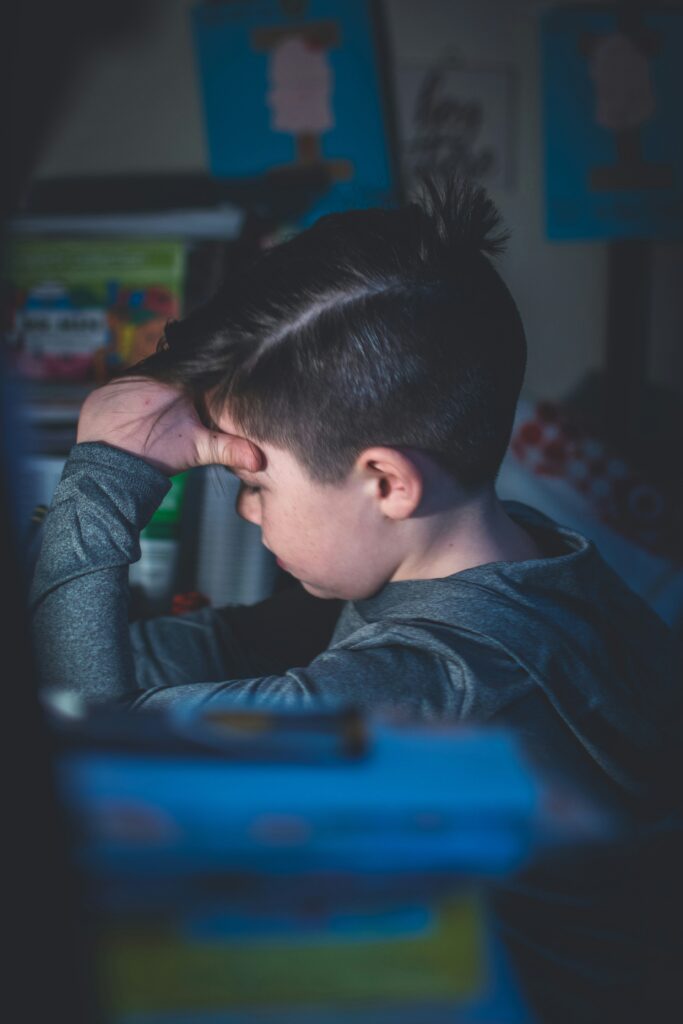
Teen anxiety back to school often goes unidentified because adolescents typically mask distress differently than younger children, presenting with irritability, social withdrawal, or academic disengagement rather than obvious worry.
Adolescents face a distinct constellation of stressors: academic pressure tied to college admissions, social media amplifying peer comparison, identity formation, and the particular vulnerability of high school social hierarchies. Some studies indicate that anxiety symptoms in teens are more likely to be internalized and less likely to be communicated to parents or teachers, which delays intervention. Creating low-pressure opportunities for honest conversation, without interrogating or problem-solving immediately, is consistently recommended by child psychologists as a way to keep communication open.
According to a 2022 study published in JAMA Pediatrics examining data from over 40,000 youth, anxiety disorders were the most prevalent mental health condition among U.S. children aged 3-17, with prevalence having increased significantly since 2016.The National Institute of Mental Health states that anxiety disorders are among the most common mental health disorders in the United States, that they frequently begin in childhood or adolescence, and that effective treatments exist, including psychotherapy and medication, with the best outcomes typically seen when intervention occurs early.
Alternative Perspectives
Not all researchers agree on the best framing of school-related anxiety. Some developmental psychologists caution against pathologizing typical stress responses, arguing that labeling ordinary nervousness as a disorder may increase health anxiety in both children and parents, and that resilience is partly built through tolerating manageable discomfort. This perspective does not dismiss clinical anxiety disorders but emphasizes that the threshold for intervention should be functional impairment, not the presence of any distress at all.
A separate debate exists around school structure itself. Some education researchers argue that the anxiety epidemic in school-age children reflects not just individual vulnerability but structural problems: excessive standardized testing pressure, inadequate recess and unstructured time, and large class sizes that reduce the sense of belonging. From this view, focusing exclusively on treating individual children without examining the school environment is an incomplete response.
There is also ongoing discussion in the clinical literature about the role of helicopter parenting and over-scheduling in reducing children’s tolerance for uncertainty. Some studies suggest that children who are given age-appropriate autonomy and unstructured problem-solving time develop stronger anxiety regulation capacities, though the causal direction of this relationship remains under study.
If you found this article helpful, our broader collection of mental health resources covers related topics including stress management, sleep and mental health, and supporting teens through emotional challenges.
Medical Disclaimer. This content is for informational and educational purposes only and does not constitute medical, psychological, or professional healthcare advice. It should not be used to diagnose, treat, or prevent any mental health condition. Always seek the advice of your pediatrician, child psychologist, or other qualified health provider with any questions you may have regarding a medical or mental health condition. Never disregard professional medical advice or delay in seeking it because of something you have read on WideJournal.com.
Crisis Support Resources: If you or your child are facing an immediate mental health crisis:
- In the US and Canada: Call or text 988 to reach the Suicide & Crisis Lifeline, available 24 hours a day, 7 days a week. Services are free and confidential.
- In the UK: Call 111 to reach the NHS mental health services, or call Samaritans at 116 123.
- Emergency: You can also call your local emergency services (like 911 or 999) or go to the nearest hospital emergency room.
Frequently Asked Questions
What is the difference between normal nervousness and clinical back to school anxiety?
Normal pre-school nervousness typically resolves within one to two weeks as the child settles into routines and reconnects with peers. Clinical anxiety is characterized by persistent, excessive worry that does not decrease over time, causes significant distress, and interferes with daily functioning such as sleep, eating, friendships, or school attendance. If symptoms last more than two to three weeks or are causing functional impairment, a pediatrician or child psychologist should be consulted.
What are the most common school anxiety symptoms in children to watch for?
The most frequently reported school anxiety symptoms in children include recurrent stomachaches or headaches on school mornings, difficulty sleeping on school nights, clinginess or tearfulness at drop-off, frequent trips to the school nurse, and avoidance of school-related activities. In older children and teens, irritability, social withdrawal, and declining academic performance can also signal anxiety that is not being expressed directly.
How can parents help a child with anxiety without reinforcing avoidance?
Research suggests that the most effective parental approach combines emotional validation with a gentle but consistent expectation that the child attends school. Saying “I hear you that this feels hard, and I’ll be here when you get home” acknowledges the child’s experience without confirming that school is something to be feared or avoided. Establishing predictable routines, practicing school scenarios, and identifying a trusted adult at school for the child to connect with may all reduce anxiety over time. When distress is severe, professional guidance is important to avoid inadvertently reinforcing avoidance patterns.
When should school refusal be treated as a medical emergency?
School refusal itself is not typically a medical emergency, but it is a serious clinical signal that warrants timely professional attention rather than a wait-and-see approach. If a child is expressing thoughts of self-harm, showing signs of severe depression alongside the refusal, or if the refusal has persisted for more than one to two weeks with no improvement, parents should seek an appointment with a pediatrician or mental health professional promptly. In cases where a child discloses abuse or bullying as the reason for school refusal, that concern requires immediate investigation and reporting through appropriate school and legal channels.